
How often should waste water tanks be cleaned?
Waste water tanks should be cleaned at an interval based on the tank’s risk assessment, usage, waste characteristics, sludge accumulation and inspection findings; there is no universal schedule for every site. Cleaning should also be arranged promptly where inspections identify build-up, contamination, restricted capacity or other conditions that could affect safe and effective operation.
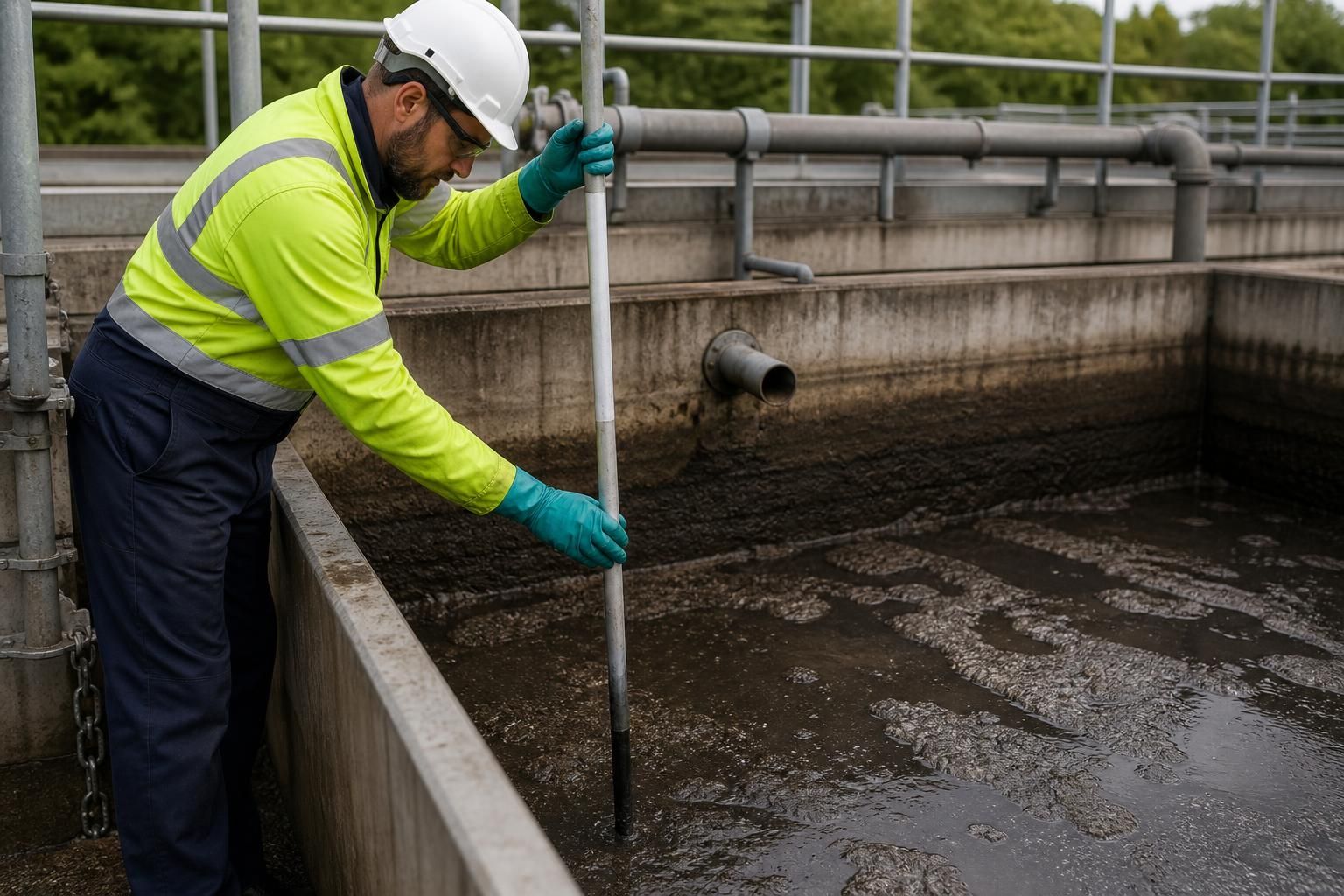
A defensible cleaning frequency is a documented, site-specific interval set from evidence about how the tank is performing, rather than a standard calendar period applied to every installation. For many businesses, the most reliable approach is to establish a baseline through inspection and cleaning records, then adjust the interval when operating conditions or tank condition changes.
The cleaning plan should distinguish between routine inspection, planned cleaning and corrective cleaning. A tank may be inspected regularly without requiring a full clean at every visit. Inspection findings can show whether settled solids, floating material, grease, scale or other deposits are affecting usable capacity, inlet and outlet performance, pumps, level controls or downstream treatment. This helps prevent unnecessary cleaning while ensuring that deterioration is not left until the tank becomes difficult or unsafe to operate.
When setting or reviewing the interval, consider:
- the volume and type of wastewater entering the tank;
- the amount of suspended solids, grease, grit or other material likely to settle;
- the tank’s effective capacity and the amount of free space needed for normal operation;
- how frequently pumps, alarms, screens, filters and associated equipment require attention;
- changes in occupancy, production, process chemicals, drainage arrangements or discharge patterns;
- evidence of corrosion, damage, leaks, poor ventilation or deterioration of internal components; and
- previous inspection results, tankering records, blockages, odour complaints and maintenance events.
A cleaning interval should be shortened where deposits are accumulating between planned inspections, pumping equipment is handling excessive solids, alarms are occurring more often, or the tank is no longer providing the intended operating capacity. A change in the nature or volume of wastewater can also make an established schedule unsuitable. Conversely, records may demonstrate that a planned interval is more frequent than the tank’s condition requires, although this should only be changed following a competent review.
Visible or operational warning signs should not be treated as a substitute for a planned programme. Persistent odours, slow drainage, surcharging, unusual pump cycling, high-level alarms, visible floating material, discoloured discharge or evidence of leakage indicate that the tank and connected system should be assessed. Cleaning may be required before the next scheduled visit, but the underlying cause should also be investigated so that the same problem does not recur.
Each visit should produce a useful record rather than simply an entry stating that the tank was cleaned. Records should identify the tank, date, observed condition, material removed, disposal arrangements, defects found, photographs where appropriate, and any recommendations for inspection or cleaning. Comparing these records over time allows the person responsible for the premises to see whether the interval remains suitable and provides evidence for maintenance planning and compliance reviews.
Cleaning work must be planned around the hazards associated with wastewater. Tanks can contain harmful microorganisms, toxic or flammable gases, contaminated sludge and unstable residues. The chosen method should therefore address isolation, access, ventilation, atmospheric testing, personal protective equipment, waste handling and emergency arrangements. Where entry into the tank may be necessary, the work requires specific confined-space controls and should not be undertaken as ordinary maintenance.
There is no benefit in selecting a frequency without recording the reasoning behind it. A suitable programme links the planned interval to inspection evidence, the tank’s duty and the consequences of reduced performance. It should be reviewed after significant operational changes, remedial work, repeated failures or any incident that shows the existing arrangements are no longer adequate.
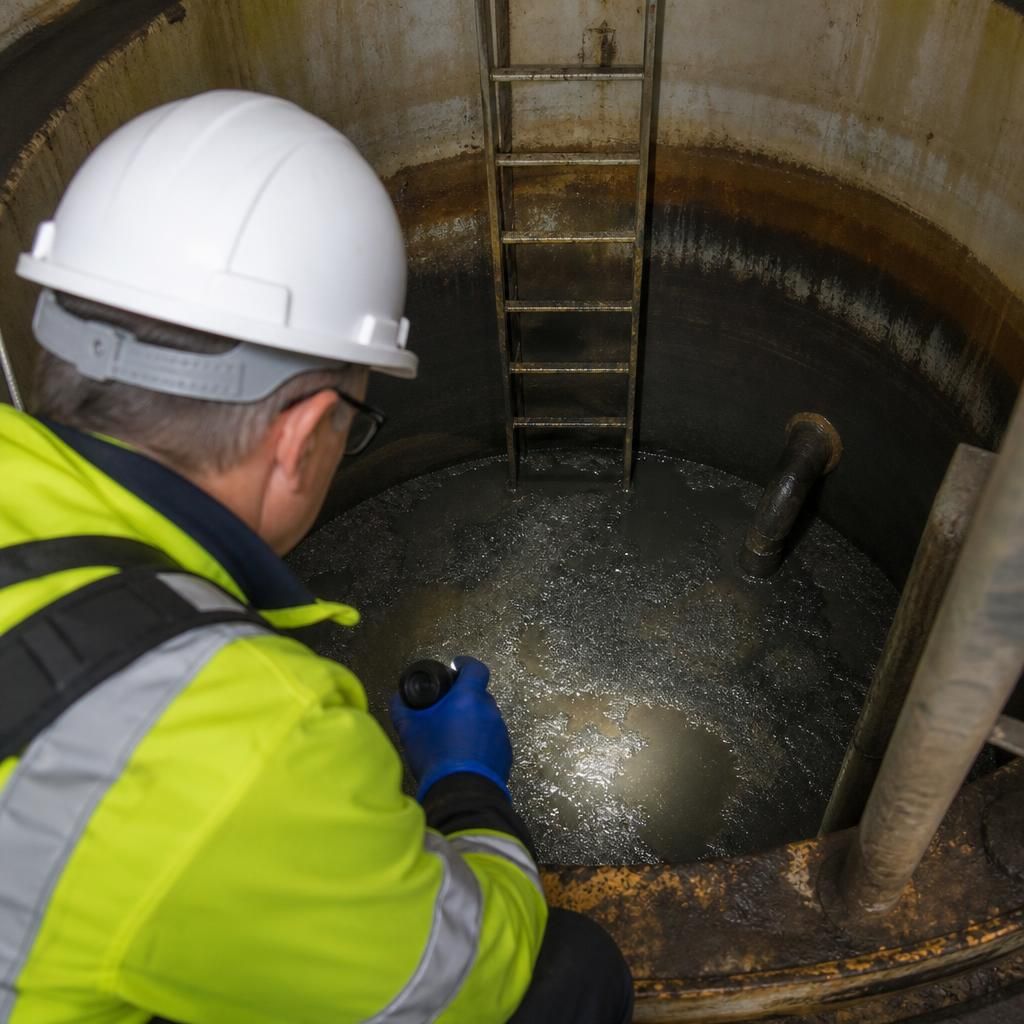
If a waste water tank needs cleaning repeatedly at short intervals, increasing the cleaning frequency may only treat the symptom. Rapid reaccumulation can indicate excessive solids or grease entering the system, ineffective screening or pretreatment, damaged internal components, or a change in the upstream process. The tank should therefore be assessed after cleaning to identify why deposits are returning and whether operational or remedial measures can reduce the load. A revised cleaning schedule should reflect the findings, rather than relying on repeated removal of the same material.
Discuss your waste water tank cleaning schedule
Discuss your waste water tank cleaning schedule with Blue Fish Water Management to review inspection records, operating conditions and any changes that could affect the appropriate cleaning interval.