
When is confined space entry needed for waste water tank cleaning?
Confined space entry is needed for wastewater tank cleaning only when the required cleaning, inspection or removal of deposits cannot be completed safely from outside the tank. If entry is unavoidable, the tank must be treated as a confined space and managed through a suitable risk assessment, safe system of work and emergency rescue arrangements.
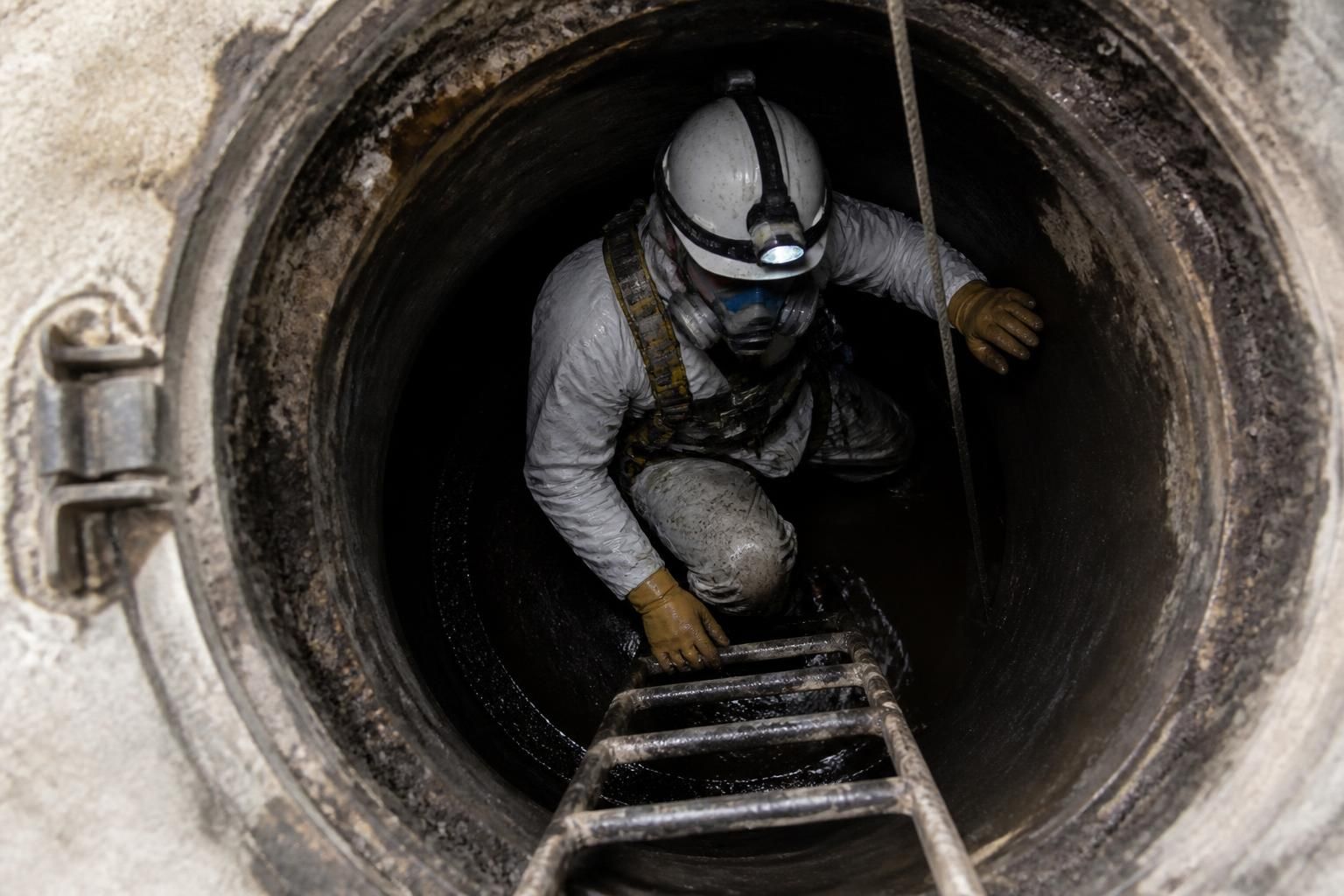
Confined space entry is required for wastewater tank cleaning when the necessary inspection, cleaning or deposit removal cannot be completed safely from outside the tank. The decision should be based on the tank’s physical design, the work involved and the hazards that could arise, rather than on the tank’s size or whether it currently contains wastewater.
A tank is generally treated as a confined space when it is enclosed, has restricted access or escape, and may expose a person to a specified risk. Wastewater tanks commonly meet these conditions because access may be through a narrow manway, internal movement can be restricted, and the atmosphere or contents may present serious hazards. A tank does not need to be permanently occupied, nor does it need to contain liquid at the time of cleaning, to require confined space controls.
Situations where entry may be unavoidable include:
- Heavy sludge, scale, grease or other deposits cannot be removed effectively using external jetting or remotely operated equipment.
- An internal inspection is needed to identify structural damage, corrosion, blocked outlets or defects that cannot be assessed through the access opening.
- Internal fittings, pipework, screens, pumps or access points need to be cleaned, adjusted or repaired by a person inside the tank.
- Deposits have hardened or compacted in areas that external cleaning equipment cannot reach.
- The tank’s design prevents suitable tools or cleaning equipment from reaching all required surfaces from outside.
Entry should not be assumed to be necessary simply because the tank requires cleaning. The first planning step is to determine whether the task can be completed without anybody entering. This may involve draining and flushing the tank, using long-reach tools, external jetting, vacuum equipment, inspection cameras or other remote methods. Opening a hatch, lowering equipment into a tank or inspecting from the opening does not automatically constitute entry, but these activities still require a suitable assessment because hazardous gases, splashes, falls and stored energy may be present.
The main hazards considered before authorising entry are:
- Atmospheric hazards: wastewater decomposition can produce gases such as hydrogen sulphide and methane. Oxygen deficiency, toxic exposure and flammable atmospheres may exist even where no obvious odour is present.
- Engulfment or drowning: liquid may enter unexpectedly from connected pipework, backflow routes or operational systems. Sludge and semi-liquid deposits can also trap a person.
- Biological contamination: wastewater can contain microorganisms and contaminated material capable of causing illness through inhalation, ingestion, contact with broken skin or contact with the eyes.
- Falls and restricted movement: access ladders, slippery surfaces, awkward openings and limited working space can make entry and escape difficult.
- Mechanical and electrical hazards: pumps, mixers, agitators, valves and automated systems may start or move unless properly isolated.
- Cleaning equipment hazards: high-pressure water, suction hoses, lifting equipment and rotating tools can cause injury or create additional risks in a restricted space.
The organisation controlling the work should document why entry is necessary and identify the specific hazards for that tank. A generic confined space procedure is not a substitute for a task-specific assessment. The assessment should consider the tank drawings and connections, contents and previous use, access and egress, nearby operations, weather where relevant, isolation points, cleaning chemicals, equipment and the condition of the structure.
Where entry is justified, the work should be controlled through a written safe system of work. This will normally include a clear method statement, a confined space entry permit where appropriate, named responsibilities, communication arrangements and defined stop-work conditions. Everyone involved should understand the hazards, controls and actions to take if conditions change.
Essential controls commonly include:
- Emptying, draining, flushing and isolating the tank so that wastewater or other materials cannot enter while people are inside.
- Locking off and labelling pumps, mixers, valves, electrical supplies and other energy sources, with the isolation checked before work begins.
- Testing the atmosphere before entry for oxygen level, toxic gases and flammable gases, using suitable, calibrated equipment.
- Continuously monitoring or repeatedly testing the atmosphere where conditions could change during cleaning.
- Providing mechanical or natural ventilation where appropriate, while recognising that ventilation may move contaminants or create a flammable mixture if it is poorly planned.
- Using suitable access equipment, fall protection and personal protective equipment for the tank and the task.
- Maintaining reliable communication between the entrant and the person supervising the work.
- Keeping unauthorised people away from the opening and preventing objects, tools or equipment from falling into the tank.
Rescue arrangements must be prepared before entry, not improvised after an incident. The plan should explain how an incapacitated person will be recovered, who will raise the alarm, what rescue equipment is required and whether the proposed rescuers are competent and equipped for the particular tank. A person should not enter to attempt a rescue without suitable training and equipment, as this can create multiple casualties. Relying solely on the emergency services does not provide a complete on-site rescue plan.
Employers and contractors should also consider the wider UK legal framework. The Confined Spaces Regulations 1997 require work in confined spaces to be avoided where reasonably practicable and, where it cannot be avoided, to be carried out under a safe system with suitable emergency arrangements. Other duties may apply depending on the task, including requirements relating to work equipment, hazardous substances, work at height, lifting operations, personal protective equipment and general workplace risk management. The controlling organisation should establish which duties apply rather than treating confined space entry as an isolated issue.
Specialist cleaning personnel should receive training appropriate to their role, including atmospheric testing, use of respiratory or other protective equipment where required, communication, isolation procedures and rescue arrangements. Training records, equipment checks, gas-test results, permits and completion notes should be retained as part of the maintenance and compliance record.
In practical terms, entry is appropriate only after safer alternatives have been assessed and found unsuitable, and after the remaining risks have been reduced as far as reasonably practicable. If the tank cannot be isolated, the atmosphere cannot be controlled or monitored, access and escape cannot be managed, or a credible rescue plan cannot be provided, cleaning should not proceed until those deficiencies have been resolved. A competent water hygiene or confined space specialist can help define the cleaning method, assess whether entry is genuinely necessary and specify the controls required for the individual wastewater tank.
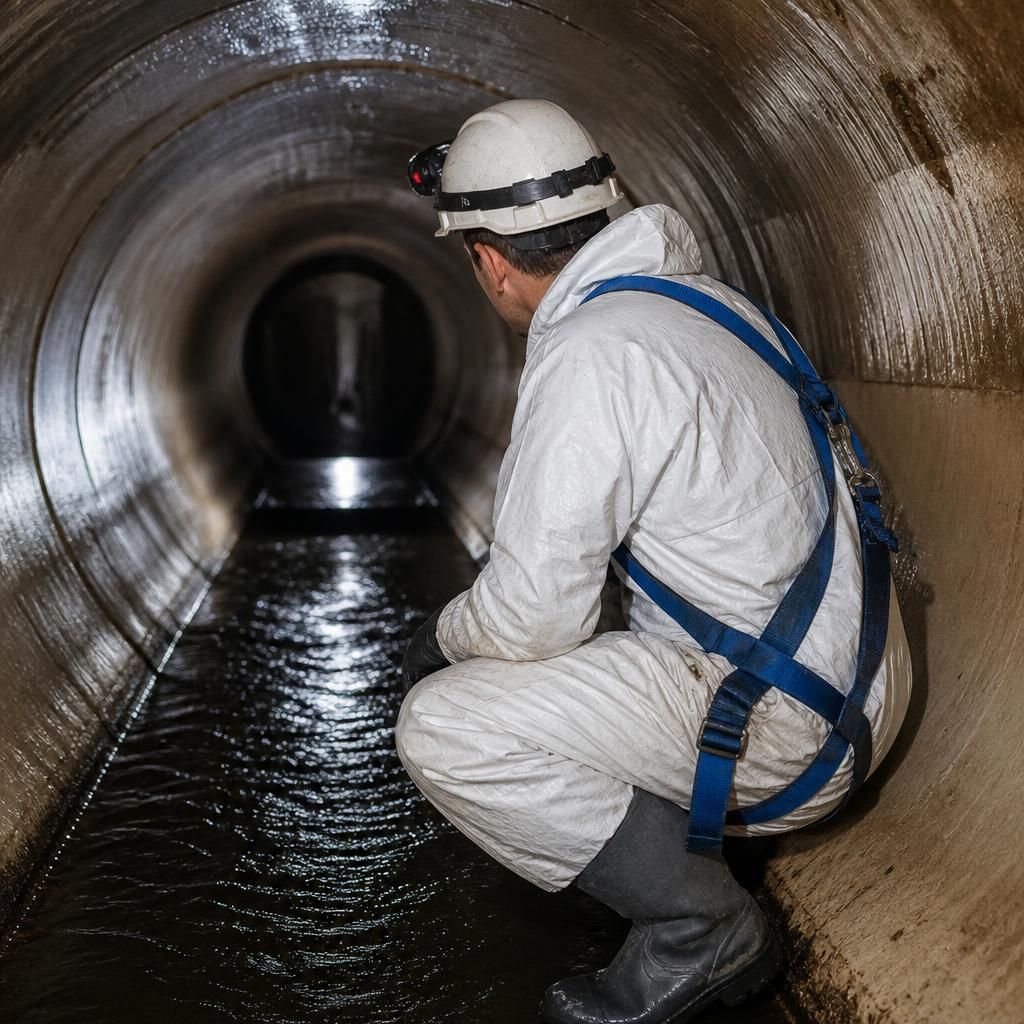
A wastewater tank cleaning specification should state clearly whether the work will be completed remotely or will require personnel to enter the tank. This distinction affects the equipment, competence, supervision, documentation and emergency arrangements that must be planned before the work begins.
Businesses should ask for the proposed cleaning method, the areas that can be reached without entry, the circumstances that could make entry necessary and any assumptions about the tank’s condition. If entry is included, the quotation and method statement should identify it explicitly rather than treating it as routine cleaning. This allows the responsible person to check that the planned approach matches the tank’s design and the work required.
Assess Whether Confined Space Entry Is Needed
Ask a competent water hygiene specialist to review the tank design, proposed cleaning method and site controls before work is commissioned. This can help confirm whether confined space entry is genuinely necessary and what documentation the contractor should provide.