
How should businesses prepare a site for grease tank cleaning?
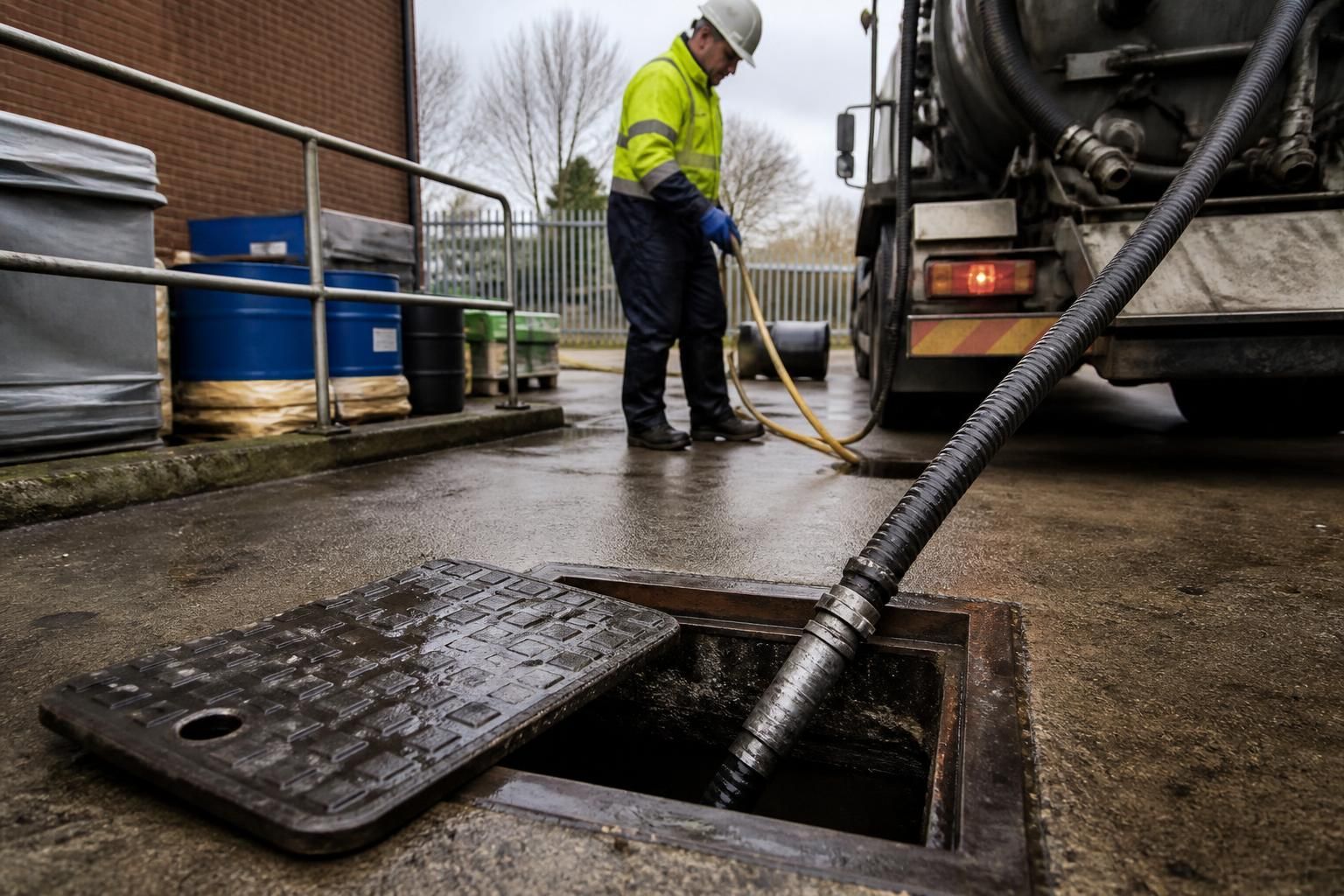
Preparing a site for grease tank cleaning means controlling the health, safety, environmental and operational conditions that could affect the work. Alongside arranging the physical visit, the business should confirm site hazards, establish waste-handling requirements, protect surrounding drainage and ensure the contractor has the information needed to complete the task under suitable controls.
Complete a site-specific risk review
Review the area around the tank and the wider site for hazards that may affect cleaning personnel or equipment. Relevant considerations can include:
- vehicle and pedestrian movements;
- uneven, wet or fragile ground;
- overhead obstructions and nearby electrical equipment;
- poor lighting or restricted visibility;
- confined-space risks, including the possibility of harmful gases or oxygen deficiency;
- nearby chemicals, hot surfaces or other hazardous substances; and
- the potential for spills to enter surface-water or foul drainage.
Provide the contractor with current site rules and any relevant risk assessments. The contractor should then confirm the method statement, risk controls and personal protective equipment required for the task. Where the work involves entering a tank or another confined space, cleaning from outside is generally preferable where practicable; any entry must be subject to a suitable confined-space assessment, competent personnel, atmospheric monitoring, rescue arrangements and an appropriate permit system.
Confirm environmental and waste arrangements
Grease, sludge and wash water must be managed as controlled waste in accordance with the applicable waste requirements. Before cleaning, establish who is responsible for classifying the waste, arranging its transport and retaining the relevant documentation. The contractor should be able to explain where the waste will be taken and provide the appropriate waste transfer information for the material removed.
Protect nearby drains, gullies, soil and watercourses from contaminated liquid. Do not rely on a normal surface drain as a disposal route unless the discharge has been specifically assessed and authorised. Spill kits, drain covers or other containment measures may be needed, depending on the tank arrangement and cleaning method. Any existing contamination or previous spill should be reported before work begins so that it can be addressed safely.
Check the tank and surrounding installation
Gather useful technical details that may not be included in general system records. These can include the tank type and capacity, access-cover condition, inlet and outlet arrangements, connected pipework, previous cleaning issues and the type of grease or solids normally collected. If drawings, photographs or maintenance records exist, make them available for review.
Inspect covers, ladders, platforms and fixed access equipment for damage, instability or signs of corrosion, but do not attempt to open or enter a hazardous tank without suitable controls. Report structural defects, unusual odours, suspected gas accumulation or evidence of overflow to the contractor in advance. This allows the cleaning method and equipment to be assessed before the visit rather than after work has started.
Prepare site controls and documentation
- Confirm the responsible site contact for permits, safety decisions and waste documentation.
- Make relevant emergency procedures available, including arrangements for raising an alarm and dealing with a spill or exposure incident.
- Ensure the contractor can complete any required site induction and understands restricted areas, welfare arrangements and emergency assembly points.
- Check whether the work requires a permit to work, hot-work controls, confined-space documentation or traffic-management measures.
- Keep the work area free from unrelated storage, deliveries and activities that could interfere with the cleaning operation.
After cleaning, the business should check that covers and associated components have been reinstated correctly, that the surrounding area is clean and that no waste or contaminated water remains. Retain the service report, waste documentation, photographs where provided and details of any defects or recommendations. These records help demonstrate that the tank has been maintained and provide a useful starting point for planning the next inspection or cleaning activity.
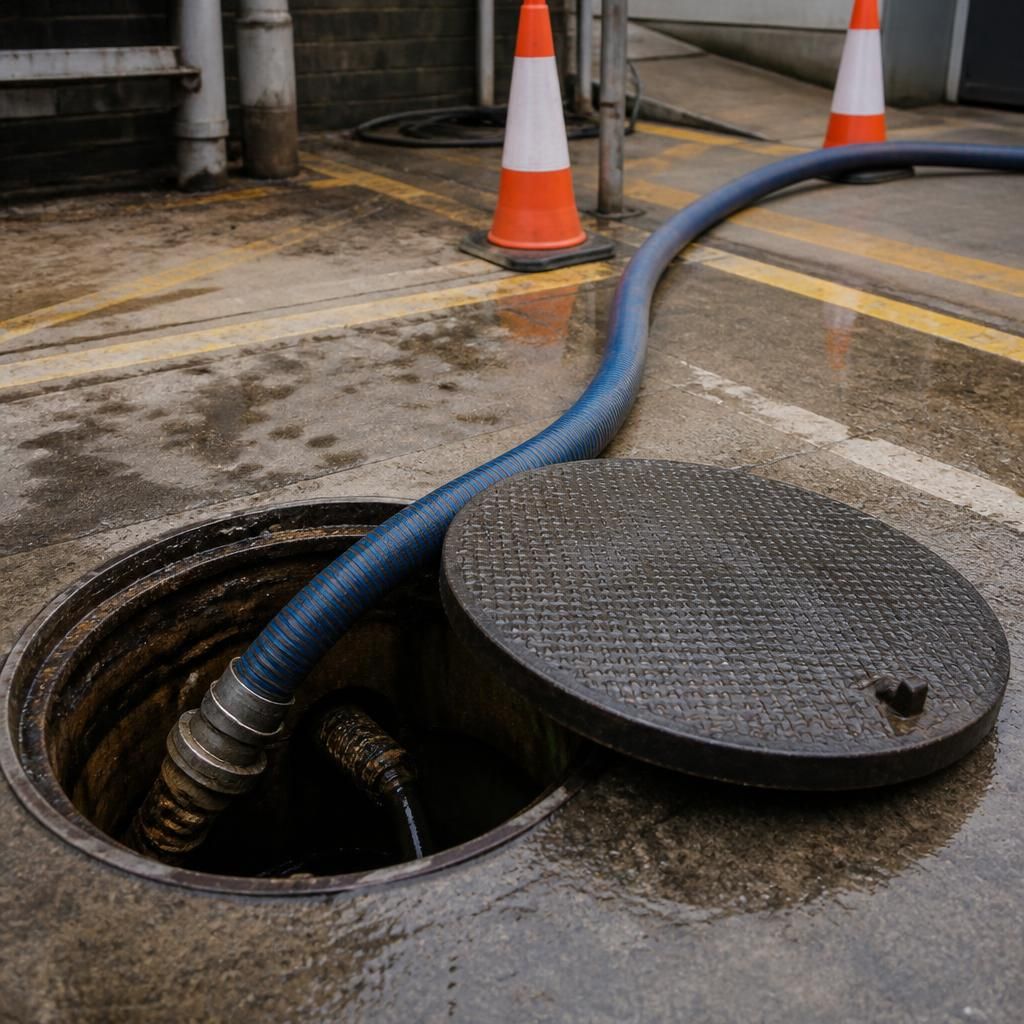
Businesses handling food, ingredients or other hygiene-sensitive materials should separate the cleaning operation from those activities. Before the contractor arrives, remove or securely cover exposed stock, packaging and equipment that could be affected by grease, sludge, aerosols or wash water. Keep unauthorised personnel away from the work area and prevent vehicles, hoses and contaminated equipment from crossing clean operational zones.
Where the tank serves a food preparation or production area, confirm how cleaning will affect connected processes and establish a suitable handover point between the contractor and the responsible site manager. The area should not be returned to normal use until the tank has been closed, the equipment has been removed and any surfaces affected by the work have been checked and cleaned under the site’s established hygiene procedures.
Discuss your grease tank cleaning requirements
Discuss your grease tank cleaning requirements with Blue Fish Water Management Ltd to help establish a suitable cleaning approach for your site and system.