
What should businesses check before choosing a grease tank cleaning contractor?
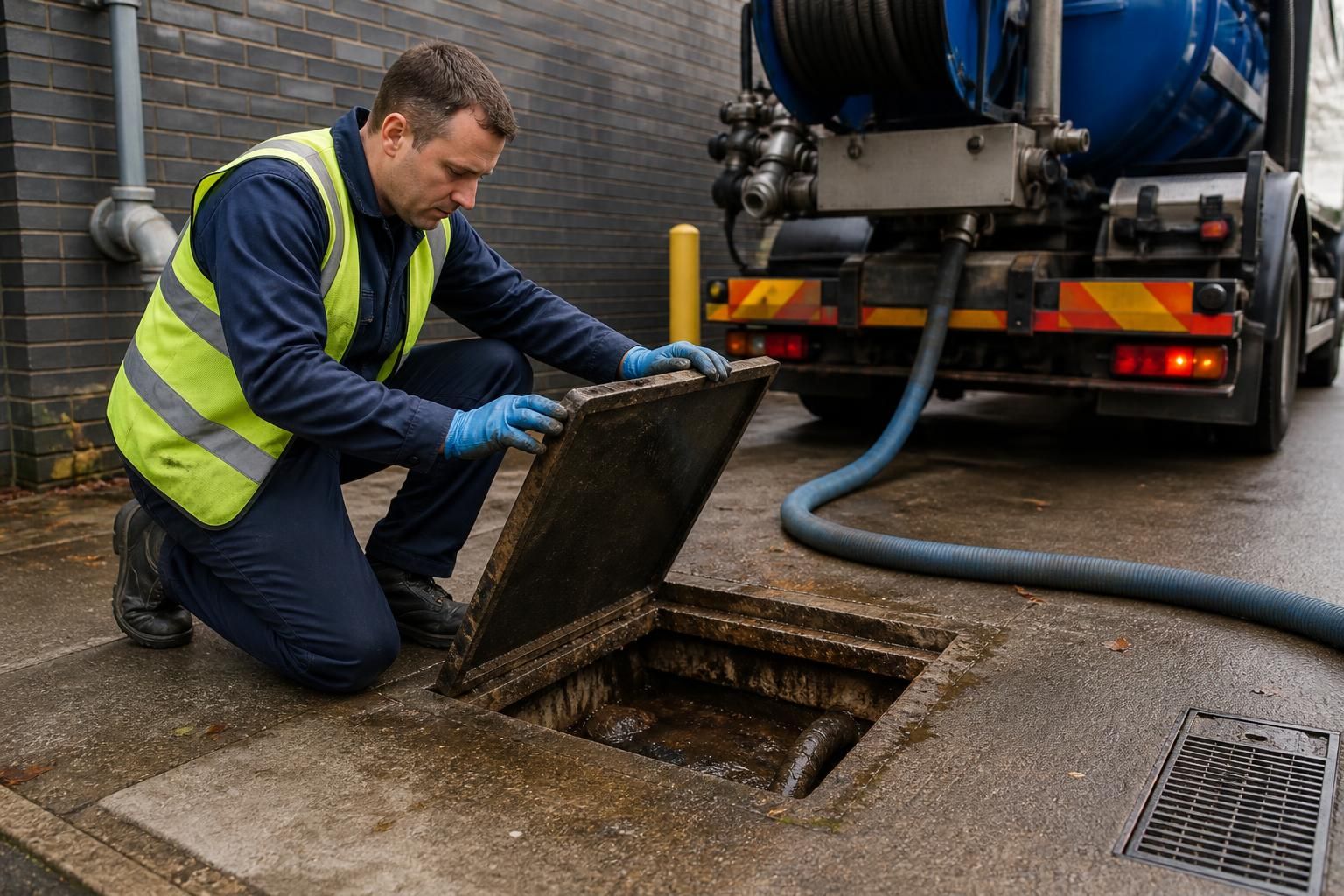
A suitable grease tank cleaning contractor should be able to define the work precisely, demonstrate relevant competence, assess the site before starting and provide evidence that the service will be controlled from planning through to completion. Businesses should compare contractors on the quality and transparency of their proposed service, not on price alone.
Check that the scope of work is specific. “Grease tank cleaning” can describe different levels of service. Ask the contractor to state whether the quotation includes:
- opening and isolating the tank or associated equipment;
- removing accumulated grease, sludge and settled solids;
- cleaning internal surfaces and relevant pipework where accessible;
- reinstating covers, connections and access points;
- identifying defects such as damaged covers, corrosion, blockages or poor access; and
- providing a completion report and details of any follow-up work required.
The scope should also identify exclusions. For example, structural repairs, excavation, drain unblocking or replacement of damaged components may require a separate quotation. Written clarification prevents an apparently low price from becoming higher when essential tasks are treated as extras.
Assess the contractor’s understanding of the installation. Before work is arranged, the contractor should ask for useful information about the tank, its location, capacity, access arrangements, connected drainage and the type of premises involved. They should be able to explain how their approach would be adapted to a restaurant, food production site, housing development or other commercial setting. A contractor that proposes the same process without asking about the installation may not have assessed the practical risks properly.
Verify competence for the conditions on site. Grease tanks can involve biological contamination, unpleasant atmospheres, heavy covers, restricted access and interaction with vehicles, staff or members of the public. Ask how the contractor selects and supervises its operatives, what training is relevant to the planned task, and whether specialist work such as entry into a confined space is avoided or separately controlled. No one should enter a tank simply because it needs cleaning. If entry could be necessary, the contractor should explain the specific controls, equipment and rescue arrangements before the work is accepted.
Check how the service will fit into site operations. The contractor should identify requirements for vehicle positioning, water or power supplies, hose routes, access to covers, temporary isolation of connected equipment and protection of nearby surfaces. On a busy commercial site, ask how pedestrians, vehicles, food-handling areas and other contractors will be kept separate from the work. The plan should also address what happens if the tank cannot be safely opened, if access is obstructed or if the installation differs from the information supplied.
Review the proposed standard of cleaning. Ask how the contractor decides that the tank is clean enough to return to service. A useful explanation will refer to the removal of deposits from the relevant surfaces and the inspection of accessible areas, rather than relying on a vague statement that the tank will be “emptied”. The contractor should also explain whether connected inlet and outlet points will be checked and how remaining restrictions or persistent build-up will be reported.
Examine the quotation and contract terms. A sound quotation should set out the agreed frequency or one-off nature of the work, the estimated duration where relevant, charges for additional tasks, cancellation arrangements, site requirements and any assumptions about access. It should identify who is responsible for isolating plant, providing keys or authorising access. Businesses should also check whether subcontractors may be used and, if so, who remains responsible for coordinating the work and supplying the final documentation.
Ask what information will be supplied after the visit. The completion documentation should be sufficiently detailed for a facilities manager or other duty holder to understand what was done. It should normally identify the site and tank, date of service, operative or company details, work completed, relevant observations and any restrictions affecting the inspection. Photographs can be useful where they show the condition of the tank or a defect, but they do not replace a written account. Ask how records are issued, corrected if an error is found and retained for future comparison.
Check that findings will be prioritised. A contractor should distinguish between an observation that can be monitored, a maintenance recommendation and a condition requiring prompt attention. Examples may include a damaged or insecure cover, evidence of leakage, blocked connections, deterioration of access equipment or recurring excessive grease accumulation. The report should explain the practical significance of each finding without presenting unnecessary remedial work as an automatic requirement.
Consider whether the contractor can support an appropriate maintenance plan. Cleaning frequency should reflect the tank’s size, loading, usage, design and history rather than an arbitrary interval. Ask whether the contractor will use information from previous visits to identify recurring problems, changes in grease accumulation or signs that upstream controls need attention. A reliable service relationship should help the business understand why a particular schedule is proposed and when it should be reviewed.
Use evidence when comparing contractors. References from comparable commercial premises, sample reports and clear answers to technical questions are more useful than broad claims of expertise. Compare quotations on the same scope and ask for clarification where wording is vague. The preferred contractor should be able to explain the work in terms that the site manager, responsible person and procurement team can all understand, while leaving a clear audit trail from the initial assessment to the completed service.
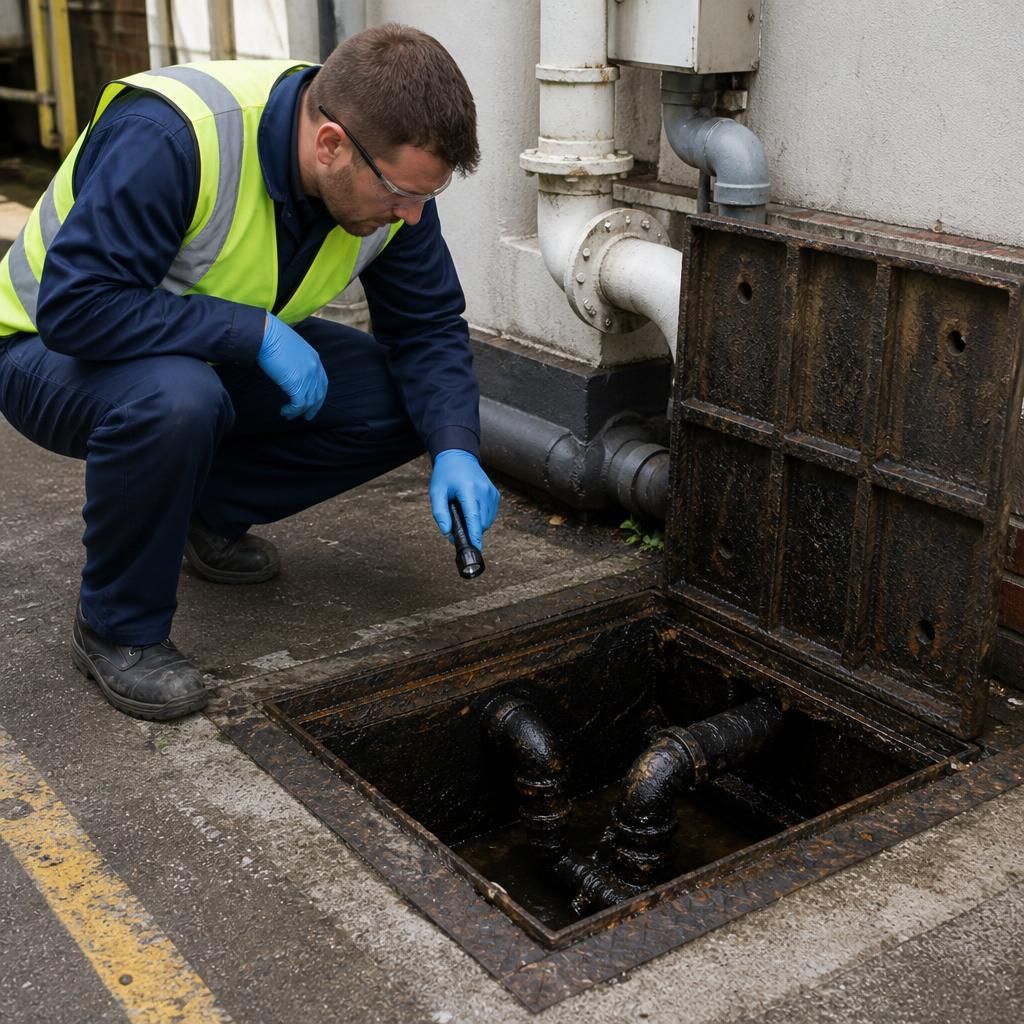
Waste traceability is a separate check from the cleaning method. Before appointing a contractor, ask how grease, sludge and contaminated washings will be classified, transported and accepted for treatment or disposal. The contractor should be able to explain which party holds responsibility for the waste at each stage and identify the authorised route it will take.
Businesses should also confirm what documentation will be provided after collection. Depending on the waste and its classification, this may include waste transfer documentation or other records showing the description and quantity of waste, collection details and the receiving facility. Retain these documents with the cleaning report so the site can demonstrate that waste was managed through a controlled and traceable process.
- Ask for the contractor’s waste-carrier details where applicable.
- Check whether disposal or treatment is included in the quotation.
- Clarify how incorrectly described, contaminated or unexpectedly large quantities of waste will be handled.
- Ensure the final paperwork identifies any difference between the planned and actual waste collection.
Discuss your grease tank cleaning requirements
Discuss your grease tank cleaning requirements with Blue Fish Water Management Ltd to clarify the work, site conditions and documentation your business needs. This can help you establish a suitable scope before requesting or comparing quotations.