
What does commercial grease tank cleaning involve?
Commercial grease tank cleaning involves safely accessing the tank, removing accumulated fats, oils and grease, and cleaning the tank, inlet and outlet connections. The contractor then checks the installation, removes the waste through an appropriate disposal route and documents the work completed.
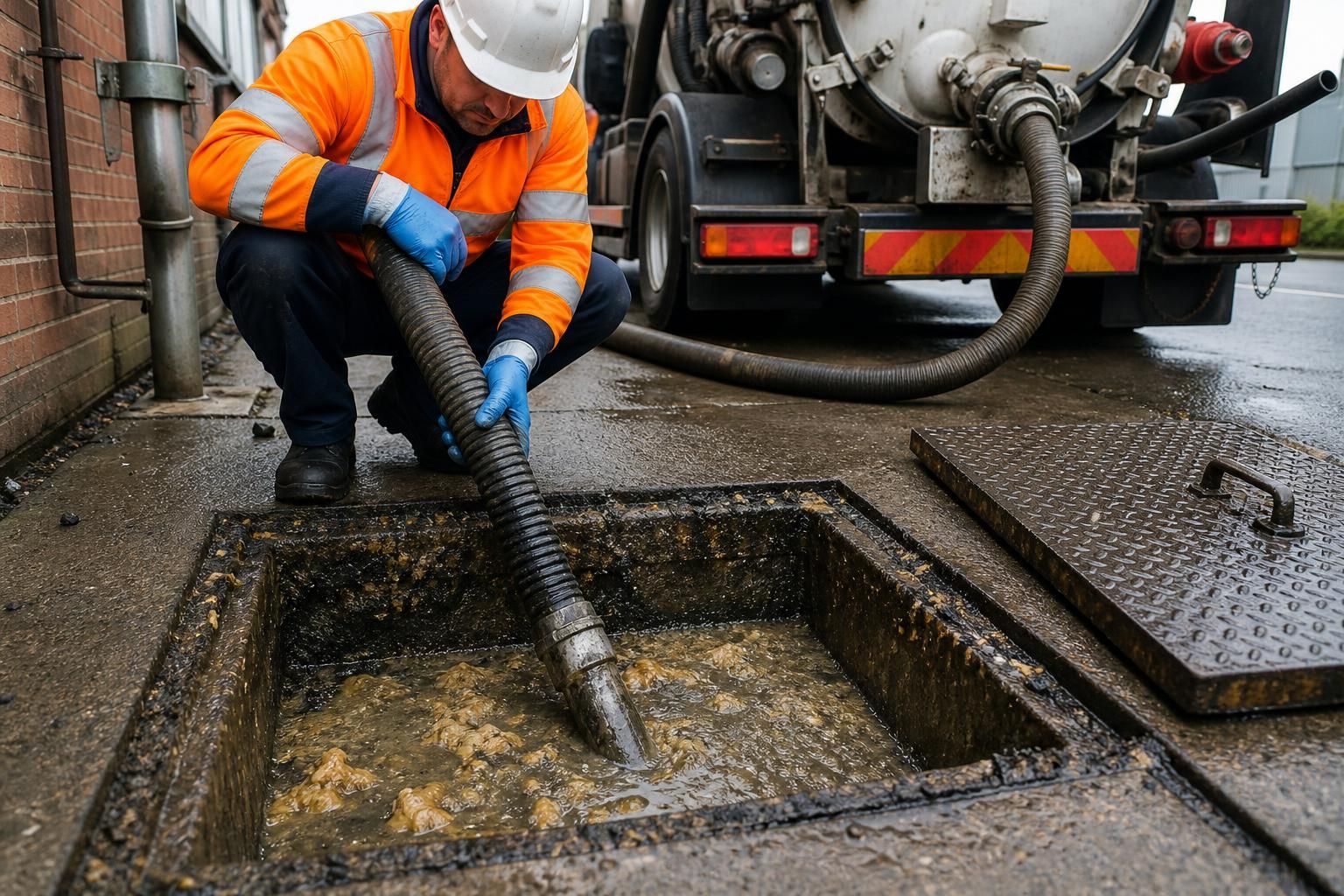
Commercial grease tank cleaning is a planned maintenance process that combines safe isolation, removal of settled and floating deposits, internal washing, condition checks and controlled waste handling. The exact method depends on the tank’s design, the volume and type of grease present, access arrangements and the requirements of the site’s drainage and waste procedures.
Before work starts, the contractor should review the tank location, access route, surrounding traffic, nearby operations and any hazards associated with the installation. This planning stage may identify the need for traffic management, barriers, additional ventilation, electrical controls or a confined-space assessment. A suitable method statement and risk assessment should explain how the work will be carried out and what precautions apply.
The installation is normally taken out of service for the duration of the cleaning operation. In a commercial kitchen or food-production environment, this may require coordination with site staff so that discharges are controlled and the tank is not refilled while the work is under way. Isolation arrangements should be confirmed before covers are opened, particularly where pumps, automated dosing equipment or other mechanical components are connected to the system.
Grease tanks commonly contain separate layers of floating fats and oils, liquid effluent and heavier solids. Cleaning therefore requires more than removing the visible surface material. The contractor may use vacuum equipment, mechanical removal tools, low-pressure washing or other suitable techniques to release deposits from the internal surfaces. The chosen approach should remove contamination without damaging the tank, seals, pipework or associated equipment.
Tank access must be treated as a significant safety issue. Opening a cover can expose workers to slippery surfaces, harmful gases, biological contamination and restricted access. Personnel should not enter a tank unless the work has been specifically assessed and the necessary confined-space controls, atmospheric monitoring, rescue arrangements and competent supervision are in place. In many cases, cleaning can be completed from outside the tank, avoiding entry altogether.
During the service, attention should be given to areas where deposits can restrict flow or reduce the effective capacity of the installation, including:
- the internal walls, base and baffles;
- inlet and outlet zones where material can accumulate;
- access covers, seals and fittings;
- submersible pumps, alarms or level controls, where installed; and
- ventilation points and connection points that may become obstructed.
Once the tank has been cleaned, the contractor should assess whether there are visible defects such as cracking, corrosion, damaged covers, failed seals, displaced components or evidence of leakage. Cleaning does not by itself repair these issues. Any defect that could affect containment, flow, safety or future servicing should be recorded and referred to the responsible site representative for investigation.
The tank is then returned to service in accordance with the manufacturer’s or site procedure. This can include replacing covers securely, checking that connections are correctly positioned, confirming that pumps and alarms operate as intended and ensuring that no tools, hoses or cleaning materials remain in the system. If the installation was isolated, the reconnection and restart should be controlled rather than carried out informally.
Waste removed from a grease tank must be managed through an appropriate authorised route. The contractor and site operator should establish what waste has been produced, how it will be contained and transported, and which records are required. Waste documentation may include a description of the material, collection details and confirmation of its transfer to the relevant treatment or disposal facility.
A useful service record should identify the tank or asset, the date of the work, the condition found, the cleaning method used, any defects noted and the waste documentation associated with the visit. Photographs can provide additional evidence where they are suitable and safe to obtain. These records help the business demonstrate planned maintenance, track recurring problems and decide whether changes to grease control or tank capacity are needed.
Cleaning should also be considered alongside day-to-day grease management. Good kitchen practices include keeping food solids out of drains, collecting oils separately where appropriate, maintaining strainers and avoiding the use of cleaning chemicals that could interfere with downstream treatment. These measures do not replace tank cleaning, but they can influence how quickly deposits build up and whether the system continues to operate effectively.
In summary, a properly managed commercial grease tank cleaning service covers preparation, safe isolation, controlled removal of deposits, appropriate internal treatment, examination of the installation, safe reinstatement and traceable waste and service records. The result should be a clearly documented maintenance intervention rather than simply an empty tank.
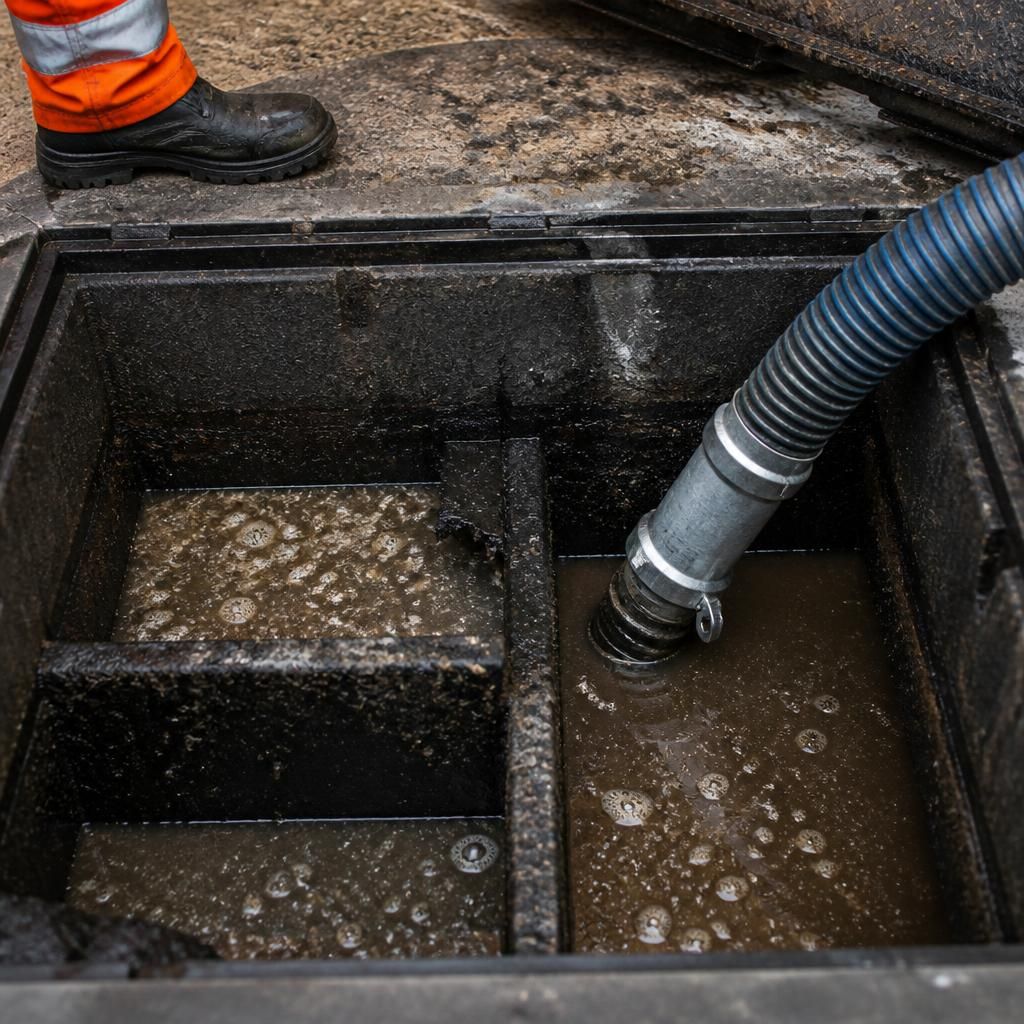
Part of commercial grease tank cleaning involves identifying whether accumulated material has begun to affect the system’s operation. Evidence such as restricted flow, repeated high-level alarms, persistent odours or grease returning into connected drainage can indicate that deposits are affecting capacity or components. These symptoms should be investigated during the service rather than treated as a reason to remove waste alone.
The findings can help determine whether the installation needs a revised maintenance interval, changes to grease-control practices or further technical investigation. A cleaning visit should therefore provide an operational assessment of the tank as well as the physical removal of accumulated material.
Discuss your commercial grease tank cleaning requirements
Contact Blue Fish Water Management Ltd to discuss your commercial grease tank cleaning requirements and the information needed to plan suitable maintenance for your site.