
How often should commercial grease tanks be cleaned?
Commercial grease tanks should be cleaned at a frequency determined by their risk assessment, capacity, usage and the amount of grease and solids they receive. They should also be emptied before accumulated waste affects performance, causes odours or creates a risk of blockage or non-compliance, with the schedule reviewed when operating conditions change.
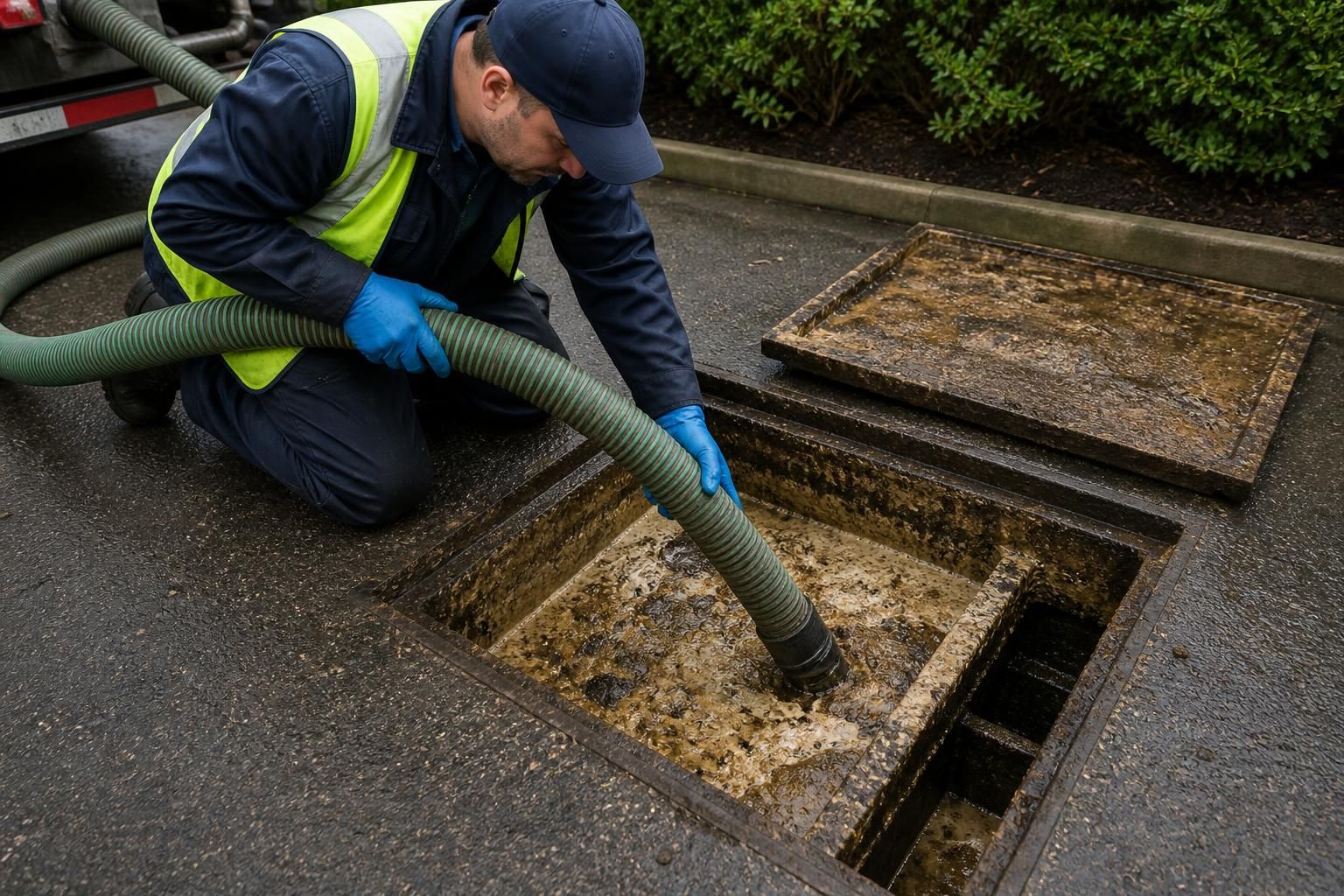
For commercial grease separators designed and operated in accordance with BS EN 1825, the usual baseline is to empty and clean the unit at least monthly. The standard also identifies cleaning every two weeks as preferable in circumstances where the quantity of grease and solids makes a monthly interval unsuitable. This is a reference point rather than a universal rule: the correct programme depends on the type of installation, its loading and the conditions attached to the site.
A grease tank should be cleaned before the accumulated grease, sludge or floating solids reduce its effective capacity. As the tank fills, there is less room to retain fats, oils and grease, increasing the possibility of carry-through into downstream drainage. A contractor or competent person should establish the tank’s storage capacity and monitor the levels against the operating limits specified for that installation.
The following factors commonly justify a shorter interval:
- High volumes of meals, food preparation or wash-down water passing through the system.
- Regular use of fryers, grills and other equipment that produces substantial grease.
- A small tank serving a relatively busy kitchen.
- Evidence that grease or solids are accumulating quickly between planned visits.
- Recurring odours, slow drainage, surcharging or deposits in connected pipework.
- A history of blockages, overflow or non-compliance with a sewerage undertaker’s requirements.
A longer interval may be appropriate for a lightly loaded installation, but this should be supported by inspection records rather than assumed from the size or apparent cleanliness of the premises. Even a low-use tank can receive concentrated grease and food solids, particularly where kitchen practices change or waste is washed into sinks.
Cleaning frequency should be reviewed whenever there is a material change to the site. Examples include extending a kitchen, increasing production, changing the menu, adding cooking equipment, altering drainage, changing the number of meals served or bringing another appliance into the tank’s catchment. Seasonal operation and periods of unusually high occupancy should also be reflected in the maintenance plan. A schedule that was suitable for the original use may no longer control the system adequately after such changes.
Between full cleans, responsible staff should carry out the checks specified by the site’s management procedure. These may include looking for unusual odours, observing drainage performance and checking for visible signs of overflow or leakage. Inspection does not replace emptying and cleaning: grease can form layers that are not obvious from the surface, while settled solids can occupy substantial capacity at the base of the tank.
Each service should normally include removal of the accumulated contents, cleaning of accessible internal surfaces and inspection for defects such as damaged covers, seals, inlets, outlets or baffles. The cleaning method must be suitable for the tank and must not simply push grease further into the drainage system. Waste should be handled and transferred by an appropriately authorised waste operator, with disposal documentation retained for the site’s compliance records.
A practical cleaning programme should record:
- the date of each inspection and clean;
- the tank or separator serviced;
- observed grease and sludge levels or other condition findings;
- any defects, blockages or drainage problems;
- the waste removed and the relevant transfer documentation; and
- the next planned service date and the reason for any change to the interval.
If a tank repeatedly reaches capacity before its planned service, the solution may be a shorter cleaning interval, improved grease control at source, changes to kitchen procedures or a review of the tank’s suitability and capacity. Increasing the interval simply because the tank has not yet overflowed can leave little margin for unexpected loading and may allow downstream problems to develop.
For a new or uncertain installation, a specialist grease tank cleaning contractor can review the design, usage and available maintenance history, then recommend a documented schedule. The programme should remain under review as operating conditions and inspection findings develop, rather than being treated as a fixed date that applies indefinitely.
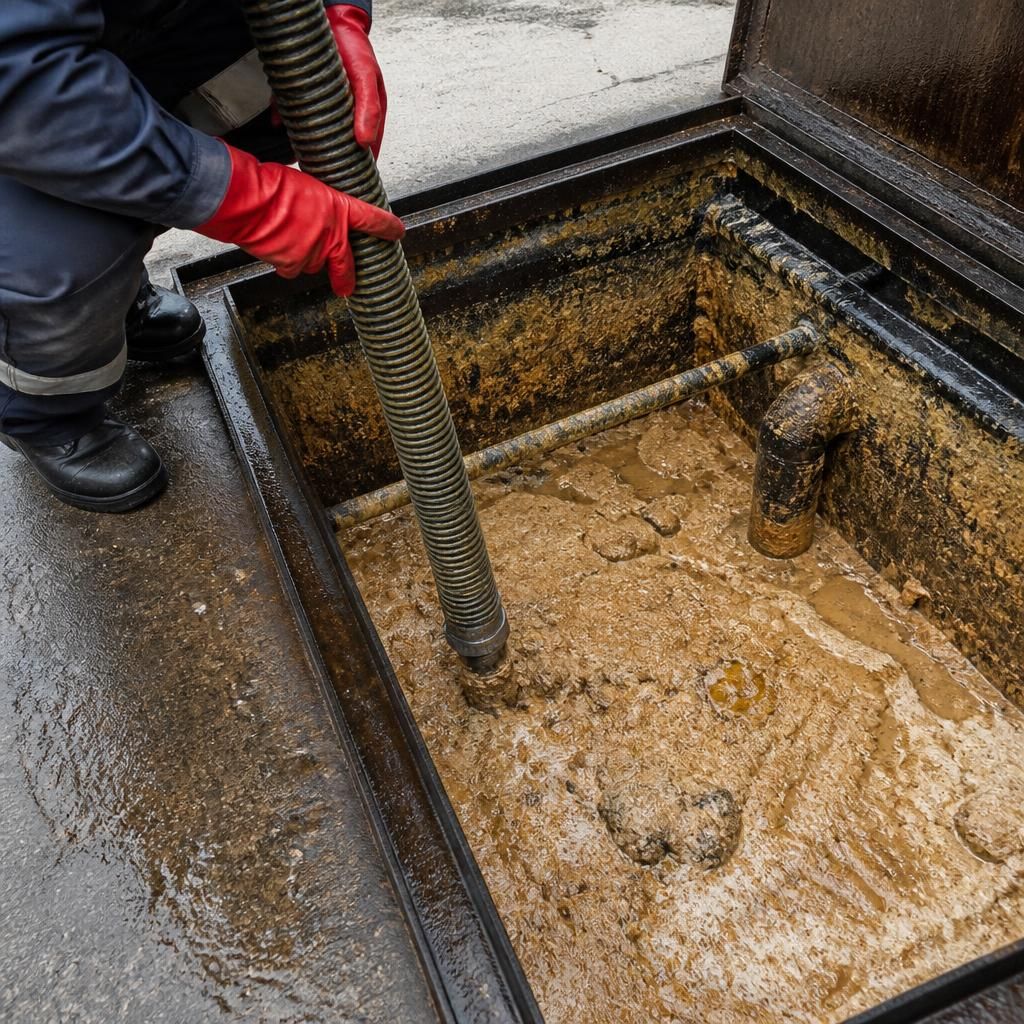
A scheduled cleaning date should be treated as a control limit, not a guarantee that the tank can safely remain in service until then. At each visit, the contractor should compare the observed grease and settled solids with the tank’s available storage and consider whether the current interval remains suitable for the actual loading.
If the tank is approaching its design limit before the next planned service, it should be cleaned early and the programme revised. Where inspections consistently show low accumulation, any extension should be evidence-based and recorded, taking account of the tank design, site procedures and relevant drainage requirements.
Discuss Your Commercial Grease Tank Cleaning Schedule
Need to confirm whether your current cleaning interval remains suitable? Discuss your commercial grease tank cleaning schedule with Blue Fish Water Management Ltd for practical advice based on your installation and operating conditions.