
What indicates that a grease tank needs cleaning?
A grease tank needs cleaning when it develops persistent foul odours, slow drainage, recurring blockages, visible grease build-up or an unusually high level of accumulated waste. These signs indicate that the tank’s capacity and performance may be compromised, so arrange an inspection and cleaning before the problem affects connected drainage or business operations.
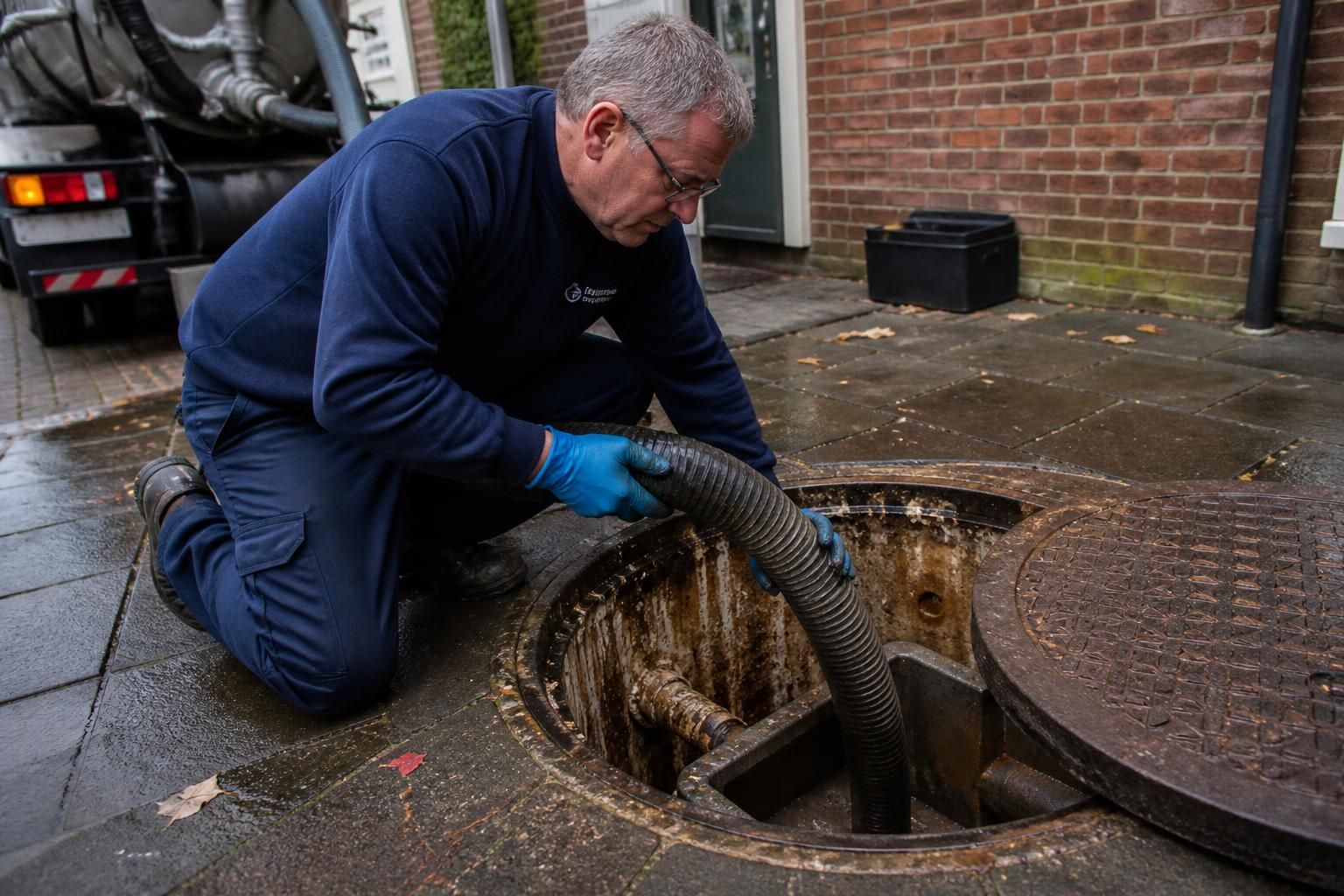
Beyond obvious drainage or odour problems, a grease tank needs cleaning when inspections show that its usable capacity is being reduced, grease is no longer separating effectively, or the tank is becoming difficult to operate safely. Warning signs can include a rapidly rising sludge layer, repeated high-level alarms, more frequent pump-outs, grease entering the outlet side, and defects around the tank or access points.
Inspection findings that indicate cleaning is due
A visual inspection can reveal build-up that is not yet causing an obvious operational failure. This may include a thick layer of grease or solids, floating material close to the outlet, settled sludge occupying a substantial part of the tank, or deposits on internal components. Where the tank has inspection ports, level indicators or monitoring equipment, these should be checked in accordance with the system manufacturer’s instructions and the site’s safe working procedures.
The condition of the tank contents is more informative than the calendar alone. A tank serving a busy food preparation area may accumulate waste faster than one serving a smaller or less intensive operation. The rate of accumulation should therefore be compared with previous inspection records and the tank’s intended capacity. If the available space is reducing significantly between scheduled visits, the cleaning frequency may no longer be appropriate.
Changes in pumping and monitoring patterns
Operational data can provide an early indication that cleaning is required. Relevant changes include:
- high-level or overflow alarms being triggered more often;
- the pump running for longer or more frequently than usual;
- the tank reaching its service level earlier than expected;
- an increase in emergency call-outs or unplanned emptying; and
- levels failing to fall as expected after normal discharge or pumping.
These changes do not always mean that the tank simply needs emptying. A faulty float switch, blocked pipe, failed pump or restricted outlet can produce similar symptoms. The tank and associated equipment should be assessed together before the cause is identified.
Grease passing beyond the separation point
A grease tank is intended to retain fats, oils and grease before wastewater continues through the outlet. If inspection shows grease on the outlet side, in the discharge pipe or in downstream components, the tank may be overloaded, poorly maintained or affected by a mechanical fault. This is a significant indicator because material that has passed through the tank can accumulate elsewhere and may be harder to remove.
Grease reaching the outlet can also result from unsuitable operating practices, such as disposing of concentrated cooking oil through sinks, using excessive detergent or allowing food solids to enter the drainage system. Cleaning addresses the accumulated material, but the underlying source should also be reviewed to prevent the same condition returning.
Physical condition around the tank
Cleaning should be considered alongside an inspection of the tank’s physical condition. Issues requiring attention may include a damaged or insecure cover, cracked access components, corrosion, water ingress, displaced seals, pooling around the access area or evidence that the tank is not ventilating correctly. These conditions can affect safe access and may indicate that the tank requires remedial work as well as cleaning.
Any inspection involving a chamber, confined space or contaminated contents must be planned using suitable safety controls. A tank should not be entered simply to confirm whether it needs cleaning. In many cases, an external inspection and controlled removal of the contents are sufficient to establish its condition.
Records and risk assessment
Maintenance records are useful for identifying less visible warning signs. Review the dates and findings of previous inspections, the volume or level removed, alarm history, reported drainage issues and any changes to kitchen use or production. A sudden change in the amount of grease collected may indicate altered usage, a measurement problem or a failure in separation, rather than a normal variation.
The cleaning plan should form part of the site’s water hygiene and drainage management arrangements. It should reflect the tank design, the type and volume of waste entering it, the consequences of an overflow, and the findings of competent inspections. Cleaning solely because a fixed date has arrived may be inefficient, while waiting for a failure creates avoidable operational and environmental risks.
When to arrange professional advice
Arrange an assessment when monitoring information conflicts with the tank’s apparent condition, when the tank repeatedly reaches its service level, or when grease is found beyond the expected separation area. An inspection can establish whether the correct action is routine cleaning, more frequent servicing, pipework clearance, pump repair, replacement of monitoring equipment or remedial work to the tank itself.
Businesses should retain inspection and maintenance records and use them to revise the planned cleaning schedule. Acting on measured changes in tank condition, rather than relying only on visible failure, provides a more reliable basis for maintaining capacity and preventing avoidable disruption.
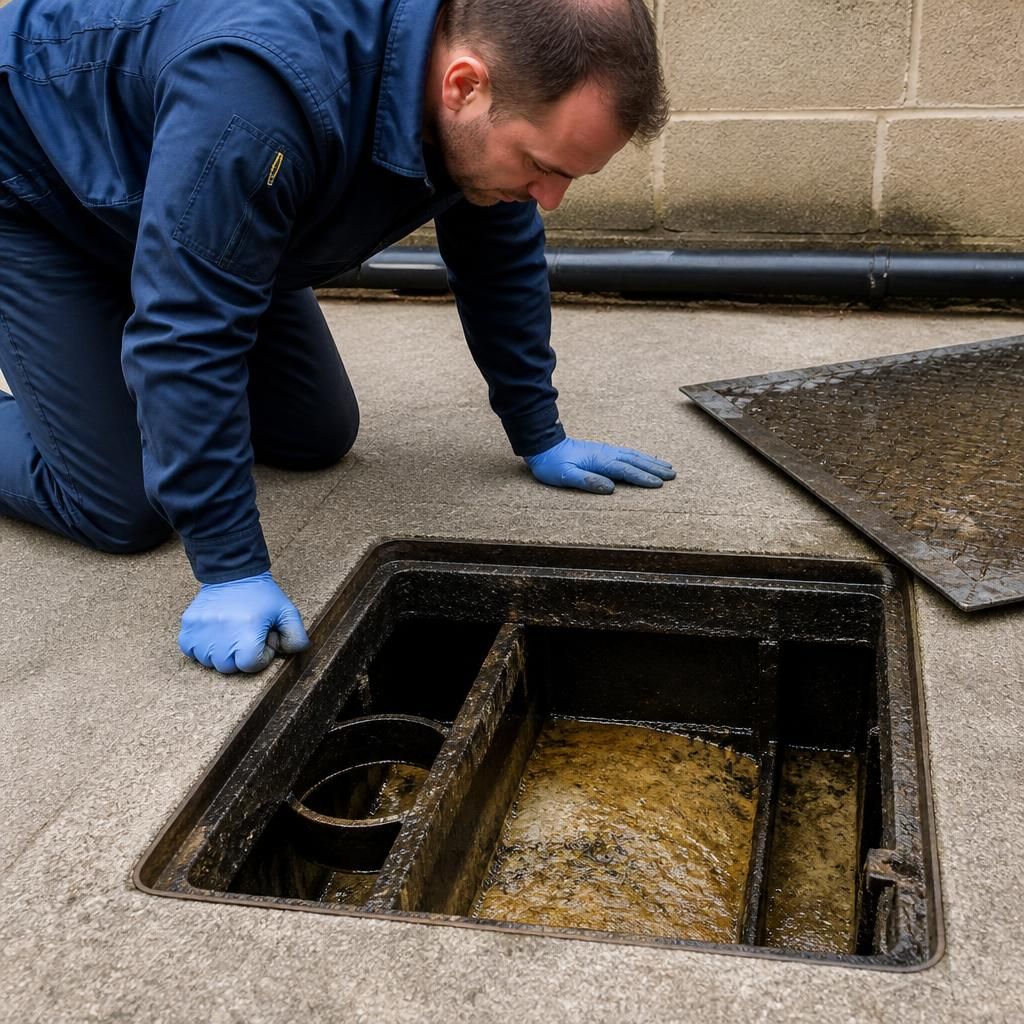
An overflow or loss of containment is a clear indication that a grease tank needs attention, even if its level appears to have returned to normal. When a tank overflows, grease and solids may have entered the surrounding area or connected drainage, while residue can remain inside the tank and pipework.
After an overflow, the tank should be assessed for residual waste, damaged covers or seals, restricted outlets and signs of leakage around the access point. Cleaning may need to be accompanied by controlled removal of contaminated material and inspection of the connected drainage. The incident should also be recorded, including what was found and removed, so future maintenance decisions are based on the tank’s actual condition rather than the calendar alone.
Arrange a grease tank cleaning assessment
If your grease tank is showing signs of reduced capacity, recurring alarms or grease beyond the separation point, arrange a professional cleaning assessment to establish the appropriate next step.