
How can grease tank cleaning be planned to minimise disruption to business operations?
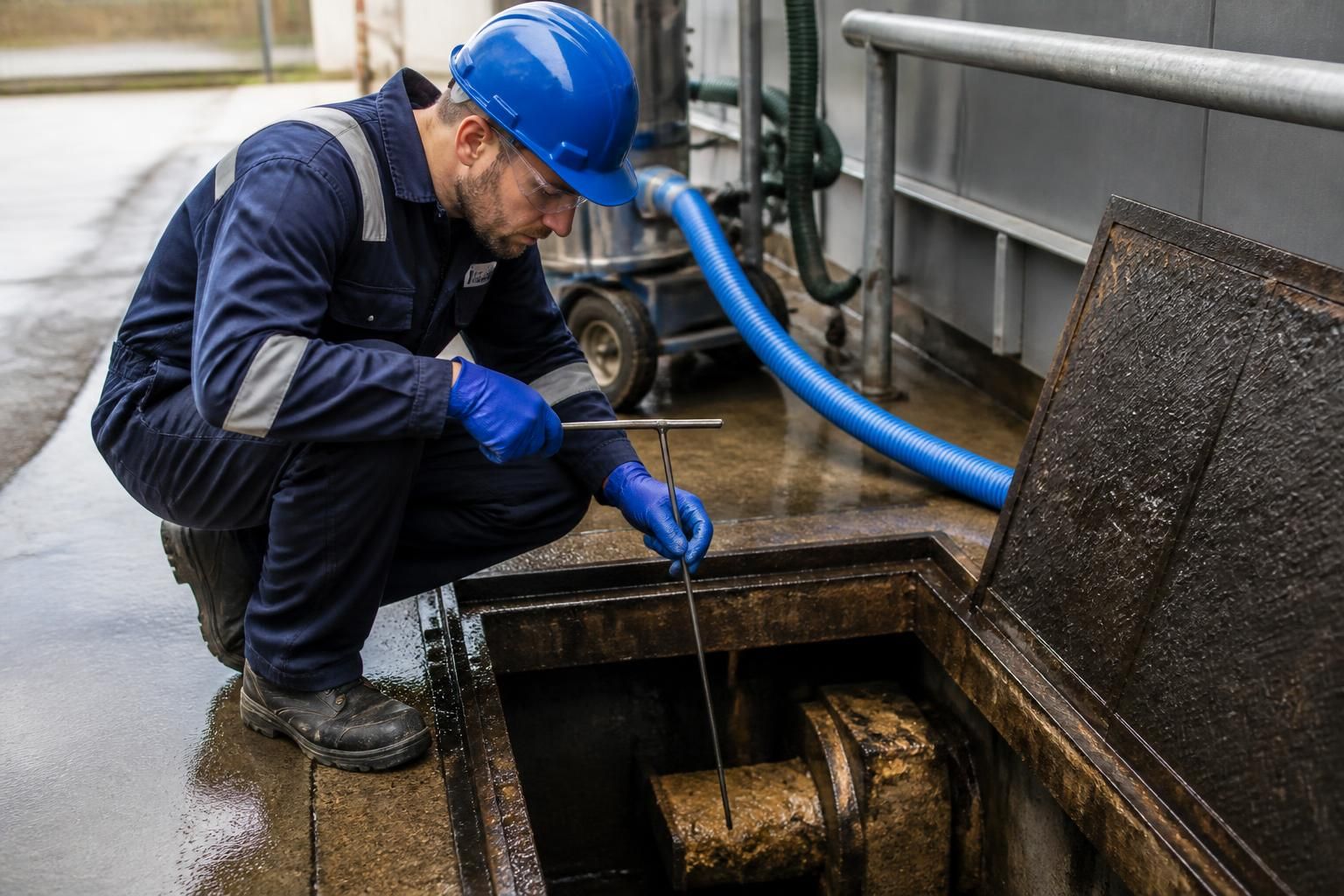
Grease tank cleaning minimises business disruption when it is managed as a planned maintenance activity, with operational dependencies identified before the work is scheduled. The aim is to understand which processes rely on the tank, define the controls needed to protect people and the environment, and organise the work so that cleaning, inspection and reinstatement follow a clear sequence.
Start with an operational review. Before arranging a cleaning visit, the responsible person should record how the tank supports the site’s drainage or production activities. This includes identifying connected kitchens, food preparation areas, trade processes, pumping equipment, discharge points and any activities that could be affected if the tank is temporarily unavailable. The review should also consider deliveries, vehicle movements, customer areas, neighbouring occupiers and other contractors working on site.
This information allows the cleaning requirement to be considered alongside the wider maintenance programme. For example, cleaning may be coordinated with planned drainage maintenance, pump servicing or a period when a particular process is already suspended. Combining related work can reduce repeated interruptions, provided each task has compatible safety and environmental controls.
Confirm the tank’s condition and cleaning requirements. A suitable plan should be based on the tank’s construction, contents, condition and previous maintenance history. The level and type of accumulated grease, the presence of settled solids, the condition of covers and connected pipework, and any signs of blockage or damage can all affect the work sequence. A tank that has been neglected or contains particularly heavy deposits may require more preparation than one maintained through a regular programme.
The cleaning contractor should establish what information is available before attending, including previous service records, site plans, photographs and details of known hazards. Where the condition is uncertain, a site assessment can help identify restrictions that may otherwise cause delays, such as difficult equipment positioning, confined-space risks, unstable surfaces or restricted movement around the tank.
Build a documented work plan. The plan should set out:
- the scope of cleaning and any inspection to be carried out;
- the equipment and personnel required;
- the sequence for taking affected equipment or processes out of use and returning them to service;
- site-specific hazards, control measures and required permits;
- responsibilities for the client, cleaning contractor and other affected parties;
- arrangements for dealing with unexpected conditions, such as excessive accumulation, damaged components or a blockage; and
- the records and completion evidence required after the work.
A written plan reduces uncertainty because the site team knows what will happen before the tank is opened or taken out of service. It also gives the responsible person a basis for checking that the proposed method is proportionate to the tank’s condition rather than relying on an assumed routine.
Coordinate the work with the people who control the site. The person arranging the cleaning should involve facilities, engineering, operations, health and safety, environmental management and relevant contractors as appropriate. Staff who use connected equipment need to understand any temporary restrictions and the checks required before normal operation resumes. If the premises are shared, landlords, tenants or managing agents may also need to agree responsibilities and access arrangements.
Communication should cover the planned work sequence, affected areas, site rules, emergency contacts and the point at which the tank is confirmed fit for service. Notices, work permits and contractor briefings should be prepared in accordance with the site’s existing procedures. This is particularly important where grease tank cleaning takes place near food handling, public areas or other work involving hygiene-sensitive operations.
Allow for verification before recommissioning. Cleaning should not be treated as complete simply because accumulated material has been removed. The tank and relevant connected components should be checked for visible damage, remaining deposits, defective covers, obstructions or conditions that could lead to a repeat problem. Any issue outside the agreed cleaning scope should be recorded and referred to the responsible person before the system is returned to normal use.
The completion record should identify the tank or location, the work undertaken, notable findings, waste documentation where applicable, and any recommendations for follow-up. Keeping this information with the site’s maintenance and compliance records helps demonstrate that the work was planned, completed and reviewed. It also supports better decisions about future cleaning intervals, particularly where the site’s grease load or operating pattern changes.
For businesses with multiple locations or several tanks, a planned programme can provide greater consistency than arranging individual cleans only after a blockage or operational problem occurs. Blue Fish Water Management can support businesses with grease tank cleaning planning, condition-based advice and associated water hygiene and compliance requirements, helping site teams integrate the work into their broader maintenance controls.
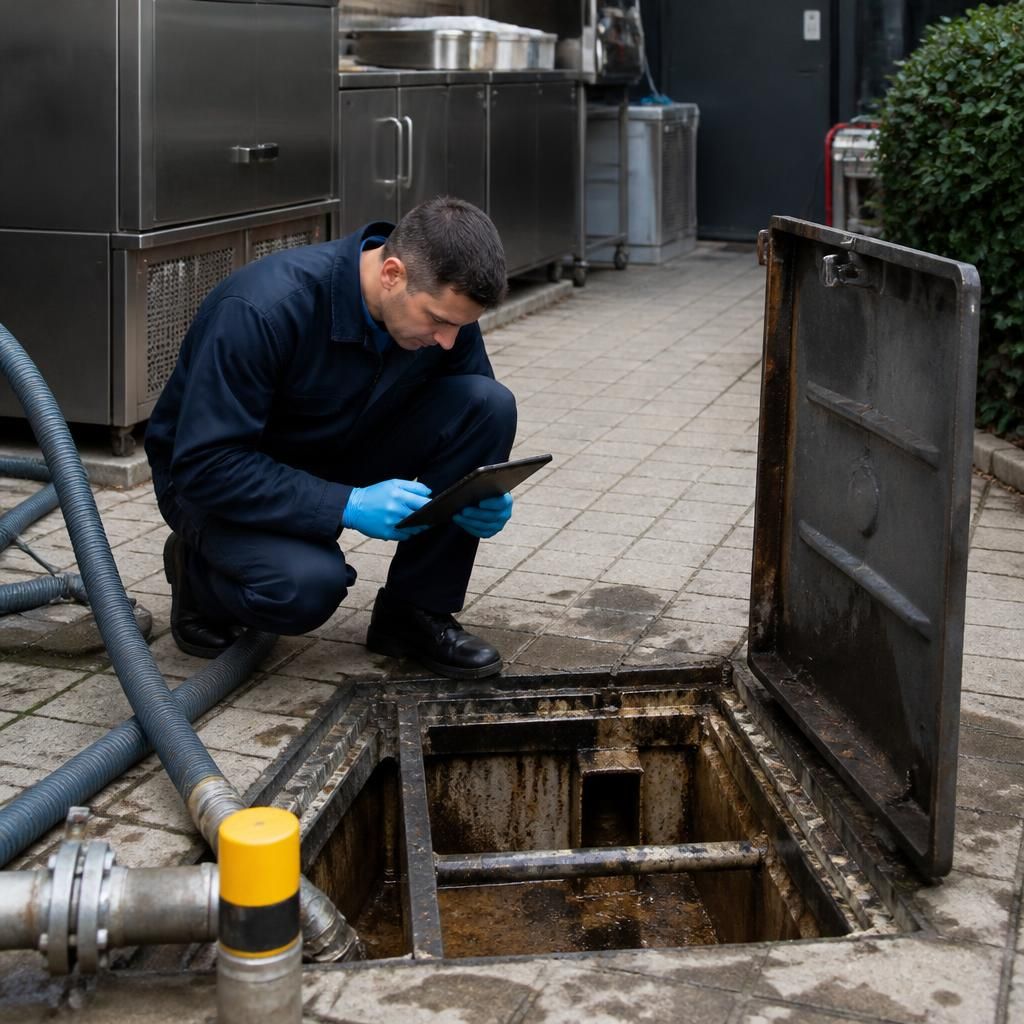
To limit disruption, agree in advance which work is essential to return the grease tank to service and which findings require separate authorisation. Cleaning should address the accumulated grease and solids, while defects such as damaged covers, defective pumps or compromised pipework should be recorded and assessed rather than allowing unplanned remedial work to extend the interruption.
This approach gives the site a clear decision point after cleaning. The responsible person can review the contractor’s findings, confirm whether the tank and connected equipment are suitable for recommissioning, and schedule additional repairs through the appropriate maintenance process where necessary. It avoids treating every defect discovered during cleaning as an immediate, unplanned extension to the work.
Discuss your grease tank cleaning requirements
Discuss your grease tank cleaning requirements with Blue Fish Water Management, including the tank’s use, site constraints and existing maintenance records. This will help establish an appropriate scope of work before the cleaning is scheduled.