
What evidence should businesses request after grease tank cleaning?
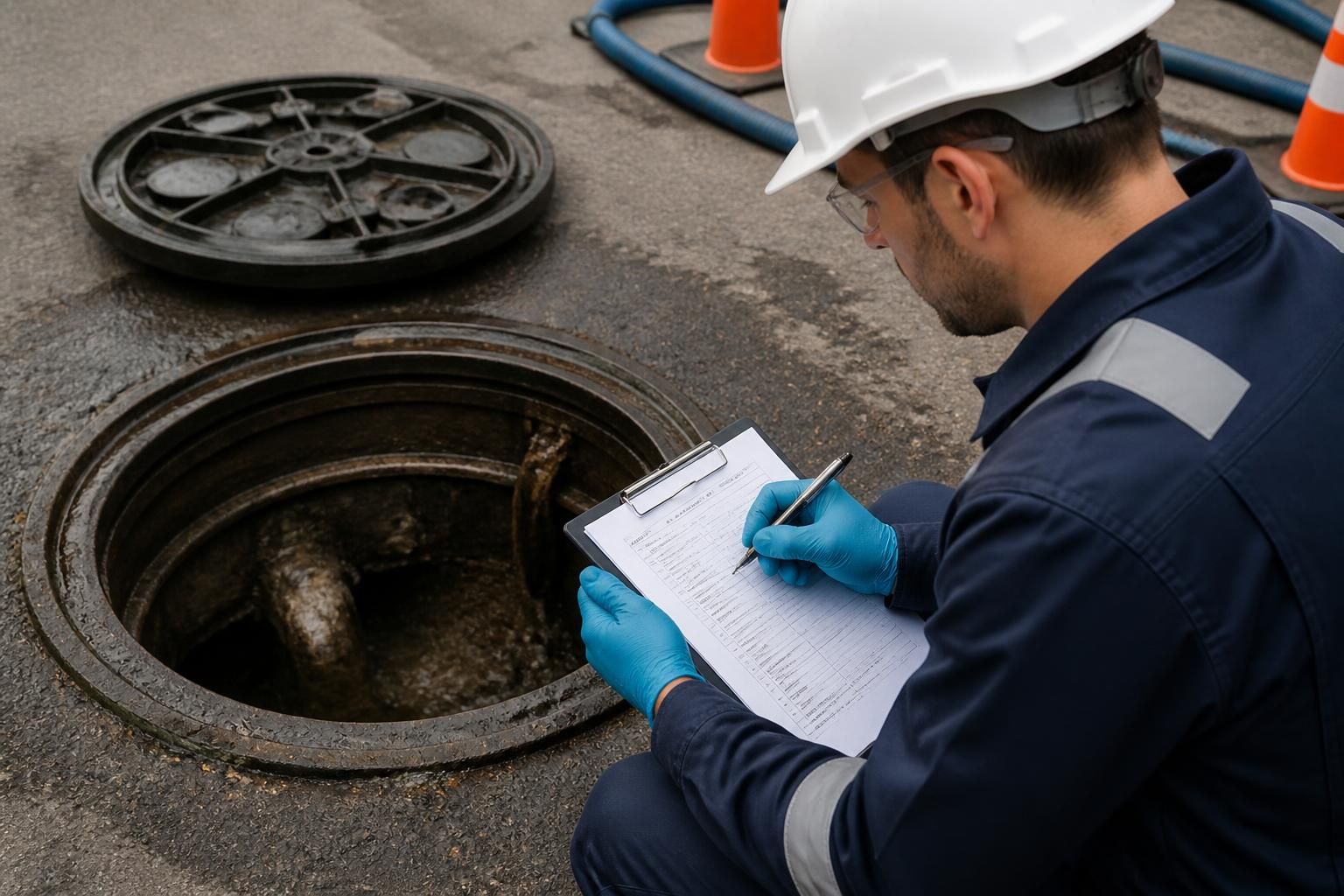
After grease tank cleaning, businesses should request supporting evidence that confirms the agreed scope was completed, records the tank’s condition, and demonstrates that any follow-up actions have been identified. The evidence should be clear enough for a facilities manager, auditor or responsible person to understand what was done without relying on verbal explanations.
Request confirmation of the agreed scope. The cleaning record should be checked against the purchase order, quotation or site instruction. It should be clear whether the work covered the tank only or also included associated pipework, access points, screens, baffles, pumps, alarms or nearby drainage components. Any item excluded from the agreed scope should be noted, particularly where it could affect the tank’s performance or future cleaning requirements.
Ask for condition evidence where it is relevant. Before-and-after photographs can provide useful evidence of the tank’s internal condition, access arrangements and the standard of cleaning achieved. Photographs are particularly valuable where deposits, corrosion, cracks, damaged covers, blocked connections or other defects were found. They should support, rather than replace, a written account of the inspection.
Check that defects and recommendations are specific. A useful report should distinguish between:
- defects requiring urgent attention or temporary controls;
- repairs that can be planned as part of routine maintenance;
- observations that should be monitored at the next inspection; and
- recommendations for changing the cleaning interval or operating arrangements.
Recommendations should identify the affected component, explain the reason for the recommendation and state whether further investigation is needed. “Monitor condition” is less useful than a clear description of what should be monitored and who should arrange it.
Request evidence of any additional work. If the cleaning contractor carried out minor remedial work, ask for a record of the task, the location, the materials or components used and any limitations. Where the work was outside the original instruction, retain the approval or variation that authorised it. If a repair was recommended but not completed, keep the recommendation open in the site’s maintenance system rather than treating the cleaning visit as fully closed.
Confirm the waste paperwork is internally consistent. The waste documentation should correspond with the site, date and contractor records. Where the service involved separate waste streams or more than one collection, retain the relevant paperwork for each movement. If the waste was subject to additional environmental controls, ask what supplementary documentation applies and ensure it is held with the main service file. An invoice alone is not evidence that waste was correctly transferred or that the tank was cleaned to the agreed scope.
Ask for test results only where testing formed part of the instruction. Tank cleaning does not automatically mean that sampling or laboratory analysis was required. However, if the contract included sampling, request the sample identifiers, collection date, test scope and report issued by the laboratory. Results should be linked to the relevant tank and interpreted in the context of the site’s risk assessment rather than filed without review.
Check the contractor and site-safety records where applicable. For work involving restricted access, confined spaces, traffic management, isolation of equipment or other site hazards, retain the relevant method statement, risk assessment, permit or completion record if these formed part of the job. The purpose is to show that the work was planned and controlled appropriately, not to collect every document produced by a contractor when it has no bearing on the cleaning activity.
Record internal acceptance and follow-up. A nominated person should review the evidence, confirm that the agreed work appears complete and assign any outstanding actions to a named role or department. Update the tank asset record, maintenance history and planned cleaning schedule where necessary. If the report identifies a defect that could affect drainage capacity, hygiene, odour control or safe operation, escalate it through the site’s maintenance or compliance process rather than waiting for the next routine visit.
The completed evidence pack will normally include the service documentation, waste records, relevant photographs, supporting safety paperwork, test results where commissioned, and records of any corrective action. Keeping these documents together creates a defensible maintenance history and helps the business demonstrate that cleaning was not treated as an isolated task but as part of ongoing tank management.
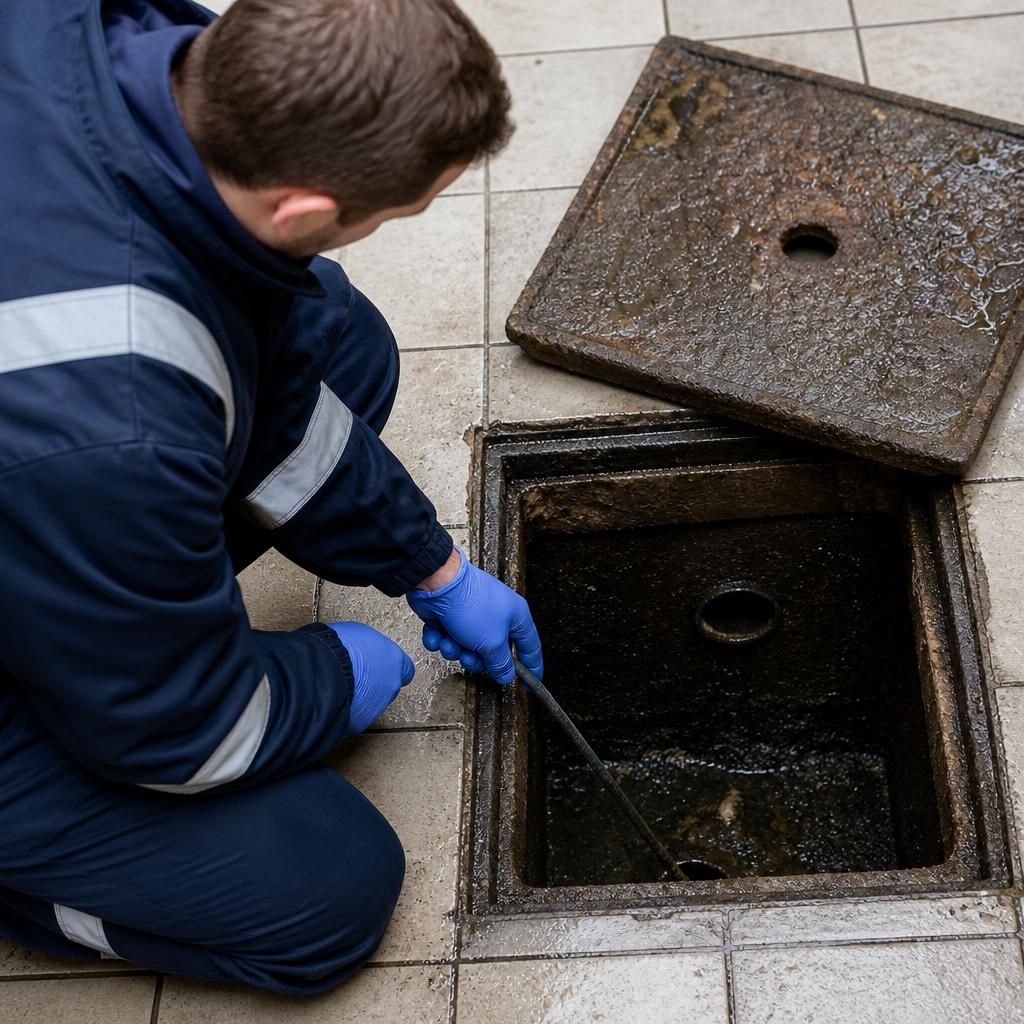
Cleaning evidence confirms what the contractor did; it does not, by itself, certify that the tank is compliant or suitable for continued operation. Businesses should therefore distinguish a completion record from a wider compliance decision. The responsible person should consider the report alongside the tank’s design, operating condition, maintenance history and any outstanding defects.
Where the contractor states that cleaning was completed, check whether this means all accessible areas were cleaned or whether any deposits, restrictions or inaccessible sections remained. Any limitation should be recorded clearly, because it may affect the decision to arrange further investigation, repair or a revised maintenance plan.
Request guidance on grease tank cleaning evidence
If you need to establish what documentation should accompany grease tank cleaning at your premises, speak to Blue Fish Water Management Ltd about your site’s requirements and record-keeping process.