
Who is responsible for arranging grease and waste water tank cleaning?
Responsibility normally rests with the dutyholder or person who has control of the premises and its water systems, such as the owner, landlord, employer or managing organisation. They must ensure grease and waste water tank cleaning is identified, arranged and recorded at suitable intervals, even when the work is delegated to a competent specialist contractor.
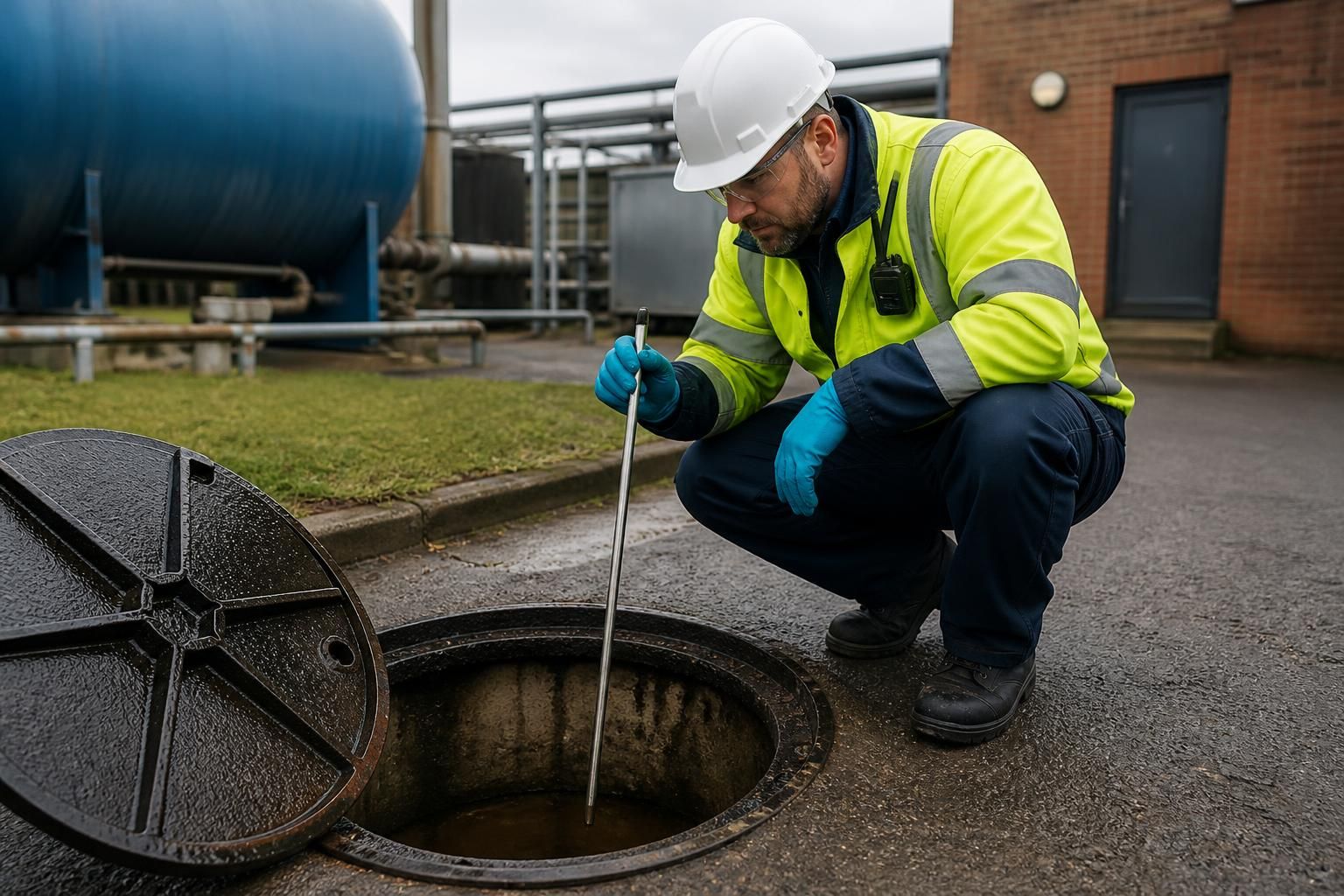
Responsibility for arranging cleaning depends on who controls the premises, the drainage installation and the relevant maintenance budget. In a business setting, this may be the property owner, landlord, tenant, employer, facilities manager or another organisation appointed to manage the site. The responsible party should be identifiable from the lease, service contract, site management arrangements and risk controls rather than assumed from job title alone.
Ownership and day-to-day control are not always held by the same organisation. A landlord may own a grease separator or waste water tank, while a tenant operates the kitchen, production area or other activity that fills it. In that situation, the lease may allocate structural maintenance to the landlord but place routine servicing, monitoring and access arrangements with the tenant. Both parties should understand the division of responsibility, particularly where a missed cleaning visit could cause an overflow, obstruction, odour nuisance or interruption to operations.
In larger organisations, the practical responsibility is often assigned internally. A facilities manager, estate manager, building services manager or site manager may be expected to arrange the work, maintain the service schedule and retain the relevant records. That person is coordinating the task rather than necessarily becoming the legal owner of the system. Senior management should provide clear authority, suitable resources and a defined escalation route when cleaning is overdue or the tank shows signs of failure.
For rented commercial premises, the lease is the starting point. It may specify responsibility for:
- routine emptying and cleaning;
- inspection of tank levels, alarms, covers and access points;
- repairs to the tank, pipework, pumps or separators;
- arranging safe access for contractors;
- paying for emergency call-outs and remedial work; and
- keeping maintenance and waste-transfer records.
Where the lease is unclear, the tenant should not assume that the landlord will arrange cleaning. The occupier remains best placed to identify changes in use, increased loading or early signs of a problem. The parties should confirm the arrangement in writing and nominate a contact responsible for authorising and checking the work.
Where several businesses use shared drainage or a communal tank, responsibility should be assigned to the organisation with control of the shared installation. This could be a managing agent, facilities company, landlord or management company. Occupiers may still need to follow controls designed to protect the system, such as preventing unsuitable materials, fats, oils, grease or solids from entering the drainage network. A written agreement should explain how costs are shared and how faults, access restrictions and missed visits are reported.
The person arranging the work must select a contractor with the competence and equipment appropriate to the installation. Grease tanks, grease separators, effluent tanks, cesspools, septic tanks and other waste water installations do not all have the same cleaning requirements. The contractor should be given accurate information about the tank type, contents, location, access constraints, connected activities and any known hazards. This allows the cleaning method, emptying equipment and waste-handling arrangements to be assessed before attendance.
Responsibility also includes making sure the work can be carried out safely. The site operator should identify traffic routes, confined spaces, electrical equipment, lifting points, contaminated areas and any restrictions affecting tanker access. Tank covers must not be opened or entered casually. Entry into a tank or other confined space requires a specific assessment and appropriate controls; routine cleaning should not be treated as permission for unsafe access.
A suitable cleaning interval should be based on the system’s design, loading, operating conditions, inspection findings and the instructions supplied for the installation. A calendar reminder alone may be inadequate if the business has changed its production volume, kitchen use or occupancy. The responsible person should review whether the existing arrangement remains suitable when the premises change, when repeated blockages occur or when a tank reaches capacity sooner than expected.
After the work, the organisation responsible for the site should check that the service was completed and that any defects were reported. Useful records can include the date, installation serviced, contractor details, waste removed, defects identified and recommended follow-up action. Waste must be handled through appropriate arrangements, with documentation retained where required. Records should be accessible to the people managing the premises and used to demonstrate that maintenance is being controlled rather than arranged only after a failure.
In practice, the clearest arrangement is a written responsibility matrix covering each tank or separator, the person who monitors its condition, the person who authorises cleaning, the party who pays, and the person who verifies completion. Blue Fish Water Management can help businesses review these arrangements and identify whether cleaning, monitoring or remedial work should be included in a planned water and waste management programme.
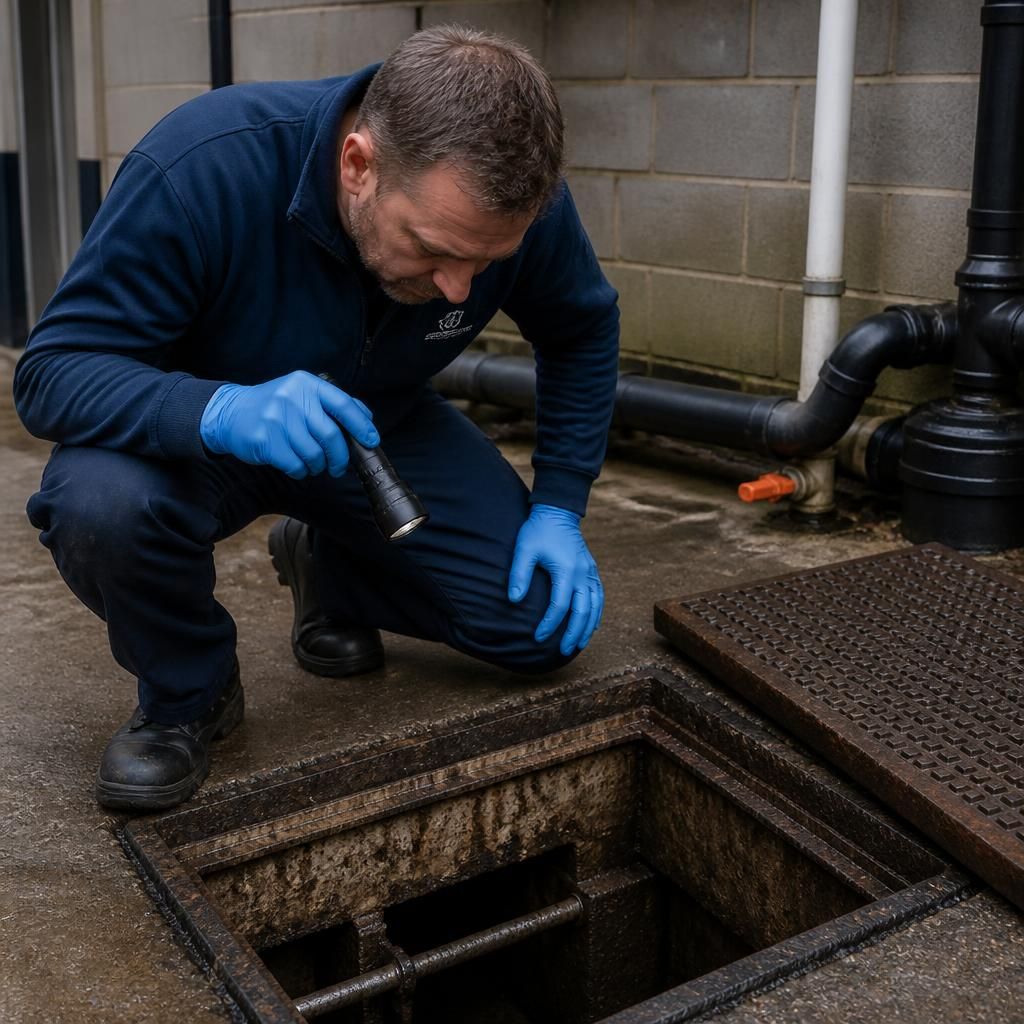
Responsibility should be confirmed whenever a commercial property changes hands or its facilities management arrangements change. A handover should identify the organisation responsible for each grease or waste water tank, rather than assuming that responsibility transfers automatically with the lease, building or maintenance contract.
The outgoing and incoming parties should record the last cleaning date, the basis for the next service, any defects or access issues, and any work already instructed. They should also confirm who can authorise further cleaning and who receives the contractor’s records. This prevents a gap in maintenance when a tenant, managing agent or service provider changes.
Discuss your grease and waste water tank cleaning responsibilities
If responsibility for arranging grease or waste water tank cleaning is unclear, discuss your site arrangements with Blue Fish Water Management and review which inspections, cleaning records and follow-up actions are required.