
How often should fuel tanks be cleaned?
Fuel tanks should be cleaned when inspections, fuel sampling or operational problems show contamination, rather than according to one universal timetable. The appropriate frequency depends on the tank’s age and condition, fuel type, storage environment, usage and the risk of water, sediment, microbial growth or corrosion affecting fuel quality.
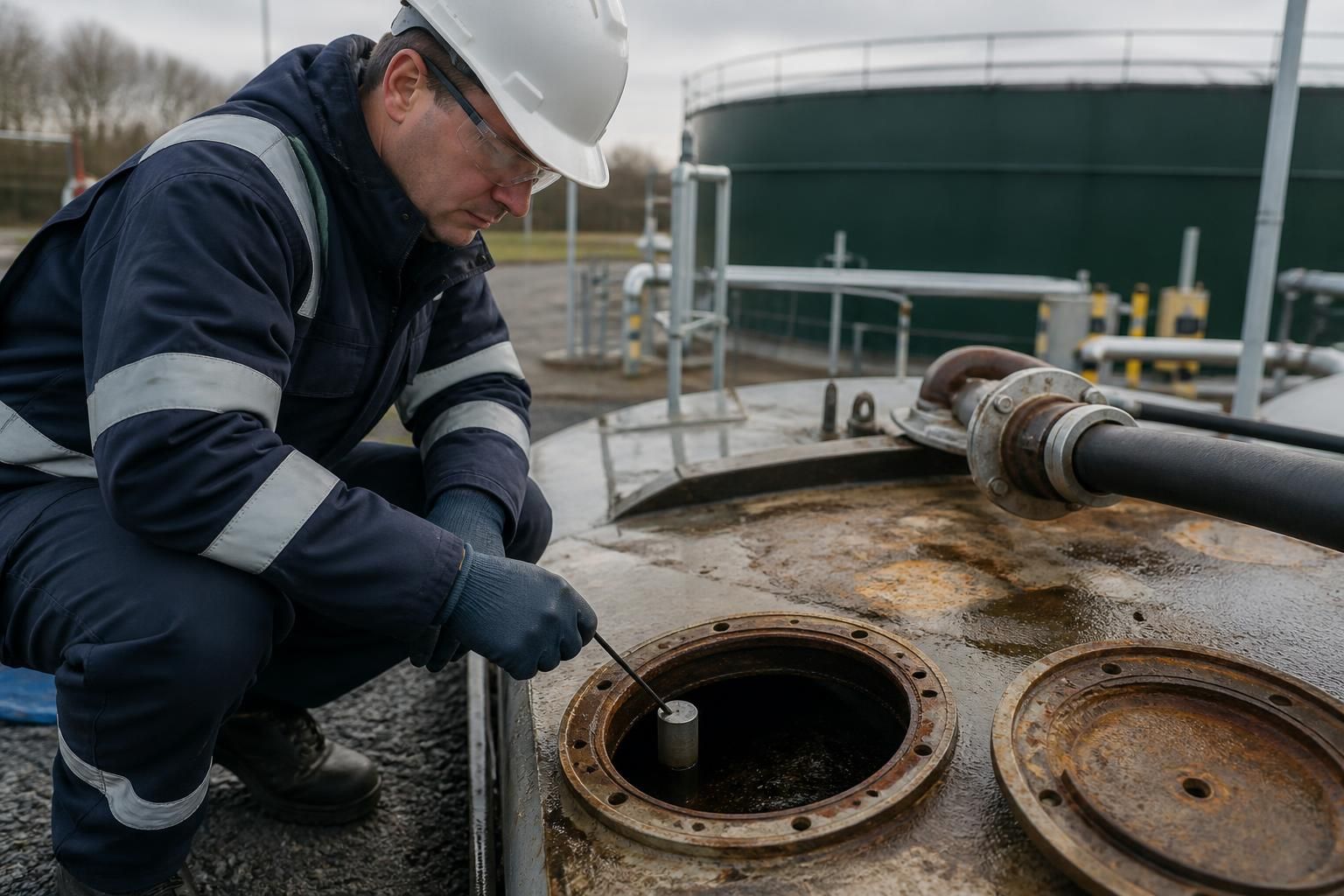
Fuel tanks should be cleaned on a risk-based schedule, not automatically at a fixed interval. A tank may need cleaning after contamination is found during inspection or fuel sampling, when water or sediment has accumulated, or when fuel-system performance shows signs of deterioration. The correct interval is established by reviewing the tank’s condition, operating pattern, fuel quality and the consequences of a supply failure.
Routine inspection and fuel testing should take place more often than full tank cleaning. These checks provide evidence of what is collecting inside the tank and whether the fuel remains suitable for use. Depending on the installation, checks may include:
- looking for water at low points, drains or sample points;
- checking for sludge, sediment or rust particles;
- examining filters, strainers and pipework for blocked or restricted flow;
- sampling fuel for water, sediment and microbial contamination;
- checking the tank, bund and associated equipment for corrosion, leakage or damage; and
- reviewing alarms, fuel quality records and any operational faults.
Cleaning is normally justified when inspection or sampling identifies material that routine draining cannot remove, or when contamination is likely to affect the stored fuel or connected equipment. It may also be appropriate where the tank has been left unused for an extended period, has received contaminated fuel, or is being returned to service after maintenance or a prolonged shutdown. Removing contamination before it reaches pumps, filters, burners, engines or standby equipment can prevent a local tank problem from becoming a wider fuel-system issue.
Some tanks require more frequent attention because their circumstances increase the likelihood or impact of contamination. For example, a tank with evidence of condensation, an ageing or damaged internal surface, infrequent fuel turnover, repeated water ingress or a history of microbial growth should be reviewed more closely than a well-maintained tank with consistently clean fuel. Tanks supporting critical operations also warrant a conservative maintenance approach because degraded fuel may only become apparent when the equipment is needed.
A practical maintenance plan should define three separate activities:
- Inspection: assess the tank, surrounding equipment and visible signs of contamination or deterioration.
- Testing: use representative fuel samples to establish whether water, sediment, microbes or other quality concerns are present.
- Cleaning: remove accumulated contamination and, where necessary, address the source of water ingress, corrosion or other recurring problems.
This distinction matters because cleaning a tank without correcting the cause of contamination may provide only a temporary improvement. For example, recurring water in the tank could indicate faulty seals, poor drainage, condensation or another defect. After cleaning, the installation should therefore be checked again and any necessary remedial work completed.
There are several warning signs that a tank may need cleaning before its planned review. These include repeated filter blockage, unexpected fuel discolouration, visible sludge, free water in samples, microbial growth, blocked fuel lines, corrosion products or unexplained equipment faults. A change in fuel performance should not automatically be attributed to the tank, but it is a reason to investigate fuel quality and tank condition promptly.
The cleaning frequency should be recorded in the site’s maintenance documentation and reconsidered whenever conditions change. Relevant changes include a different fuel type, altered usage, installation modifications, a new operating environment, a contamination incident or a change in the importance of the connected equipment. Inspection findings, sample results, cleaning work and follow-up checks should all be retained so that future decisions are based on the tank’s history rather than guesswork.
For a reliable schedule, the tank owner or responsible person should consider the findings of the risk assessment, applicable operating and manufacturer requirements, insurer expectations and the recommendations of a competent fuel-tank specialist. Professional assessment is particularly important where contamination is extensive, the tank is corroded, access is restricted, or the stored fuel supplies safety-critical equipment.
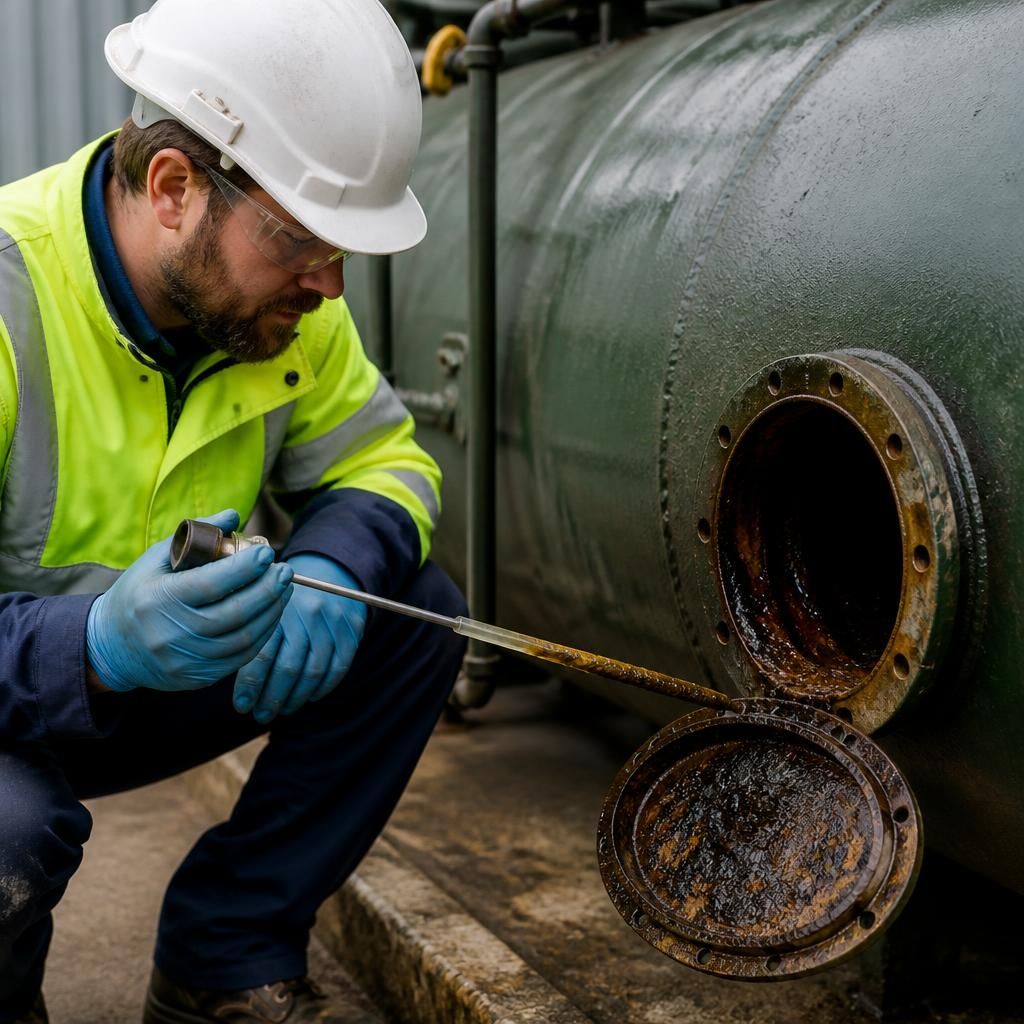
Fuel sampling should be representative of the tank’s condition, because contamination often settles at the lowest points rather than remaining evenly distributed through the fuel. Samples taken from drains, low points or designated sampling points can reveal water, sludge or microbial contamination that may not be apparent from the fuel surface. Comparing results from successive inspections also helps identify whether contamination is stable, increasing or recurring, providing a more reliable basis for deciding when the next clean is needed.
Sampling records should identify the tank, sampling location, fuel condition and any relevant operating issues. This creates a useful trend rather than treating each result as an isolated pass-or-fail check. Where results show a developing problem, cleaning may need to be brought forward; where the tank remains demonstrably clean and stable, the existing review interval may remain appropriate.
Review your fuel tank cleaning requirements
Review your fuel tank cleaning requirements with a competent specialist to determine an appropriate maintenance plan for your installation and operating conditions.