
What does fuel tank cleaning involve?
Fuel tank cleaning involves safely isolating the tank, removing its contents, extracting water, sludge and sediment, and cleaning the internal surfaces. The tank is then inspected for damage or corrosion, waste is handled appropriately, and the system is prepared for safe refilling and continued use.
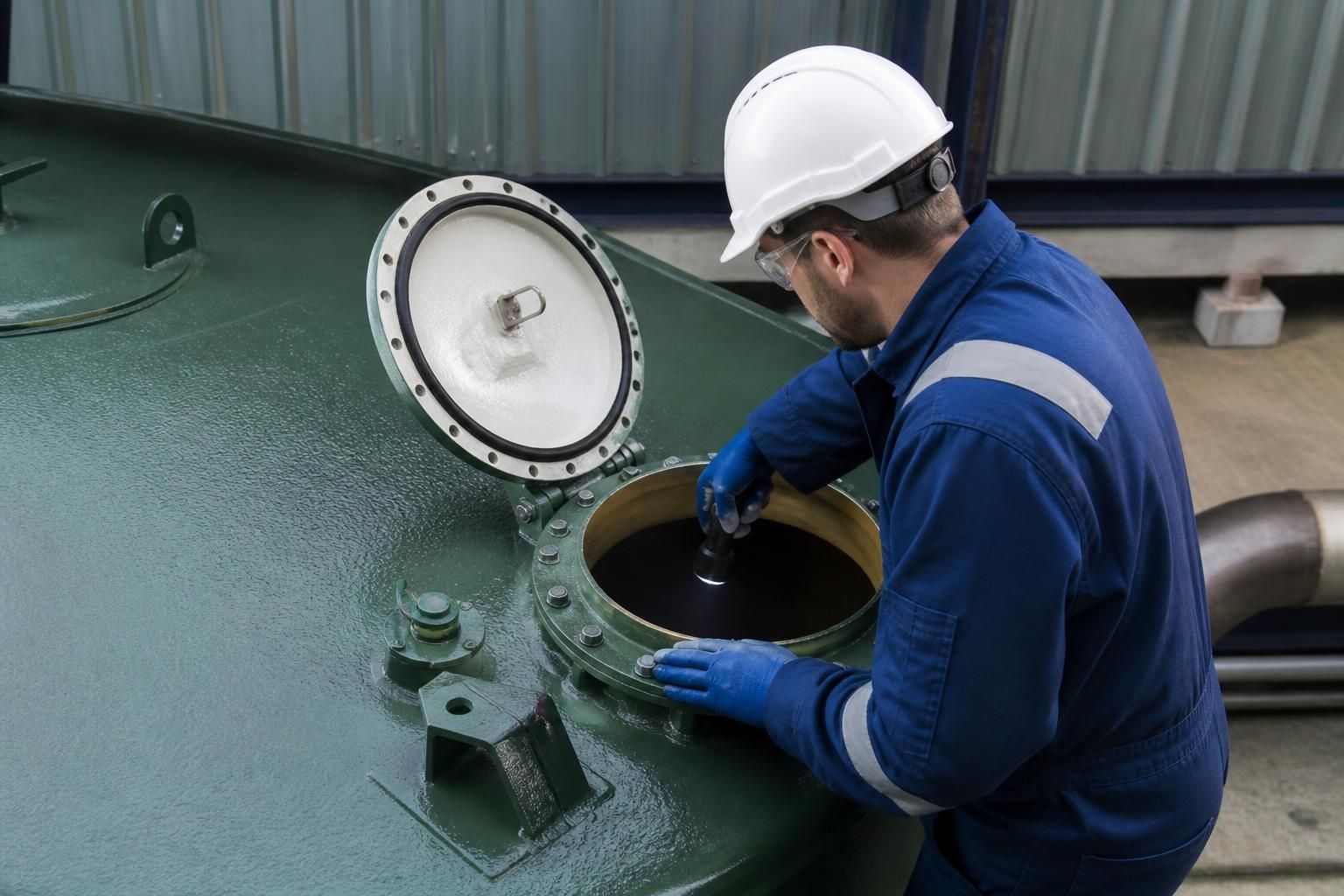
Fuel tank cleaning is a controlled maintenance process designed to remove contamination from the tank and associated fuel system while protecting people, equipment and the environment. It involves assessing the installation, planning safe access and fuel handling, carrying out the appropriate cleaning method, and documenting the tank’s condition and any further work required.
The process usually begins with a site assessment. Before work starts, the contractor should establish the tank’s construction, capacity, location, fuel type, access arrangements and connection to pumps, generators, boilers or other equipment. Existing records, previous maintenance findings and known fuel-quality issues help determine the likely contamination and the most suitable method. The assessment should also identify confined-space hazards, ignition sources, ventilation requirements, nearby operations and arrangements for protecting drains, ground and surrounding property.
A method statement and risk assessment should set out how the work will be controlled. Depending on the installation, this can include isolating electrical equipment, controlling static and ignition risks, establishing exclusion zones, using suitable personal protective equipment and checking the atmosphere where entry or restricted access could create a hazard. Tank entry is not automatically required: many tanks can be cleaned through existing access points using specialist equipment, reducing the need for personnel to enter the tank.
Cleaning methods are selected according to the tank and the contamination. A contractor may use suction equipment, internal vacuum systems, mechanical tools, approved cleaning agents or fuel filtration and polishing equipment. The aim is to remove contamination without damaging tank linings, seals, level sensors, pumps, pipework or other connected components. If deposits have affected the fuel system beyond the tank itself, the scope may need to include accessible lines, filters or other components, subject to the findings and the client’s instructions.
Fuel removed during the work is assessed and managed separately from contaminated waste. Where appropriate, usable fuel may be filtered and returned to service, while fuel that no longer meets the required quality standard must be kept separate and handled through suitable waste arrangements. Waste classification, transfer documentation and disposal routes should be agreed in advance, particularly where the tank has contained heating oil, diesel or another controlled substance.
Following cleaning, the contractor should check that access covers, seals, fittings, gauges, vents and connections are suitable for reinstatement. Any defects identified during the work should be recorded rather than concealed by refilling the tank. Cleaning may reveal issues such as damaged coatings, faulty level measurement, blocked vents or deteriorated seals, all of which can affect future operation and may require separate remedial work.
Before the system is returned to service, the fuel and equipment should be reinstated in accordance with the agreed procedure. Filters may need changing, pipework may need checking and connected equipment may require controlled recommissioning. The tank should not be refilled until the work area, fittings and containment arrangements are ready and the responsible person is satisfied that the system can be operated safely.
Good documentation is an important part of the service. A completion report should normally record the tank identification, work undertaken, findings, waste or fuel removed, photographs where relevant, equipment condition and recommendations for follow-up action. Keeping this information with the tank’s maintenance records supports future inspections, helps demonstrate responsible fuel management and provides a useful baseline when deciding when further cleaning or testing may be needed.
The frequency and extent of cleaning depend on fuel quality, tank age and design, storage conditions, usage, water ingress, turnover and the consequences of equipment failure. Cleaning is therefore not simply a matter of washing out a container; it is a planned maintenance activity that links fuel condition, tank integrity, operational safety and environmental control.
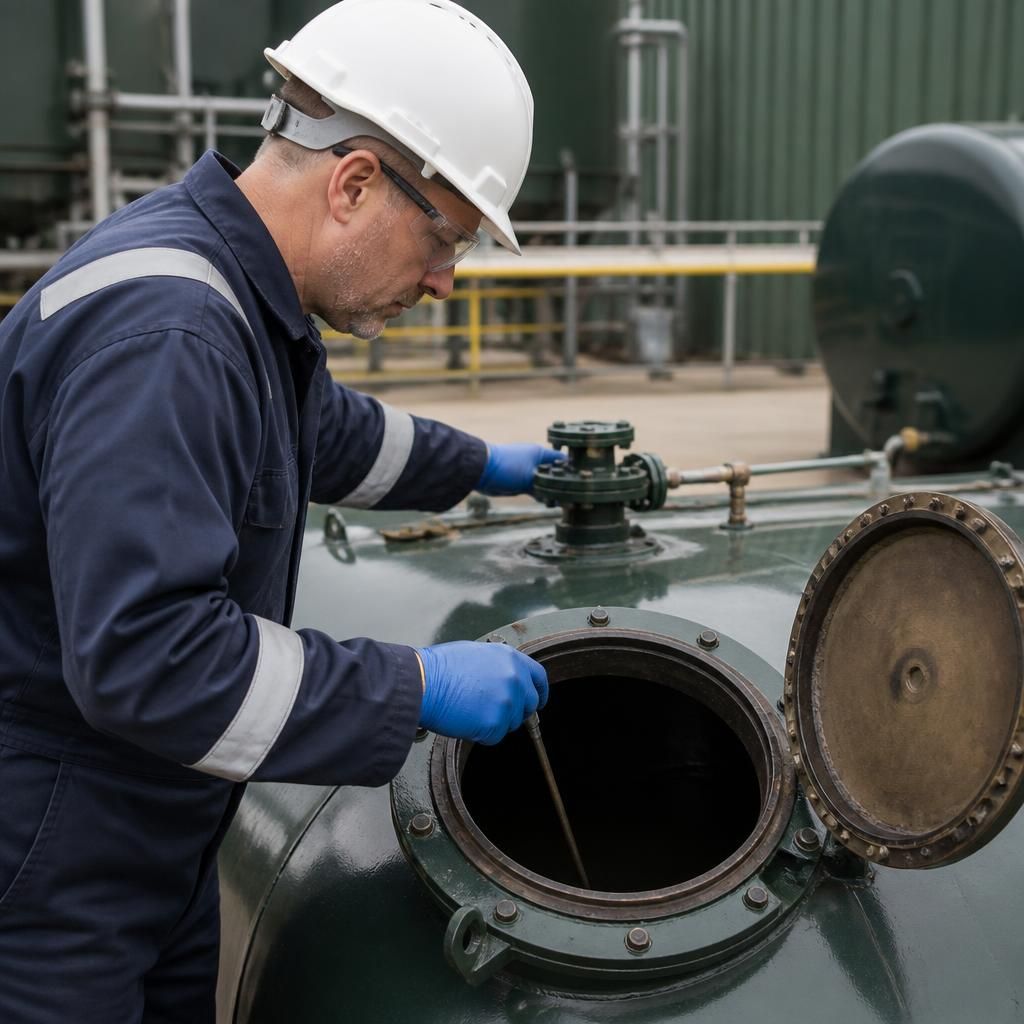
Cleaning is not complete simply because the tank’s surfaces appear clear. The remaining fuel should be checked for visible water, sediment and other contamination before it is returned to service, with sampling or fuel-quality testing considered where the condition of the fuel is uncertain. This helps distinguish a clean tank from a fuel system that still contains contaminated contents and may require filtration, replacement or further investigation.
Discuss Your Fuel Tank Cleaning Requirements
If you are planning fuel tank cleaning or need to clarify the appropriate scope of work, discuss your requirements with Blue Fish Water Management Ltd. The team can help you identify the relevant considerations before commissioning a cleaning service.