
How is diesel tank cleaning adapted to a site's fuel storage requirements?
Diesel tank cleaning is adapted by assessing the tank’s capacity, construction, access arrangements, fuel condition and connection to the site’s wider storage and dispensing system. The cleaning method, equipment, isolation measures and waste handling can then be selected to address site-specific contamination risks while limiting disruption to fuel operations.
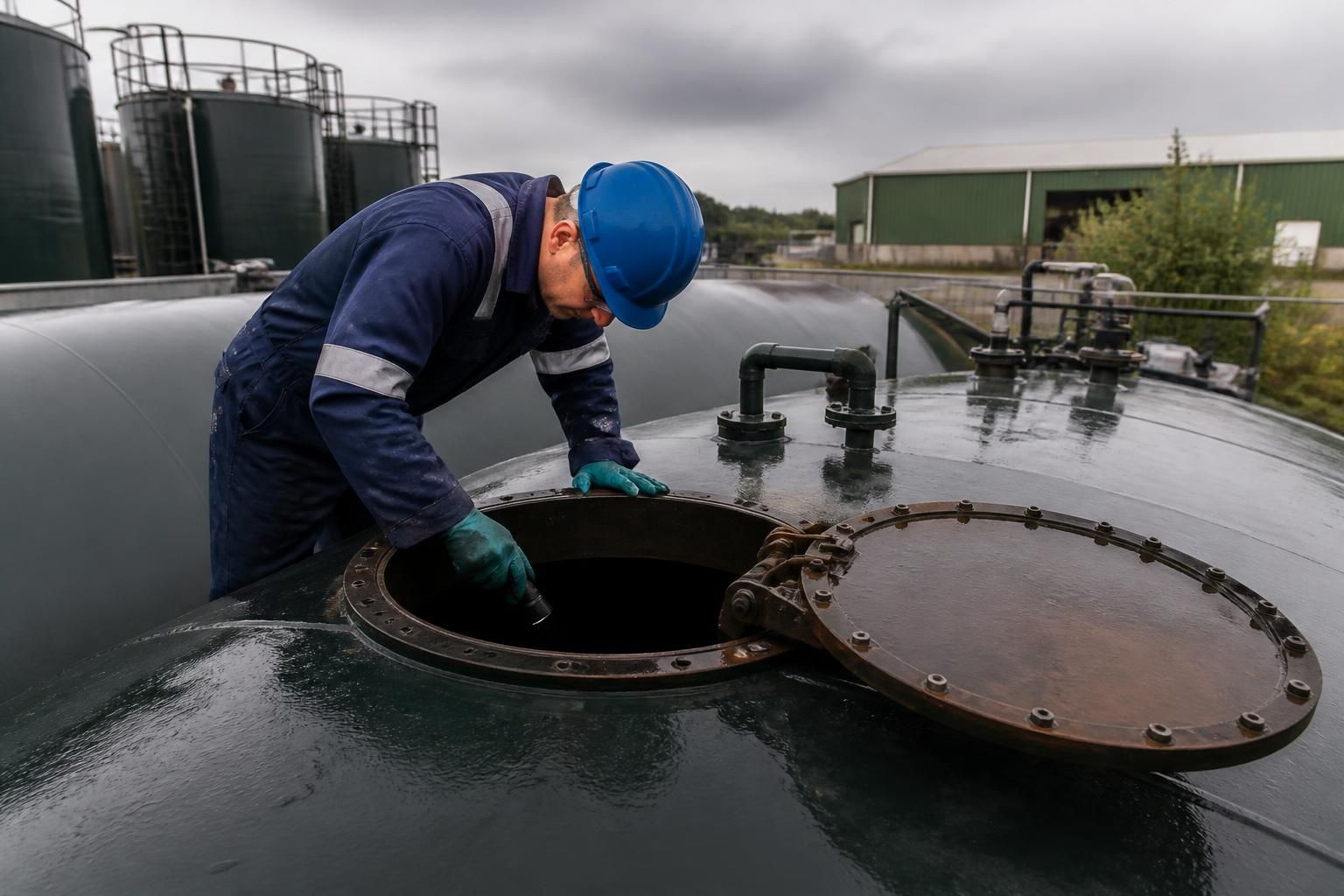
Diesel tank cleaning should be planned around the way a site stores, uses and controls its fuel. The objective is not simply to remove visible sludge, but to select a cleaning scope that addresses the likely contamination, protects the tank and associated equipment, and fits the site's safety and operational controls.
A suitable approach normally begins with a review of the fuel system and its operating history. Relevant information includes:
- the age of the tank and its previous cleaning or inspection records;
- the type of diesel stored and whether fuel is used for vehicles, generators, heating or process equipment;
- the frequency and volume of fuel deliveries and withdrawals;
- any history of blocked filters, injector problems, pump faults, water accumulation or fuel quality concerns;
- the design of the tank, including internal compartments, sumps, draw-off points and inspection openings;
- the position of the tank in relation to buildings, vehicle routes, drainage and environmentally sensitive areas; and
- the condition of pipework, hoses, vents, dispensing equipment and filtration components.
This information helps determine whether the work should be a routine planned clean, a response to confirmed contamination or part of wider remedial work. For example, a tank supplying standby generation may require particular attention to fuel reliability and the condition of the lowest points, whereas a vehicle-fuelling installation may need the cleaning plan to account for dispensing equipment, delivery schedules and the risk of contaminated fuel reaching multiple vehicles.
The contamination profile also affects the method. Water can collect at the bottom of a tank through condensation, faulty seals or contaminated deliveries. Sediment may consist of rust, dust, degraded fuel residues and biological material. Microbial contamination, sometimes referred to as diesel bug, can produce sludge and contribute to filter blockage and corrosion. A tank with limited sediment may need controlled removal and internal cleaning, while heavy contamination may require additional extraction, filtration, repeated cleaning or inspection of connected components.
Fuel recovery is another site-specific consideration. Where the remaining diesel is suitable for reuse, it may be transferred or filtered under controlled conditions. Fuel that contains excessive water, sludge or other contaminants may need to be segregated and managed as waste. The contractor should establish how recovered fuel, contaminated liquids, sludge, absorbents and used filters will be contained, documented and disposed of. Discharge to ground, surface water or site drainage is not an acceptable substitute for proper waste management.
Safety controls must reflect the installation rather than relying on a standard procedure. Before work starts, the site operator and contractor should agree isolation points, lock-off arrangements, ignition-source controls, electrical requirements, traffic management and emergency measures. Tanks and associated pipework may contain residual fuel and vapour even after draining, so entry into a tank should not be treated as routine access. If internal entry is proposed, the work requires a suitable confined-space assessment, atmospheric monitoring, a trained team, communication arrangements and a specific rescue plan. Where possible, remote or non-entry cleaning can reduce these risks.
The cleaning plan should also protect the wider fuel system. Pumps, level gauges, filters and dispensing lines can retain contaminated material or become damaged if unsuitable equipment or excessive pressure is used. In some cases, cleaning the tank alone will not resolve recurring problems because contamination remains in low points, pipework or filtration equipment. The scope may therefore include inspection or replacement of affected ancillary components, subject to the findings and the site operator's approval.
Work sequencing is adapted to the site's operating needs without compromising safety. A business may need to establish an alternative fuel supply, clean one tank while another remains available, or schedule the work alongside planned maintenance. The relevant consideration is not only the duration of the cleaning activity, but also the time needed for isolation, draining, inspection, refilling, filtration and any checks before the system returns to service. These arrangements should be agreed in advance with the people responsible for fuel supply, engineering, health and safety and environmental compliance.
After cleaning, the tank should be checked for remaining water, sediment, corrosion, coating damage or other defects that could cause recontamination. The condition of seals, access covers, vents and fittings should be considered before the installation is closed and returned to use. Depending on the risk and the intended use of the fuel, a representative sample may be sent for laboratory analysis to confirm relevant quality characteristics. Testing is particularly useful where contamination has affected equipment, the source of the problem is uncertain or the fuel will support critical plant.
Records form part of the adapted solution. A clear report should identify the tank and equipment addressed, the observed contamination, the cleaning method, waste or recovered-fuel arrangements, safety controls, inspection findings, sampling results and any recommendations. The site can then use this information to review storage practices, delivery controls, water checks, filtration and future inspection intervals. Professional diesel tank cleaning is most effective when it is treated as a risk-based maintenance activity linked to the site's fuel management system, rather than as an isolated removal of sludge.
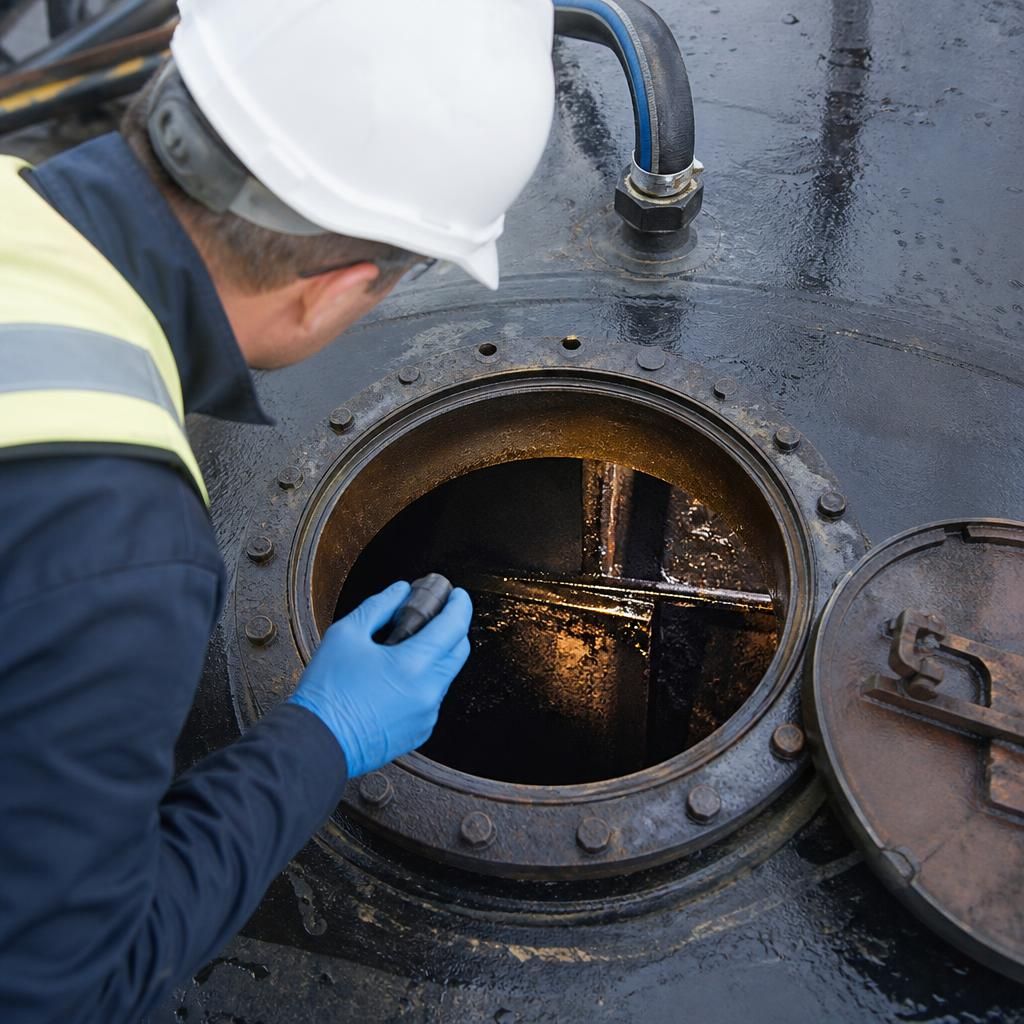
Diesel tank cleaning must be matched to the tank’s construction and internal condition as well as to the contamination present. Before selecting mechanical agitation, suction, filtration or other equipment, the contractor should confirm the tank material, any internal coating or lining, the condition of seals and fittings, and the sensitivity of connected components. This helps prevent an otherwise effective cleaning method from damaging protective surfaces, level equipment or draw-off arrangements.
Access also influences how thoroughly the tank can be examined and cleaned. A restricted opening may require remote equipment and a different inspection approach, while a larger access point may allow closer assessment of deposits and corrosion without assuming that entry is appropriate. The chosen method should remove contamination from relevant low points and surfaces while preserving the tank’s integrity, with any limitations clearly recorded for the site operator.
Discuss Your Site’s Diesel Tank Cleaning Requirements
Discuss your site’s diesel tank cleaning requirements with Blue Fish Water Management Ltd to identify a suitable scope for the tank, fuel system and operational controls. Providing details of the tank arrangement, fuel use and known issues will help inform the initial assessment.