
How can businesses assess competence before appointing a diesel tank cleaning contractor?

A competent diesel tank cleaning contractor should be able to demonstrate technical knowledge, controlled working practices and a clear understanding of the particular fuel system involved. Businesses should assess not only what the contractor claims to do, but also how it plans the work, verifies hazards, protects the site and records the condition of the tank afterwards.
Check experience relevant to the installation
Experience should be relevant to the type of tank and fuel system being cleaned, rather than limited to a general statement that the contractor works with tanks. Ask whether the contractor has handled comparable:
- Tank capacities, construction materials and access arrangements
- Diesel storage systems, including generator, heating, agricultural, commercial or industrial applications where applicable
- Contamination such as sludge, water, microbial growth, sediment or degraded fuel
- Sites with restricted access, operational vehicles, sensitive equipment or multiple connected tanks
- Systems that require fuel recovery, filtration, transfer or temporary storage during the work
The contractor should be able to explain how these features affect the proposed method. A competent provider will distinguish between routine tank cleaning and work requiring additional controls, specialist equipment or input from the site operator.
Ask who will carry out and supervise the work
Request a clear explanation of the personnel involved, their practical experience and the supervision arrangements. The business should identify who is responsible for the job, who controls the work on site and who has authority to stop it if conditions change. Where subcontractors are used, the principal contractor should explain their role and how their competence is checked.
Competence is not established by training certificates alone. It includes the ability to interpret the tank layout, recognise unsafe conditions, use equipment correctly, follow the agreed method and respond appropriately to unexpected contamination or access problems. Ask how new or less experienced operatives are supervised and how site-specific instructions are communicated before work begins.
Review the technical assessment before accepting the quotation
A reliable quotation should be based on information about the actual installation. The contractor may need details such as tank drawings, photographs, access dimensions, fuel type, tank condition, connected pipework, previous cleaning history and the intended operating status during the work. If the price is given without asking meaningful questions, establish what assumptions it is based on.
The written scope should describe what is included and what is excluded. It should state whether the work covers fuel removal, sludge removal, internal cleaning, inspection, filtration, refilling, disposal and cleaning of associated components. It should also explain how variations will be handled if the tank contains more contamination than expected or defects are discovered.
Examine the proposed safety controls
The contractor should be able to explain the hazards associated with diesel, vapours, ignition sources, moving equipment, manual handling, work at height and restricted or confined spaces. Where entry into a tank is proposed, the business should provide a specific justification and explain the controls for access, atmospheric testing, ventilation, communication, rescue and emergency response. Tank entry should not be treated as an ordinary cleaning task.
Ask how the contractor will control ignition sources and prevent unsafe interaction with electrical equipment, vehicles, hot work or other activities on the premises. The method should also address isolation of pumps, valves and connected equipment, protection of nearby personnel, spill prevention and keeping unauthorised people away from the work area.
Look for a site-specific method statement and risk assessment
Generic documents can provide a starting point, but they do not prove that the contractor understands the site. The documents should reflect the tank arrangement, access route, fuel quantity, nearby operations, environmental sensitivities and emergency arrangements. Check that the proposed controls match the actual sequence of work rather than simply listing standard hazards.
It is reasonable to ask how the assessment will be reviewed if the tank differs from the information supplied, if weather or site conditions affect the work, or if unexpected contamination is found. This shows whether the contractor has a practical change-control process rather than relying on paperwork prepared before visiting the site.
Verify equipment and inspection arrangements
Ask what equipment will be used for fuel transfer, filtration, sludge removal, ventilation, access, lighting, gas monitoring and spill control. The contractor should explain why the equipment is suitable for the tank and fuel involved. Equipment used in potentially hazardous areas should be appropriately selected and maintained.
Request evidence that relevant equipment is inspected, tested and maintained. This may include lifting accessories, electrical equipment, access equipment, atmospheric monitors, hoses and pumps. The important issue is whether the contractor can demonstrate a controlled system for checking equipment before use and removing defective items from service.
Assess environmental and waste arrangements
Tank cleaning produces materials that may include waste fuel, water, sludge, absorbents, filters and contaminated personal protective equipment. Establish how each waste stream will be contained, classified, transported and disposed of. The contractor should identify who retains responsibility for the waste and what documentation the client will receive.
Check that the plan covers spill prevention and response, protection of drains and ground, secure storage during the work and the handling of recovered fuel. A vague statement that waste will be removed responsibly is weaker than a documented process identifying the materials, containers and disposal route.
Inspect previous work records and reporting quality
Ask to see anonymised examples of reports from comparable projects. A useful report should record the tank or system addressed, the work completed, significant findings, waste removed, limitations, photographs where appropriate and any recommendations for further action. It should make clear whether observations were made directly, inferred from the condition of removed material or identified through testing.
Reports should not conceal uncertainty. If parts of the tank could not be accessed or if deposits prevented a complete inspection, the limitation should be recorded. This allows the business to understand what the cleaning has established and what it has not established.
Compare tenders on scope and controls, not just price
When comparing contractors, place each proposal against the same checklist. Consider the completeness of the scope, the quality of the site assessment, the proposed controls, the treatment of waste, the competence of the operatives, the reporting arrangements and the handling of unexpected work. A lower price may reflect omitted activities, assumptions about access or disposal, or a method that does not address the actual condition of the tank.
Ask each contractor to identify exclusions and potential additional charges in writing. Clarify whether cleaning is intended to restore the tank to service, support an inspection, resolve a fuel-quality problem or prepare it for maintenance. The intended outcome affects the appropriate depth of cleaning and the evidence required on completion.
Use the appointment documents to confirm accountability
Before appointing the contractor, ensure the order or contract identifies the tank, agreed scope, site responsibilities, access requirements, isolation arrangements, deliverables and escalation process. It should also state who provides information about the installation and who authorises changes to the method or scope.
The site operator should retain the risk assessment, method statement, waste records, completion report and any inspection or test results supplied. These records help demonstrate that the appointment was properly considered and provide a useful baseline for future tank maintenance.
Warning signs during evaluation
- The contractor cannot explain how the method changes for different tank designs or contamination types.
- The proposal contains no meaningful information about access, isolation, ventilation or emergency arrangements.
- The scope is limited to vague wording such as “clean and remove waste” without defining the deliverables.
- The contractor is unwilling to identify exclusions, subcontractors or the proposed waste route.
- Examples of previous work are unavailable or reports contain no findings, limitations or supporting evidence.
- The contractor treats tank entry, fuel transfer or unexpected contamination as routine matters requiring no additional assessment.
A sound appointment decision is therefore based on verifiable evidence, technical questioning and a site-specific review of the proposed work. The contractor should be able to show that it understands the fuel system, has planned the task in a controlled manner and will leave the business with clear records of what was done and what was found.
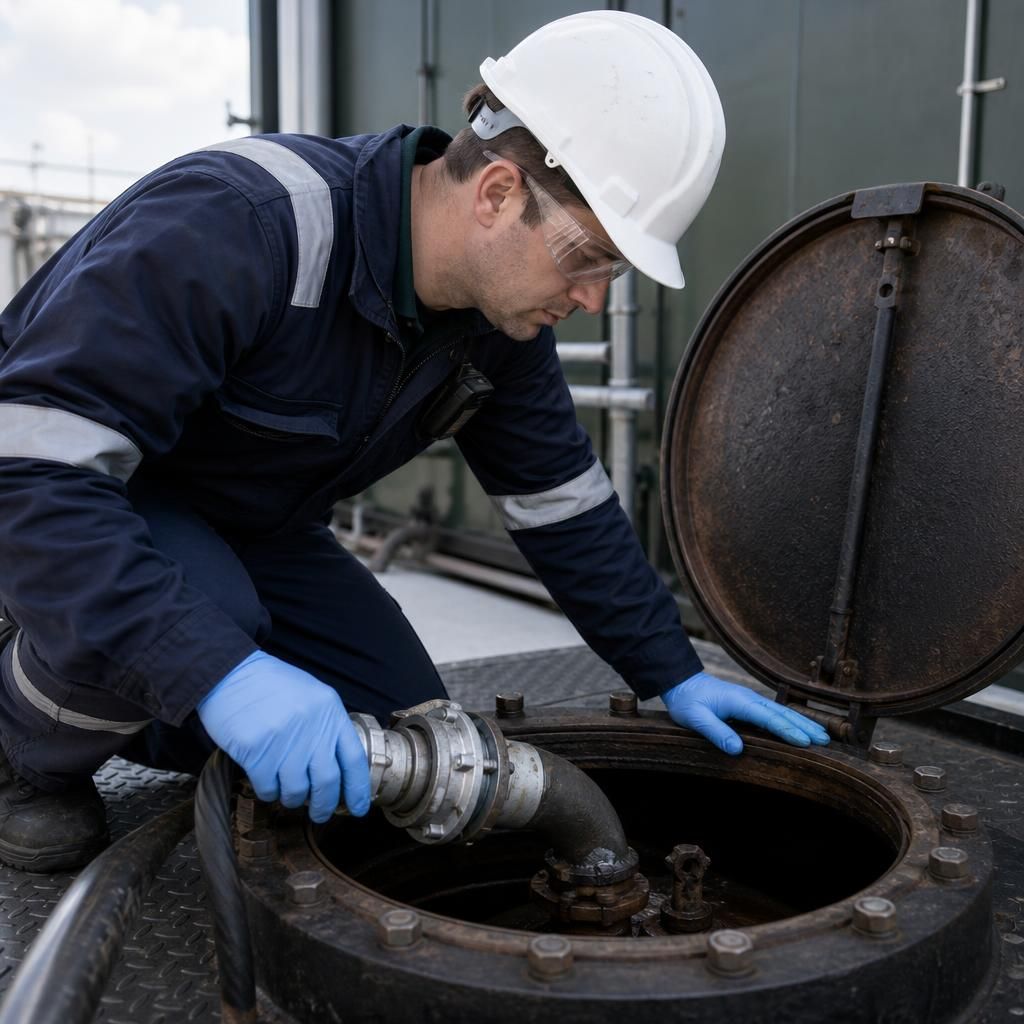
Insurance evidence is an important part of contractor due diligence, but it should be treated as protection against particular risks rather than proof of technical competence. Before appointment, ask for current certificates and confirm that the insured activities match diesel tank cleaning, fuel transfer, waste handling and work on the type of site involved.
Check whether the policy includes employers’ liability for the contractor’s workforce, public liability for injury or property damage, and environmental or pollution cover where a spill or contaminated waste could affect land, drains or watercourses. If the contractor is providing technical advice, inspection findings or remedial recommendations, establish whether its professional liability arrangements are appropriate to that work. The policyholder’s name, validity dates, exclusions and any relevant limits should correspond with the contracting entity named in the quotation.
Insurance should sit alongside, rather than replace, evidence of competence. A contractor that supplies clear documentation and explains any material exclusions gives the business a better basis for assessing residual risk and confirming who remains responsible if the work causes damage or an environmental incident.
Discuss your diesel tank cleaning contractor requirements
If you are assessing diesel tank cleaning contractors, discuss your tank configuration, intended outcome and site requirements with Blue Fish Water Management Ltd. Their team can help clarify the information needed to define a suitable scope of work and evaluate the proposed controls.