
How disruptive is diesel tank cleaning for business operations?
Diesel tank cleaning can cause some operational disruption because the tank may need to be isolated, emptied or partially drained, and made unavailable while it is inspected and cleaned. The impact depends on the tank’s condition, site access, fuel demand and whether the business can use alternative storage or supply during the work, so careful planning can help limit interruption.
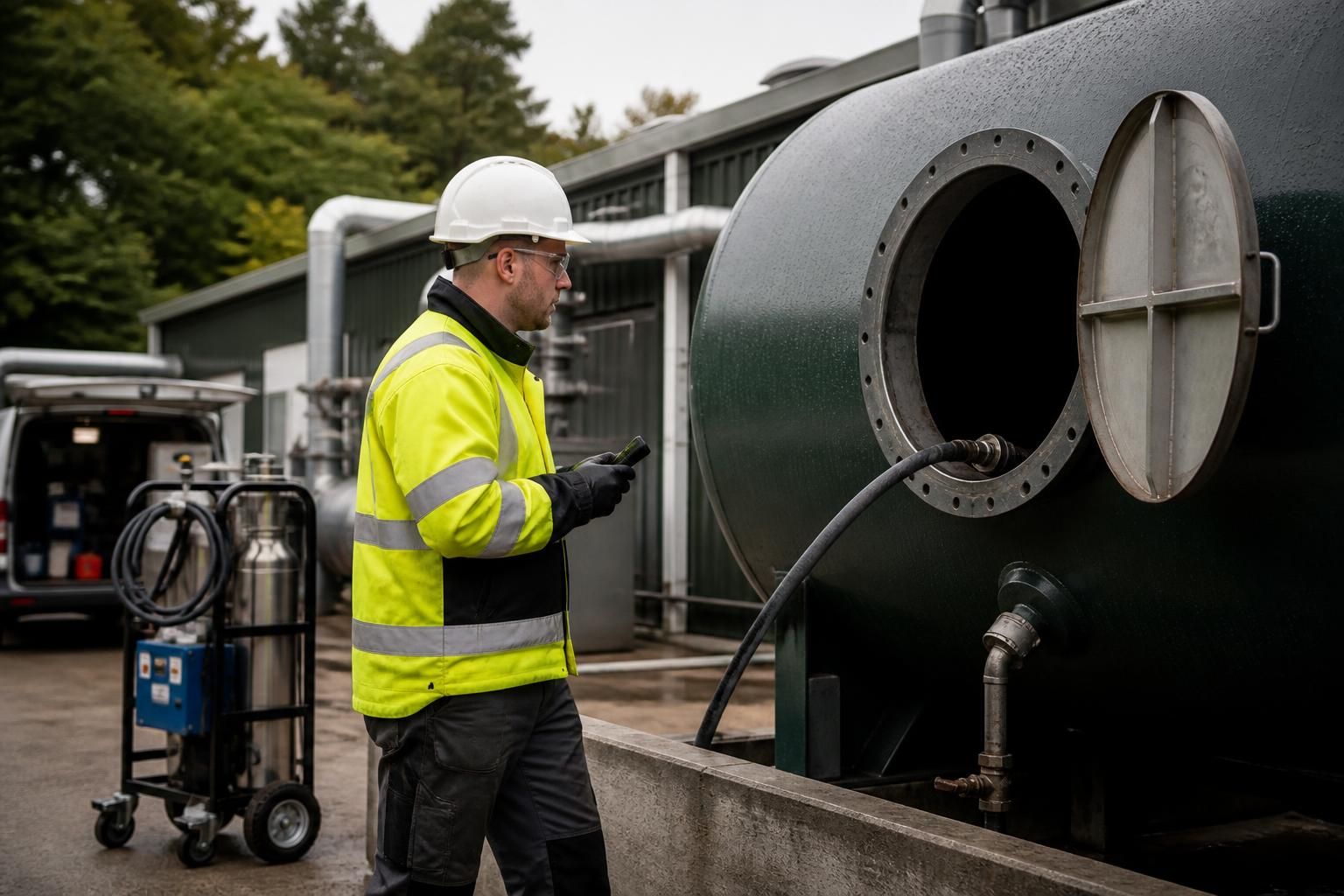
Diesel tank cleaning is usually a planned, controlled interruption rather than a prolonged shutdown, but its operational effect depends on how essential the stored fuel is to the site. The main disruption arises from coordinating access to the tank, restricting fuel movements during the work, managing any affected equipment and confirming that the system is suitable for use again afterwards.
What can be affected during the work?
- Fuel-dependent equipment: generators, boilers, plant, vehicles and other machinery may be unable to operate if they rely directly on the tank being cleaned.
- Fuel dispensing: pumps, delivery points and transfer systems may need to be taken out of service while connections, filters and associated pipework are checked.
- Site access: contractors may need clear access for inspection equipment, cleaning apparatus, removed fuel, waste containers and any specialist vehicles. This can affect traffic routes, loading areas or working space.
- Staff and contractor activity: site personnel may need to follow revised access arrangements, exclusion zones and permit controls while the tank is being worked on.
- Fuel quality management: sludge, water and contaminated fuel removed from the system must be handled appropriately. Poorly planned removal and storage arrangements can create additional delays or environmental risks.
The most significant operational question is whether the tank supports a critical process. A business with standby generation, continuous production, heating obligations or a vehicle fleet may face greater consequences than a site where fuel is used intermittently. The cleaning plan should therefore consider the function of the tank, the consequences of losing fuel availability and whether other tanks or an approved temporary supply can support essential operations.
How planning reduces disruption
A useful plan starts with a site-specific review rather than treating every tank in the same way. Relevant information includes the tank’s location and construction, access restrictions, fuel type, connected equipment, recent fuel-quality concerns, known defects and the site’s minimum operating needs. Reviewing these points before the visit helps identify whether the work can be completed in one planned intervention or whether additional preparation is needed.
- Define the operational limits. Identify which equipment must remain available, which activities can be paused and who has authority to suspend or restore fuel use.
- Agree the work sequence. Confirm the order of inspection, fuel handling, cleaning, component checks and recommissioning. Everyone affected should understand when the tank and connected systems cannot be used.
- Prepare access and safety controls. Clear the working area, arrange permits and risk controls, and brief staff and other contractors whose work could interfere with the cleaning activity.
- Plan fuel handling. Decide how usable fuel, contaminated fuel, sludge and water will be assessed, stored, transferred or disposed of. This should account for the tank’s capacity and the site’s environmental responsibilities.
- Coordinate deliveries and site movements. Fuel deliveries, vehicle movements and other work around the tank should be scheduled so that they do not conflict with the cleaning operation.
- Allow for findings. Cleaning may reveal corrosion, damaged fittings, blocked components, water ingress or other defects. The programme should distinguish between work needed before the system can safely return to service and improvements that can be planned separately.
Cleaning is generally less disruptive when it is coordinated with planned maintenance on pumps, filters, gauges, pipework or tank fittings. Combining related tasks can avoid repeated access restrictions, although additional work should only be included when its effect on the operating plan is understood and controlled.
What businesses should confirm before work starts
- Which systems and activities will be unavailable, and for what stage of the work?
- What access, isolation, ventilation and permit arrangements are required?
- How will removed fuel and tank residues be managed?
- What temporary arrangements, if any, are suitable for essential fuel users?
- Who will communicate changes to staff, drivers, contractors and site management?
- What inspection, testing or documentation is required before normal use resumes?
After cleaning, the tank should not simply be returned to service because the visible contamination has been removed. The relevant components and connections should be checked, any agreed remedial work recorded, and the system assessed for safe operation. Where fuel quality has been a concern, appropriate sampling or testing can help establish whether the fuel and tank are suitable for continued use. Records should capture the work completed, findings, waste handling and any recommendations for future monitoring.
For most businesses, the practical aim is not to assume that cleaning has no impact, but to control the impact through a defined work method, clear responsibilities and a realistic contingency plan. A contractor assessing the job should be able to explain the proposed sequence, the controls affecting site operations, the information needed from the business and how the system will be handed back after the cleaning activity.
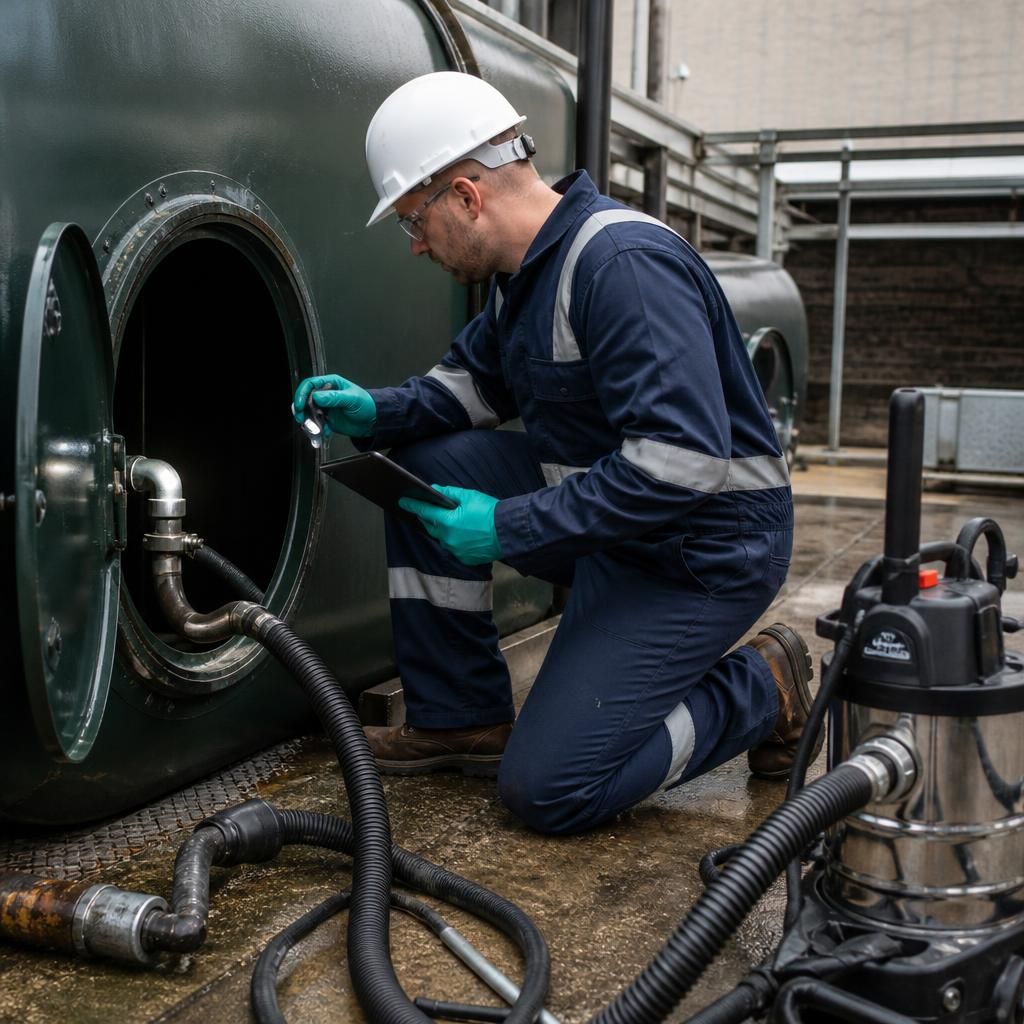
Recommissioning can affect operations as much as the cleaning itself. Once the tank and connected equipment are ready, the fuel system may need to be primed, checked for leaks and assessed for normal flow before dependent equipment is placed back into service. A staged restart allows site personnel to identify problems without exposing the whole operation to an uncontrolled interruption.
The handover should therefore state what has been inspected, which components were disturbed, whether any restrictions remain and who is responsible for authorising fuel use. This gives the business a clear basis for restoring equipment in a controlled order, rather than treating the end of the contractor’s work as an automatic return to normal operation.
Plan your diesel tank cleaning with expert guidance
Discuss your tank’s operational requirements with Blue Fish Water Management Ltd before arranging cleaning, so the proposed work can be planned around essential fuel users and site controls. Request practical guidance on the information and preparations needed for a suitable cleaning plan.