
How are water tanks with pumps disinfected?
Water tanks with pumps are disinfected by isolating the system, draining and cleaning the tank, applying an appropriate disinfectant at the required concentration and contact time, then flushing the tank, pump and connected pipework with clean water. The system is returned to service only after checks confirm that disinfectant has been removed and any required post-disinfection water testing has been completed.
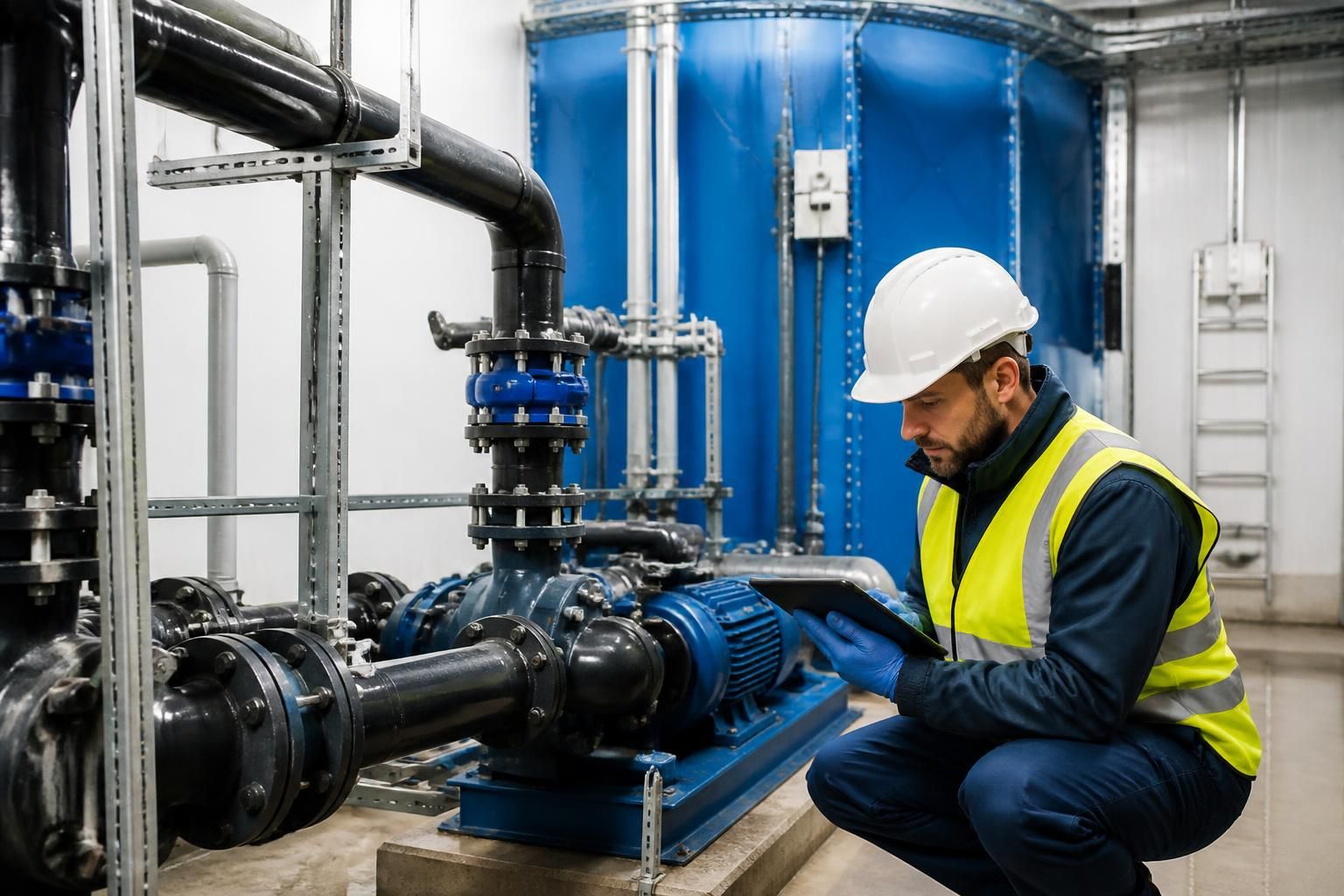
The defining feature of disinfecting a water tank with a pump is that the treatment must address the complete water pathway, not just the tank itself. This includes the tank interior, inlet and outlet arrangements, pump chamber, valves, flexible connections, pressure vessels and connected distribution pipework. The procedure is planned around the system design, its condition and the level of legionella risk identified for the premises.
Before work begins, the system should be reviewed by a competent person. This review establishes how the tank is filled, where the pump draws water from, which outlets and branches are connected, and whether there are bypasses, standby pumps or sections that could remain untreated. The assessment should also identify vulnerable users, operational constraints, access requirements and any reason chemical disinfection may be unsuitable. A written method statement normally sets out the isolation arrangements, chemicals, equipment, safety controls, responsibilities and verification requirements.
Electrical and mechanical safety are particularly important where a pump is involved. The pump must not be allowed to run dry, and it may need to be isolated, operated intermittently or used under controlled conditions so that disinfectant reaches the relevant components without causing damage. Electrical isolation, lock-off arrangements and protection from water ingress should be considered. If the system has automatic controls, level switches, variable-speed drives or remote alarms, these should be managed so that the disinfection process does not trigger unintended operation or equipment faults.
The tank itself must be physically suitable for cleaning and treatment. Sediment, scale, biofilm and corrosion products can reduce the effectiveness of a disinfectant and may shelter organisms from contact. Internal surfaces, covers, lids, vents, screens, washers and fittings should therefore be inspected and cleaned using methods appropriate to their materials. Defects such as damaged coatings, insecure lids, poor ventilation or inadequate overflow protection should be recorded because disinfection does not correct an underlying design or maintenance problem.
The choice of disinfectant and application method depends on the system materials, the tank volume, the pump type and the required level of control. The product must be used in accordance with its safety data and manufacturer’s instructions, with suitable controls for storage, handling, dilution and disposal. The person carrying out the work should confirm that the disinfectant is compatible with tank linings, seals, elastomers, metals, membranes and pump components. Mixing different chemicals or applying an unverified concentration can create safety risks and may damage the installation.
To treat a pumped system effectively, disinfectant must be distributed through the areas that normally carry water. This may require carefully controlled pump operation, opening selected outlets or valves, and working through branches in a planned order. Air locks, closed valves, high points, low-use outlets and dead legs can prevent proper contact. Where a pump is part of a booster set, the arrangement may include non-return valves, strainers, accumulators or pressure vessels that need separate consideration. These components should not be assumed to have been treated simply because disinfectant has reached the storage tank.
During the process, the responsible person should monitor the conditions that determine whether the treatment is effective, including:
- the disinfectant concentration at representative points;
- the required contact period;
- the condition and temperature of the water where relevant;
- the operation of the pump and associated controls;
- the presence of leaks, abnormal pressure or equipment distress; and
- the safety of people who may come into contact with the water or chemical.
After treatment, the system needs controlled flushing and inspection before it is put back into normal use. Flushing should remove disinfectant and loosened debris from the tank, pump and distribution network without discharging contaminated or chemically treated water in an uncontrolled manner. The discharge route, drainage capacity and environmental precautions should be considered in advance. Any strainers, filters or aerators that have collected debris may need cleaning or replacement.
Recommissioning should include checks that the pump primes correctly, maintains the expected pressure, responds to level controls and does not cycle abnormally. Valves should be returned to their correct positions, alarms and automatic controls reinstated, and covers and access points secured. Where the system supplies outlets used by people, those outlets should be checked for safe operation and any necessary flushing instructions communicated to the responsible building operator.
Verification is not limited to observing that the water looks clear. Residual disinfectant should be assessed using an appropriate test method, and microbiological sampling may be required where the risk assessment, system history or specification calls for it. Samples should be taken from locations that provide useful evidence about the tank and pumped distribution system, rather than relying on one convenient outlet. The results should be interpreted alongside the condition of the system and its operating history.
A complete record should identify the system treated, the reason for the work, the responsible personnel, chemicals and equipment used, monitoring observations, defects found, flushing arrangements, test results and any recommendations. If the pump or tank has serious corrosion, persistent fouling, poor turnover or inaccessible sections, repeat disinfection alone may not provide lasting control. Remedial work, improved monitoring, alterations to pipework or changes to operational controls may be necessary to reduce the underlying risk.
For commercial and industrial premises, the work should sit within the site’s wider water safety management system. The responsible person should understand what was treated, what remains outside the scope, when follow-up checks are needed and which measures will prevent recontamination. A competent water hygiene specialist can help interpret the system design, coordinate the disinfection procedure and advise on remedial actions where a tank and pump arrangement presents additional legionella control challenges.
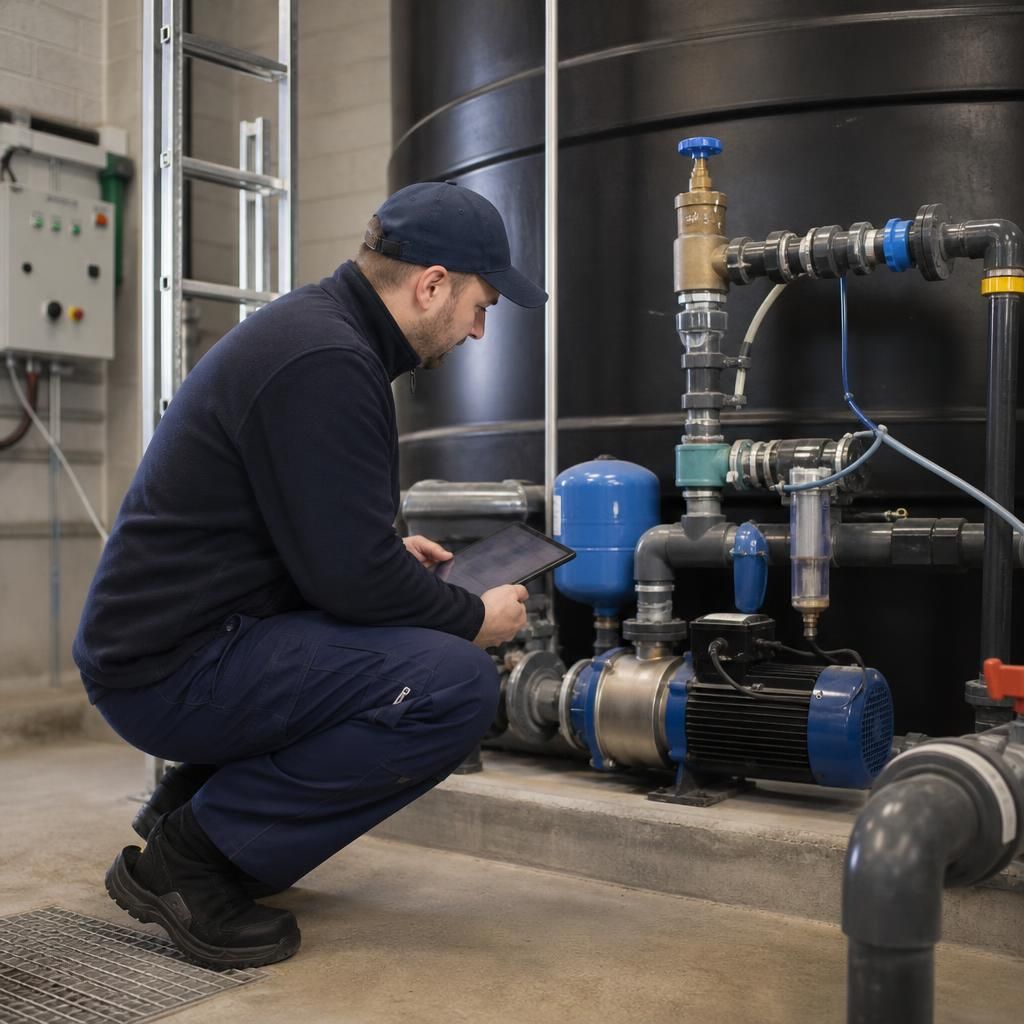
A pumped tank system should remain isolated from normal building use until the treatment has been formally completed and the water is confirmed suitable for return to service. This is especially important where the pump can start automatically in response to falling pressure or tank level. Controls should be placed in a safe operating mode, and outlets supplied by the system should be clearly identified so that treated water is not used inadvertently.
At handover, the responsible person should receive clear confirmation of the system’s status, including any outlets or components that were excluded from the work. The record should also state whether automatic pump controls have been reinstated and whether any additional flushing, sampling or remedial action is required. This prevents the disinfection certificate from being treated as proof that every part of a complex pumped installation has been addressed.
Discuss your water tank disinfection requirements
Discuss your water tank disinfection requirements with Blue Fish Water Management Ltd to establish the appropriate treatment scope, verification and any follow-up actions for your pumped system.