
What should a water tank disinfection method statement include?
A water tank disinfection method statement should explain the work scope, identified hazards and control measures, responsibilities, equipment and chemicals, and the planned sequence for isolation, cleaning, disinfection, rinsing and recommissioning. It should also define the records and verification testing needed to demonstrate that the tank has been returned to safe service.
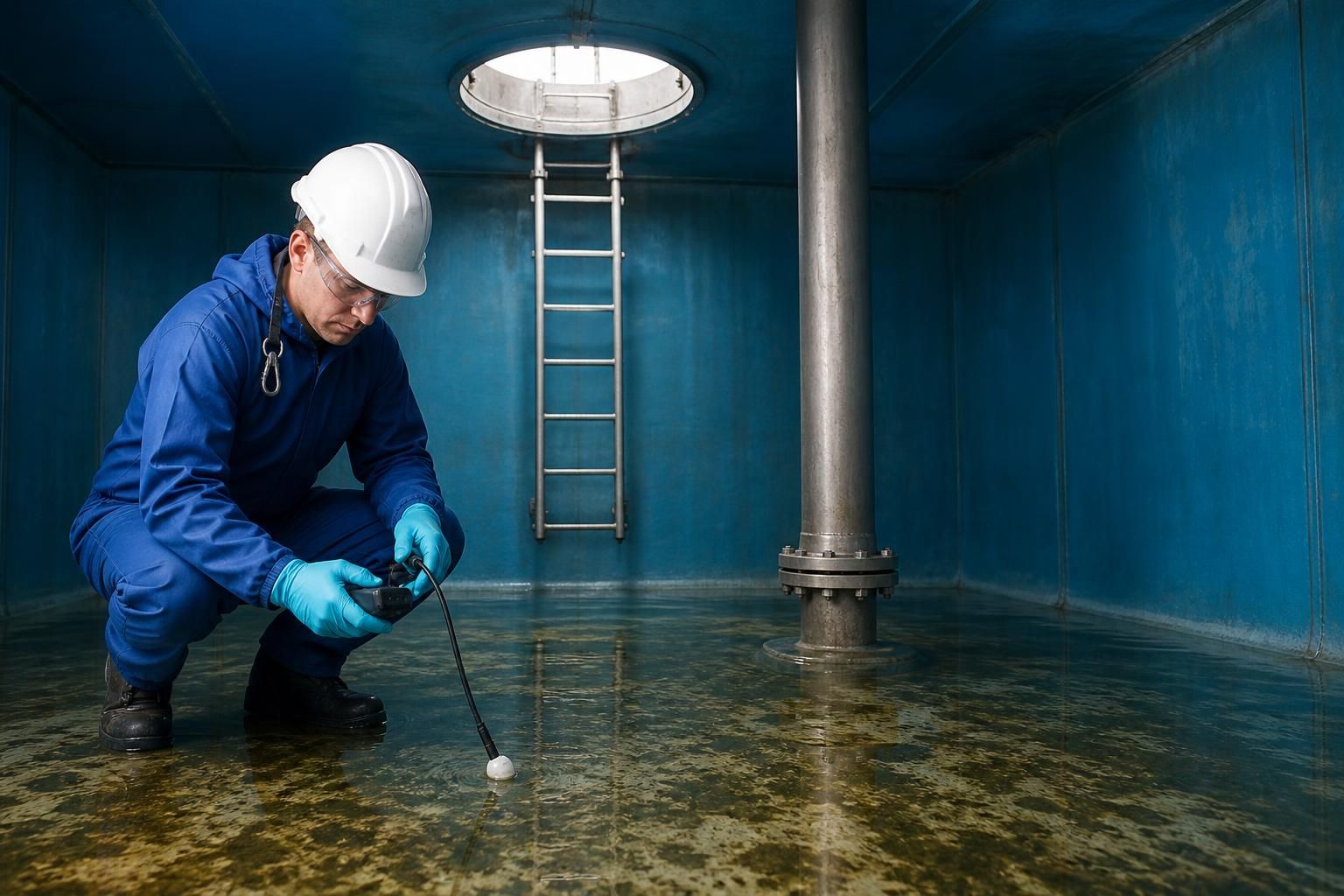
A water tank disinfection method statement is a site-specific document explaining how the work will be carried out, controlled and evidenced. In addition to describing the treatment itself, it should give enough technical and operational detail for the client, contractor and any affected water-system users to understand the planned approach, the conditions that must be met before work starts, and the criteria for handing the system back.
System and site information should identify the premises, tank or tanks concerned, the relevant water system and the limits of the work. Useful details include tank identification numbers, location, capacity, construction material, access arrangements, connected services, associated pumps or valves, and the parts of the system that will remain in use. A schematic or marked-up drawing can help show isolation points, drain points, sample points and areas that may be affected by the work.
The document should also record the information used to plan the treatment. This may include the reason for disinfection, known defects, previous water-quality concerns, recent inspection findings and any restrictions imposed by the building or its occupants. If the tank forms part of a larger system, the method statement should explain how the proposed work relates to downstream pipework, outlets, temperature controls and other connected components.
Prerequisites and permissions should be clear. The method statement may need to specify that access, water-system information, isolation authority, suitable drainage and a safe working area are confirmed before the contractor attends. It should state who authorises the system to be taken out of service and what arrangements apply if isolation cannot be achieved or the system is found to differ from the available records.
A suitable document should cross-reference the supporting safety information rather than treating the method statement as a substitute for it. Depending on the site, this can include:
- the task-specific risk assessment;
- COSHH assessments and current safety data for any chemical used;
- confined-space arrangements where entry into a tank or chamber is possible;
- work-at-height, electrical and manual-handling controls where relevant;
- site induction, permit-to-work and emergency procedures; and
- environmental arrangements for discharge, spill response and chemical waste.
Where tank entry is unnecessary, the method statement should say so and explain how the work will be completed without entry. Where entry may be required, it should set out the authorisation, atmosphere checks, access equipment, communications, standby arrangements and rescue provisions. A statement that simply says operatives will use appropriate PPE is not enough; it should identify the controls that apply to the actual tank, location and task.
Technical parameters should be stated in a way that allows the work to be checked. The document should identify the approved disinfectant, concentration or dosing basis, required contact conditions, method of application, compatibility limitations and any manufacturer or site instructions that affect its use. It should explain how the operative will confirm that the intended conditions have been achieved, including the instruments used, their suitability and, where applicable, calibration status.
The method statement should explain how physical obstructions, sediment, scale, damaged coatings or inaccessible areas will be dealt with. It should state what happens if inspection reveals a defect that could prevent effective disinfection, such as a leaking valve, defective access cover or contaminated component that cannot be cleaned adequately. A clear hold point should require the issue to be reported and resolved, or formally accepted by the responsible client representative, before the work proceeds.
Communication and service protection are important in occupied or operational premises. The document should identify how affected users will be informed, how outlets or services will be protected from unintended use, and how the responsible person will know when the system can be returned to operation. It should also cover unexpected events, such as loss of isolation, chemical spillage, failure of a pump, discovery of structural damage or an inability to achieve the specified treatment conditions.
Documentation and handover requirements should be precise. The completed records may include the tank identification, dates and times of key activities, operative names, chemical details, instrument readings, inspection observations, deviations, photographs where appropriate, waste documentation and any follow-up actions. The method statement should identify the records that will be supplied to the client and explain how unresolved defects or restrictions will be highlighted rather than concealed within a general completion note.
Finally, the method statement should define the handover conditions without assuming that carrying out the planned task alone proves satisfactory completion. It should identify the required inspection, sampling or other verification route, the responsible parties for reviewing the results, and the action to be taken if the acceptance criteria are not met. This gives the client a traceable link between the planned work, the evidence produced and the decision to place the water tank back into service.
Before approval, the client should check that the document matches the actual tank and site rather than relying on a generic template. A sound method statement is specific enough to guide the work, flexible enough to address defined contingencies, and sufficiently documented to support the site's ongoing water hygiene records.
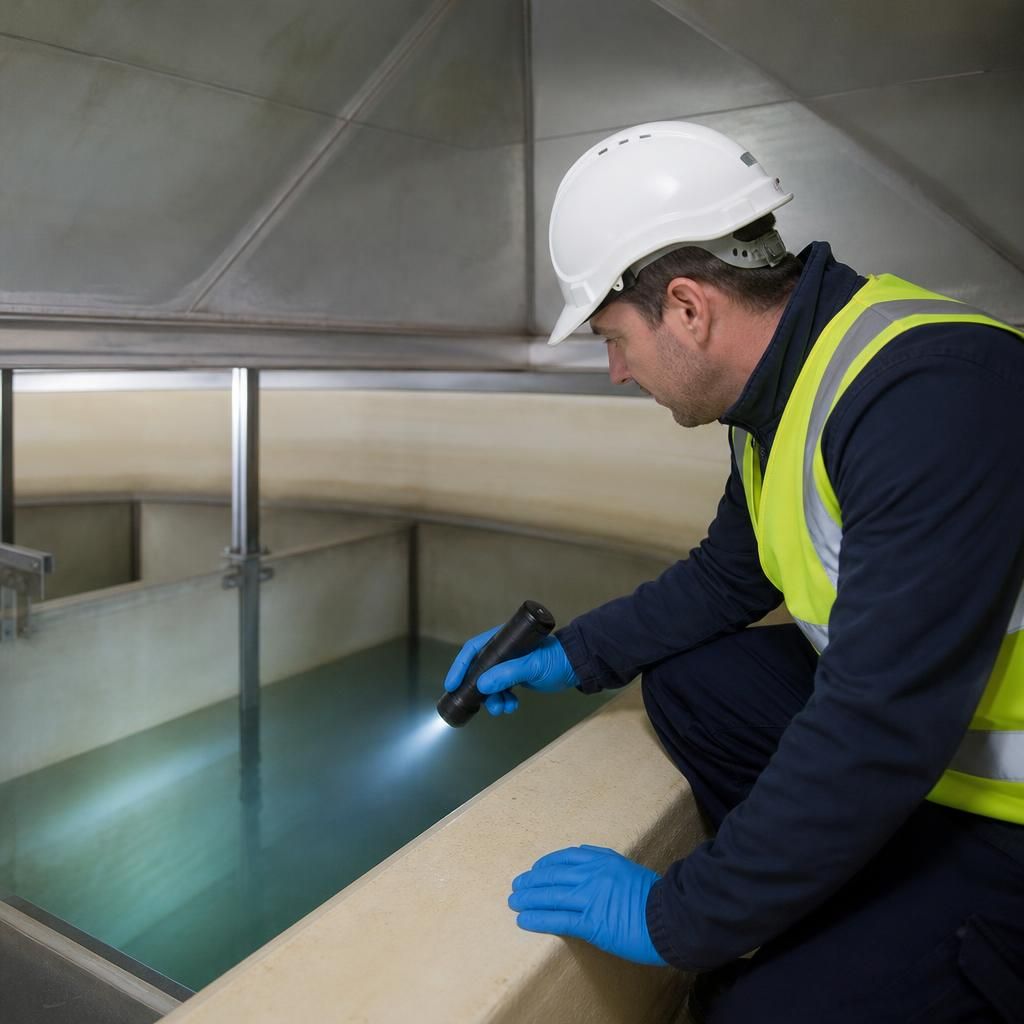
A water tank disinfection method statement should be a controlled document, not a fixed template that remains unchanged when site conditions develop. Its issue number, preparation date, author and approval status should be identifiable so the client and operatives can confirm that they are working from the current version.
The document should also explain how changes will be managed. If the tank, access arrangements, isolation plan, chemicals, equipment or treatment sequence differs from the approved method, work should pause at the relevant control point while the change is assessed and authorised. Revised instructions should be communicated to everyone involved, with superseded versions removed from use and the reason for the change recorded. This creates a clear audit trail and prevents an operative from following instructions that no longer match the system.
Need guidance on your water tank disinfection method statement?
Blue Fish Water Management Ltd can advise on the information needed for a site-specific water tank disinfection method statement. Contact the team to discuss your water hygiene requirements.