
What testing is required after water tank disinfection?
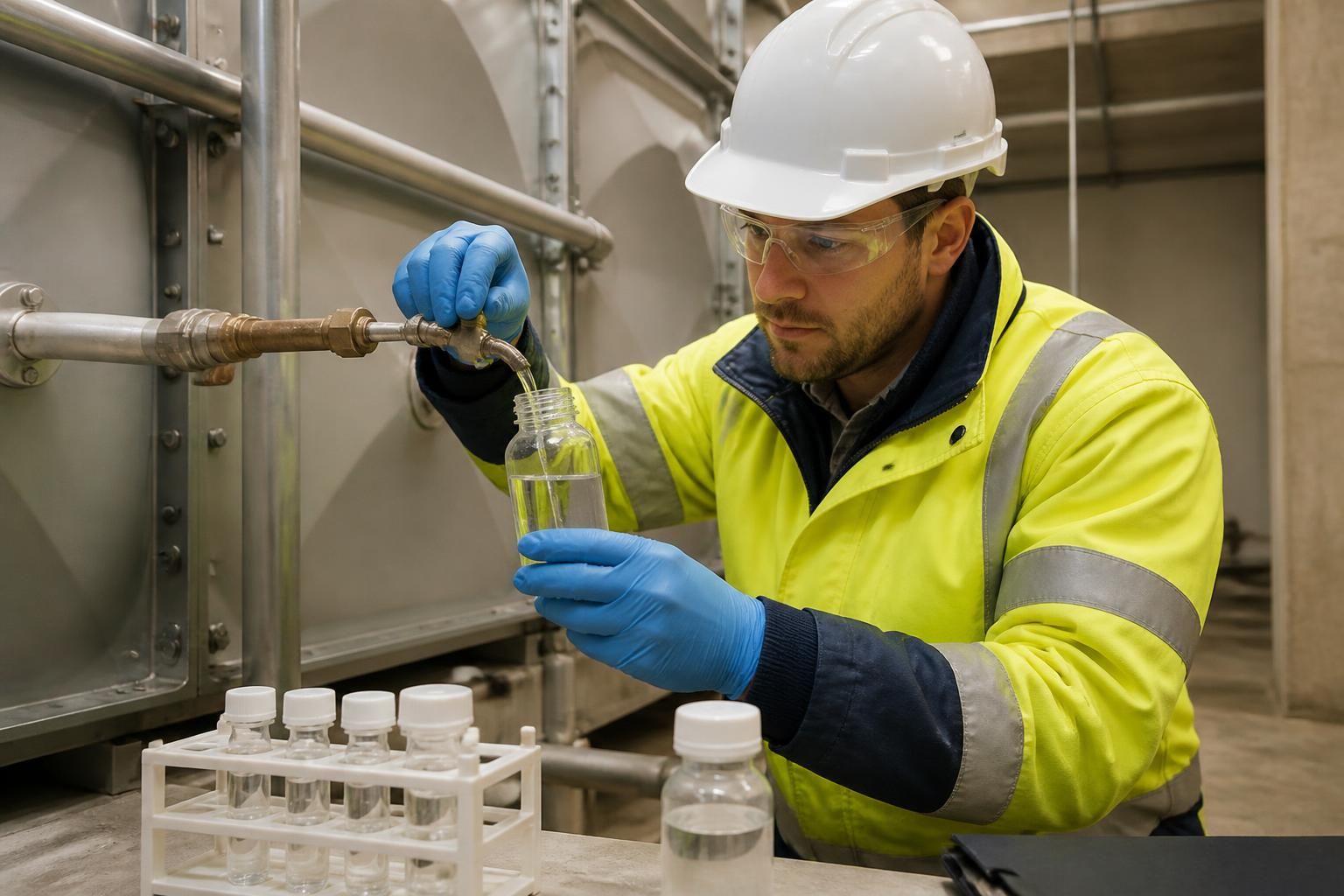
There is no single universal post-disinfection test panel. The required checks depend on the disinfection chemical or method used, the type of tank and distribution system, the reason for the work, and the findings of the water hygiene risk assessment. Testing should demonstrate that the system has been safely returned to service and that its operating controls are functioning as intended.
Chemical verification before use
Where chlorination or another chemical treatment has been used, the person carrying out the work should verify the disinfectant concentration at relevant points before the system is handed back. Samples may be taken from the tank, outlets and representative parts of the distribution network because concentration can vary through the system. The water should not be returned to normal use until the disinfectant has been adequately removed, neutralised or reduced in accordance with the treatment method and the applicable safety requirements.
Other basic water-quality observations can also be relevant at this stage. These may include pH, appearance, odour, turbidity and, where appropriate, temperature. Such checks can identify incomplete flushing, disturbed deposits or a treatment condition that could affect the reliability of subsequent microbiological samples.
Microbiological sampling and timing
Microbiological samples should be collected using a defined sampling plan rather than from a convenient outlet alone. The plan should identify representative outlets, tank sections and any areas where water may stagnate or where contamination was previously found. Taps and sample points should be prepared consistently, and the laboratory should receive sufficient information about the system, treatment and sampling locations to interpret the results properly.
Sampling should take place at the point specified by the contractor's method statement, the risk assessment or relevant technical guidance. A sample taken immediately after heavy flushing may not provide the same evidence as one taken after the system has been refilled and returned to its normal operating conditions. For that reason, the sampling interval should be agreed in advance rather than chosen solely for convenience.
A Legionella sample is not automatically required after every tank disinfection. It may be appropriate where the risk assessment identifies a significant risk, where Legionella contamination prompted the disinfection, where a responsible person needs evidence of control, or where the system is subject to a particular healthcare or operational regime. A negative result is useful evidence, but it does not replace ongoing control of temperatures, storage conditions, circulation, cleanliness and stagnation.
How results should be assessed
- Disinfectant results should be compared with the requirements of the treatment procedure and the safe-use requirements for the system.
- Microbiological findings should be interpreted by a competent person in relation to the system history, sampling points, previous results and the reason for disinfection.
- A general bacterial count should not be treated as a standalone pass-or-fail measure; a change from the system's normal results may be more significant than an isolated result.
- Any detection of indicator organisms or Legionella should trigger a documented review, with further sampling, investigation or remedial work where justified.
- Results should be considered alongside physical inspection, tank condition, temperature measurements and evidence that dead legs, low-use outlets or other underlying causes have been addressed.
Checks after recommissioning
Once the tank and associated pipework are back in service, operational checks may be needed to confirm that the system can maintain its intended control conditions. For hot-water systems, this can include temperature measurements at storage, return and representative outlets. For cold-water systems, checks may focus on storage temperature, turnover, insulation, stagnation and the condition of the tank and lid. The exact checks depend on system design and the hazards identified in the assessment.
If results are unsatisfactory, simply repeating disinfection may not solve the problem. The investigation should consider damaged or poorly fitting tank covers, sediment, corrosion, inadequate turnover, inaccessible sections, cross-connections, dead legs, ineffective circulation and defects that allow contamination to recur. Corrective work should be followed by the testing specified for the revised method statement.
Records that should be retained
The completion record should link the results to the work carried out. It should normally include the system identification, treatment method, chemical used where relevant, sampling dates and locations, flushing or neutralisation details, test results, laboratory documentation, deviations from the planned procedure and any follow-up actions. Keeping this evidence with the water hygiene log allows the responsible person to demonstrate what was tested, why it was tested and how the results informed the decision to return the system to use.
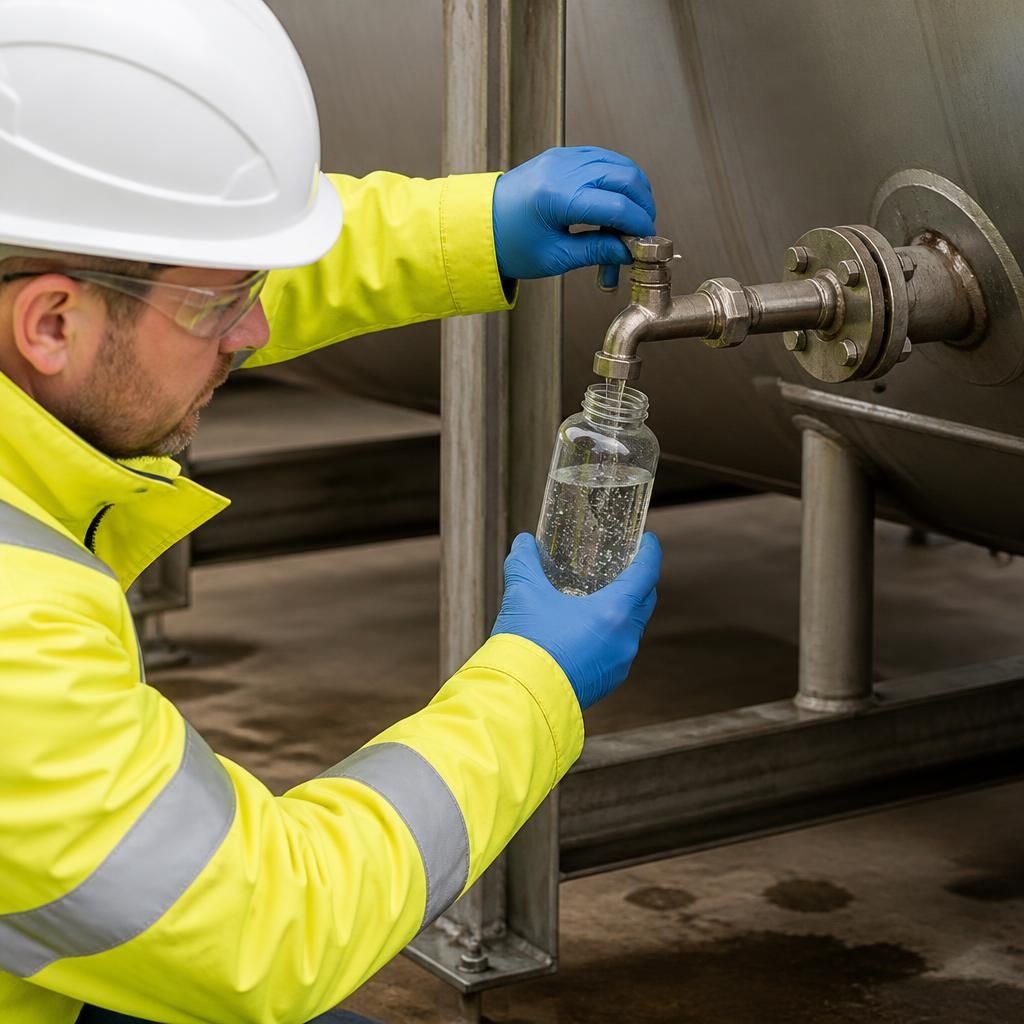
Post-disinfection water samples are only useful when they are collected and handled in a way that protects their integrity. A poor sample can produce an unreliable result, even where the tank and pipework have been treated correctly.
- Use suitable sterile sample containers supplied or approved by the laboratory.
- Record the system, outlet, sample type and collection conditions accurately.
- Avoid contaminating the container, cap or tap during collection.
- Keep samples under the conditions specified by the laboratory and arrange transport within its required timeframe.
- Use a competent laboratory, including a UKAS-accredited laboratory where the applicable specification or client requirements call for it.
The laboratory report should be checked against the sampling plan and the reason for disinfection. Missing location details, an unsuitable sample condition or a result marked as compromised may mean that repeat sampling is needed before the system can be confidently assessed.
Discuss your post-disinfection testing requirements
Need to confirm which post-disinfection tests your water system requires? Discuss the tank, treatment method and risk assessment with Blue Fish Water Management Ltd to identify an appropriate testing plan.