
How is contamination confirmed before disinfecting a window cleaning water tank?
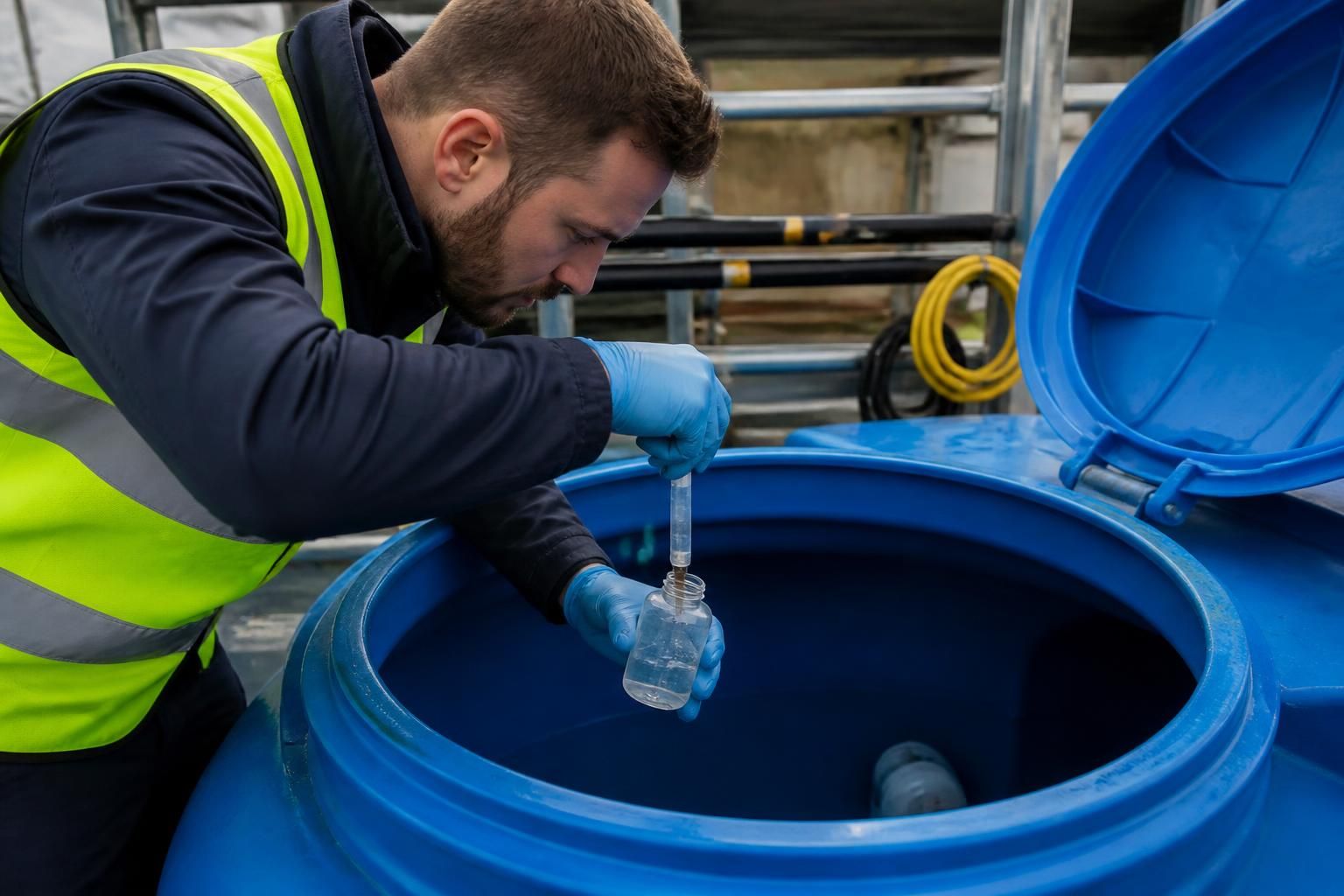
A window cleaning water tank is confirmed as contaminated when physical evidence, system history and laboratory results together show that the water or internal surfaces present an unacceptable biological or physical hazard. Cloudiness, odour, staining or visible deposits can indicate a problem, but these observations alone do not identify the contaminant or establish whether disinfection is required.
The assessment should consider the tank and the connected equipment as one system. Relevant checks include:
- the condition of the tank, lid, seals, vents and access points;
- evidence of ingress from dust, rainwater, pests, cleaning chemicals or other substances;
- sediment, sludge, scale, algae or biofilm on the tank base and internal surfaces;
- water temperature, stagnation, turnover and periods when the system has not been used;
- the condition of pumps, hoses, filters, pipework and delivery points; and
- whether previous maintenance, cleaning or disinfection has been documented.
Sampling should be planned around how the system is used rather than relying on a single convenient sample. Depending on the findings, this may involve water from the tank, water from a representative outlet and, where appropriate, samples associated with the incoming supply or areas where deposits have formed. The sampling method, locations, date, system condition and any relevant observations should be recorded so that the laboratory result can be linked to the actual system.
Microbiological analysis can look for organisms relevant to the identified risk, including Legionella where the assessment indicates that testing is appropriate, together with other indicator organisms or general bacterial activity. The appropriate test depends on the source of the water, the tank design, the exposure route and the reason contamination is suspected. A laboratory result should therefore be interpreted alongside the inspection findings rather than treated as an isolated pass-or-fail statement.
Results can be affected by sampling technique, recent flushing, tank disturbance, disinfectant residues and delays in getting a sample to the laboratory. The report should be checked for the sample location, collection details, analytical method, result units and any comments about the validity or limitations of the test. Where a result is unexpected or inconsistent with the condition of the tank, further sampling may be needed before selecting the treatment.
Confirmation also requires distinguishing between different types of contamination. Organic deposits and biofilm may support bacterial growth even when the water appears clear. Conversely, a high level of suspended sediment may affect equipment performance without proving the presence of a specific pathogen. Chemical contamination, physical debris and microbiological contamination require different corrective measures, so the suspected cause should be identified before choosing a disinfectant or deciding whether cleaning is sufficient.
The evidence should be retained with the tank’s water hygiene records. A useful record includes the inspection findings, photographs where relevant, sampling points, laboratory report, maintenance history and the reason for the proposed action. This provides a defensible basis for deciding whether to clean, disinfect, investigate the wider system or arrange remedial work.
Following disinfection, repeat sampling may be appropriate to verify that the treatment was effective, particularly where the initial contamination was significant, the system has complex pipework or the source of the problem has not been removed. A negative result from one sample does not prove that every part of a poorly maintained tank and its connected equipment is free from contamination; the sampling coverage and the underlying condition still matter.
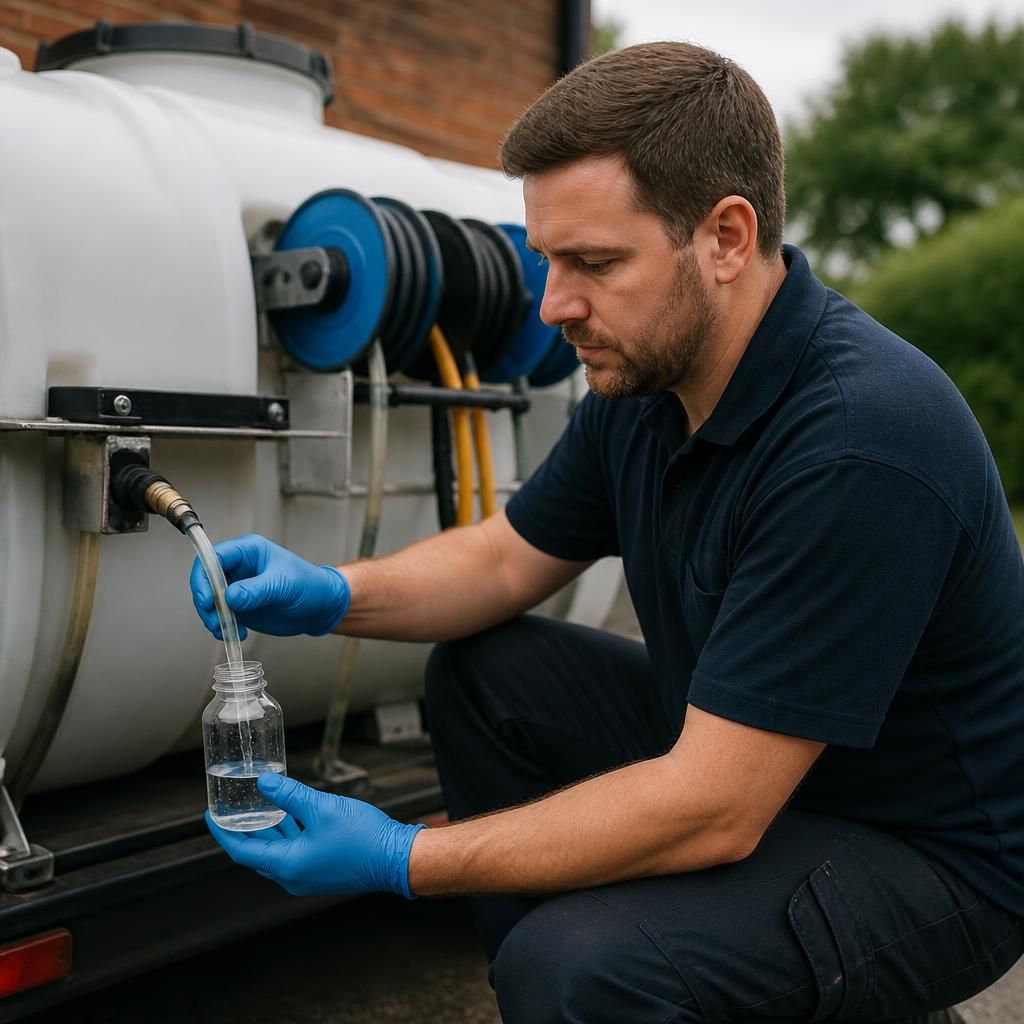
Sample handling is part of confirming contamination. Containers should be suitable for the analysis, kept sterile where required, and handled without touching the sample or container opening. The sample should be clearly identified and protected from conditions that could alter the result before it reaches the laboratory.
These controls help distinguish contamination present in the window cleaning water tank from contamination introduced during collection, storage or transport. If handling conditions are unsuitable or the sample history is unclear, the result may not provide a reliable basis for selecting disinfection or other corrective action.
Request expert guidance on confirming contamination before disinfecting your window cleaning water tank
Speak to Blue Fish Water Management for practical guidance on interpreting suspected contamination and selecting the appropriate next step for your window cleaning water tank.