
What risks must be assessed before disinfecting a window cleaning water tank?
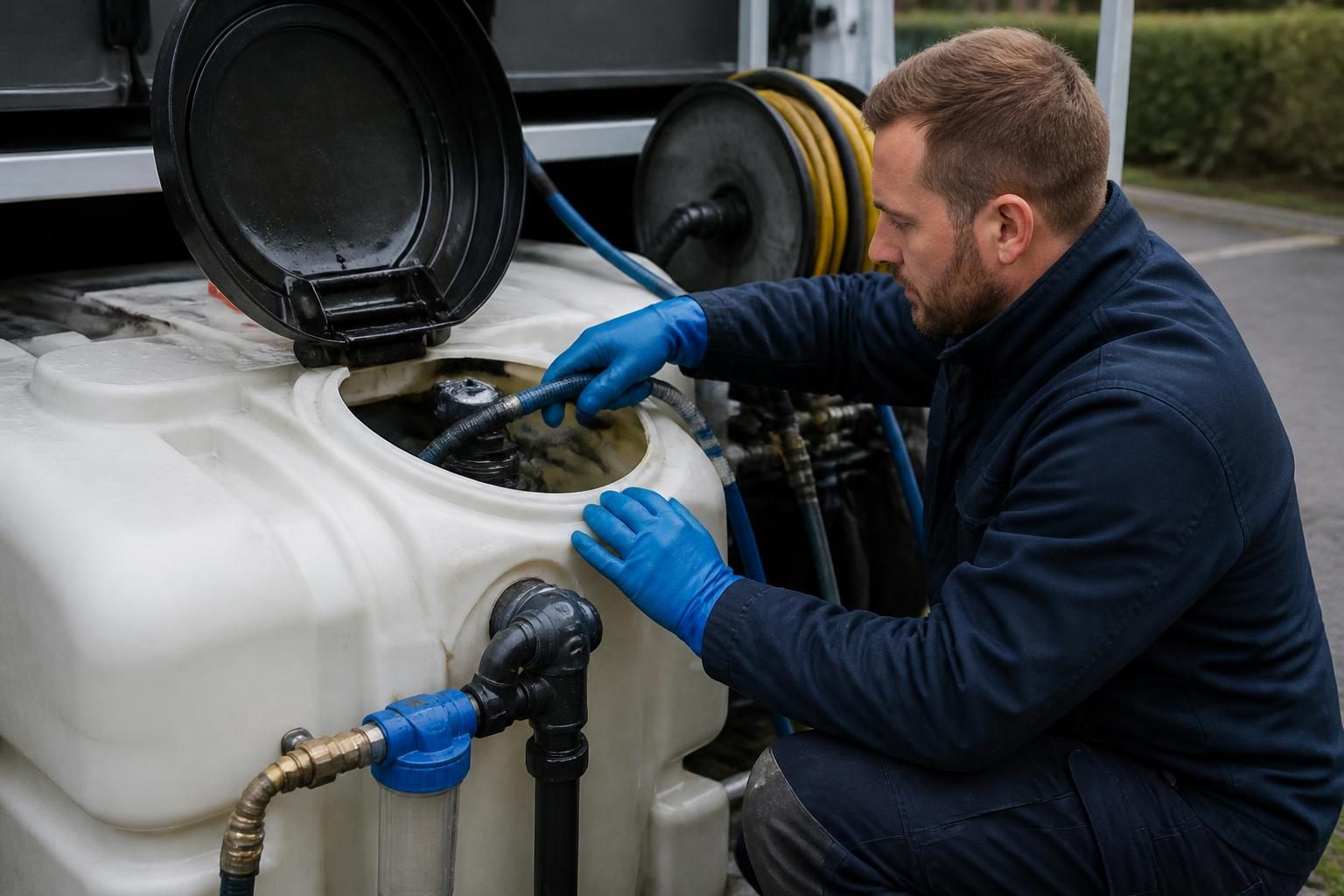
The assessment should establish whether disinfection is necessary, whether the proposed method is suitable for the tank and water-fed cleaning system, and whether the work can be completed without creating a greater risk. It should cover the people affected, the equipment and materials involved, the treatment method, the required shutdown and flushing arrangements, and the checks needed before the system returns to use.
Assess the purpose and use of the system. Confirm whether the tank supplies only a window cleaning process or forms part of a wider water system. The intended use affects the acceptable treatment method, the level of cleaning required afterwards and the consequences of leaving disinfectant residue in the system. Consider who may come into contact with the treated water, including operatives using poles, brushes, hoses or pumps, and whether spray or mist could be generated during operation.
Check chemical compatibility. The disinfectant must be compatible with the tank material, seals, fittings, pump components, hoses, filters, resin, reverse-osmosis equipment and other treatment media. Some chemicals can degrade plastics or elastomers, corrode metals, damage membranes or reduce the effectiveness of filtration equipment. The assessment should identify components that must be isolated, removed or replaced before treatment, rather than assuming that the whole installation can safely receive the same solution.
Consider the treatment method and its limits. Assess the required concentration, contact time, circulation arrangement and temperature, following the product label and safety data sheet. A disinfectant may not work effectively where deposits or established biofilm remain in place. Mechanical cleaning or removal of scale may therefore be needed, but that work can release additional contamination and must be controlled. The assessment should also define how the solution will be distributed to all relevant internal surfaces and dead legs, rather than treating only the visible tank interior.
Assess exposure under the Control of Substances Hazardous to Health Regulations. Identify the risks from mixing, transferring, applying and removing the disinfectant, including incompatible chemicals, splashes, vapour and contaminated protective equipment. Controls may include a written method statement, suitable personal protective equipment, training, secure chemical storage and access to the relevant safety data sheet. PPE should support, not replace, measures that prevent exposure at source.
Review operational and service-continuity risks. Determine how the tank will be isolated from normal cleaning activities and how accidental use will be prevented while treatment is in progress. Consider the effect of taking the system out of service, the need to protect unfinished work, and the risk that someone reconnects or operates equipment before flushing and verification are complete. Clear labelling, isolation controls and a defined handover reduce the chance of premature use.
Assess the flushing and reinstatement stage. Disinfection is not complete when the chemical has reached its contact time. The assessment should specify how residual disinfectant will be removed, where the flushing water will go, and what checks will confirm that the system is suitable for use again. Filters, carbon cartridges, resin and other consumable components may require replacement after treatment. The person responsible should record the treatment carried out, the parts isolated or changed, the flushing completed and the approval to return the equipment to service.
Consider environmental and third-party effects. Wastewater containing disinfectant, loosened deposits or microbial material must not be discharged without considering drains, soil, surface water, plants, animals and neighbouring premises. The method should prevent uncontrolled release and set out any neutralisation, collection or disposal requirements that apply. Where the tank is located at a customer’s premises, the assessment should also address access arrangements, communication with the site operator and protection of people who are not involved in the work.
Use evidence to decide whether treatment is proportionate. The decision should take account of inspection findings, the tank’s history, the condition of associated equipment and any available water-testing results. If the tank is damaged, cannot be cleaned effectively, or is incompatible with the proposed disinfectant, replacement or specialist remedial work may be safer than disinfection. A competent person should review the findings and document the reasoning, controls and post-treatment verification before the system is put back into operation.
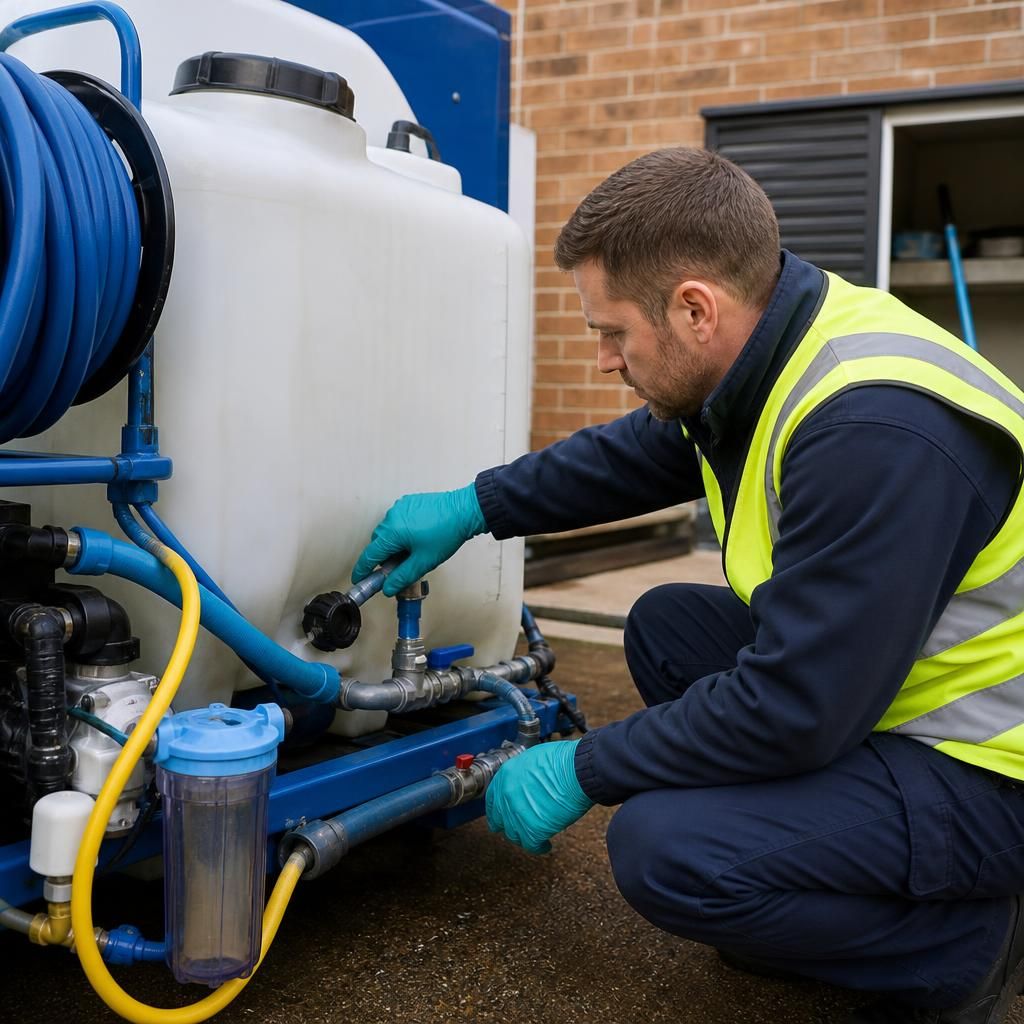
Check for cross-connections before introducing disinfectant. A window cleaning tank may connect to pumps, hoses, filters, reverse-osmosis equipment or a supply that is also linked to another part of the premises. The assessment should trace the flow path and identify any route by which disinfectant could enter a mains-fed system, shared pipework or equipment not intended for treatment. Backflow protection, air gaps and isolation points should be verified rather than assumed. This prevents the treatment solution from spreading beyond the tank and makes clear which components must be disconnected, protected or checked before the system is returned to service.
Discuss window cleaning water tank disinfection risks
Contact Blue Fish Water Management Ltd to discuss a structured risk assessment before disinfecting your window cleaning water tank, including the tank, connected equipment and proposed treatment method.