
What disinfectant should be used for a window cleaning water tank?
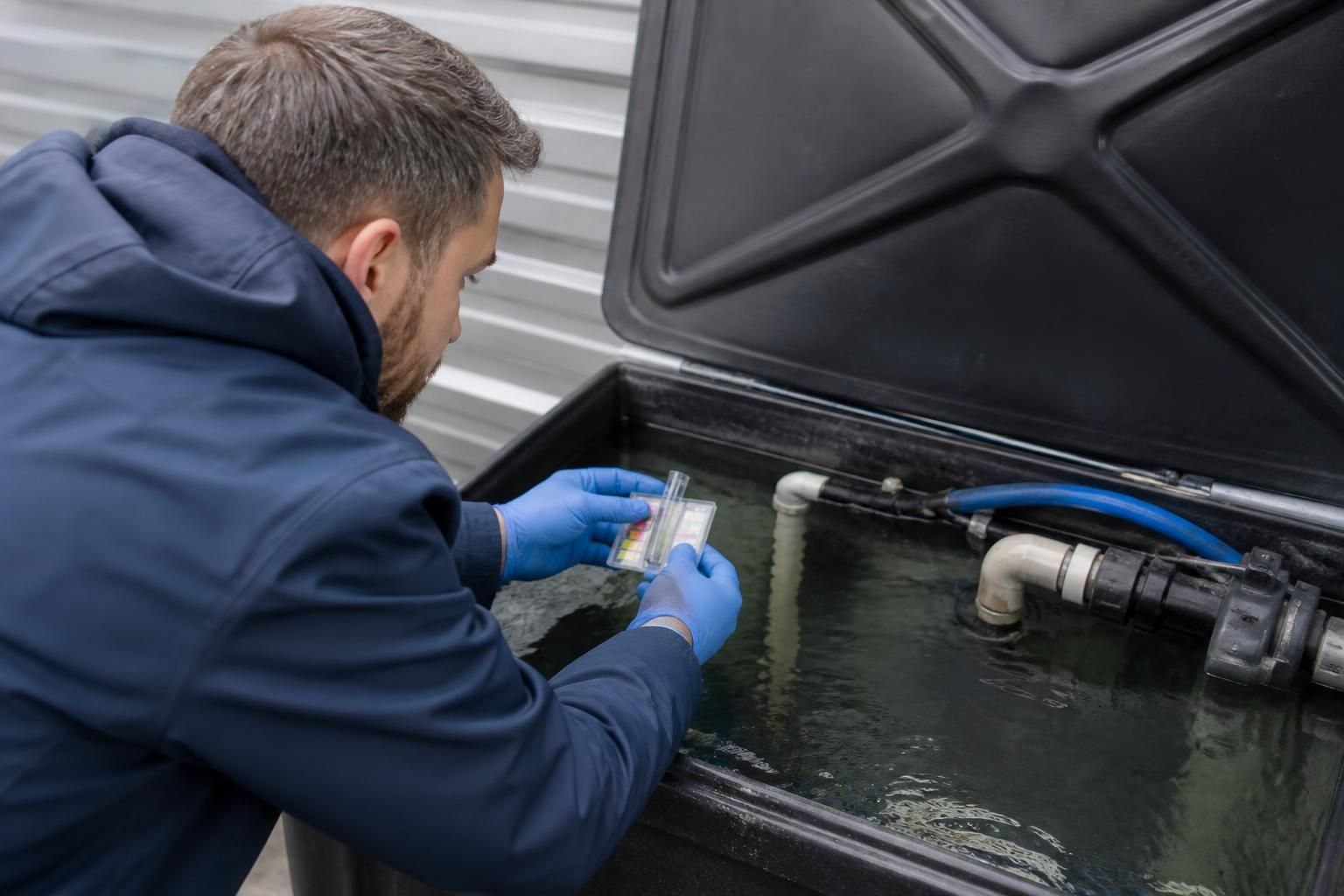
The suitable choice is a water-system disinfectant based on chlorine, usually sodium hypochlorite, rather than ordinary household bleach. The product should be authorised and labelled for the intended water-system application, and its use must be compatible with the tank, pump, pipework and any water-treatment equipment connected to it.
Do not select a product by strength alone. The correct disinfectant depends on the tank’s construction, the volume and condition of the water, the level of contamination and whether the tank forms part of a wider pure-water system. A product that is appropriate for a simple polyethylene tank may be unsuitable for components such as reverse-osmosis membranes, de-ionisation resin, seals or dosing equipment.
Household bleach is not automatically an acceptable substitute. It may contain additives, its available chlorine concentration may be uncertain, and it may not provide the instructions or control needed for professional water-system disinfection. A suitable commercial biocide should have clear label instructions covering dilution, application, contact time, material compatibility, rinsing and disposal.
Before treatment, the tank should be emptied and physically cleaned to remove sludge, scale, biofilm and other deposits. Organic matter can consume chlorine and reduce the amount available to act on contamination. Cleaning is therefore an important part of disinfection, rather than a replacement for it.
For a window cleaning water tank, the assessment should also consider the complete water path. This can include:
- the tank outlet, lid, breather and internal surfaces;
- feed and return hoses, pumps and valves;
- filters, cartridges and strainers;
- reverse-osmosis equipment and storage vessels; and
- de-ionisation resin, water-fed poles and any sections that can retain stagnant water.
Chlorine may damage or impair some treatment components, particularly membranes, resins and certain elastomers. Sensitive equipment may need to be isolated or removed before treatment, with the system reassembled only after the disinfectant has been fully flushed. The equipment manufacturer’s instructions should take precedence where they specify a restriction on chlorine or another oxidising biocide.
The disinfectant should be prepared from the measured tank volume and applied in accordance with the product label or a documented disinfection procedure. Guessing the dose, mixing different chemicals or extending treatment without technical justification can damage equipment and create a chemical safety risk. Disinfectants must never be mixed with acids, ammonia-based products or other cleaning chemicals, as dangerous gases or reactions can result.
After the required contact period, the tank and connected components should be drained and rinsed with suitable water until testing confirms that disinfectant residues are at an acceptable level for the intended use. Simply emptying the tank is not sufficient if treated water remains in hoses, pumps, low points or filters. Any rinse water and removed components should be handled in accordance with the product safety information and relevant environmental requirements.
Verification should include appropriate residual disinfectant checks and, where contamination or Legionella control is a concern, microbiological sampling by a competent water hygiene provider. A clean-looking tank is not proof that disinfection has worked. If results remain unsatisfactory, the cause may be a contaminated connected component, dead leg, damaged tank, poor circulation or continuing ingress rather than the choice of chemical alone.
For this reason, the best disinfectant is the one selected through a documented assessment of the whole water-fed system, not simply the strongest product available. A competent person should review the tank material, treatment equipment, contamination findings and intended return-to-service procedure before chemical disinfection is undertaken.
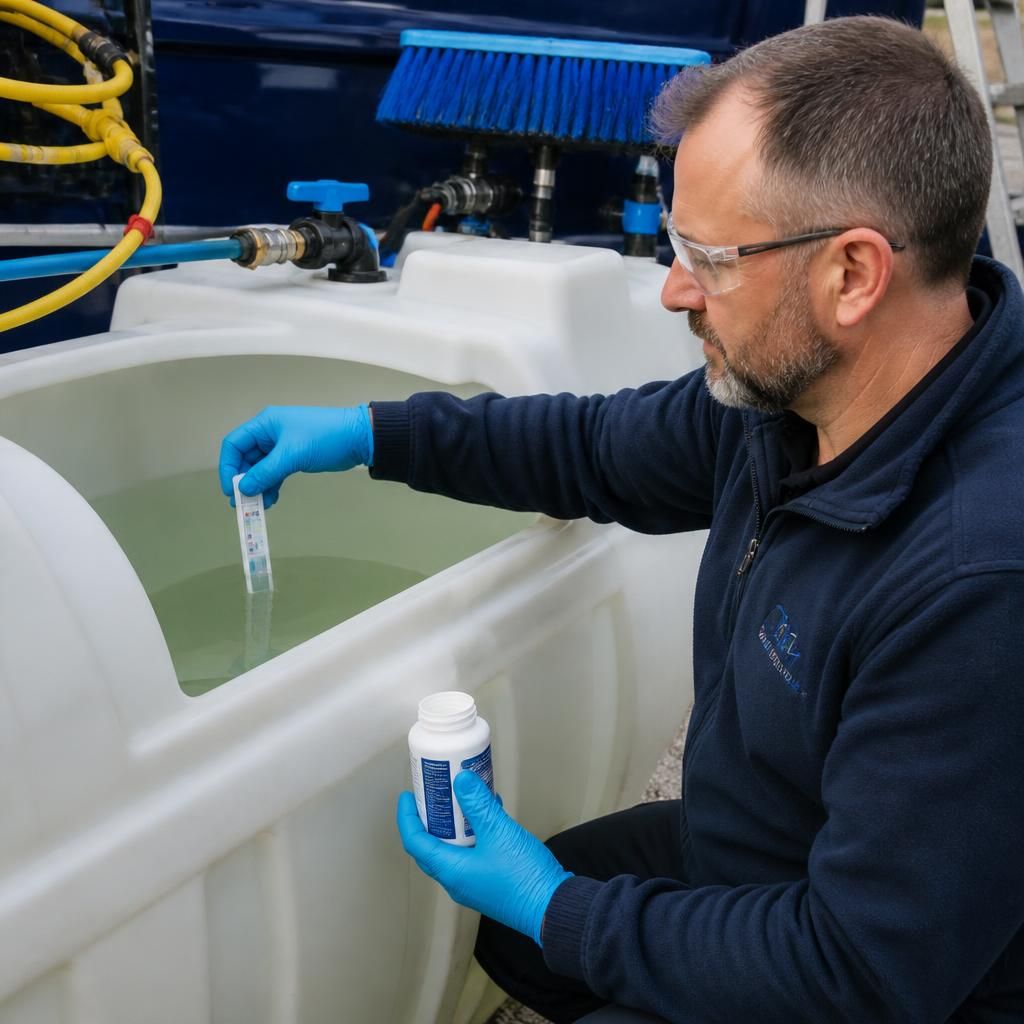
Purified water is not the same as disinfected water. Reverse-osmosis and de-ionisation equipment are designed to remove dissolved substances, but they do not make a contaminated storage tank hygienic. Disinfectant selection must therefore account for the tank and the full water-fed system, rather than relying on the performance of the purification equipment.
This is particularly important where treated water is stored before use. The chosen water-system biocide must be suitable for the intended disinfection task and compatible with any purification stages that remain connected. Those stages may require isolation during treatment, followed by careful flushing and checks before the system is used again.
Discuss the right disinfectant for your window cleaning water tank
If you are unsure which disinfectant is suitable for your window cleaning water tank, contact Blue Fish Water Management Ltd to discuss the tank, connected equipment and intended treatment process. Their water hygiene specialists can help establish an appropriate, controlled approach before disinfection begins.