
Can a window cleaning water tank be disinfected without replacing it?
Yes, a window cleaning water tank can often be disinfected without replacement if it is structurally sound, suitable for the intended water system and accessible for thorough cleaning. Replacement is more appropriate where the tank is damaged, persistently contaminated, degraded or cannot be cleaned and disinfected effectively.
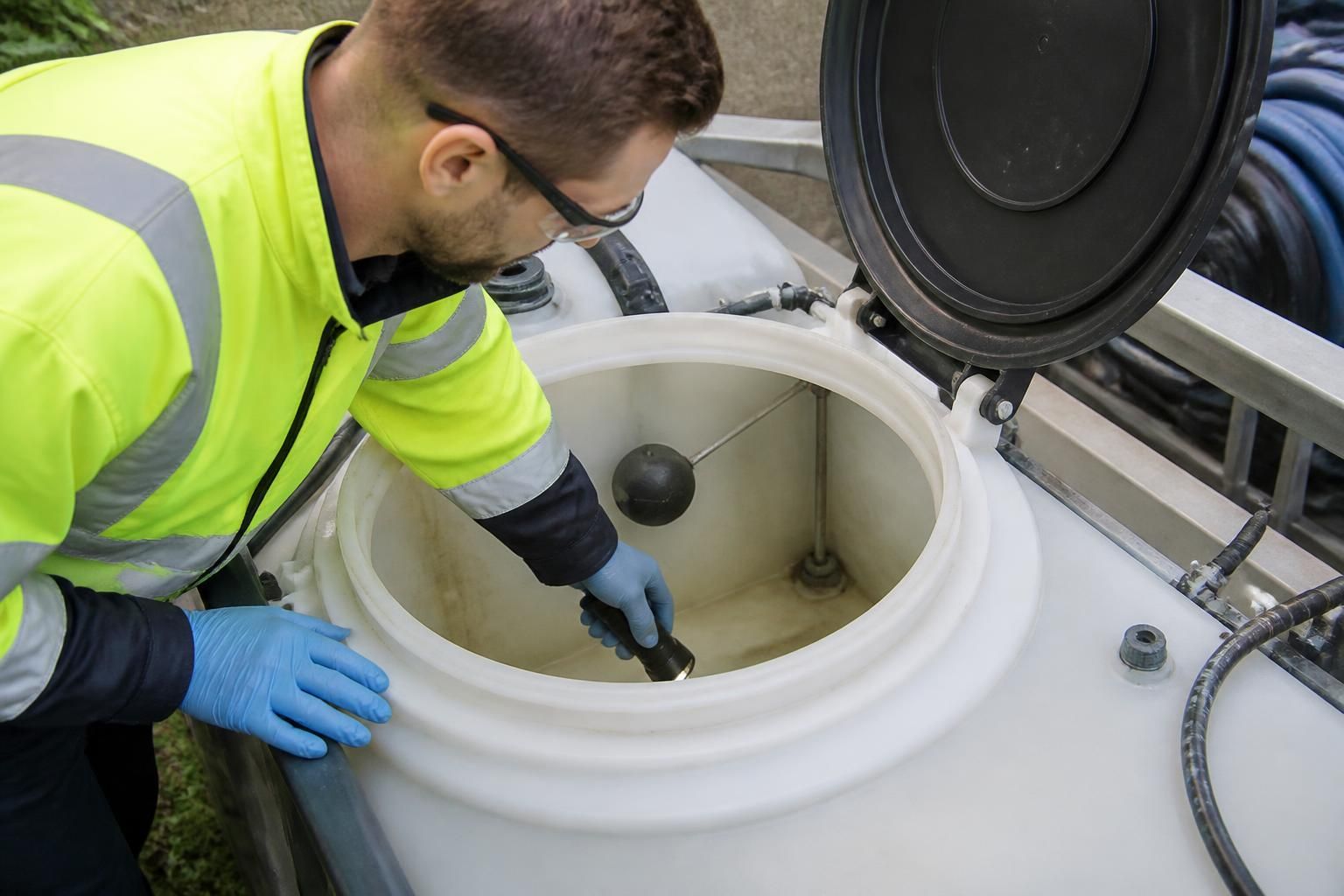
A window cleaning water tank that remains in use after contamination should be managed through a controlled cleaning, disinfection and verification process. The objective is not merely to add a chemical: contamination must be removed from the tank and associated components, the disinfectant must contact the relevant surfaces correctly, and the system must be shown to be suitable for return to service.
The first step is to understand how the tank is used. A water-fed window cleaning system may store purified or treated water, and its tank, lid, outlet, pipework, pump and fittings can all contribute to contamination. Water that remains unused for prolonged periods, exposure to heat, poor lid security, sediment or organic matter can reduce disinfection effectiveness. The assessment should therefore consider the whole arrangement rather than treating the tank as an isolated container.
Before work begins, the system should be taken out of service and the relevant risks assessed. This includes preventing contact between the disinfectant and people, cleaning chemicals, window-cleaning equipment or other substances that could react with it. The person carrying out the work should confirm the correct chemical, concentration, contact time, handling controls and disposal arrangements for the tank material and the intended water use. Product instructions and the applicable safety data should be followed.
Disinfection normally follows a sequence similar to this:
- Isolate the tank and equipment. Stop the affected system from being used and prevent untreated or disinfectant-containing water from reaching a pole, hose, pump or outlet where it could be released unintentionally.
- Empty and inspect the tank. Remove the stored water and examine internal surfaces, the lid, seals, connections and visible areas of pipework. Any sediment, slime, scale or organic residue should be identified because chemical treatment is less reliable when contamination is shielded by deposits.
- Clean before disinfecting. Physically remove deposits using methods and materials compatible with the tank. Cleaning water and debris should be collected and disposed of appropriately rather than allowed to enter an uncontrolled drainage route.
- Apply the selected disinfectant correctly. The solution must reach all relevant wetted surfaces and remain in contact for the specified period. This may require attention to the tank outlet, internal fittings, pump, hoses and sections of pipework that would otherwise remain untreated.
- Flush the system thoroughly. After the required contact time, remove the disinfectant and rinse with suitable water until the system is free from unacceptable chemical residue. Flushing should cover the tank and connected equipment, not just the visible outlet.
- Refill and verify. The system should be returned to its normal operating condition only after checks confirm that disinfection has been completed and the water is suitable for its intended use.
Verification is an important distinction between a completed disinfection and an assumed one. Depending on the reason for the work and the risk assessment, this may include checking disinfectant residuals, inspecting the tank again, reviewing the cleaning and contact-time records, and arranging appropriate water sampling. A sample can provide useful evidence, but it does not replace proper cleaning or prove that every internal surface was exposed to the treatment.
Where testing identifies an organism of concern, the result should be interpreted alongside the system design, usage pattern and sampling circumstances. A single result may indicate local contamination, wider system contamination or a sampling issue. Further investigation may be needed before the equipment is put back into routine use, particularly where water can be aerosolised during window cleaning or where workers could be exposed to contaminated water.
Materials and components also matter. Some tanks, seals, hoses and fittings can be affected by unsuitable chemicals, excessive concentrations, heat or prolonged contact. Damage that is not immediately visible may later cause leakage, odour, deterioration or renewed contamination. The selected treatment should therefore be compatible with the manufacturer’s instructions and the construction of the complete system.
Records should identify the reason for the work, the equipment treated, the inspection findings, the cleaning method, the disinfectant used, contact time, flushing arrangements, verification checks and any follow-up actions. These records help demonstrate that the tank was managed systematically and provide a baseline for future monitoring.
After disinfection, controls should address the cause of contamination. Practical measures may include keeping the lid secure, preventing ingress of dirt, avoiding unnecessary storage periods, maintaining suitable temperatures, inspecting hoses and fittings, and establishing a routine cleaning and monitoring schedule. If contamination returns despite these measures, the tank and the wider water-fed system should be reassessed rather than repeatedly treated without investigating the underlying cause.
For a business responsible for several vehicles, tanks or water-fed systems, a documented procedure can help maintain consistent standards. Blue Fish Water Management can provide risk-based advice, water hygiene testing and compliance support where specialist assessment or independent verification is required.
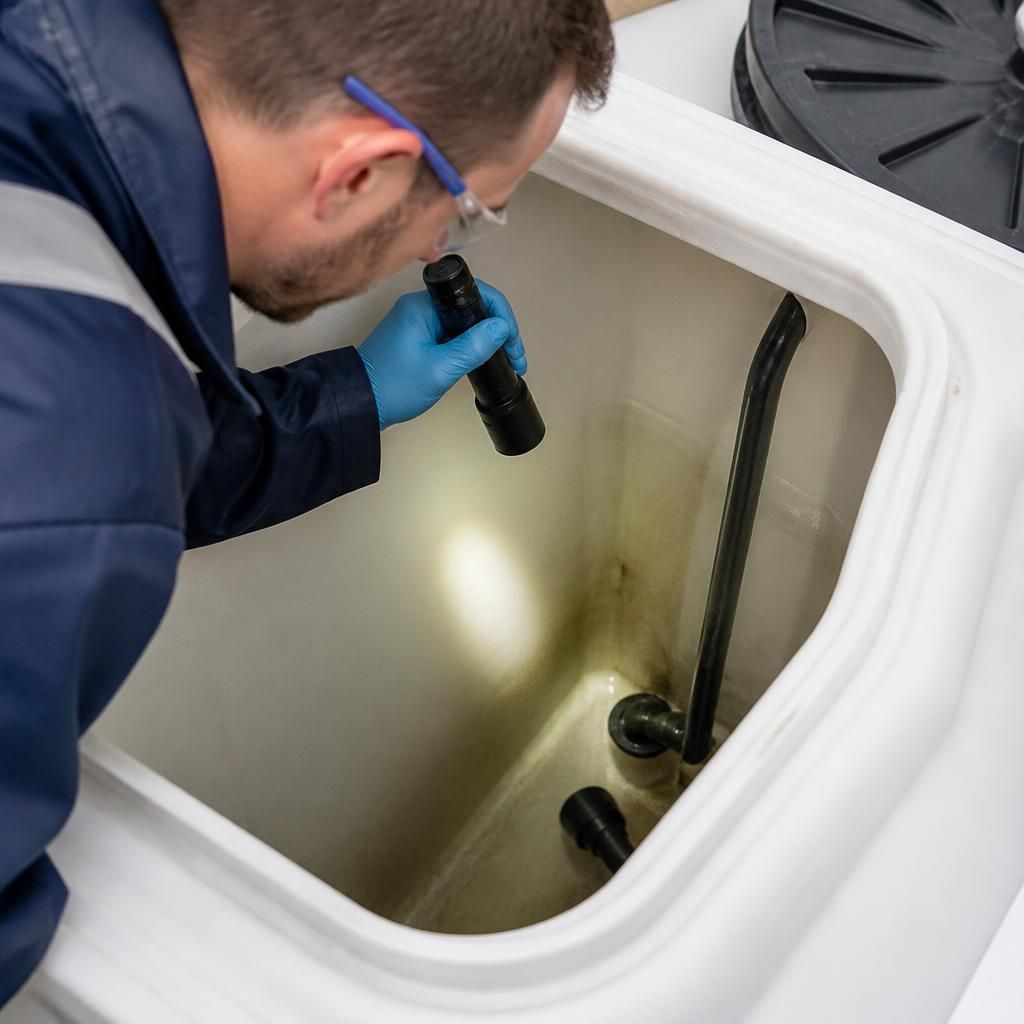
A positive contamination result does not automatically mean that a window cleaning water tank must be replaced. The key question is whether the contamination is removable and whether the tank can be returned to a hygienic condition without leaving protected areas where organisms or deposits can persist.
Disinfection is more likely to be suitable where internal surfaces are smooth, non-absorbent and free from persistent staining, heavy scale or damaged areas. Particular attention should be given to seams, joints, outlet points and any fittings that may retain residue. If these areas cannot be cleaned properly, chemical treatment alone should not be treated as proof that the tank is safe to reuse.
Replacement may therefore be a control measure rather than simply a response to age. It can remove uncertainty where the tank’s condition, construction or previous use prevents reliable cleaning and verification. The decision should be recorded with the inspection findings and supported by a risk-based assessment of the complete water-fed system.
Discuss disinfecting your window cleaning water tank
If you are unsure whether your window cleaning water tank can be safely disinfected, contact Blue Fish Water Management to discuss a risk-based assessment and suitable verification approach. Their specialists can help determine whether disinfection or replacement is the more appropriate control measure.