
What risks can contamination pose in a GRP water storage tank?
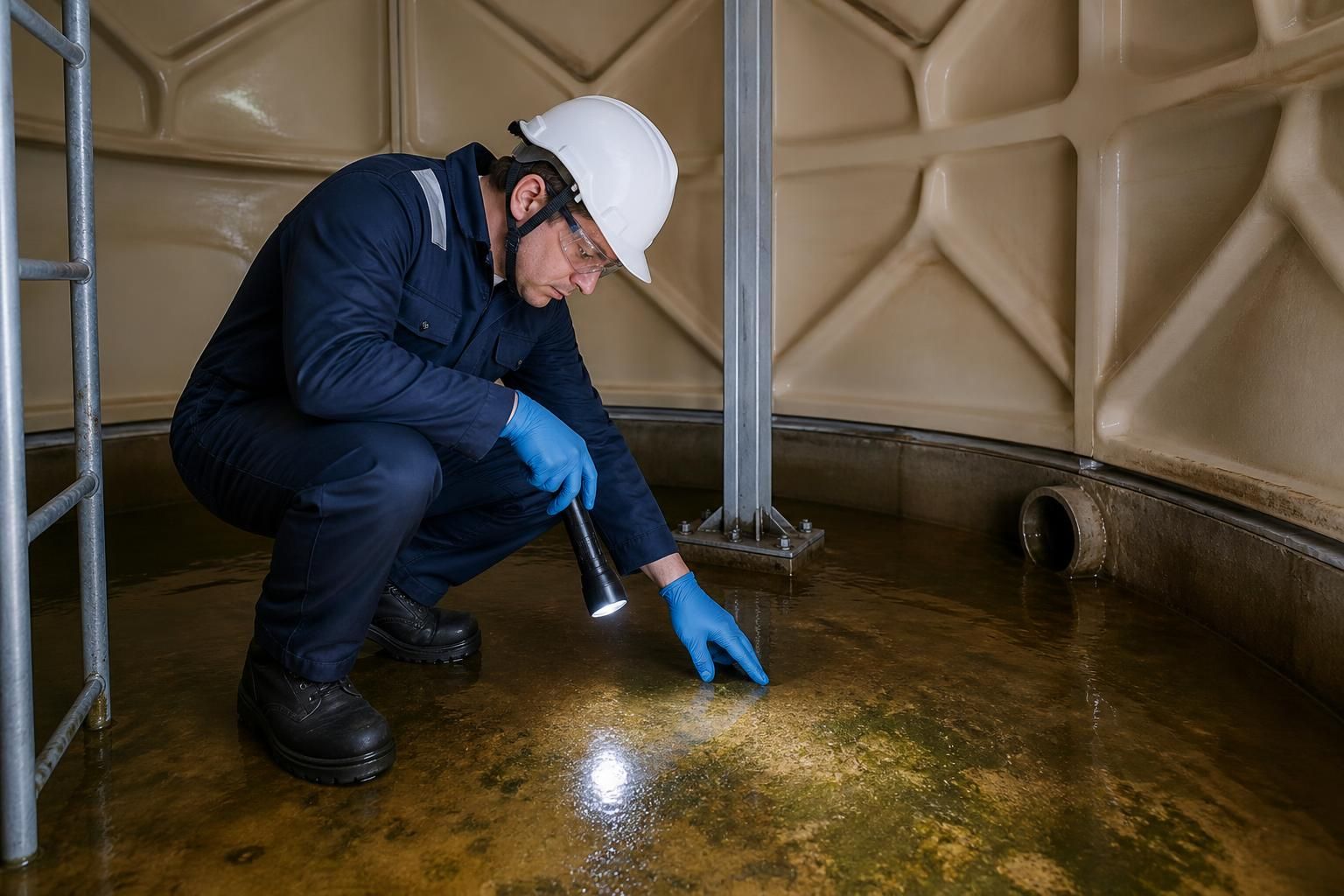
Contamination in a GRP water storage tank can create several distinct risks: exposure to harmful microorganisms, deterioration of the stored water, obstruction or damage within the distribution system, and loss of control over the water safety regime. The severity depends on the contaminant, how long it has been present, the tank’s temperature and condition, and whether the water is used for drinking, washing, process operations or other purposes.
Microbiological risk
A contaminated tank can provide conditions for microorganisms to multiply, particularly where water is warm, stagnant or poorly circulated. Organic matter and deposits may support a biofilm on internal surfaces. Biofilm can protect microorganisms from routine flushing and make contamination more persistent than a single water sample might suggest. Disturbing deposits during maintenance or changes in flow can also release contaminated material into the outlet pipework.
Where the tank forms part of a domestic hot or cold water system, contaminated water may be distributed to outlets used for drinking, food preparation, washing or bathing. Some exposure routes involve inhaling fine droplets or aerosols rather than drinking the water, so an assessment must consider how the system is used and not only the condition of the tank itself.
Water quality and usability
Organic debris, insects, animal ingress, dust and other foreign material can alter the appearance, odour or taste of stored water. These changes may indicate a wider failure of tank hygiene, defective covers or inadequate protection from the surrounding environment. Water that appears clear is not necessarily free from microbiological contamination, while visible material should be treated as a reason to investigate rather than simply removed from the outlet.
Contaminants can also enter the wider installation. Fine particles may block strainers, valves, spray plates and taps, while deposits can restrict flow or interfere with mechanical components. In process or commercial settings, unsuitable water quality may affect equipment, cleaning operations or products that come into contact with the supply.
How contamination can enter a GRP tank
- Damaged, ill-fitting or unsecured access covers can allow rainwater, dust, insects, birds or other material to enter.
- Defective insect screens, overflow arrangements or vents can provide an entry route for external contaminants.
- Cleaning chemicals, maintenance materials or unsuitable substances may be introduced during work on the tank or connected pipework.
- Low-use sections, poor circulation and infrequent turnover can allow deposits and microbial growth to remain undisturbed.
- Cracks, failed seals, damaged internal coatings or other defects can make the tank more difficult to clean and maintain effectively.
GRP is not immune to contamination simply because it is non-metallic. Its condition still needs to be checked for surface damage, degradation, loose components, failed sealant and areas where deposits can accumulate. Any defect that permits ingress or prevents effective cleaning increases the likelihood of a recurring problem.
Risks to water safety management
Contamination can indicate that existing control measures are not working as intended. If inspection findings, sampling results, cleaning records and system conditions do not align, the responsible person may be unable to demonstrate that the tank is being adequately managed. This can complicate decisions about continued use, isolation, cleaning, disinfection and recommissioning.
A single negative sample does not always establish that a tank is free from contamination. Results can vary according to sampling location, water movement and the condition of the tank at the time of sampling. A competent investigation should therefore consider the tank, its inlet and outlet arrangements, connected pipework, operating temperatures, usage pattern and maintenance history.
Risk control may involve isolating affected sections, removing the source of ingress, cleaning deposits, repairing defects, disinfecting the tank and connected system where appropriate, then carrying out suitable verification before normal use resumes. Records should show what was found, what action was taken and why the system was considered suitable to return to service. Ongoing inspection and water hygiene monitoring are important where the tank remains part of a higher-risk or heavily used installation.
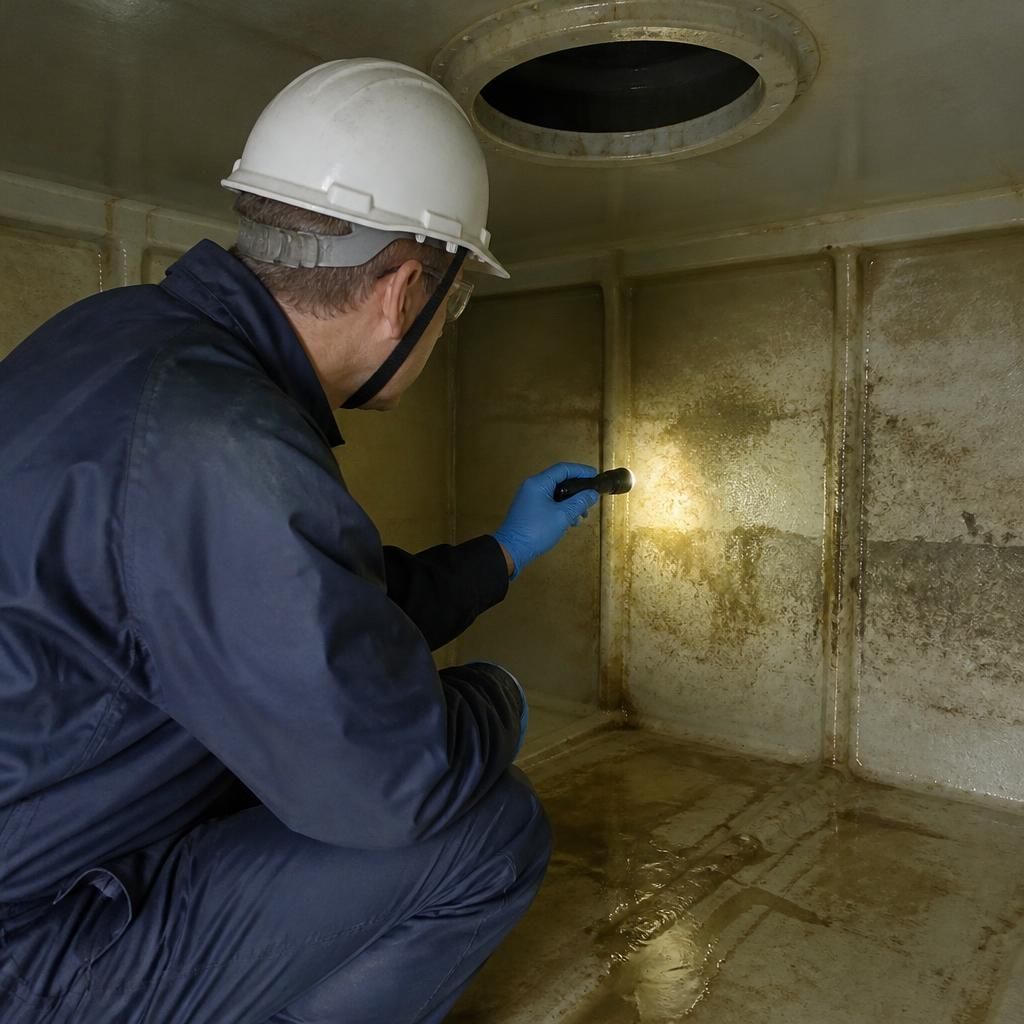
Contamination can also enter a GRP water storage tank through backflow from connected pipework. If water, cleaning agents or process fluids move in the wrong direction, the tank may be affected without any obvious damage to its cover or structure. This can introduce substances that alter the water’s chemical quality and may make it unsuitable for its intended use.
Investigating this risk means reviewing how the tank connects to the wider installation, including non-return devices, valves, pressure conditions and any systems that could discharge into the storage arrangement. Where backflow is possible, the source should be identified and the relevant protective measures checked before the tank is cleaned, disinfected and returned to service.
Discuss your GRP water storage tank contamination risks
If you need to assess contamination risks in a GRP water storage tank, speak to Blue Fish Water Management Ltd about a suitable inspection and water hygiene review. The findings can help determine whether further investigation or remedial action is appropriate.