
Is cold water tank cleaning required by law?
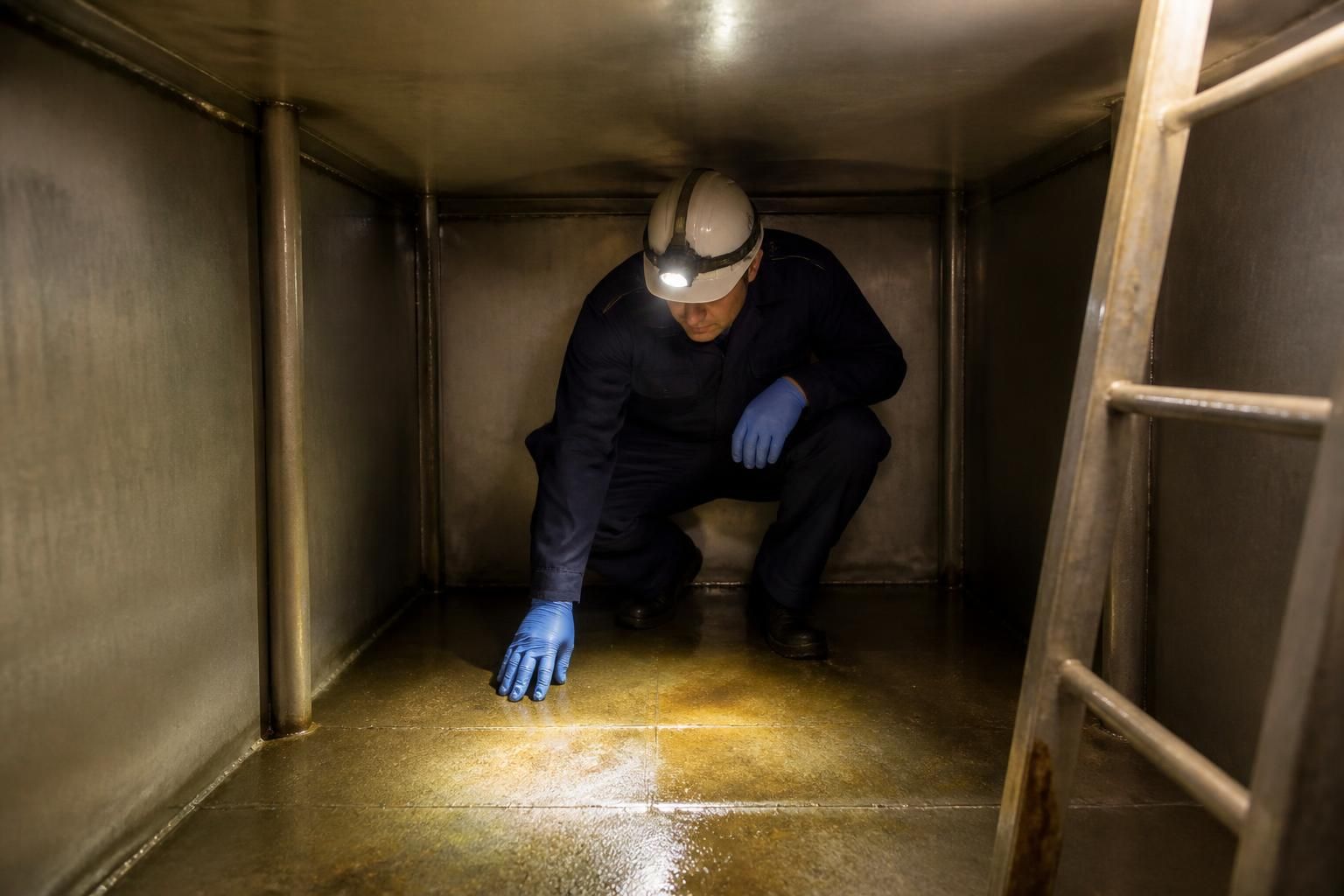
The legal test is whether the person responsible for a water system has identified and controlled any foreseeable risk from it. A cleaning record by itself does not demonstrate compliance, and a tank should not be cleaned simply to satisfy an assumed universal timetable.
Which duties apply? The main legal framework depends on the type of premises and how the water system is used. Relevant duties may arise under:
- the Health and Safety at Work etc. Act 1974, where work activities or premises create health and safety risks;
- the Management of Health and Safety at Work Regulations 1999, which require suitable arrangements for assessing and managing risks;
- the Control of Substances Hazardous to Health Regulations 2002, where exposure to legionella bacteria is a reasonably foreseeable biological risk; and
- the Workplace (Health, Safety and Welfare) Regulations 1992, which include requirements relating to drinking water and welfare facilities in workplaces.
Other requirements can apply in particular settings, including rented accommodation, healthcare premises, schools, care facilities, hotels and industrial sites. The responsible organisation should identify the legislation relevant to its premises rather than relying on a generic cleaning schedule.
What the guidance says about cold water storage tanks
The Health and Safety Executive’s Approved Code of Practice L8 and associated HSG274 guidance are central references for controlling legionella in water systems. They are not a law stating that every tank must be cleaned at a particular fixed interval. However, they set out recognised ways to assess and manage the risk. If a tank contains sludge, scale, biofilm, corrosion or other contamination, cleaning and disinfection may be necessary as part of suitable control measures.
Guidance also supports regular inspection of cold water storage tanks and associated components. The inspection should consider the tank’s condition, its cover and insulation, the quality of stored water, evidence of stagnation, and whether insects, debris or other contaminants can enter. An inspection may conclude that cleaning is not currently required, provided the reasoning is recorded and other controls remain effective.
When can cleaning become a legal requirement in practice?
Although the legislation may not use the wording “clean every tank every year”, cleaning becomes necessary where it is needed to reduce an identified health risk. Examples include:
- visible sediment, sludge, scale, corrosion or biological growth inside the tank;
- evidence that the tank has been contaminated by debris, insects, animals or damaged fittings;
- poor water turnover, prolonged stagnation or an unexpectedly low water temperature;
- a damaged, poorly fitted or missing tank cover;
- unacceptable water quality or microbiological findings that point to contamination within the storage system;
- alterations, repair work or an incident that could have introduced contamination; or
- an instruction within the site’s written control scheme or risk assessment.
In these circumstances, failing to clean, disinfect or repair the tank could mean that the dutyholder has not taken reasonably practicable steps to control the risk. The legal issue is therefore the failure to manage the hazard, rather than the absence of a particular cleaning certificate.
Who is responsible? The dutyholder is the person or organisation with control of the premises or water system. In a commercial building this may be the employer, building owner, facilities manager or another appointed party. In rented property, responsibilities may be shared between the landlord, managing agent and occupier, depending on who controls the water installation and maintenance arrangements.
A dutyholder should appoint a competent person to carry out the assessment and specify any necessary cleaning or remedial work. Competence means having suitable knowledge, training and experience for the complexity of the system. A contractor may undertake the work, but appointing a contractor does not automatically transfer the dutyholder’s legal responsibility for making sure the risk is properly managed.
What evidence should be retained? Compliance is easier to demonstrate when the management system contains a clear audit trail. Relevant records can include:
- the current legionella risk assessment and written control scheme;
- tank inspection findings, including photographs where useful;
- the reason for carrying out, postponing or repeating cleaning;
- details of the cleaning and disinfection method used;
- records of repairs, alterations and follow-up checks;
- temperature monitoring and other routine control results; and
- water quality or legionella test results where sampling was considered appropriate.
Records should show what was found, what action was taken, who completed it and whether the action was effective. A document stating only that a tank was cleaned, without describing the condition of the system or any follow-up checks, may provide limited evidence of effective control.
Does testing replace cleaning? No. Sampling can provide useful information, but a satisfactory result at one point in time does not remove the need to maintain the tank and control the wider system. Conversely, an unfavourable result does not identify the cause on its own. The appropriate response may involve inspecting the tank, cleaning and disinfecting it, correcting temperatures or flow, removing contamination sources, and reviewing the risk assessment.
What should a dutyholder do? Start with a competent assessment of the complete water system, including the tank, inlet and outlet arrangements, pipework, outlets and points of low use. Use the findings to decide whether cleaning, disinfection, repair or further monitoring is required. Work should be planned to protect users, maintain suitable water hygiene and prevent recontamination. After completion, the control scheme and records should be updated to reflect the actual condition of the system.
For complex or high-risk premises, an independent legionella risk assessment and documented water hygiene programme can help establish whether tank cleaning is necessary and what other controls are required. The decision should be based on the condition and use of the particular system, with reference to current HSE guidance and the duties applying to the premises.
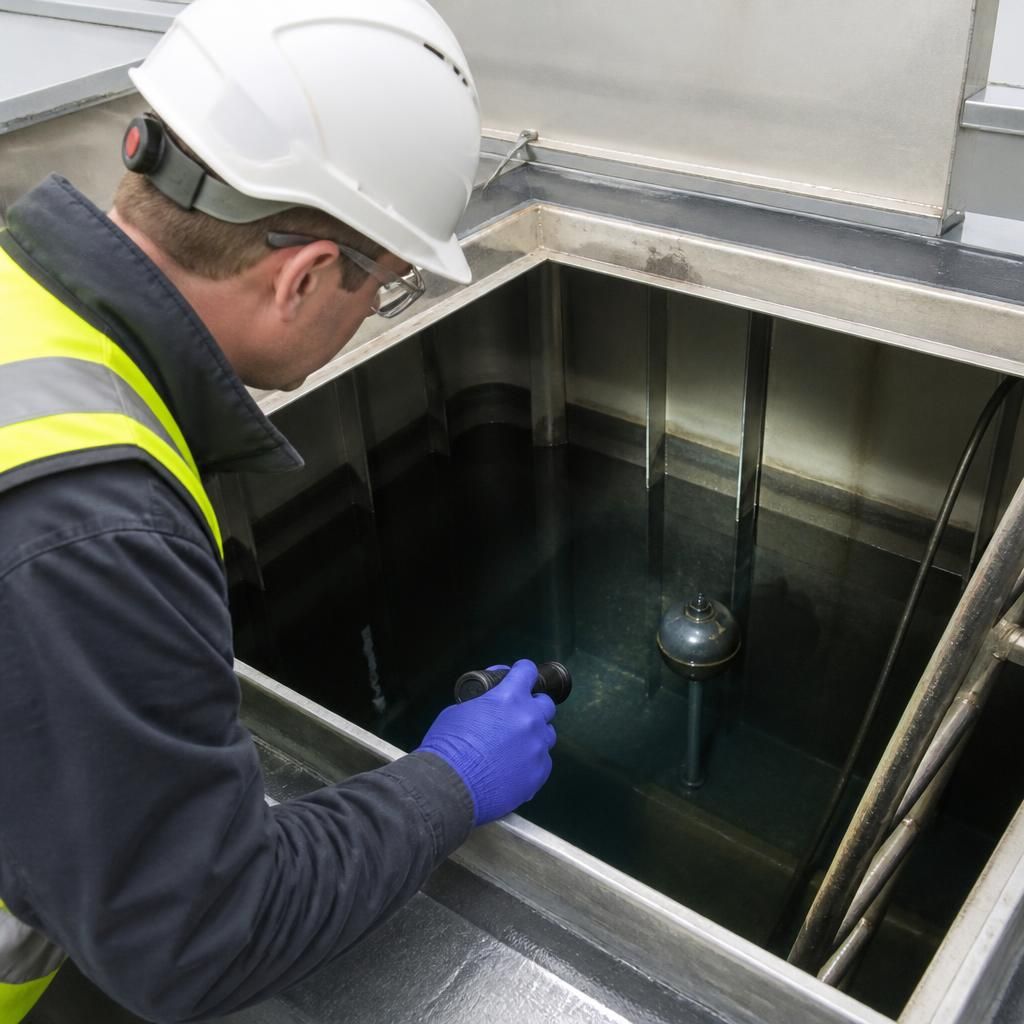
An inspection is not the same as cleaning, and the law does not require a tank to be cleaned merely because it has been opened or examined. Inspection provides evidence for deciding whether cleaning, repair or continued monitoring is the appropriate control measure.
The competent person should consider the tank’s internal condition alongside how the system operates. A clean, suitably protected tank may require no immediate cleaning, whereas contamination, deterioration or conditions that could support legionella growth may require remedial work. The decision should be recorded with the inspection findings so that the dutyholder can demonstrate why cleaning was or was not necessary.
Discuss whether your cold water tank cleaning is legally required
If you need to establish whether cold water tank cleaning is necessary, arrange a competent assessment of the tank and wider water system. Blue Fish Water Management Ltd can advise on appropriate inspection, cleaning and remedial measures for your premises.