
How do you choose a cold water tank cleaning service?
Choose a cold water tank cleaning service by checking its competence in water hygiene, understanding of relevant compliance duties, documented cleaning methods and ability to provide clear findings. The provider should assess the tank and associated system properly, explain any defects or contamination risks, and supply records that support ongoing water safety management.
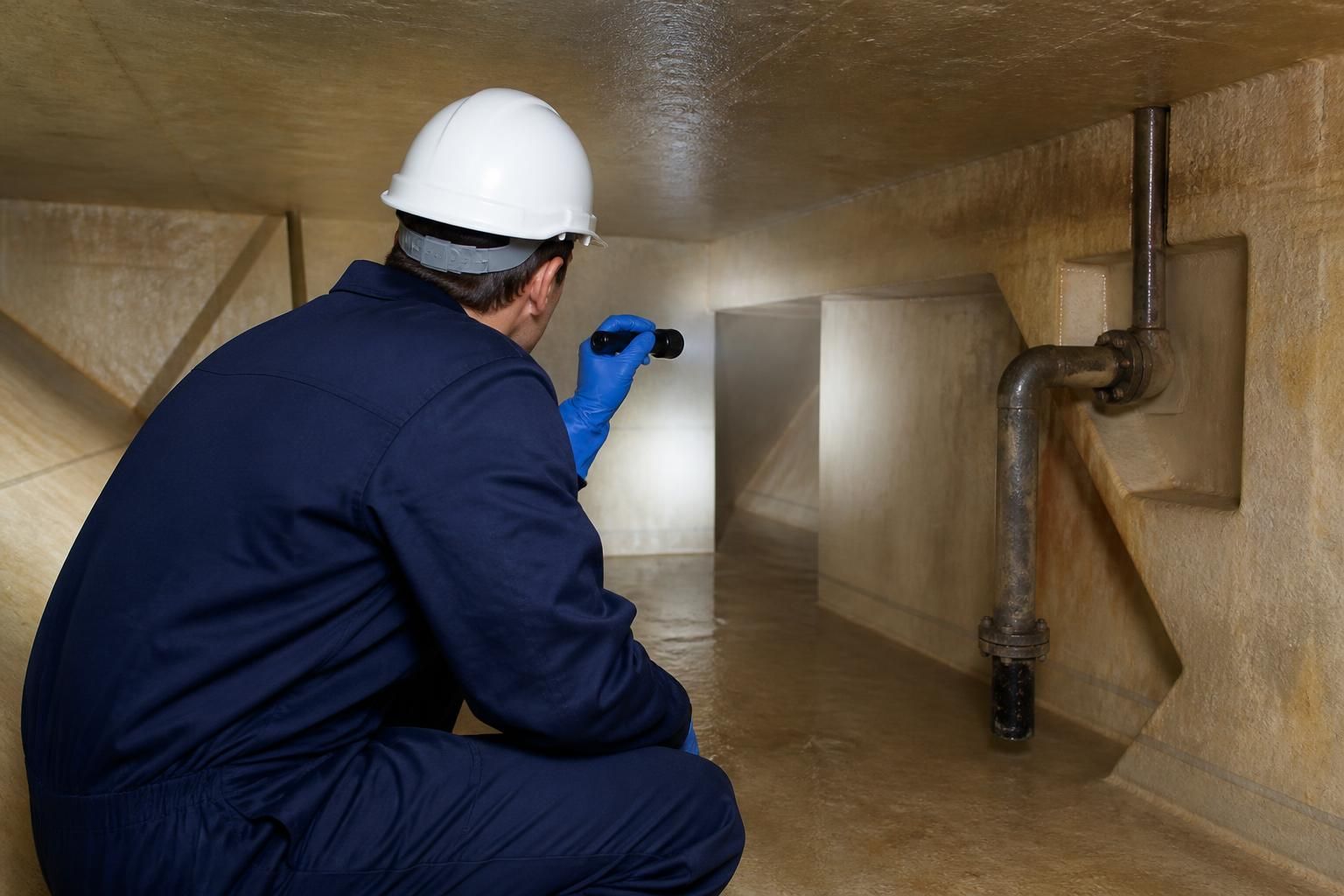
The right cold water tank cleaning service is one that combines suitable technical competence with a clearly defined, risk-based process, safe working practices and useful records. Selection should be based on how well the provider understands the complete water system, not simply on the price of removing visible sediment from the tank.
Check the provider’s experience. Ask whether it regularly works with cold water storage tanks in buildings similar to yours, including the tank materials, capacity, access arrangements and connected pipework. A service suitable for a small domestic tank may not be appropriate for a commercial, industrial or multi-occupancy system. The contractor should be able to identify common issues such as restricted access, damaged covers, poor insulation, dead legs, low turnover and tank components that are difficult to clean safely.
Confirm that the service is part of a wider water hygiene approach. Cleaning may remove contamination from the tank, but it does not correct every cause of water quality deterioration. A suitable provider will consider whether the tank is correctly covered, protected from heat and light, adequately insulated and receiving sufficient flow. It should also identify defects that could allow birds, insects, dust or other contaminants to enter. Where cleaning reveals a problem outside the agreed work, the provider should explain its significance and distinguish essential remedial work from optional improvements.
Ask what the cleaning process includes. A written scope should explain whether the service covers:
- safe isolation, draining and access to the tank;
- removal of sludge, scale, corrosion products and other deposits;
- cleaning of the tank, lid, inlet arrangements, outlet and internal components;
- disinfection where the risk assessment indicates that it is required;
- careful refilling and return to service;
- inspection for cracks, leaks, defective fittings and unsuitable materials; and
- disposal of waste and reinstatement of any insulation or protective covers.
Terms such as “tank clean” can mean different things, so clarify what is included and what would be charged separately. Cleaning without addressing a damaged lid or a contaminated inlet, for example, may provide only a temporary improvement.
Evaluate the proposed controls for occupants and staff. Tank cleaning can affect the availability and quality of water supplied to parts of a building. The contractor should explain how it will isolate the relevant section, prevent accidental use of untreated water and manage the system during and after the work. It should also provide suitable risk assessments and method statements for the site, particularly where access involves confined spaces, work at height, electrical equipment or chemical disinfectants.
Consider whether testing is appropriate. Sampling is not automatically required for every cleaning visit, and the need depends on the system’s risk, condition and reason for the work. Where testing is recommended, ask what will be sampled, why the sample is relevant, which laboratory will analyse it and how the results will be interpreted. UKAS-accredited water testing can provide an appropriate level of confidence where laboratory analysis is needed, but a test result should be considered alongside the tank’s condition and the wider control measures.
Review the quality of the records. A useful completion report should identify the tank and location, date of work, condition found, work completed, products or disinfectants used where relevant, test results where taken, outstanding defects and any recommended follow-up. Photographs can help demonstrate the condition before and after cleaning, particularly where a tank is difficult to access. These records should be retained with the building’s water hygiene documentation so that future inspections and decisions are based on evidence.
Check how the service fits the site’s monitoring programme. There is no universal cleaning interval that suits every tank. The appropriate frequency depends on factors such as water turnover, temperature control, tank condition, contamination history, occupancy and the findings of the water hygiene risk assessment. A provider should explain the basis for its recommendation rather than proposing repeated cleaning without reference to system risk.
Compare quotations on scope rather than headline cost. Before appointing a contractor, compare the proposed method, exclusions, access requirements, remedial options, laboratory arrangements and reporting. Ask who will carry out the work, what supervision is provided and how unexpected contamination or defects will be handled. A very low quotation may omit isolation, disinfection, sampling, access equipment or necessary follow-up, leaving the building owner to arrange these separately.
For a business managing a cold water system, the strongest choice is therefore a provider that can assess the tank in context, carry out proportionate work safely, explain limitations clearly and leave an auditable record. Blue Fish Water Management Ltd can support organisations with cold water tank cleaning as part of broader legionella control and water hygiene management, helping clients make decisions based on the condition and risks of their systems.
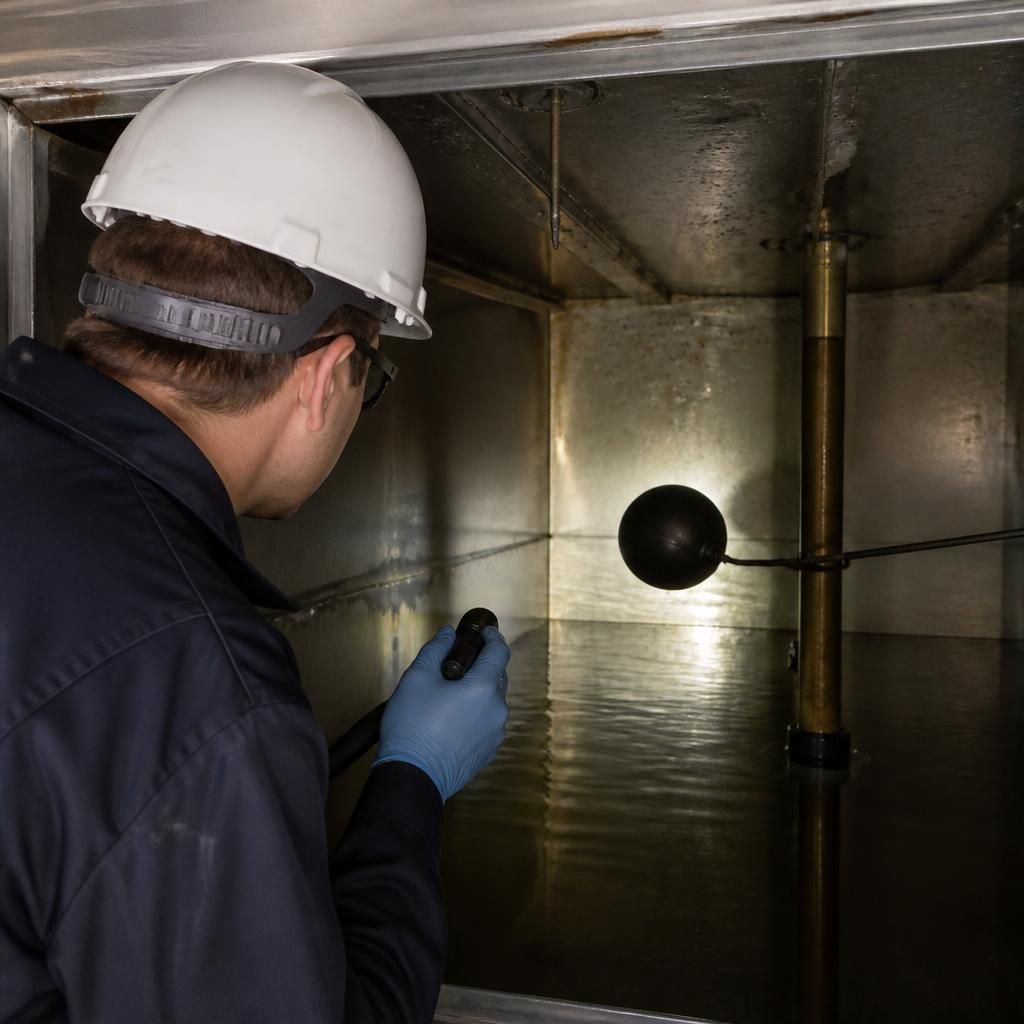
A useful way to assess a cold water tank cleaning service is to ask how it deals with limitations. If parts of the tank, fittings or connected pipework cannot be accessed safely, the contractor should state this clearly rather than implying that the whole system has been inspected or cleaned. The report should identify the limitation, explain its possible effect on the assessment and set out a practical next step, such as arranging suitable access or obtaining further specialist advice.
This level of transparency helps the person responsible for the water system distinguish between work completed, areas not examined and risks that still require control. It also provides a fair basis for comparing providers: a thorough service records uncertainty and boundaries, rather than presenting an incomplete inspection as a complete solution.
Discuss your cold water tank cleaning requirements
Discuss your cold water tank cleaning requirements with Blue Fish Water Management Ltd to clarify the appropriate scope of work for your building and water system. We can help you identify the information needed to plan the next stage of your water hygiene management.