
When should cold water tanks be cleaned?
Cold water tanks should be cleaned when a risk assessment, inspection or water-quality result identifies contamination, sediment, corrosion or other deterioration, and after events such as remedial work or prolonged stagnation. There is no single interval suitable for every system; the cleaning frequency should be set and reviewed according to the tank’s condition, use and legionella risk.
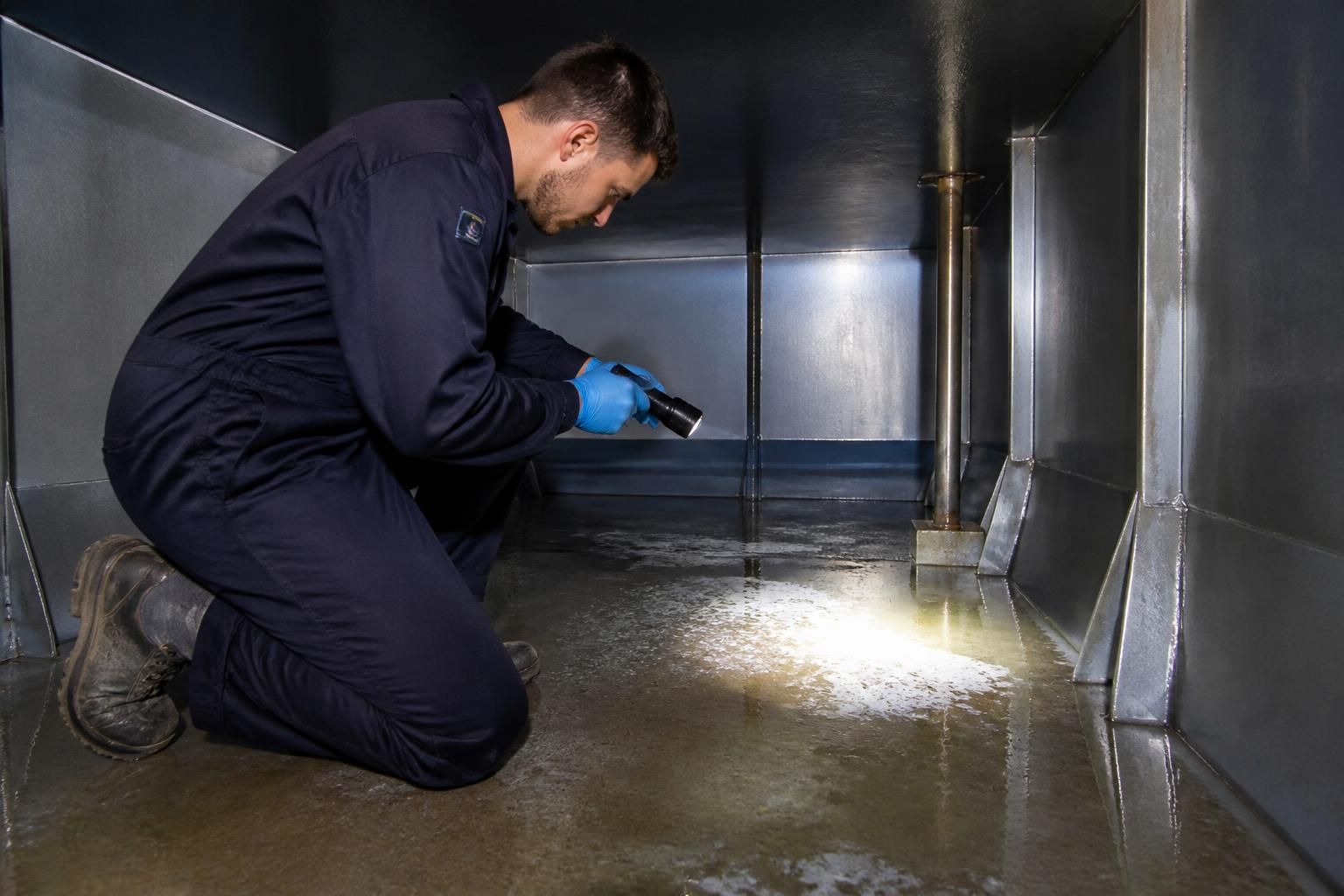
Cold water storage tanks should be cleaned as part of a planned water hygiene regime, with the timing based on the findings of inspection, the system’s risk assessment and any relevant water-quality evidence. A tank may require cleaning sooner than planned if it contains visible deposits, has been affected by contamination, or is not maintaining suitable conditions for safe water storage.
In practice, the tank should be inspected at least annually, or more frequently where the risk assessment requires it. An inspection is not the same as cleaning: it establishes whether cleaning and disinfection are necessary. The inspection should consider the internal condition of the tank, the quality of the stored water, the integrity of the cover and insect screen, and whether dust, debris or other material could enter the vessel.
Cleaning is more likely to be required where an inspection identifies:
- sludge, scale, rust, biofilm or other deposits on the tank floor or surfaces;
- discoloured, cloudy or otherwise abnormal water;
- corrosion, cracks, damaged coatings or deterioration of internal components;
- a defective or poorly fitted lid, vent or overflow arrangement;
- evidence of animal, insect, dust or building-material contamination; or
- conditions that allow the water to remain stagnant or the tank to operate outside its intended temperature range.
The appropriate interval also depends on how the system is used. Greater attention may be needed where water turnover is low, demand varies significantly, the tank is located in a dusty or exposed environment, the installation serves people who may be particularly vulnerable to infection, or previous inspections have found recurring problems. A history of contamination, poor temperature control or remedial work should be reflected in the next review of the cleaning plan.
Cleaning should be considered after work that opens, modifies or repairs the tank or connected pipework. It may also be appropriate when a tank has been taken out of use for a prolonged period and is being returned to service. In these circumstances, the work should be coordinated with any wider system disinfection and commissioning checks rather than treated as an isolated task.
Where cleaning is required, the usual sequence is to make the system safe, isolate or manage the water supply, drain the tank, remove deposits and clean the internal surfaces. Disinfection may then be required, depending on the condition of the tank, the nature of the contamination and the risk assessment. The tank is refilled and the installation returned to service in accordance with the relevant water hygiene procedure. Sampling or other verification may be appropriate where contamination has been suspected or remedial work has taken place.
Cleaning frequency should not be set by a calendar alone. A fixed annual cleaning contract, for example, may be unnecessary for a well-maintained low-risk installation but insufficient for a system with persistent contamination or vulnerable occupants. Equally, delaying cleaning until water quality visibly changes is not a reliable control, because deterioration may not be apparent from appearance alone.
Each inspection and cleaning decision should be documented. Records should identify the tank, inspection date, findings, photographs or test results where relevant, work completed, chemicals or disinfection method used, verification results and any further action. These records help demonstrate that the system is being managed in line with its risk assessment and provide evidence when the cleaning interval is reviewed.
For complex commercial or industrial installations, a competent water hygiene specialist can assess the tank alongside the wider hot and cold water system. UKAS-accredited water testing can support the investigation where sampling is indicated, but test results should be interpreted alongside inspection findings, system operation and legionella control measures.
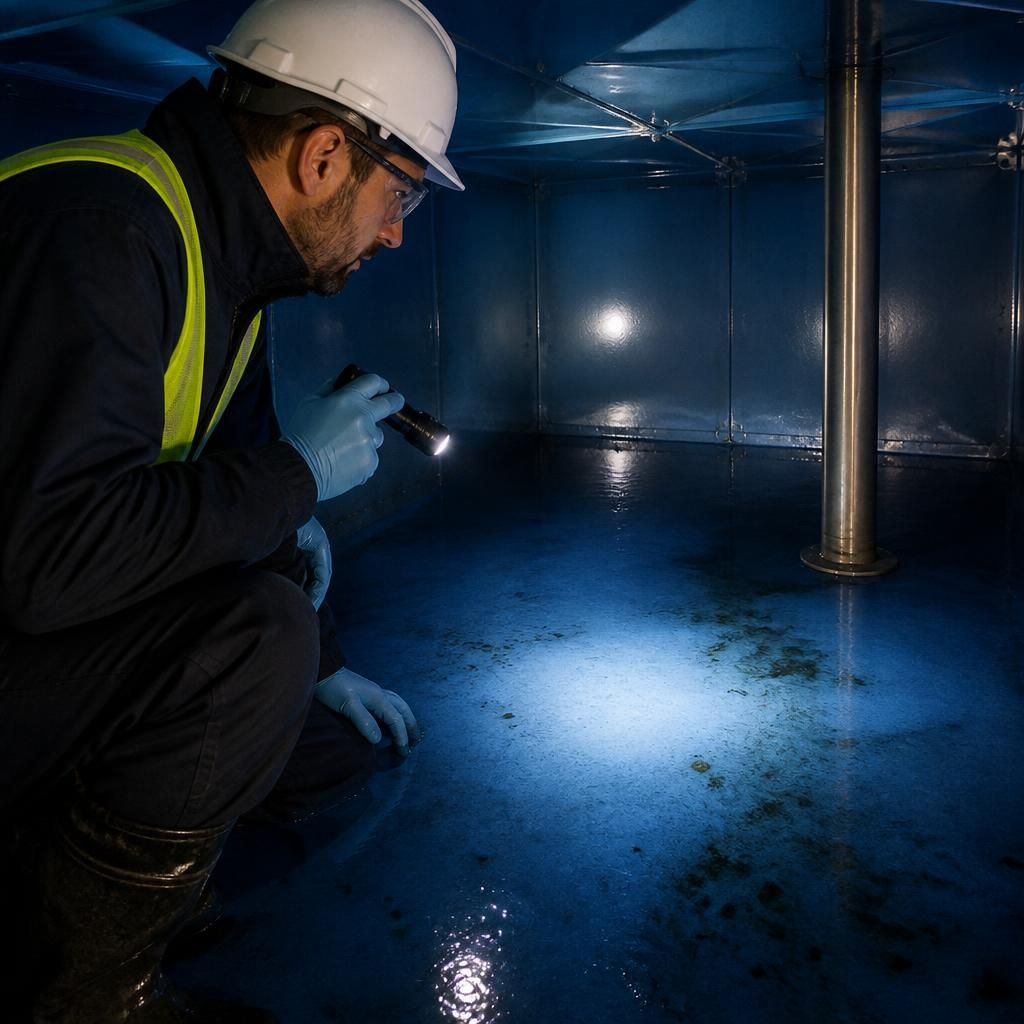
A newly installed or replaced cold water tank should be cleaned and, where required, disinfected before it is put into service. Construction dust, swarf, jointing materials and other debris can enter during installation, so the tank should be checked as part of commissioning rather than waiting for the first routine inspection.
The same principle applies after substantial alteration to the tank or its connected pipework. Cleaning and any necessary disinfection should be planned alongside flushing, system checks and return-to-service arrangements, with the work recorded as part of the water hygiene documentation.
Discuss your cold water tank cleaning requirements
Discuss your cold water tank cleaning requirements with Blue Fish Water Management Ltd to establish whether your system needs cleaning, disinfection or further assessment.