
How is cold water tank cleaning carried out?
Cold water tank cleaning is carried out by inspecting the tank, isolating and draining it, removing sediment and contamination, then cleaning and disinfecting all internal surfaces. The tank is refilled and, where required, water samples are taken to verify that the system is suitable for return to service.
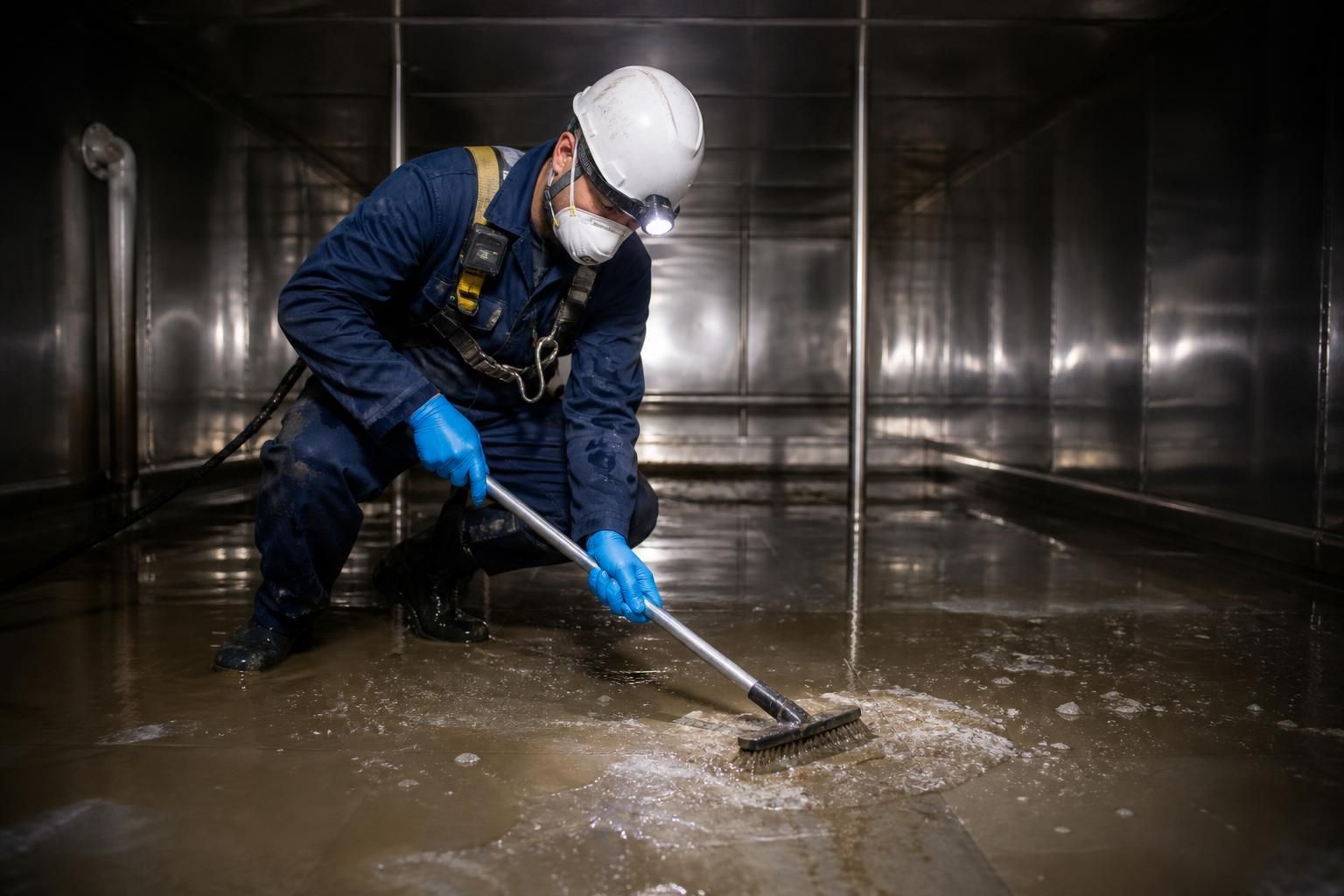
Cold water tank cleaning is a controlled water hygiene procedure designed to remove accumulated contamination without damaging the tank, fittings or connected distribution system. The method should be based on a site-specific risk assessment, the tank’s condition, the type of contamination present and the requirements of the building’s water safety plan.
Before work begins
A competent person should identify the tank, its inlet, outlet, overflow, warning pipe, access cover, associated pumps and any connected outlets. The system is checked so that the correct isolation points can be used and essential services are not disrupted unnecessarily. Where relevant, the work plan will also consider vulnerable water users, access arrangements, electrical equipment, chemical handling and whether tank access presents a confined-space risk.
The tank and surrounding area should be protected from additional contamination during the work. Suitable personal protective equipment, tools and containers are used, and any chemicals selected for disinfection must be appropriate for use in a potable water system. A method statement should set out the cleaning, disinfection, flushing and verification arrangements before the task starts.
Inspection of the tank and fittings
The internal surfaces are examined for sediment, scale, biofilm, corrosion, damaged lining materials and evidence of ingress. The inspection should include the tank lid, seals, air inlet or screened openings, overflow arrangement, float-operated valve and insulation. Problems such as a poorly fitting cover, damaged insect screen or defective overflow can allow contamination to return after cleaning, so these issues should be recorded and addressed where necessary.
The condition of the connected pipework and valves is also relevant. Sediment may have collected in low points or within fittings, while stagnant branches can affect the quality of water returning to service. Cleaning a tank alone may not resolve a wider system hygiene issue, and further remedial work may be recommended if the inspection identifies one.
Removing deposits safely
Loose sediment and debris are removed using methods that minimise aerosol formation and avoid damaging the tank. Non-abrasive equipment is normally preferred for internal surfaces. Aggressive scraping or unsuitable cleaning products can damage protective coatings, create residues or leave surfaces more difficult to clean in future.
Visible contamination should not simply be pushed into connected pipework. Waste material is removed in a controlled manner, and the tank is rinsed as required. If the tank is cracked, heavily corroded, structurally unsound or contaminated beyond practical cleaning, replacement or significant remedial work may be more appropriate than returning it to service.
Disinfection and flushing
After physical cleaning, the tank and relevant parts of the system are disinfected using a suitable process. The disinfectant, concentration and contact period should be selected by a competent person in accordance with the risk assessment, applicable water hygiene guidance and the product manufacturer’s instructions. The process must reach the surfaces and components that require treatment, rather than being applied only to easily accessible areas.
The system is then flushed with clean water in a controlled way. Flushing continues until the disinfectant has been removed or reduced to an acceptable level and the water is suitable for its intended use. Discharge arrangements should be considered in advance, particularly where treated water could affect drainage systems, equipment or the environment.
Checks before return to service
Following cleaning and disinfection, the tank is checked again for remaining debris, defects or signs of recontamination. Valves, covers, screens, insulation and access points should be correctly reinstated. The system is returned to its normal operating configuration, and outlets may be run to confirm that water is reaching the intended areas and that there are no leaks or operational faults.
Water sampling may be appropriate where the risk assessment, the history of the system or the nature of the work indicates that verification is needed. Samples should be collected correctly and sent to a suitably competent laboratory. Results are interpreted alongside the inspection findings and the site’s water safety controls rather than considered in isolation.
Records and follow-up
Good practice is to document the date and scope of the work, the condition of the tank, cleaning and disinfection methods, any defects found, remedial actions, flushing details and test results where samples were taken. Photographs can provide useful evidence of the tank’s condition before and after the work.
Any recommendation should distinguish between a cleaning issue and an underlying management or design issue. For example, recurring sediment may indicate ineffective turnover, an unsuitable tank arrangement, damaged protection or poor control of dead legs. Addressing the cause helps determine an appropriate future inspection and cleaning regime under the site’s water safety plan.
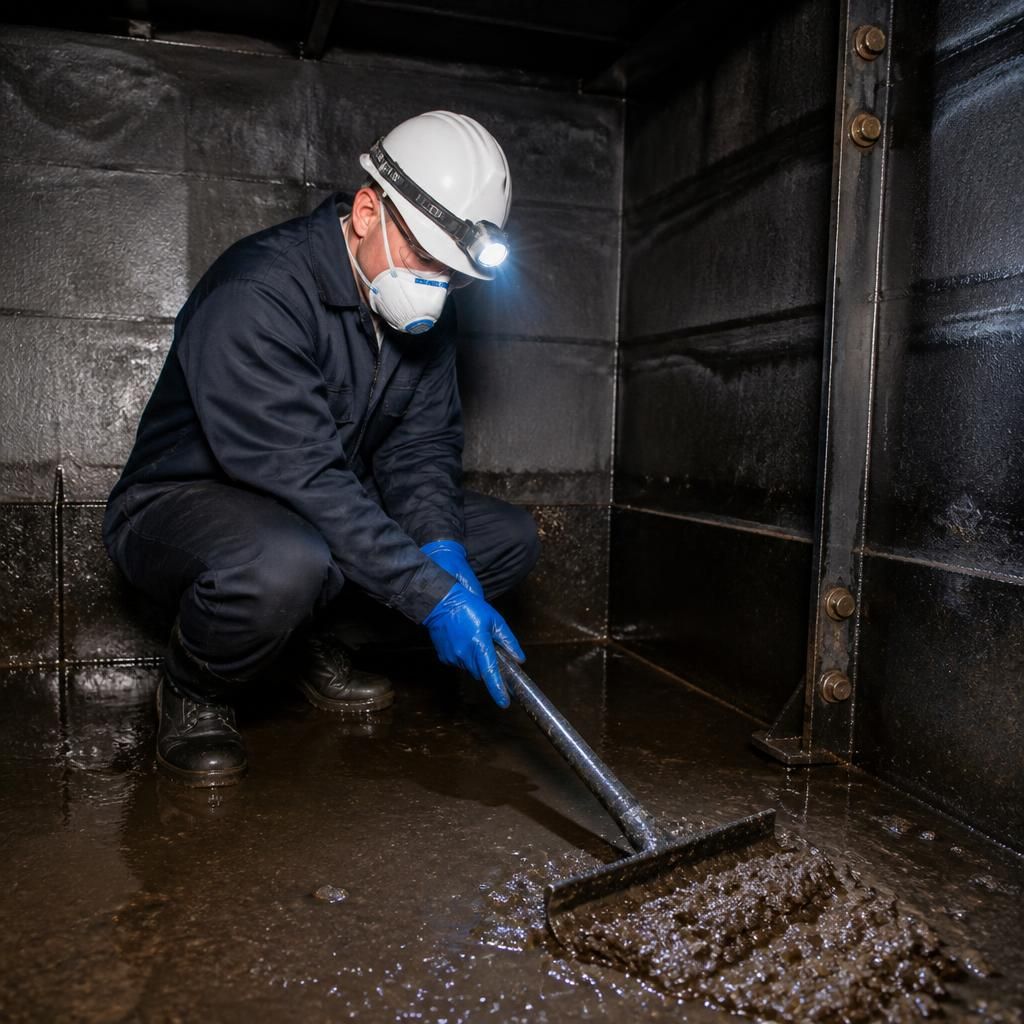
Tank design affects how cleaning is carried out. A sectional cold water storage tank may need each compartment, joint and internal fitting to be inspected and treated individually, rather than relying on water or disinfectant passing through the tank as a whole. Where a site has multiple tanks or separate storage compartments, the cleaning plan should identify how each section will be isolated and returned to service without leaving an untreated area.
Restricted access is also significant. If the cover, internal layout or surrounding equipment prevents a thorough inspection, the limitation should be recorded and addressed through suitable remedial work or a revised cleaning method. The objective is not simply to make the visible base appear clean, but to ensure that all accessible water-contact surfaces and storage sections have been properly dealt with.
Discuss your cold water tank cleaning requirements
Discuss your cold water tank cleaning requirements with Blue Fish Water Management to identify an appropriate scope of work for your building and water safety arrangements.