
What evidence of competence should a cold water storage tank cleaning contractor provide?
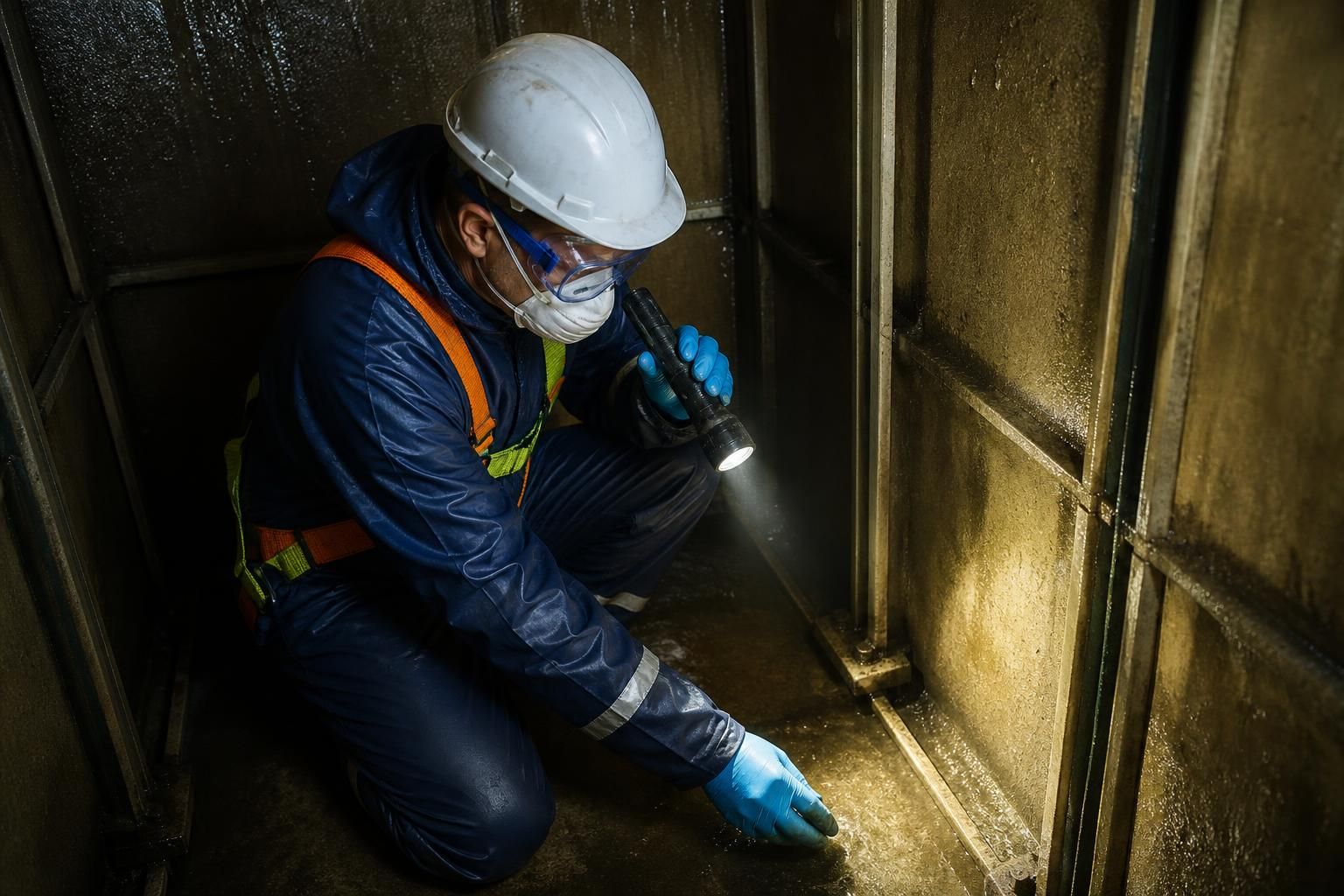
A competent cold water storage tank cleaning contractor should be able to demonstrate more than general cleaning experience. They should provide current evidence that their personnel understand water hygiene, can work safely on the specific tank and distribution system, and can produce records that show what was inspected, done and found.
Evidence of individual competence
- Names and roles of the people who will carry out and supervise the work.
- Relevant water hygiene and legionella-control training records, including the course provider, completion date and any refresher requirements.
- Evidence of practical experience with cold water storage tanks, including comparable materials, configurations and access arrangements.
- Confirmation that the person responsible for technical decisions understands cleaning, disinfection, sampling, flushing and the interpretation of findings.
- Details of any specialist training needed for associated hazards, such as confined spaces, work at height, manual handling, electrical equipment or chemical use.
Training certificates should be current and relevant to the task rather than simply showing that an employee has attended a generic health and safety course. Where subcontractors are used, the same information should be available for them rather than only for the main contractor’s employees.
Evidence of a controlled working method
Request a sample or project-specific method statement and risk assessment. These documents should explain how the contractor will identify and isolate the tank, protect the water supply, manage stored water and prevent contamination from spreading to connected systems. They should address access, drainage, ventilation, lighting, chemical handling, personal protective equipment and the safe disposal of waste water.
The proposed method should be adapted to the installation. Relevant details include the tank’s material, size and condition, the presence of a lid and screened vents, inlet and outlet arrangements, internal fittings, access limitations, drain points and whether the tank supplies critical operations. A generic document with no reference to the actual system may indicate that the work has not been properly planned.
The contractor should also explain the sequence of work. This will normally involve inspecting the tank and connected arrangements, removing deposits and contamination using a suitable method, disinfecting where required, flushing appropriately and arranging any necessary sampling. The method should identify how the contractor will avoid damaging coatings, seals, insulation, pipework or fittings, and how any defect found during cleaning will be reported.
Evidence of safe chemical and equipment controls
Where chemicals are used, ask for the relevant COSHH assessments, product safety information and handling arrangements. The contractor should explain how chemical strength and contact time will be controlled, how residues will be removed and how discharge will be managed. Chemical selection and use should be appropriate to the tank, the water system and the intended service.
Equipment should be suitable, clean and maintained. This may include inspection equipment, pumps, hoses, tools, access equipment and protective equipment. Items introduced into a potable or wholesome water system should be managed to prevent recontamination. A contractor should be able to describe its equipment-cleaning and storage arrangements rather than relying only on a statement that equipment is suitable.
Evidence that inspection and testing are reliable
A useful completion record should identify the site, tank or asset, date of attendance, personnel involved, condition before cleaning, work undertaken and condition afterwards. It should record deposits, corrosion, damaged lids or screens, leaks, inadequate insulation, evidence of ingress and any other issue that could affect water quality or system control. Photographs can provide valuable supporting evidence, particularly where access is restricted or remedial work is recommended.
If samples are taken, request a report showing the sample locations, dates, sample type, laboratory details, results and any relevant limitations. Where laboratory testing is required, the laboratory’s accreditation should cover the test being performed; UKAS accreditation of a laboratory does not automatically mean that every activity carried out by a contractor is UKAS-accredited. Results should be considered alongside the condition of the tank, the wider water system and the site’s risk assessment, rather than treated as a substitute for inspection.
Evidence of quality and legal controls
- Public liability and employers’ liability insurance details, with confirmation that the cover is appropriate for the proposed work.
- Health and safety policies and a process for reporting incidents, defects and near misses.
- Document control showing how risk assessments, method statements, certificates and service records are reviewed and updated.
- Waste handling arrangements, including the lawful management of contaminated materials and discharged water where relevant.
- Clear arrangements for supervising, reviewing and approving subcontracted work.
- Examples of anonymised reports or service records that demonstrate the standard of information supplied to clients.
The contractor should be familiar with applicable water hygiene guidance, including the Health and Safety Executive’s guidance on legionella control, and should explain how its procedures support the responsible person’s wider control scheme. The evidence should relate to the tank and system being cleaned, not merely list policies that are never reflected in the work records.
Questions to ask before appointing a contractor
- Who will carry out and supervise the cleaning, and what relevant training do they hold?
- How will the tank and connected system be assessed before work begins?
- What cleaning and disinfection method is proposed, and why is it suitable for this installation?
- How will isolation, flushing, sampling and reinstatement be controlled?
- What records, photographs and laboratory reports will be provided?
- How will defects or evidence of contamination be escalated and prioritised?
- Which activities are performed by the contractor and which, if any, are subcontracted?
Strong evidence is specific, current and verifiable. A contractor should be willing to explain its competence through training records, documented procedures, insurance, appropriate testing arrangements and complete service reports. For a business selecting a provider, these records offer a more useful basis for comparison than a low price or a broad claim of experience alone.
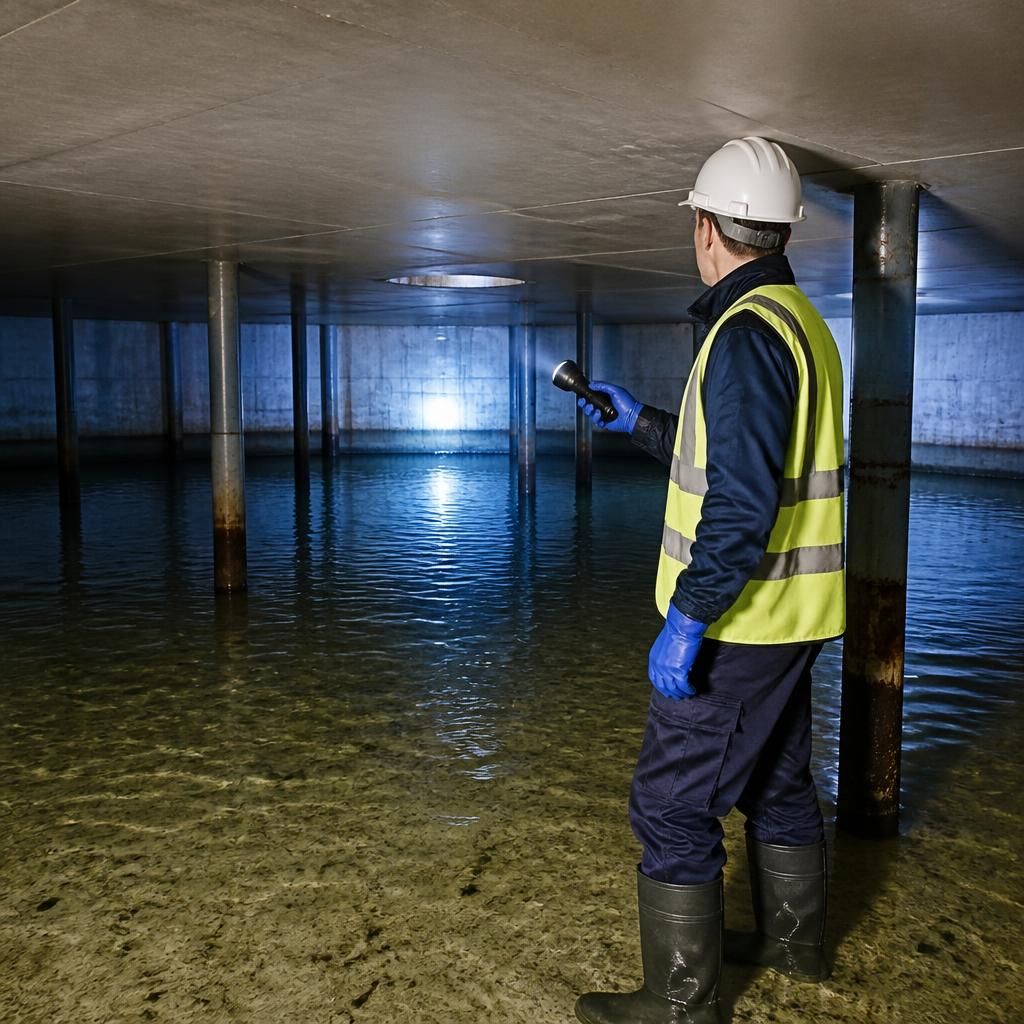
One useful indicator of competence is whether the contractor can explain when cleaning should be paused rather than continued as planned. Unsafe access, a structurally unsound tank, failed isolation, unexpected cross-connections or an unidentified coating may require the work to stop until the responsible person agrees how the risk will be controlled.
Ask how these decisions are recorded and communicated. A suitable process should identify the issue, explain its potential effect on people or water quality, state what immediate controls were applied and set out what information is needed before work resumes. This demonstrates professional judgement and shows that the contractor is not treating a planned cleaning method as suitable in every circumstance.
Request Evidence of Competence for Your Tank Cleaning Project
Contact Blue Fish Water Management Ltd to discuss your cold water storage tank cleaning requirements and the evidence needed for your site. The team can help you identify the appropriate scope of work and supporting documentation before appointment.