
What causes contamination in cold water storage tanks?
Contamination in cold water storage tanks is commonly caused by dirt or microorganisms entering through unsecured covers, vents or overflows, as well as damaged tanks, poor seals and inadequate maintenance. Stagnant water, sediment accumulation, unsuitable tank conditions and dead legs in connected pipework can also support microbial growth, including conditions that may allow Legionella to multiply.
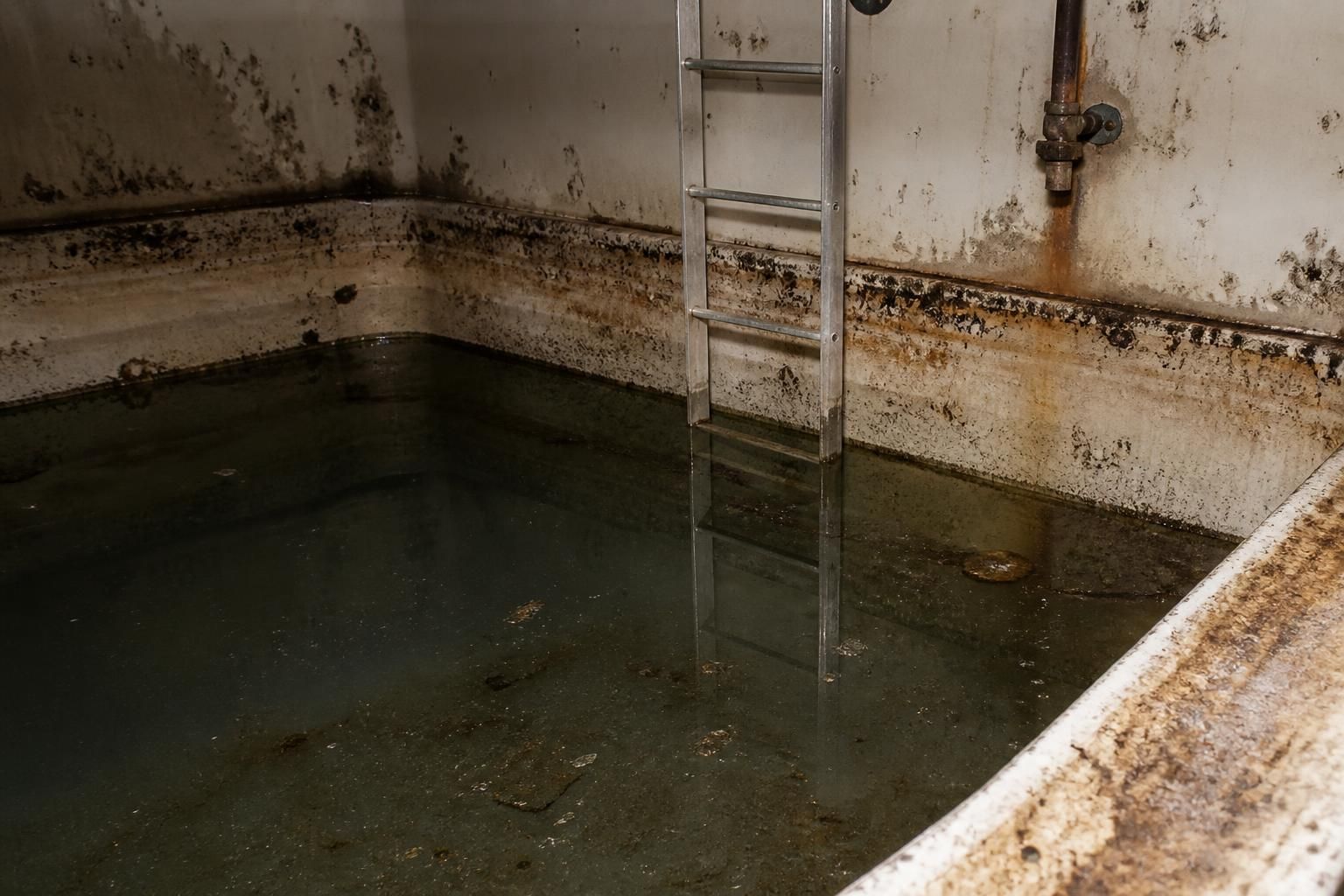
Contamination in a cold water storage tank occurs when harmful microorganisms, particles or chemicals enter the stored water, multiply within the system or are introduced during installation, maintenance or cleaning. The underlying cause is usually a combination of tank condition, water movement, connected pipework and management controls rather than one isolated defect.
Backflow and cross-connections
Water can be contaminated when it flows backwards from a connected service into the storage tank or its supply pipework. Pressure changes, incorrectly installed valves, failed check devices and cross-connections between wholesome water and non-potable systems can all create this risk. Examples include links to process equipment, hoses, heating systems or other services containing chemically treated or contaminated water. A tank may therefore appear clean while contamination is being introduced through the network connected to it.
Backflow protection should be suitable for the level of risk, correctly installed and maintained. Changes to pipework, plant or building use should trigger a review of the connections and any backflow prevention arrangements.
Work on the tank or connected pipework
Building works, plumbing alterations and replacement components can introduce metal filings, jointing compounds, dust, oils and other foreign matter. Water may also become contaminated if tools, hoses or temporary equipment have not been clean and suitable for potable-water work. Newly installed or modified sections require appropriate flushing and, where necessary, disinfection before being returned to service.
Contamination can also occur when access is provided for inspection or repairs and the work is not controlled properly. Personnel, materials and cleaning equipment should be managed so that the inside of the tank and associated fittings are not exposed to avoidable sources of pollution.
Deterioration of tank materials
Ageing tanks can release corrosion products, fragments of internal coating, degraded sealant or other material into the water. Cracks, distortion and failed joints may affect the tank’s structural integrity and create surfaces that are difficult to clean effectively. Some repairs may also introduce unsuitable materials or leave rough areas where deposits and microbial films can become established.
Inspection should consider the tank itself, not only the appearance of the water. Internal surfaces, joints, inlet arrangements, valves, insulation and support structures can all provide evidence of the source. A damaged or unsuitable tank may require repair or replacement rather than repeated cleaning alone.
Heat and local temperature changes
Although the tank stores cold water, its temperature can rise if it is located near boilers, heating equipment, hot pipework, plant-room heat sources or areas exposed to solar gain. Poorly positioned or damaged insulation can make this worse. Warmer water can encourage the growth of microorganisms, particularly where other control measures are weak.
Temperature should be assessed at relevant points in the tank and distribution system, rather than assumed from the room name or design intention. The findings may indicate a need to improve insulation, separate heat sources or review the arrangement of nearby services.
Inadequate cleaning and disinfection
A tank may remain contaminated when previous cleaning has removed visible dirt but not deposits or microbial films from difficult-to-reach areas. Disinfection can also be ineffective if the process is not suited to the system, contact conditions are not achieved, or the tank and pipework are not flushed correctly afterwards. Conversely, residual cleaning chemicals can contaminate the water if rinsing and verification are inadequate.
Cleaning should be based on an inspection of the tank and the wider system. A competent contractor will normally consider the nature of the contamination, the condition of surfaces, the effect on building users and the checks needed before the supply is put back into use. Water testing may be appropriate where there is evidence of contamination, a history of problems or a significant change in system condition.
Contamination from the incoming supply or surrounding environment
Unusual contamination can originate upstream of the tank following work on the supply network, a loss of pressure or an incident affecting the incoming water. External flooding or polluted water around damaged underground services can create additional risk. These causes are less likely than defects within the building’s own system, but they should be considered when several outlets show a similar change in appearance, taste, odour or test result.
Investigation should compare samples from the incoming supply, the tank and representative outlets. This helps establish whether the source is before the tank, inside it or further along the distribution system. Samples should be taken by a suitably competent person using an appropriate sampling method, since poor sampling technique can itself produce misleading results.
Weak management controls
Contamination is more likely where there is no reliable record of inspection, cleaning, defects, temperature checks, alterations or test results. Changes in occupancy, production, water demand or building layout can alter how the system behaves without the tank design changing. Responsibility may also be unclear, allowing known defects or overdue remedial work to remain unresolved.
A practical investigation should establish:
- what substance or microorganism has been detected;
- where in the system it was found and whether the result is isolated or widespread;
- whether backflow, heat, corrosion, material failure or recent work could explain the finding;
- what inspection, cleaning, disinfection and testing has previously taken place; and
- whether the tank and its associated pipework remain suitable for their current use.
Preventing recurrence requires more than treating the water after a failed result. The physical cause must be corrected, the tank and connected system maintained in a hygienic condition, and the control measures reviewed whenever the building, equipment or water use changes.
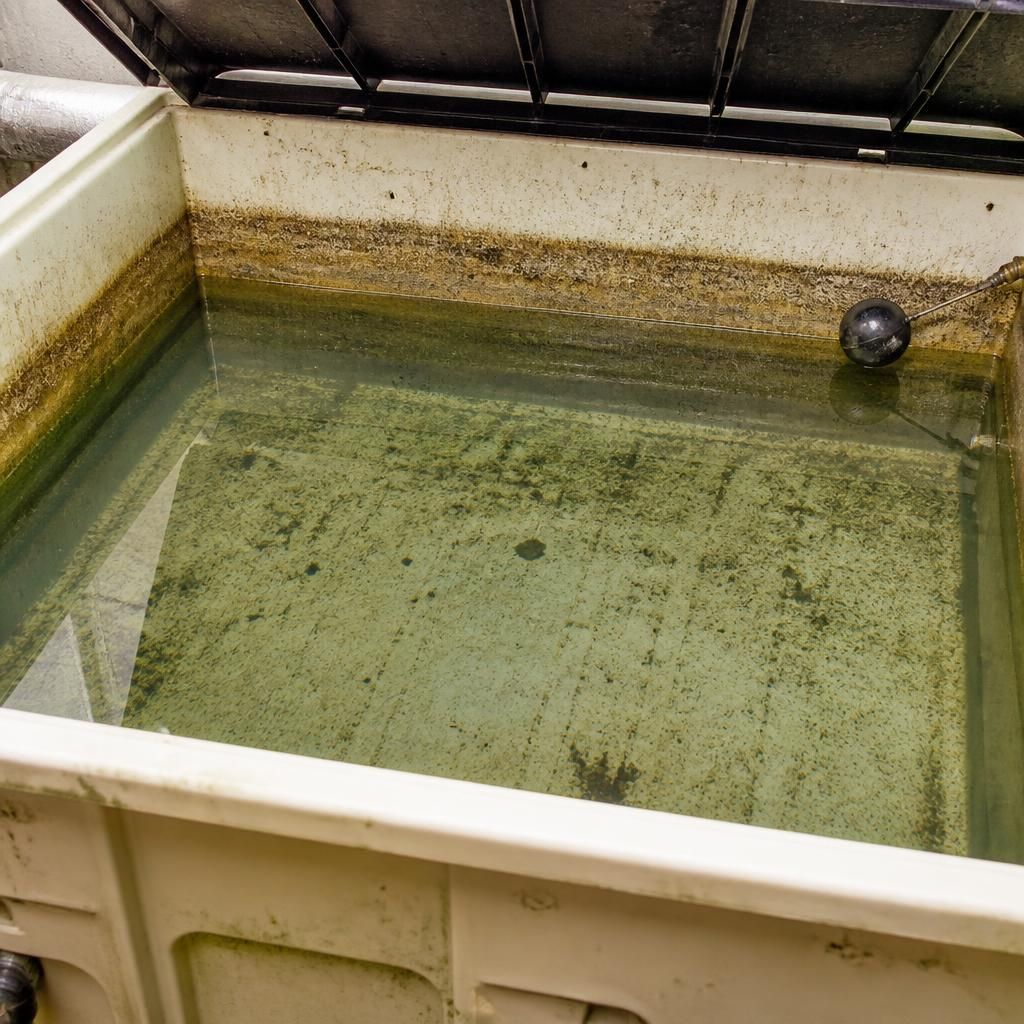
Light entering a cold water storage tank can support algae growth, particularly where the tank or its cover is translucent, damaged or poorly fitted. Algae can add organic material to the water and create deposits on internal surfaces, providing conditions in which other microorganisms may persist.
This risk is not limited to outdoor tanks. Roof spaces, plant rooms and areas exposed to strong daylight can allow light to reach the stored water through unsuitable materials or gaps around the cover. Inspection should therefore check the cover, access hatch, joints and tank material for light penetration as well as visible damage.
Preventive measures may include repairing or replacing the cover, removing unnecessary light sources and cleaning deposits from internal surfaces. Any remedial work should be followed by appropriate flushing and, where indicated by the findings, disinfection and water testing.
Discuss the causes of cold water storage tank contamination
If you suspect contamination in a cold water storage tank, arrange a professional inspection and risk assessment to identify the source and determine whether cleaning, disinfection, repair or testing is appropriate. Blue Fish Water Management can provide practical advice based on the condition of the tank and its connected system.