
How disruptive is cold water storage tank cleaning for business operations?
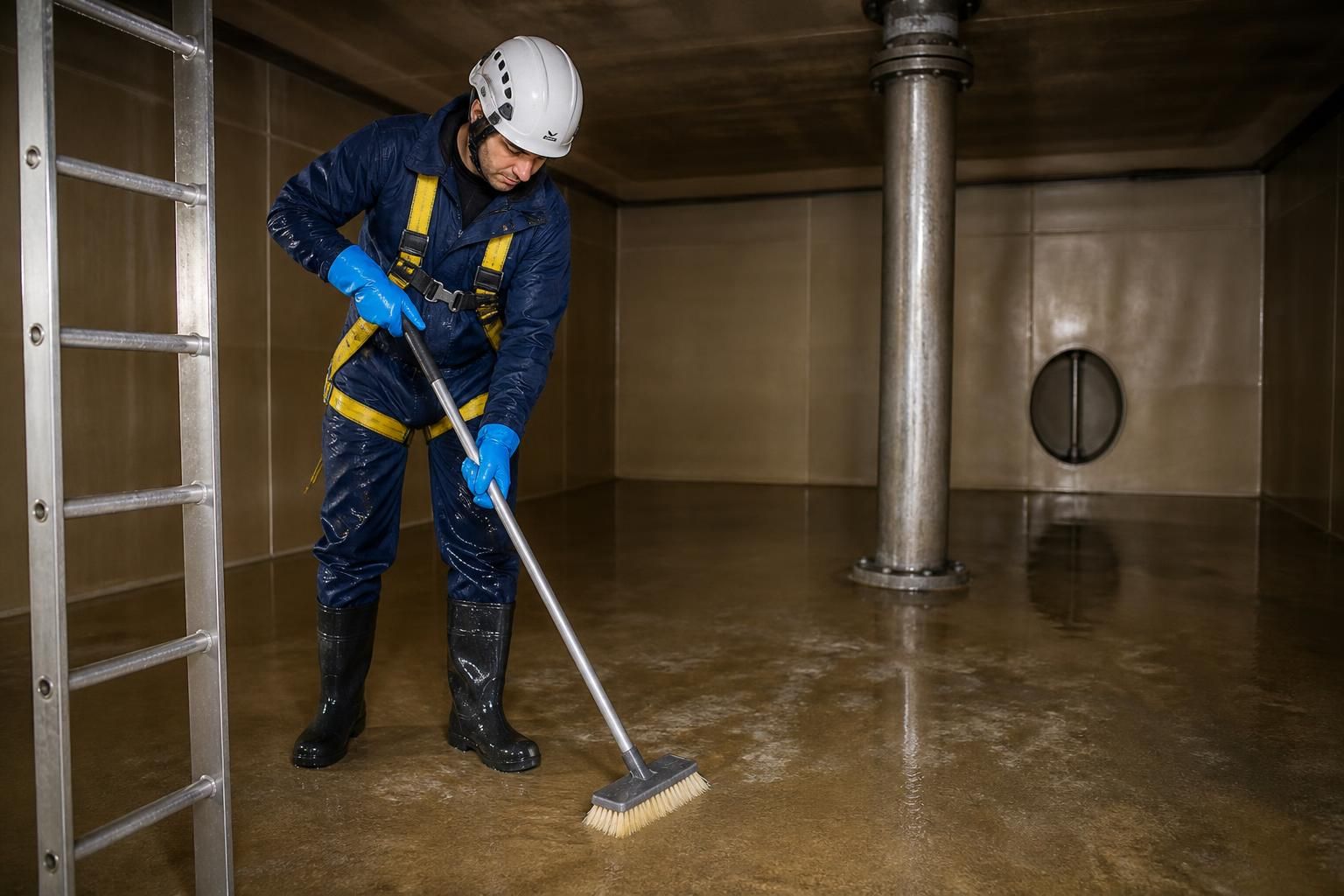
The level of disruption depends mainly on how the tank is connected to the building, whether it supplies essential outlets and how well the work is coordinated with other site activities. A properly planned clean can often be completed without closing the whole premises, but some outlets may need to be unavailable while the tank and associated pipework are isolated, cleaned, disinfected and verified.
Before work begins, the contractor should establish which outlets receive water from the tank and whether the stored supply serves critical operations. This may include welfare facilities, production processes, clinical areas, catering equipment, fire protection arrangements or plant that relies on a particular water pressure. The effect of isolation can then be assessed for each part of the building rather than treating the premises as one system.
A useful pre-work review should consider:
- the number, size and location of the tanks;
- access routes for personnel, equipment and removed components;
- the condition of covers, valves, ladders, insulation and surrounding areas;
- whether the tank supplies direct outlets, boosted systems or secondary storage;
- the availability of alternative mains-fed or temporary supplies;
- any processes that cannot be paused or exposed to a change in water supply; and
- the site’s requirements for permits, security, hygiene and contractor supervision.
This information allows the method statement and timetable to reflect the actual building. It can also identify work that should be completed before isolation, such as moving stock, protecting sensitive equipment, arranging access to locked plant rooms or notifying departments that may be affected.
Disruption is often reduced by separating the work into controlled stages. Where a site has more than one tank or supply route, one section may be dealt with while another remains available, provided the arrangement is technically suitable and the resulting water system remains safe. This should not be assumed from the presence of multiple tanks: valves, cross-connections, shared outlets and stored volumes must be checked first. A phased approach may not be appropriate where the tanks operate as one combined system or where partial operation could create a water hygiene risk.
Where isolation will remove water from important outlets, the business and contractor should agree suitable temporary measures in advance. Depending on the site, these might include an alternative supply, designated welfare facilities or a controlled change to the order in which areas are taken out of service. Temporary arrangements need their own hygiene controls. For example, equipment or hoses introduced for the work must be suitable for potable water use and managed so that they do not introduce contamination.
The cleaning process itself commonly involves safe isolation, removal of sediment or other deposits, cleaning of internal surfaces, inspection of the tank and associated components, disinfection and flushing. The precise sequence varies with tank construction, access and the condition found inside. If damaged fittings, unsuitable covers, corrosion, poor insulation or defective valves are identified, remedial work may extend the programme beyond the cleaning activity. These possibilities should be considered when agreeing the operational plan.
Businesses can reduce avoidable delays by providing accurate system information and making the tank accessible before the contractor arrives. Relevant drawings, previous inspection reports, sampling results and records of earlier remedial work can help the contractor understand the installation. The site should also identify a person who can authorise isolation, provide access and make decisions if an unexpected defect is found.
Communication is particularly important where several occupiers, departments or contractors share the building. The site plan should state which areas may lose water, what alternative arrangements apply, who should be contacted about changes and what conditions must be met before normal use resumes. This is more effective than notifying users only after an outlet has been taken out of service.
Once cleaning and disinfection are complete, the system should be returned to service in a controlled manner. This can include flushing relevant outlets, checking that valves are correctly positioned, confirming that tanks and covers have been reinstated and carrying out any required water quality checks. The tank should not simply be refilled and assumed to be ready for use. The responsible person should receive records of the work, findings, remedial recommendations and any follow-up sampling or monitoring requirements.
If the tank is found to be heavily contaminated or in poor condition, the impact may be greater than originally expected. Additional cleaning, component replacement, investigation of the contamination source or repeat verification may be necessary. A contractor should explain these findings clearly and distinguish essential corrective work from improvements that can be scheduled separately.
For that reason, the best way to minimise operational impact is to treat tank cleaning as a planned water-system intervention rather than an isolated maintenance task. Blue Fish Water Management Ltd can support businesses with tank cleaning, water hygiene assessment, testing, monitoring and related remedial work, helping the responsible person link the cleaning activity to the wider management of the water system.
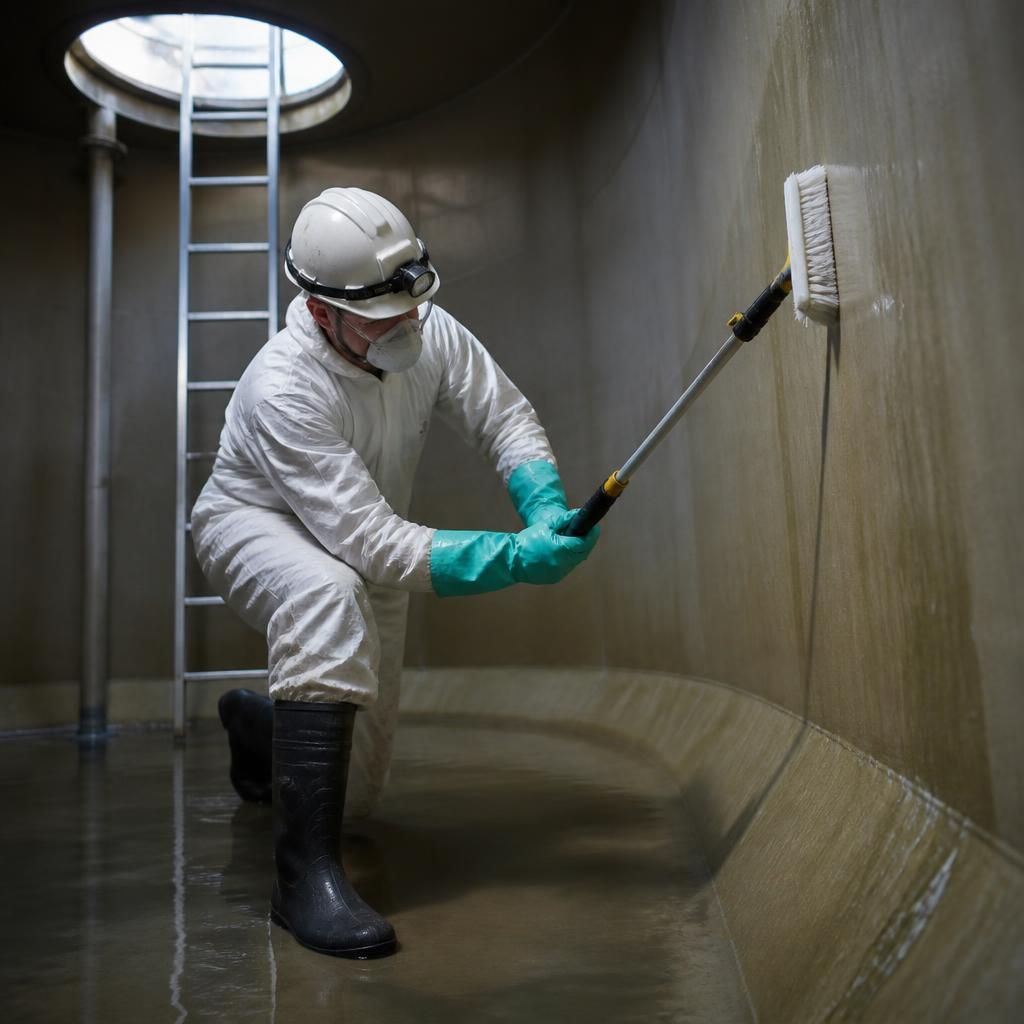
The likely disruption is determined less by the physical size of a cold water storage tank than by what depends on it. A relatively small tank may supply a process or facility that cannot operate without a continuous water connection, while a larger tank may serve areas that can be isolated with limited operational effect.
For that reason, the business impact assessment should map the tank to the functions it supports, not judge the work by tank capacity alone. This helps the responsible person set appropriate priorities, identify which activities are genuinely dependent on the stored supply and decide whether the proposed isolation arrangement is suitable before cleaning begins.
Discuss your cold water storage tank cleaning requirements
Discuss your cold water storage tank cleaning requirements with Blue Fish Water Management Ltd to establish the appropriate scope of work for your premises. The team can advise on tank cleaning alongside related water hygiene assessment, testing and remedial requirements.