
How is cold water storage tank cleaning adapted to different tank designs?
Cold water storage tank cleaning is adapted by assessing how the tank is built, how it is used and what access it provides. A suitable method must remove sediment and contamination without damaging the tank lining, disturbing insulation or introducing debris into the connected water system.
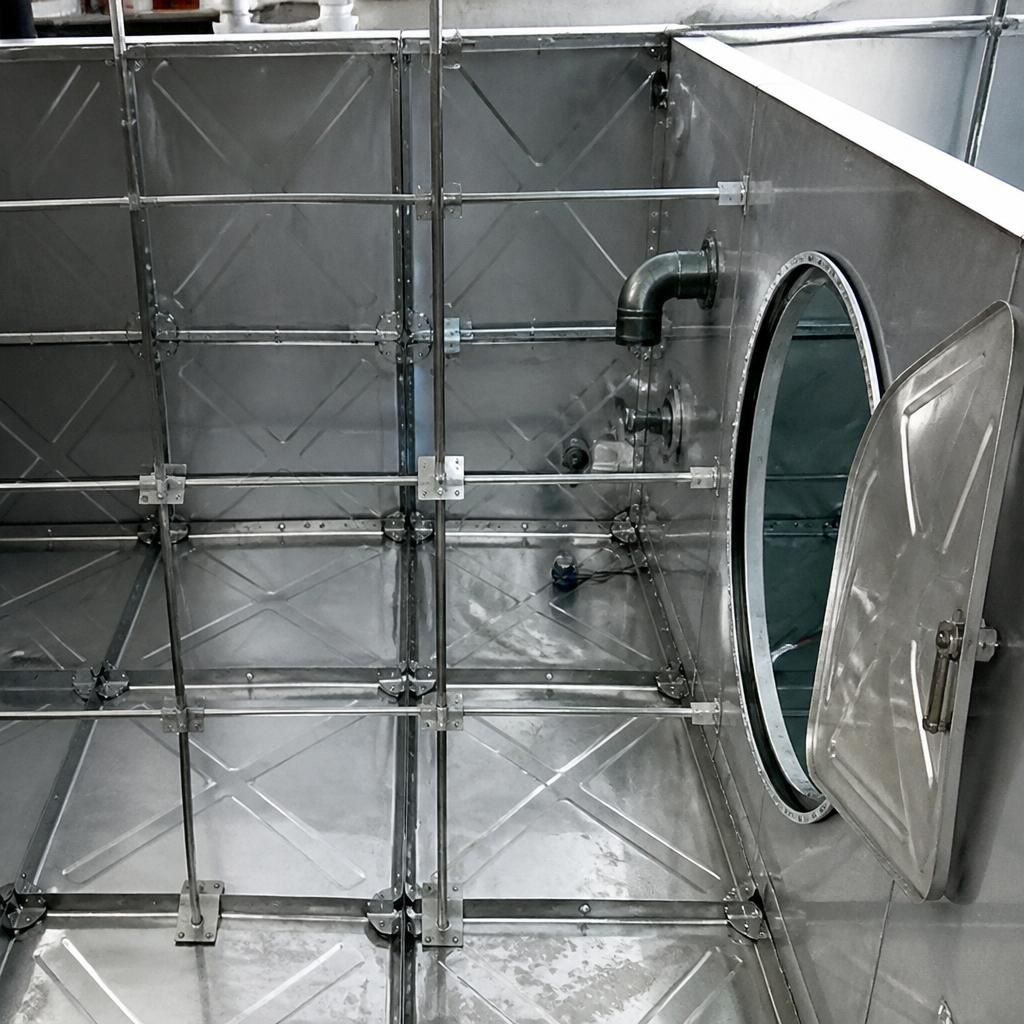
Sectional tanks. Glass-reinforced plastic (GRP) sectional tanks are assembled from panels, so the condition of panel joints, seals, flanges and internal stays is relevant to the cleaning method. The contractor may need to work around narrow sections, internal bracing or uneven surfaces. Abrasive tools and unsuitable chemicals can damage protective finishes or seals, making material compatibility an important part of the procedure.
One-piece tanks. Moulded GRP, polyethylene and other prefabricated tanks often have fewer joints, but their access openings can be relatively small compared with the tank volume. Cleaning may therefore require equipment that can be introduced and operated through the available aperture. The contractor should also check that tools, hoses and extraction equipment will not mark or deform the tank.
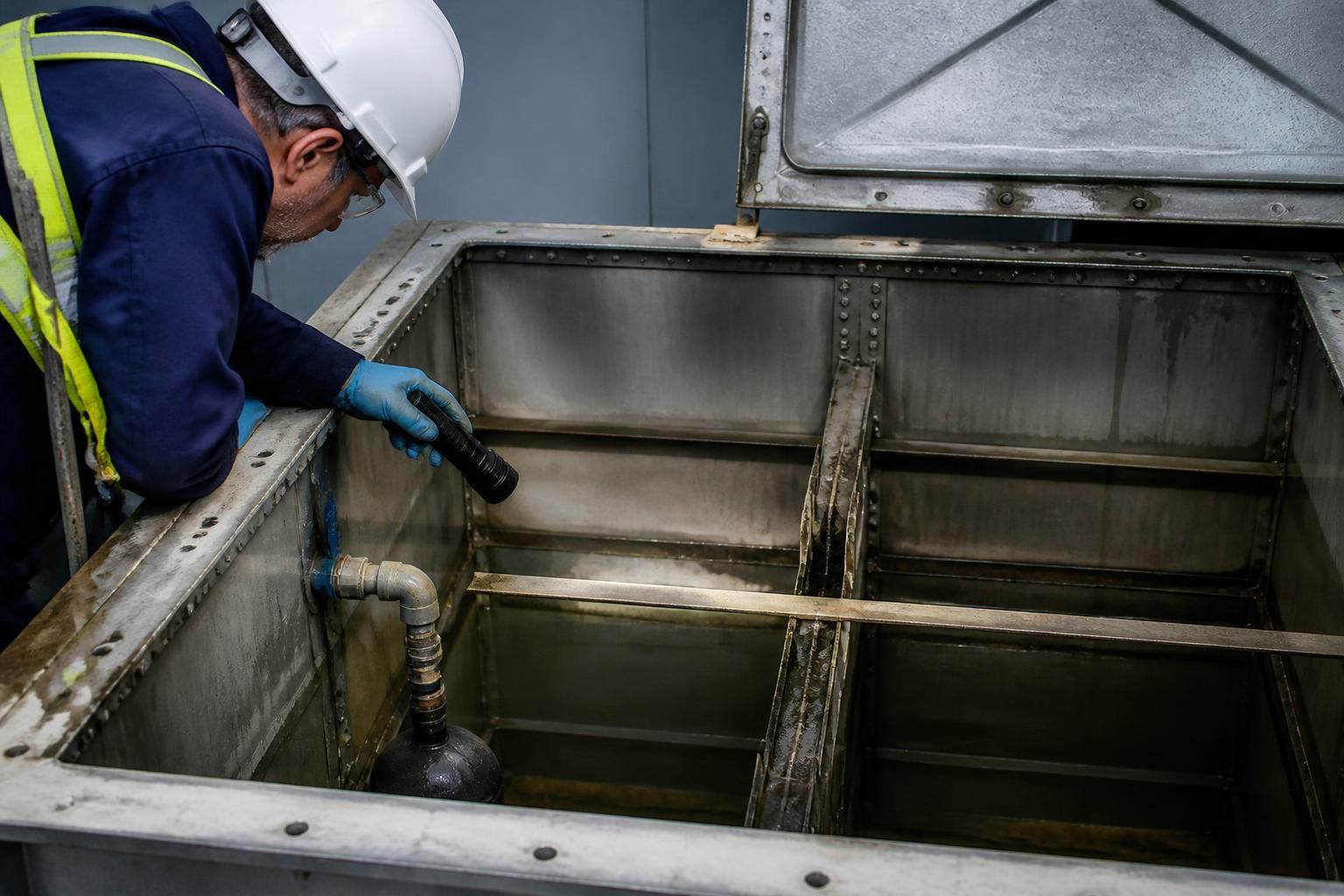
Metal tanks. Galvanised steel and other metal tanks require particular care where there is corrosion, exposed metal or deterioration of the protective coating. Loose corrosion products and sediment need to be removed without accelerating damage. A visual inspection should identify weakened areas, defective seams, damaged coatings and signs that the tank may require repair or replacement rather than routine cleaning alone.
Concrete or built-in tanks. Tanks formed within a building structure may have restricted access, irregular surfaces, permanent pipework and difficult drainage arrangements. The cleaning plan may need additional control measures for confined access, water removal and protection of nearby building components. Cracks, porous surfaces and failed waterproofing can also affect whether cleaning will provide a lasting solution.
Small loft and plant-room tanks. Domestic-sized or compact tanks may be surrounded by roof structures, plant, electrical equipment or insulation. In these settings, the work is planned around safe movement and the protection of adjacent services. The tank lid, ball valve, float-operated valve, warning pipe and overflow are inspected because defects in these components can allow dirt, insects or vermin to enter after cleaning.
Large or compartmented tanks. Larger tanks may contain multiple sections, partitions or separate outlets. Each compartment and associated fitting should be considered so that sediment is not left in an isolated area or transferred between sections. Where a tank supplies more than one part of a building, the sequence of isolation, drainage, cleaning and return to service must prevent untreated or contaminated water from entering downstream outlets.
Tank design also affects the cleaning sequence. A competent contractor will normally establish the tank’s construction, dimensions, inlet and outlet arrangements, water use, previous inspection findings and the condition of the surrounding area before work begins. Isolation points and drain routes are identified in advance, and any services that must remain operational are considered when deciding how the tank can be taken out of use.
After the tank is emptied, accumulated sludge and loose material are removed using methods appropriate to the surface and available access. The internal surfaces, joints, fittings, screens and lids are then examined for deposits, damage and defects. Cleaning alone may not address a damaged cover, failed seal, defective inlet arrangement or poorly positioned overflow; these issues should be recorded and referred for corrective work where necessary.
Disinfection is selected and controlled according to the tank materials, system arrangement and applicable water hygiene procedure. The aim is to treat the tank and relevant connected components without exceeding conditions that could damage the construction or leave an unsafe residue. Once the process is complete, the tank is flushed or otherwise returned to a suitable condition, and the system is refilled in a controlled manner.
Verification should match the risk and the work carried out. This can include a post-cleaning inspection, records of the method and materials used, details of defects or remedial actions, and water sampling where appropriate. The resulting documentation should identify the tank, date of work, findings and any recommendations, giving the responsible person a clear basis for deciding whether the tank can be returned to normal operation or requires further attention.
For unusual, damaged or difficult-to-access tanks, the safest approach may be to combine cleaning with remedial works or a review of the storage arrangement. Blue Fish Water Management provides water hygiene support for varied cold water storage tank designs, with procedures selected to suit the construction and the building’s operational requirements.
Tank design also helps define the cleaning boundary. Cleaning the storage vessel does not automatically clean downstream distribution pipework, calorifiers or outlets. Where the tank supplies several branches, the contractor should establish which components are included in the procedure and which require separate assessment, so that contaminated water is not returned to service through an untreated section.
This is particularly important for tanks with multiple outlets, linked compartments or complex inlet arrangements. The cleaning record should identify the tank and the connected components covered, together with any sections excluded and the reason for exclusion. This gives the responsible person a clear understanding of what the work has addressed and whether further water hygiene measures are needed.
Discuss your cold water storage tank cleaning requirements
Discuss your cold water storage tank cleaning requirements with Blue Fish Water Management to establish a suitable approach for the tank’s design and operational constraints. You can also raise any inspection findings or remedial considerations that may affect the work.