
What should businesses check before arranging water tank cleaning?
Before arranging water tank cleaning, businesses should check the tank’s purpose, capacity, condition, access, water usage and any known contamination or hygiene risks. They should also confirm that the planned work covers suitable cleaning methods, inspection, disinfection where necessary, post-cleaning testing, risk assessment and clear records for ongoing compliance.
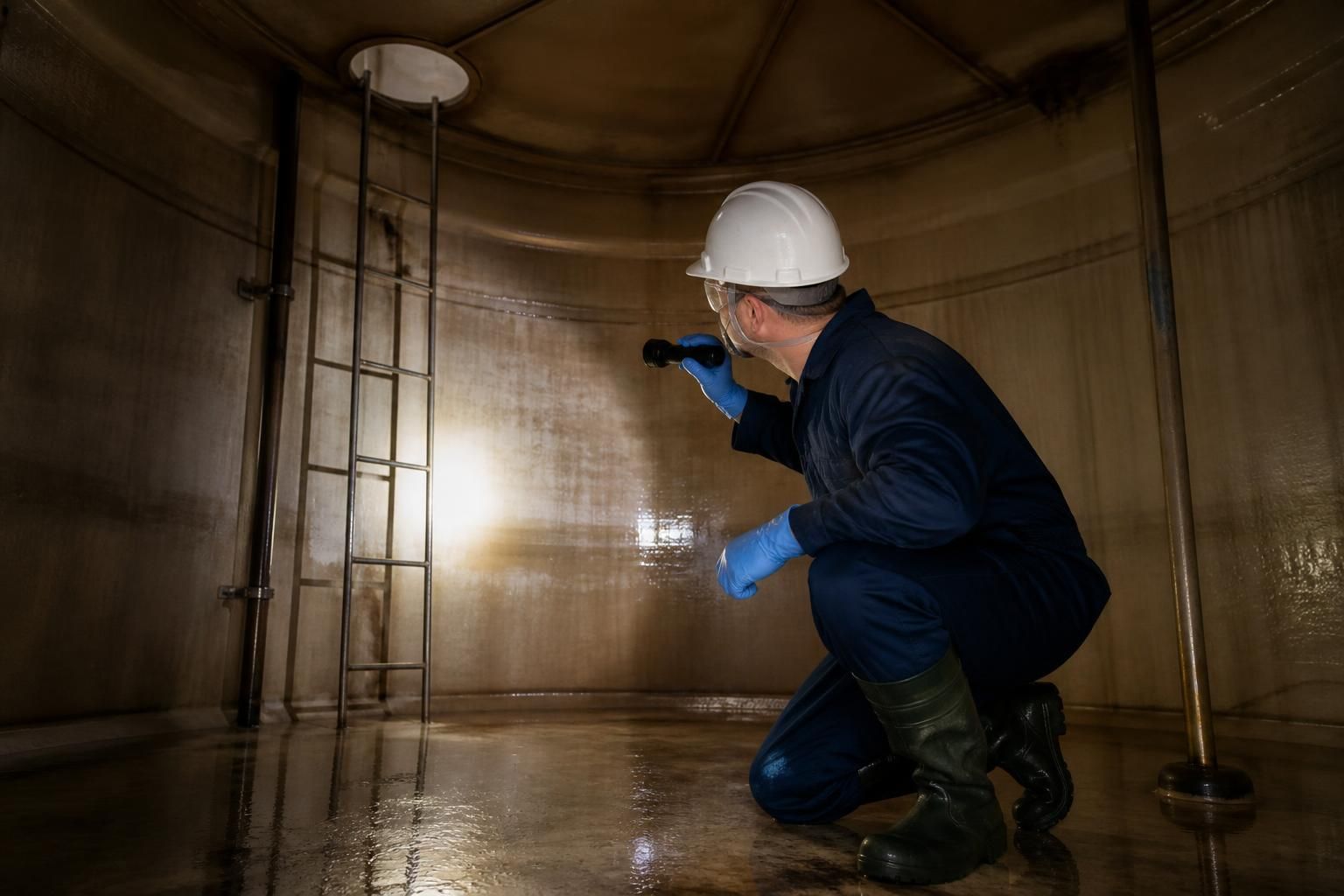
Before arranging water tank cleaning, a business should verify who is responsible for the system, whether the proposed contractor is competent for the type of installation, how the work will be controlled safely, and what evidence will be supplied afterwards. These checks help ensure the work is suitable for the building’s water-management arrangements rather than being treated as an isolated maintenance task.
Confirm the management responsibility
Establish which person or organisation is responsible for authorising the work and maintaining the water hygiene records. In a commercial property, this may involve the facilities manager, landlord, managing agent, principal contractor or duty holder. The responsible person should have access to the current water system schematic, asset register and legionella control documentation so that the contractor receives accurate information before attending.
It is also important to check whether other parties need to be involved. Tenants, building users, water-system engineers and relevant maintenance contractors may need notice if the work affects shared services or requires equipment to be taken out of use. Clear responsibility reduces the risk of assumptions about who will isolate the supply, reinstate the system or review the completed paperwork.
Review the existing records
Previous cleaning certificates, inspection reports, temperature-monitoring records, sampling results, remedial work reports and maintenance logs can reveal recurring issues. For example, repeated sediment, scale, corrosion or microbiological concerns may indicate that cleaning alone will not address the underlying cause. Records can also show whether earlier work identified defects that still require attention.
Businesses should compare the proposed work with their current legionella risk assessment and written control scheme. If the system has changed since those documents were produced, such as through alterations to pipework, changes in occupancy or the addition of new equipment, the documents may need review before the work is specified.
Assess the contractor’s competence
Ask for evidence that the contractor has suitable experience with the relevant tank and water system, rather than relying solely on a general cleaning description. The assessment should cover the people carrying out the work, their technical knowledge, supervision arrangements, training and familiarity with water hygiene controls.
Useful questions include:
- Will the work be designed and supervised by appropriately competent personnel?
- Can the contractor explain how the proposed approach suits the tank construction and connected system?
- Will the contractor identify defects that fall outside the cleaning scope?
- Can the contractor provide clear method statements, risk assessments and chemical safety information?
- Will findings be explained to the responsible person in practical terms?
Memberships, certifications or accreditations can support a procurement decision, but they should be considered alongside the actual scope, competence and quality of the proposed controls. A certificate by itself does not confirm that a particular method is suitable for a particular installation.
Check how the work will be isolated and controlled
Tank cleaning can affect the operation of the wider water system. Before approval, establish how the supply will be isolated, whether alternative arrangements are required, and how accidental reconnection will be prevented while work is under way. The contractor should identify relevant valves, pumps, electrical equipment, automatic controls and connected services in the method statement.
The risk assessment should address work at height, access equipment, confined or restricted spaces, slips, biological exposure, chemical handling, electrical hazards and manual handling where applicable. It should also explain how unauthorised access will be prevented and how contaminated water, residues and used materials will be contained and disposed of lawfully.
Where the tank is in a plant room, roof space or other restricted location, check that the proposed access route is suitable and that the work will not damage surrounding equipment. Any permit-to-work, isolation or site-induction requirements should be agreed before the visit.
Define what the quotation includes
A useful quotation should distinguish included work from potential additional charges. It should identify the tank or tanks concerned, the planned sequence of activities, the areas that will be accessed, the controls used to protect the water system and the circumstances in which further remedial work may be recommended.
Ask how the contractor will deal with defects discovered during the visit. Cleaning may expose damaged coatings, insecure fittings, faulty lids, defective valves, inadequate insulation or signs of leakage. These findings should be recorded and priced separately unless repair work has been expressly included. This prevents a low initial quotation from creating uncertainty once the tank has been opened.
Consider the effect on building users
Agree how disruption will be managed before the work begins. The responsible person should understand which outlets or services may be unavailable, how affected occupants will be informed, and what arrangements are needed for any activities that depend on the water supply. Buildings with care, healthcare, accommodation, food-handling or manufacturing functions may require additional coordination because water interruptions can affect hygiene, welfare or production processes.
The plan should also explain how the system will be returned to service and who will confirm that it is operating correctly. Where a building has multiple tanks or linked supplies, the sequence of work should avoid creating an uncontrolled change in flow or water quality elsewhere in the system.
Agree the evidence required after completion
Before appointing the contractor, specify the records needed for the compliance file. These may include a completed service report, photographs where appropriate, details of defects, chemicals used, waste-disposal information, relevant test results and confirmation of any actions still outstanding. The report should identify the equipment clearly and record the date, findings and person responsible for the work.
Where water samples are required, establish which samples will be taken, why they are needed, where they will be collected and how the results will be interpreted. Testing should be arranged through a suitably competent laboratory, with the results linked to the correct tank and system. A result should not be considered in isolation from the site risk assessment, operating conditions and other monitoring information.
Check the follow-up arrangements
Cleaning is only one part of ongoing water-system management. The final report should make clear whether further action is recommended, who is responsible for it and whether the work affects routine monitoring or the existing control scheme. Set a review point for outstanding defects and make sure revised documents are stored where the responsible person can access them.
In practice, businesses should not select a contractor on price alone. The better comparison is between complete scopes of work, competent supervision, effective safety controls, transparent exclusions and useful completion records. These checks provide a more reliable basis for arranging water tank cleaning and for demonstrating that the decision forms part of a managed water hygiene programme.
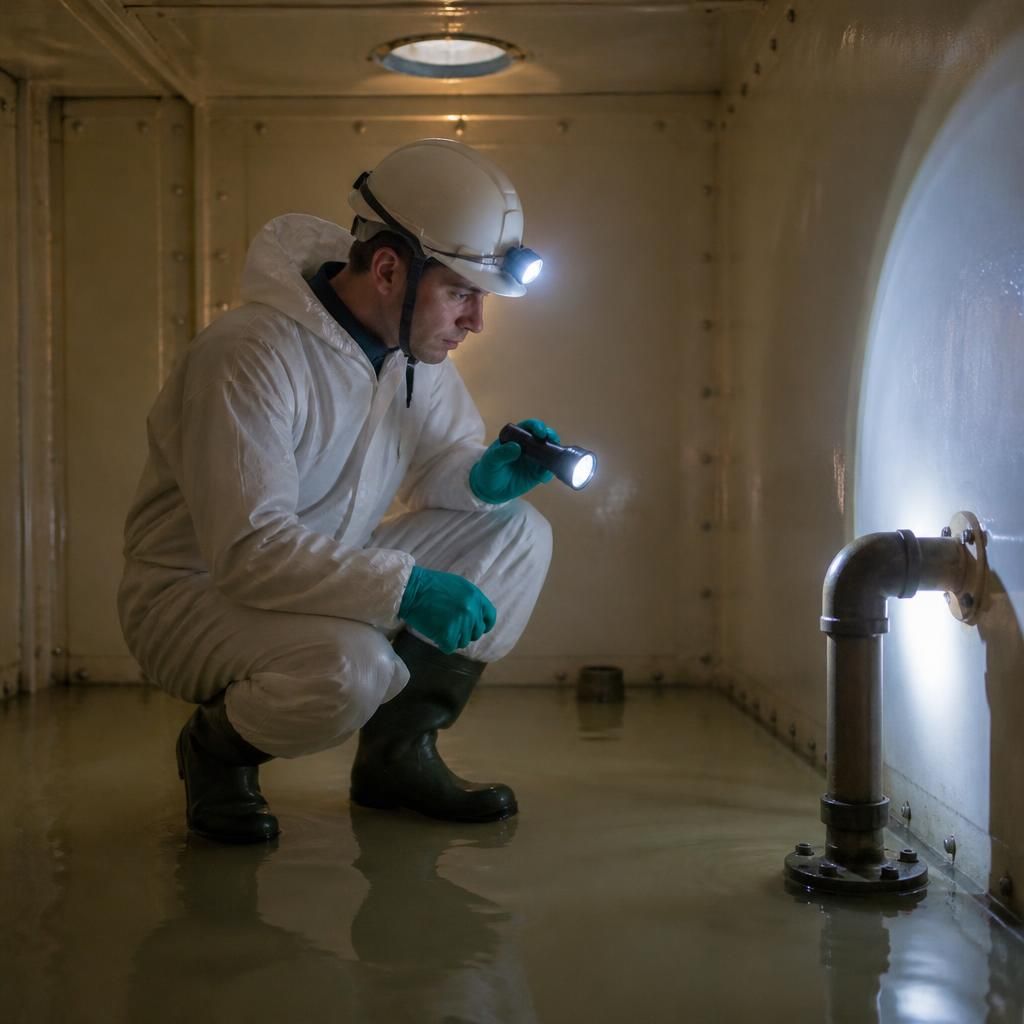
Before arranging water tank cleaning, businesses should agree how completion will be judged. “Cleaned” should mean more than removing visible sediment: the specification should state whether the tank will be inspected internally, whether surfaces and fittings will be checked, and what condition is required before the tank is returned to service.
Useful acceptance criteria may include:
- no avoidable sediment, sludge or loose deposits remain;
- the tank, lid, access points and internal components have been visually inspected;
- inlets, outlets, overflow arrangements and warning systems remain correctly positioned and functional;
- cleaning residues have been removed and the system has been safely reinstated; and
- any condition that prevents the tank meeting the agreed standard is clearly recorded.
Agreeing these points in advance makes the completed report more meaningful and helps distinguish a satisfactory cleaning from work that has exposed a separate tank defect requiring further attention.
Discuss your water tank cleaning requirements
Discuss your water tank cleaning requirements with Blue Fish Water Management Ltd to establish a suitable scope of work for your water system.