
How does water tank cleaning support legionella control?
Water tank cleaning supports legionella control by removing sediment, scale and biofilm where Legionella bacteria can persist and multiply. It also helps expose defects or contamination during inspection, but should form part of a wider water safety programme that includes risk assessment, temperature control, monitoring and appropriate disinfection.
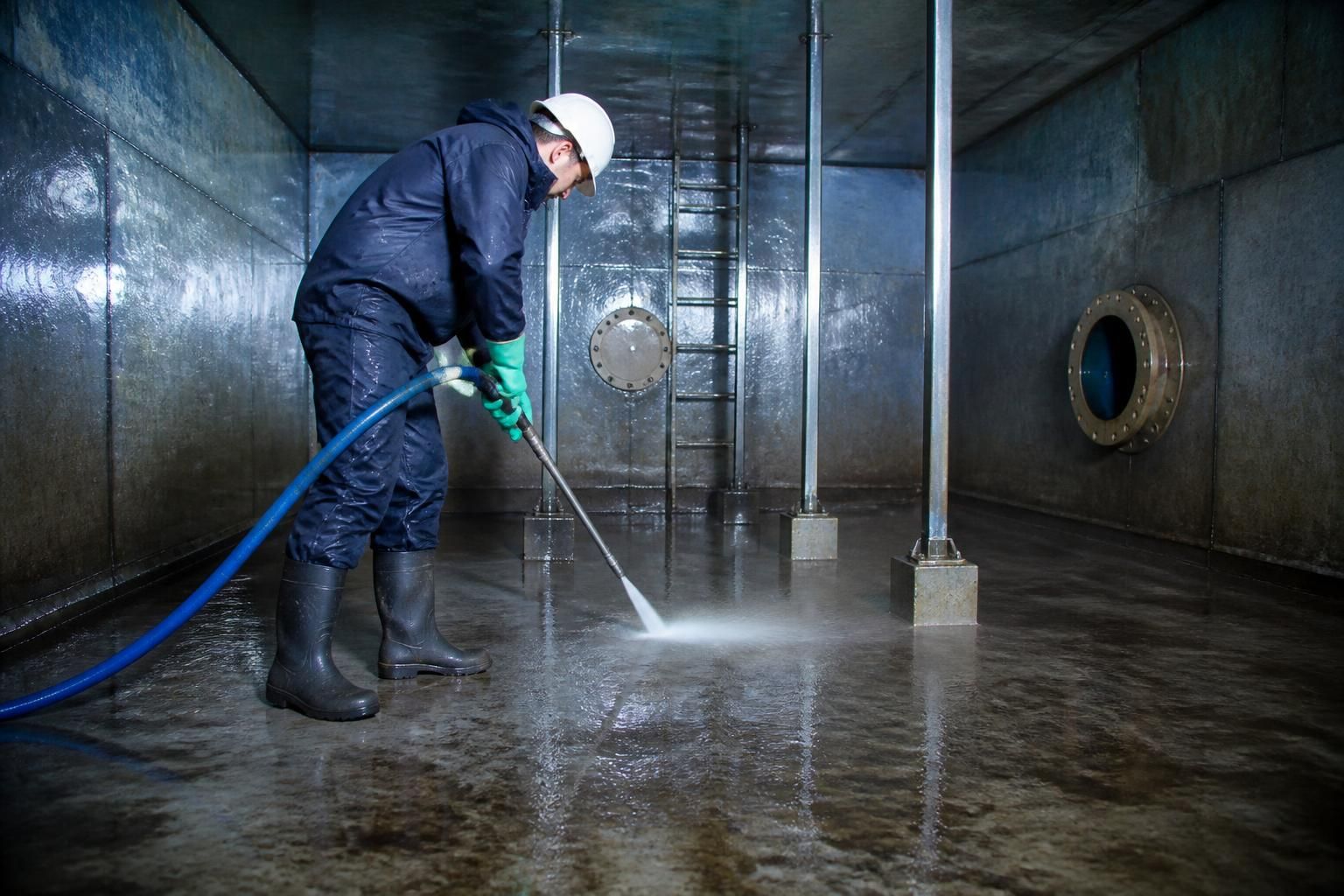
Water tank cleaning supports legionella control by restoring the storage vessel to a hygienically managed condition and making its condition easier to assess. A cold water storage tank can influence the quality of water throughout a building, so its cleanliness, design, operating temperature and turnover should be considered as part of the wider water system rather than in isolation.
It removes conditions that protect contamination. Deposits on the tank base and internal surfaces can provide areas where microorganisms are less exposed to disinfectant and normal water movement. Surface growth can also release contamination back into the water after cleaning or disturbance elsewhere in the system. Removing these materials reduces the protected areas available for persistence and makes subsequent disinfection more effective.
It supports a more accurate risk assessment. Before cleaning, restricted access, poor lighting or accumulated deposits may conceal defects and hygiene problems. During a professional clean, the tank can be examined for:
- damaged or missing lids, screens, vents and overflows;
- inadequate protection against insects, dust, debris or other ingress;
- corrosion, cracks, porous surfaces or deteriorated coatings;
- poorly positioned inlets, outlets and warning pipes;
- internal obstructions that prevent effective drainage or cleaning; and
- evidence of low use, restricted flow or areas where water may remain undisturbed.
These findings matter because cleaning alone does not correct a tank that is allowing contamination to enter or creating persistently poor water movement. Repairs, alterations or changes to operating controls may be needed before the tank can be considered suitably managed.
It helps maintain control between routine inspections. Following cleaning, the tank should be returned to service using an appropriate procedure. This may include refilling, disinfecting where required, flushing connected pipework and confirming that water quality is acceptable before normal use. The precise approach depends on the tank, the building's water system, the reason for cleaning and the findings made during the work. A written record should identify what was cleaned, when it was completed, any defects found and any further action required.
It provides useful evidence for water safety management. For commercial premises, records from cleaning, inspection, disinfection and water testing can help demonstrate that identified risks are being managed. They should sit alongside the site's legionella risk assessment and written control arrangements. Where sampling is appropriate, test results can help assess whether conditions have improved, but a satisfactory sample is not a substitute for maintaining the tank and controlling the system over time.
The frequency of cleaning should be risk-based rather than selected solely by calendar date. Relevant factors include the tank's age and construction, the quality of incoming water, the condition of its cover and fittings, the volume stored, water turnover, the vulnerability of building occupants and any previous contamination or remedial work. A change in building use, an extended period of low occupancy, building alterations or a failed inspection may justify an earlier review.
Cleaning should also be coordinated with other controls. Responsible persons may need to review temperature management, outlets that are rarely used, pipework configuration, flow patterns and the effectiveness of monitoring. If a tank repeatedly becomes contaminated, the underlying cause should be investigated instead of relying on repeated cleaning as the sole response.
For that reason, professional water tank cleaning is most useful when it forms part of a documented water hygiene programme. A competent provider can combine the physical clean with inspection, appropriate disinfection, testing or remedial recommendations, while the duty holder remains responsible for ensuring that the wider control measures are implemented and reviewed.
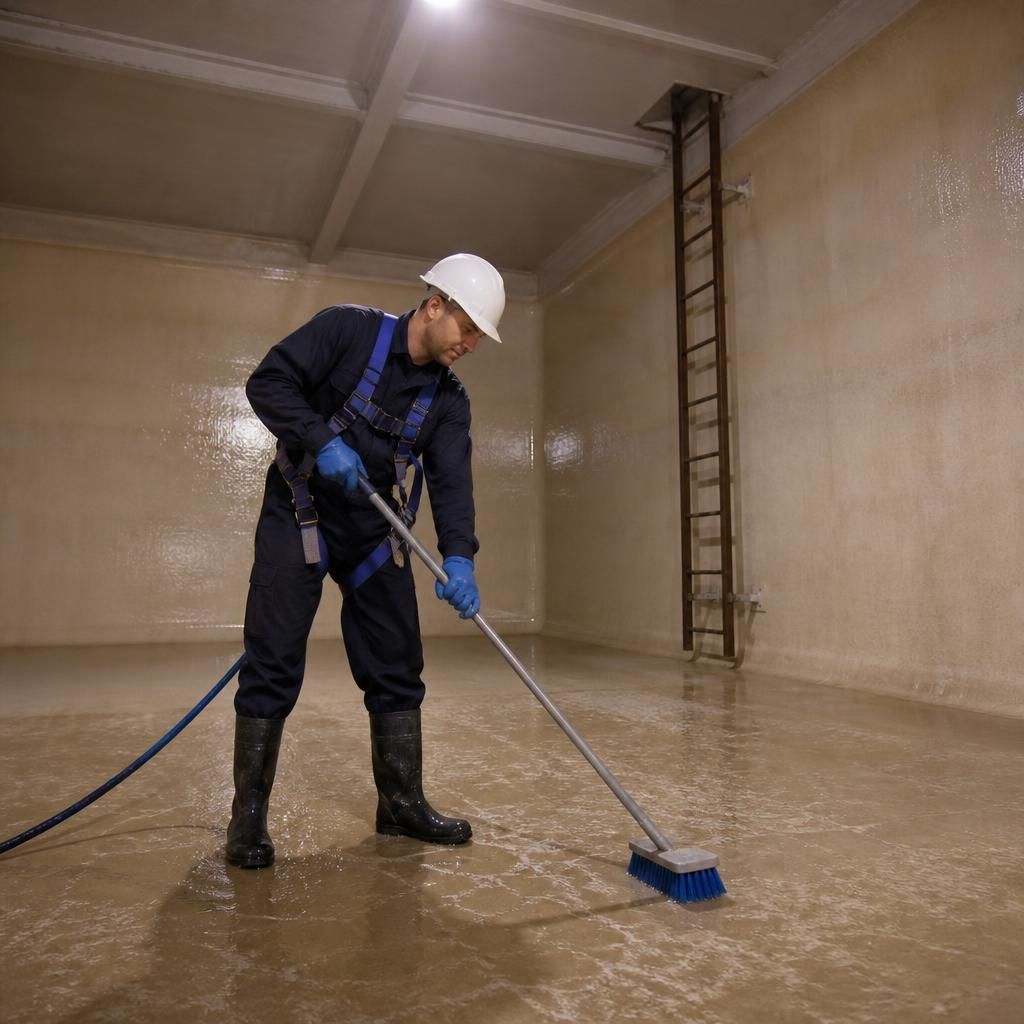
Water tank cleaning supports legionella control by addressing contamination at the point where water is stored, but it does not demonstrate that the entire water system is free from risk. Legionella can persist in connected pipework, outlets, showers and other components that are not treated as part of the tank-cleaning work.
For this reason, the findings from a tank clean should be considered alongside the site’s wider control measures. If contamination is identified, the responsible person may need to establish whether it is limited to the tank or has affected downstream parts of the system. This distinction helps determine whether further investigation, targeted disinfection or additional sampling is appropriate, rather than assuming that cleaning the storage vessel alone resolves the issue.
Discuss how water tank cleaning can support legionella control
If your cold water storage tank requires review, speak to Blue Fish Water Management about a professional inspection and cleaning plan suited to your site’s water safety requirements.