
What does professional water tank cleaning involve?
Professional water tank cleaning involves inspecting the tank and connected components, safely isolating and draining the system, removing sediment and deposits, then cleaning and disinfecting the surfaces. The tank is rinsed, refilled and checked before being returned to service, with findings and any recommended remedial work recorded for compliance purposes.
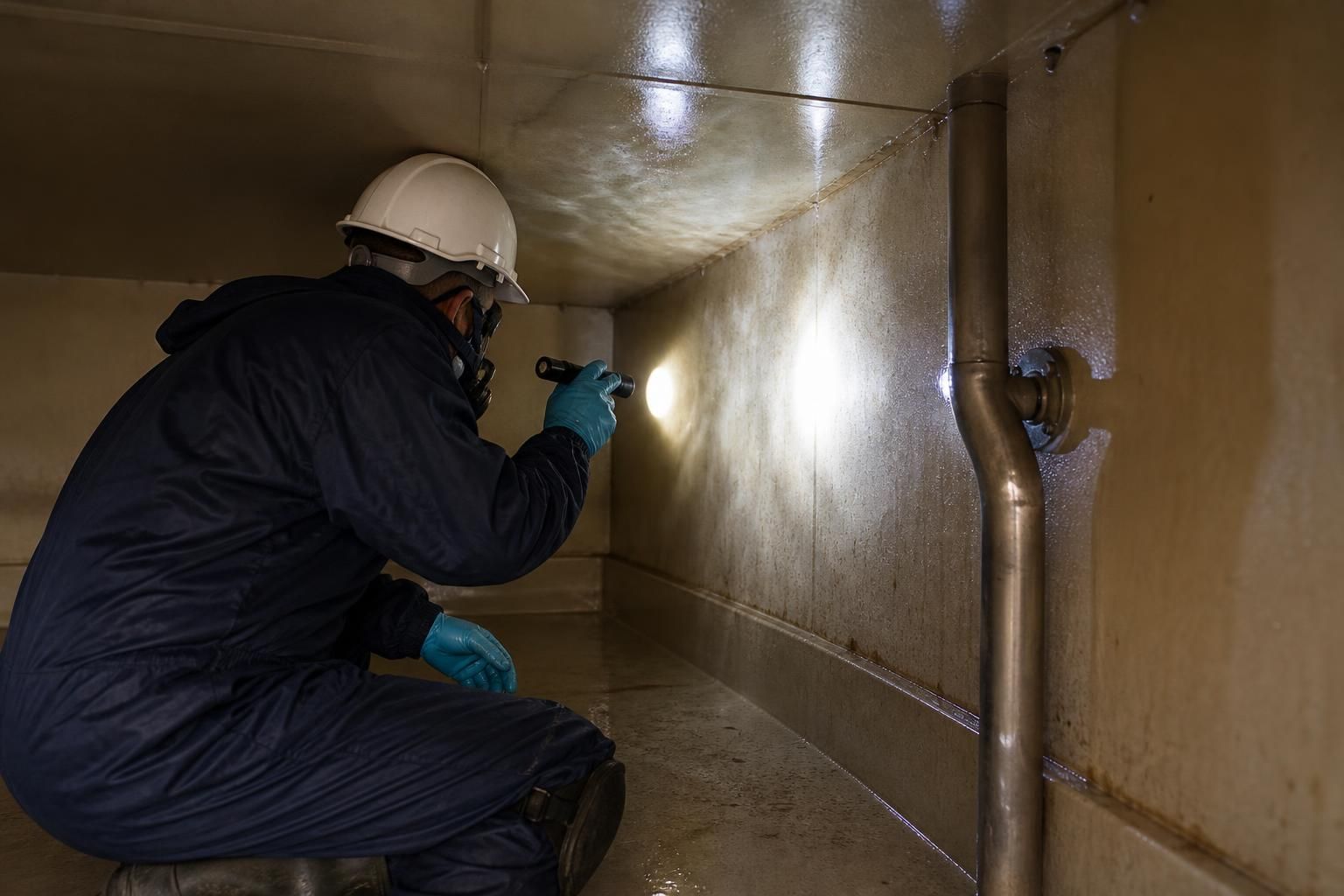
Professional water tank cleaning is a documented, risk-controlled maintenance procedure that combines a review of the water system with hygienic removal of contamination, appropriate disinfection and post-work verification. It is more than emptying a tank: the work must protect users, prevent further contamination and leave an auditable record of the tank’s condition and the work completed.
1. Pre-cleaning assessment
Before work begins, the contractor should establish how the tank operates and how it connects to the wider water system. This normally includes reviewing available schematic drawings, identifying inlet and outlet arrangements, confirming the tank’s capacity and use, and considering whether it supplies drinking water, welfare facilities, process operations or other outlets. The assessment also considers access, confined-space risks, electrical equipment, chemicals, drainage and any effect that taking the tank out of service could have on the premises.
The condition of the tank and associated components is considered as part of this assessment. Relevant observations can include corrosion, damaged coatings, poor-fitting covers, defective screens, blocked or incorrectly positioned warning pipes, unsuitable fittings and evidence of ingress from dust, insects or other sources. These issues can affect the success of cleaning and may require separate remedial attention.
2. Safe preparation and system control
A planned cleaning operation requires suitable controls to prevent accidental use of the water supply and to protect the people carrying out the work. The relevant valves, pumps and controls are managed in accordance with the system design, and affected occupants or site teams are given the information needed to avoid using outlets during the operation. Where access into a tank or enclosed area is necessary, the work must be assessed and controlled as a potential confined-space activity rather than treated as routine access.
Equipment, protective clothing and cleaning materials should be suitable for use with the type of tank and water system involved. The contractor should also control the route by which dirty water, sludge and used materials leave the site, so that waste does not contaminate clean areas or enter drainage systems inappropriately.
3. Cleaning the tank and its components
The cleaning method depends on the tank’s construction, lining, internal fittings and the nature of the deposits present. Sediment, scale, biofilm and other residues are removed using methods that avoid unnecessary damage to surfaces, seals and protective finishes. Internal surfaces, corners, joints, inlet arrangements and outlet areas need attention because contamination can remain in places that are not obvious from the access opening.
Cleaning should not be limited to the main tank chamber. Covers, access hatches, screens, ball valves, warning arrangements and nearby pipework may also influence water quality. Components that are damaged, difficult to clean or no longer hygienically suitable should be recorded for investigation rather than concealed by the cleaning process.
4. Disinfection and reinstatement
Where disinfection is required, the method and chemical treatment should be appropriate to the system, the materials present and the intended use of the water. Control of concentration, contact conditions and safe handling is important, as is preventing disinfectant from being left in the system at an unsuitable level. The system is then returned to its normal operating arrangement in a controlled manner, with attention to avoiding the reintroduction of contamination through hoses, tools, personnel or unclean components.
Disinfection is not a substitute for correcting defects. A tank with a damaged cover, persistent ingress, excessive stagnation or deteriorated internal surfaces may become contaminated again even after a technically satisfactory clean. For that reason, professional work distinguishes between the immediate cleaning activity and longer-term corrective measures.
5. Checks after the work
Once cleaning and any required disinfection have been completed, the tank and relevant controls should be checked before the supply is placed back into normal use. Checks may include the condition and fit of the cover, the integrity of screens and seals, valve operation, the cleanliness of visible surfaces, the absence of residual debris and the correct operation of warning and overflow arrangements.
Water sampling may be appropriate where the risk assessment, system type, incident history or client’s monitoring arrangements require it. Testing should be carried out using a suitable sampling approach, and results should be interpreted alongside the condition of the tank and the wider water system rather than considered in isolation. Where laboratory analysis is needed, UKAS-accredited water testing can provide an appropriate evidential basis for the assessment.
6. Reporting and follow-up
A professional service should produce records that allow the client to demonstrate what was examined and done. Depending on the scope, documentation can include:
- the date and location of the tank;
- the system or asset identified;
- the condition found before work;
- the cleaning and disinfection methods used;
- any defects, access limitations or unusual findings;
- sampling details and laboratory results where samples were taken;
- photographic evidence where appropriate; and
- recommendations for remedial work, monitoring or future maintenance.
These records support the responsible person’s water hygiene arrangements and help establish whether further action is needed. They can also be used alongside a legionella risk assessment, monitoring records and compliance audits to show how identified risks are being managed.
The precise scope of professional water tank cleaning therefore varies with the tank’s use, condition, construction and position within the water system. A suitable specification should state whether the service includes inspection, cleaning, disinfection, sampling, remedial recommendations or all of these elements, so that the client can compare like-for-like work and retain clear evidence for ongoing water safety management.
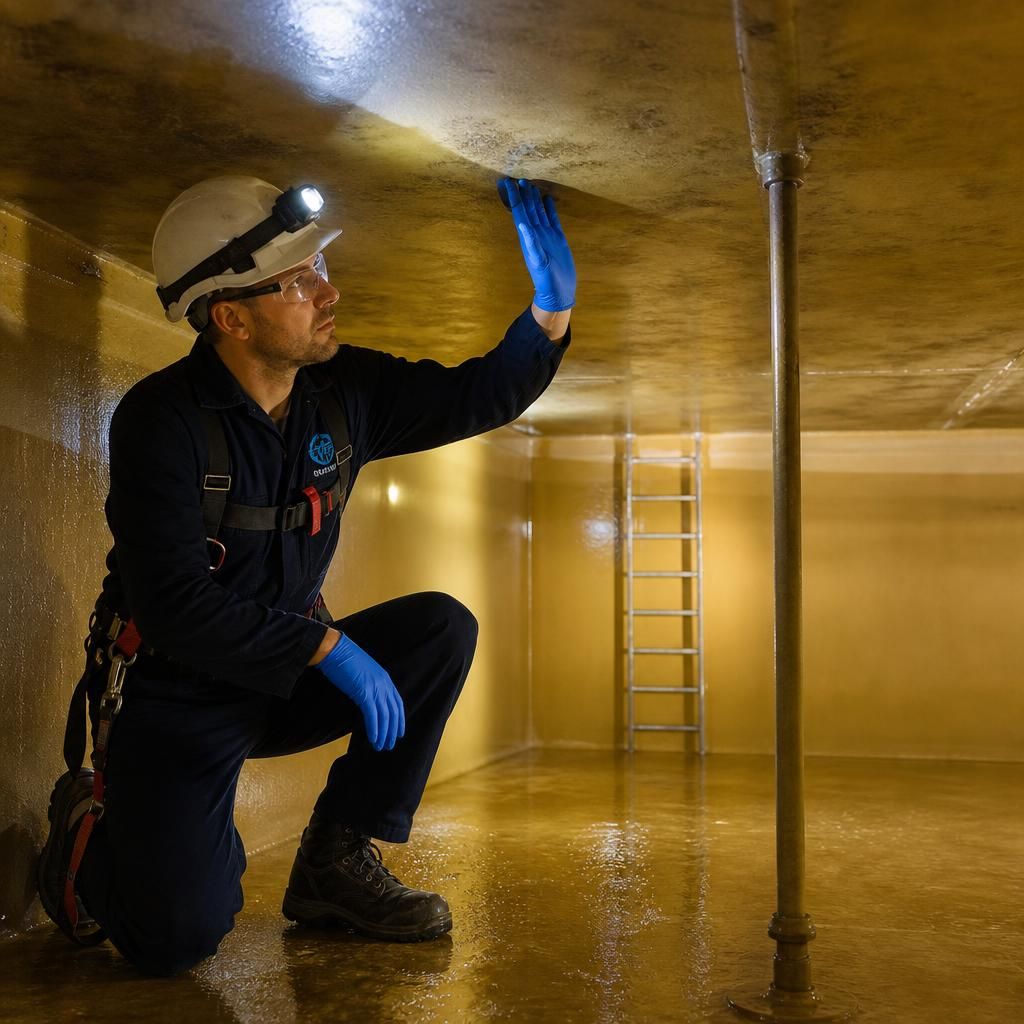
Where a site has more than one storage tank or a standby arrangement, professional cleaning may be planned in stages rather than taking the entire storage system out of use at once. Each tank is isolated, cleaned and assessed in accordance with the system design before it is brought back into service. This approach requires clear identification of valves, flow routes and interconnections, because an incorrectly isolated section could either remain contaminated or affect the operation of the wider water supply.
Discuss your professional water tank cleaning requirements
If you are planning professional water tank cleaning, discuss the tank’s use, condition and access requirements with Blue Fish Water Management Ltd to establish an appropriate scope of work. This can help ensure the specification covers the services and records your site requires.