
How often should commercial water tanks be cleaned?
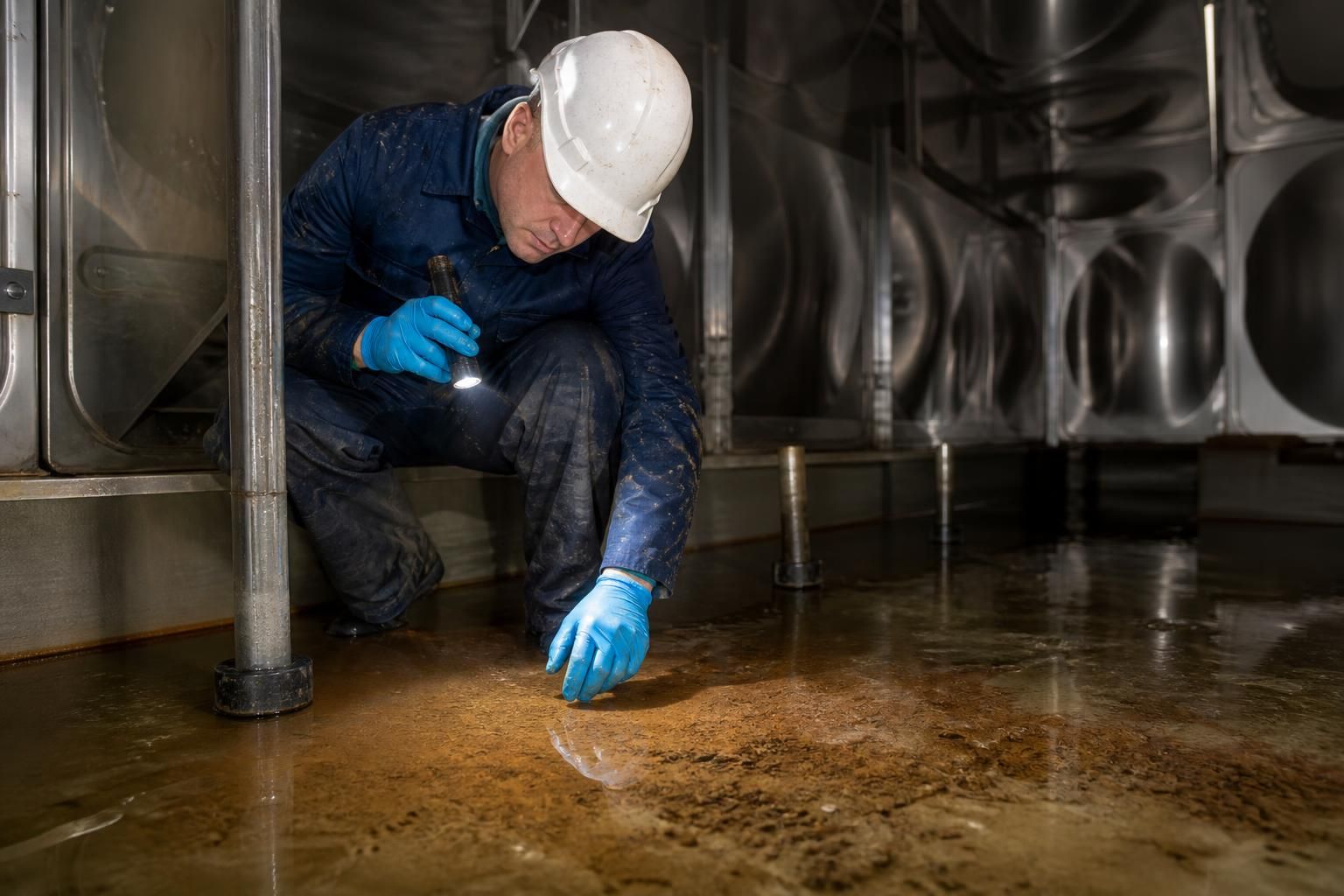
There is no single legally prescribed cleaning interval for every commercial water tank. The appropriate frequency is determined by the water hygiene risk assessment, the tank’s condition and the way the system is used. A tank may require planned cleaning at a shorter interval where it serves a high-risk population, experiences low or irregular turnover, or is affected by conditions that allow sediment and microbial growth to develop.
For many businesses, the cleaning programme forms part of the written control scheme for the water system. That scheme should identify which tanks are included, who is responsible for arranging the work, what standard the cleaning must meet and when the frequency will be reviewed. The decision should be based on evidence from inspections, sampling, system monitoring and maintenance records rather than on a calendar date alone.
Factors that can affect the cleaning frequency include:
- the volume and design of the tank, including whether internal surfaces, lids, screens and fittings can be properly inspected;
- the age and condition of the tank, supports, insulation, inlet and outlet arrangements;
- the amount and regularity of water turnover;
- the presence of sediment, scale, biofilm, rust or other deposits;
- the temperature of stored water and the effectiveness of temperature control elsewhere in the system;
- whether the tank supplies showers, healthcare premises, care settings or other areas where the consequences of exposure to Legionella may be greater; and
- previous test results, complaints, incidents, remedial work or changes to the building’s occupancy and water usage.
A tank should also be reassessed when the system is commissioned, brought back into use after a prolonged shutdown, substantially altered or repaired. Cleaning and disinfection may be needed following contamination, flooding, an ingress problem or work that has introduced debris into the tank. Where monitoring identifies Legionella or another water quality concern, the response should be set by a competent person and may include further investigation, cleaning, disinfection, flushing and additional verification.
The legal duty is not simply to arrange a routine tank clean. Under health and safety legislation, employers and those responsible for premises must assess and control risks from work activities, including exposure to Legionella bacteria where it is reasonably foreseeable. The control scheme should be suitable for the system and kept under review. Guidance such as the Health and Safety Executive’s Approved Code of Practice L8 and HSG274 is commonly used to support this work, while drinking water requirements also apply where stored water is intended for potable use.
Before setting or changing a schedule, a business should confirm that the tank has been correctly identified and that the assessment covers connected tanks, pipework, outlets and associated equipment. Cleaning only one accessible tank may not control the risk if another storage vessel or dead-leg pipework is contributing to poor water quality. The work should be planned to protect users from interruption, prevent recontamination and ensure that the system is returned to service safely.
A suitable service record should normally include the reason for cleaning, the tank identification, observations about its condition, deposits or defects found, the cleaning and disinfection method, any repairs or recommendations, and the results of relevant checks or samples. These records help the responsible person demonstrate that the frequency is justified and make it easier to identify deterioration over time.
In practice, the best schedule is one that is specific to the building and supported by documented evidence. If the existing interval was inherited from a previous operator, the tank’s history is unknown, or inspection findings are inconsistent, the responsible person should obtain a fresh assessment from a competent water hygiene professional rather than relying on a generic timetable.
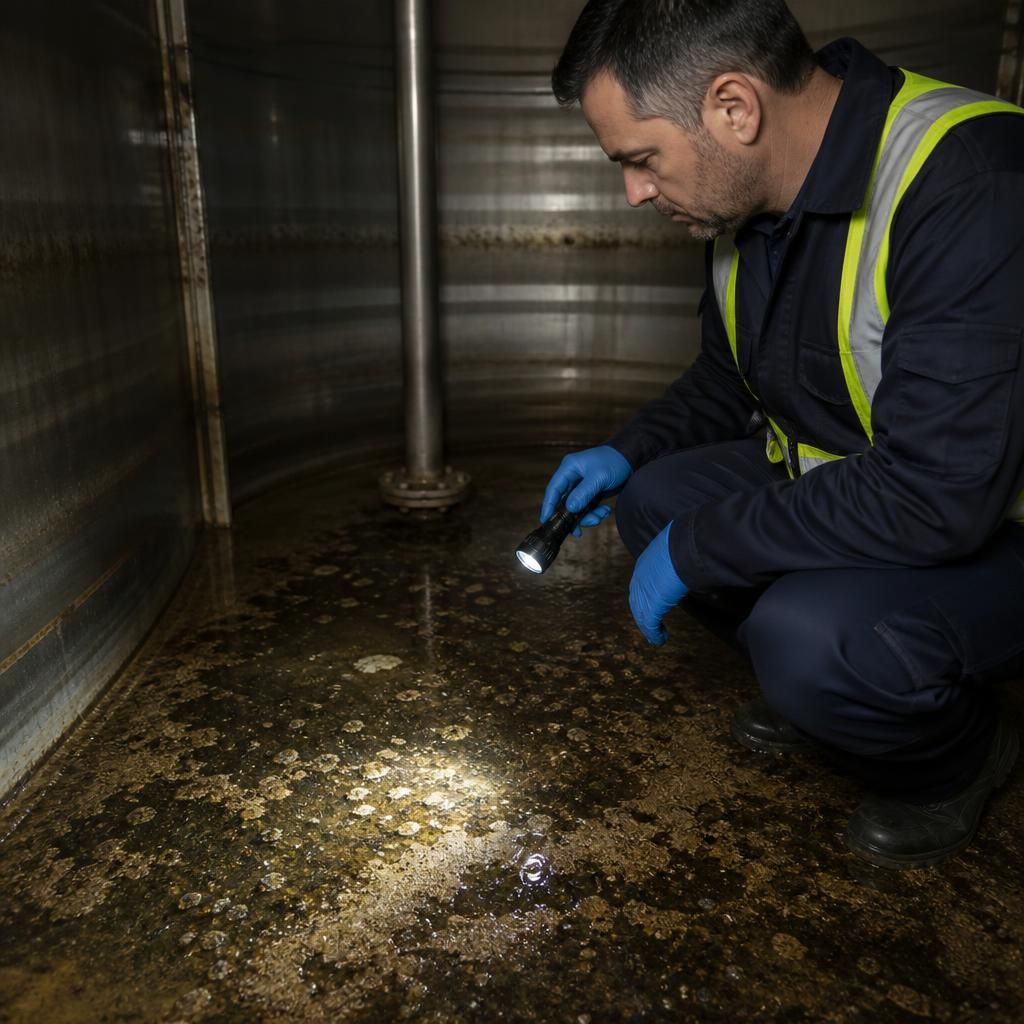
A visually clean commercial water tank is not necessarily microbiologically safe. Sediment and visible deposits can be absent while water quality is affected by stagnation, inadequate temperature control or contamination elsewhere in the connected system. For this reason, the inspection of a tank should be considered alongside water sampling, system temperatures, turnover and previous monitoring results.
Results should be assessed as a trend rather than treated as an isolated pass-or-fail check. Repeated changes in sample results, unexplained complaints or a deterioration in operating conditions may justify bringing the next clean forward, even where the tank’s internal surfaces appear satisfactory. This approach helps ensure that the cleaning interval reflects the condition of the whole water system, not just what can be seen during an inspection.
Review your commercial water tank cleaning schedule
If your commercial water tank cleaning interval is unclear or no longer reflects current conditions, arrange a review with a competent water hygiene professional. Blue Fish Water Management Ltd can help assess the system and identify appropriate next steps.