
What competence should a pool chlorination provider demonstrate?
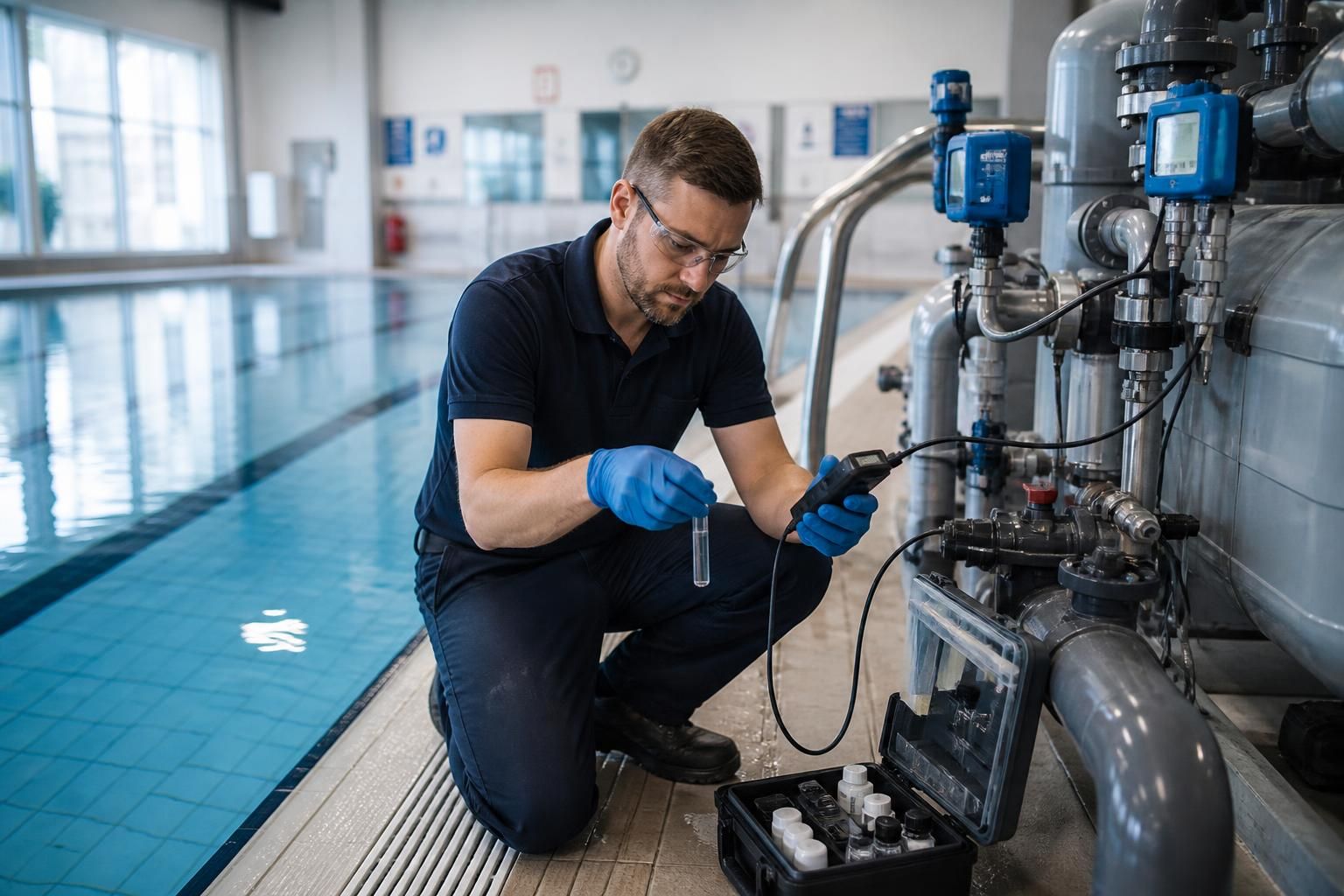
A competent pool chlorination provider demonstrates more than the ability to dose chlorine. They should show that they can plan the work, protect people and equipment, control chemical hazards, make technically justified decisions and explain the results in a way the dutyholder can act upon.
Relevant technical knowledge
The provider should understand how pool design, circulation, filtration, water temperature, bather load and organic contamination affect disinfection. They should be able to distinguish between routine chlorination, shock treatment and remedial disinfection, and explain when each approach is appropriate. Their advice should account for the pool's construction materials, pipework, plant and connected water systems rather than treating every pool as identical.
Competence also includes recognising factors that can make chlorine less effective or create misleading readings. These may include unsuitable pH, poor circulation, blocked filters, inadequate turnover, biofilm, excessive demand or faults in chemical dosing equipment. A provider should investigate the underlying cause instead of recommending repeated chemical treatment without addressing the system condition.
Safe chemical handling and site control
Chlorine products can cause injury, release hazardous gases when incorrectly mixed and damage surfaces or plant. A professional provider should therefore have a controlled method for receiving, storing, transporting and using treatment chemicals. Before work starts, they should identify relevant hazards, establish suitable exclusion arrangements and consider the effect of treatment on staff, contractors, pool users and the surrounding premises.
- Use appropriate personal protective equipment and handling procedures.
- Prevent incompatible chemicals from being mixed.
- Control access to the pool and affected plant areas during treatment.
- Consider ventilation, spill response and emergency arrangements.
- Protect dosing equipment, liners, coatings, filters and other vulnerable components.
These controls should be proportionate to the work and explained to the person responsible for the site. A provider that focuses only on the chemical dose, without discussing safe isolation and reoccupation arrangements, has not demonstrated complete competence.
Sound preparation and decision-making
Before proposing treatment, the provider should gather enough information to understand the pool's operation. This can include the type and size of the pool, the circulation and filtration arrangement, recent operating history, known faults, previous treatment, water quality concerns and any restrictions on access or use.
They should be willing to ask practical questions and identify information gaps. Where the available information is insufficient, a competent provider should say what must be checked before work proceeds. The proposed method should then be proportionate to the identified problem, with a clear explanation of why it has been selected and what limitations apply.
Reliable use of instruments and samples
Competence is also reflected in how readings are obtained. The provider should use suitable, maintained equipment and follow a consistent sampling approach. Results should be recorded with enough context to show where and when the sample or measurement was taken and whether the pool was in normal operation or undergoing treatment.
Where a result appears unusual, it should be considered alongside other evidence rather than accepted without question. A competent technician will recognise that a single reading may not explain a recurring problem and may recommend further investigation where necessary. They should also distinguish between an observation, a confirmed result and a professional recommendation.
Understanding of operational handover
Chlorination work does not end when the chemical has been introduced. The provider should explain what the site operator needs to do afterwards, including any required flushing, cleaning, filter attention, rebalancing, equipment checks or restrictions on use. Instructions should be specific enough for the responsible team to follow and should identify any conditions that need to be met before the pool returns to normal operation.
The handover should also make clear which tasks remain with the site operator. This prevents uncertainty about who is responsible for checking plant, maintaining routine water quality controls and escalating a further issue.
Clear evidence of work completed
A suitable report should allow another competent person to understand the work without relying on informal explanations. It should normally identify the area treated, the reason for the work, the method used, relevant observations, measurements taken, any restrictions or limitations and the actions recommended afterwards. If defects or conditions outside the provider's control affected the work, these should be stated rather than omitted.
Useful evidence of competence can include technician training records, documented procedures, risk assessments, examples of anonymised reports, equipment maintenance arrangements and a clear explanation of how unusual findings are handled. These documents are more informative than a general claim of experience because they show how the provider works in practice.
For a business responsible for pool safety, the strongest provider is one that combines chemical knowledge with disciplined site management, honest communication and a clear understanding of operational responsibility. Those qualities help the dutyholder judge whether the proposed treatment is suitable and whether the pool can be managed safely after the visit.
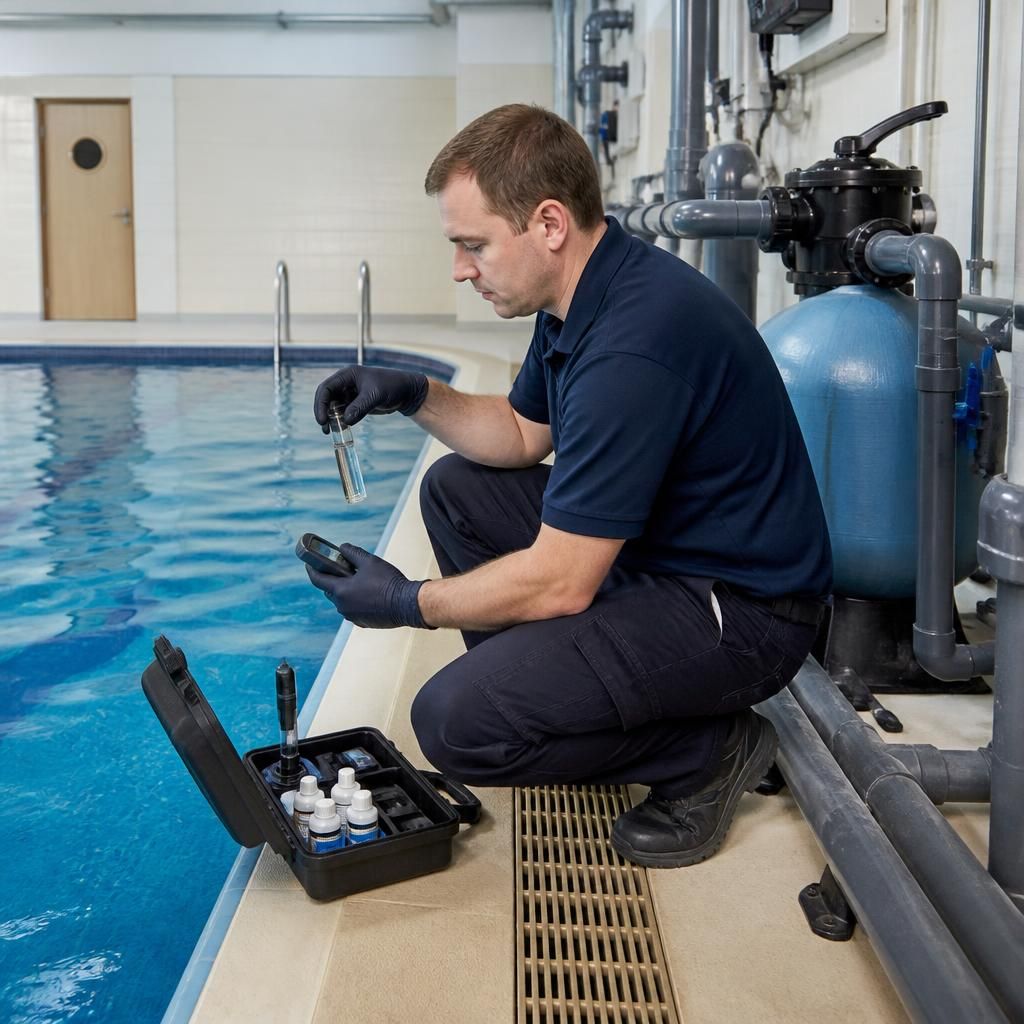
Competence should also be demonstrated through quality assurance after the treatment has been completed. The provider should have a defined method for reviewing the work, checking that the recorded results are internally consistent and confirming that any deviation from the planned method has been explained.
This review may include checking treatment records against the agreed scope, verifying that sampling and instrument readings were documented correctly, and identifying whether further investigation is needed. Where the work does not produce the expected result, a competent provider should record the issue, explain its likely significance and recommend an appropriate next step rather than presenting the job as complete without qualification.
Discuss Your Pool Chlorination Requirements
Discuss your pool chlorination requirements with Blue Fish Water Management Ltd to clarify the scope of work, information needed and suitable next steps.