
What should a pool chlorination provider include in its report?
A pool chlorination report should record the work completed, the treatment method used, chemical and water-quality readings, relevant observations, and any corrective action required. It should also identify the pool or system assessed, include the date and responsible technician, and clearly state follow-up recommendations so the results provide an auditable record of water safety management.
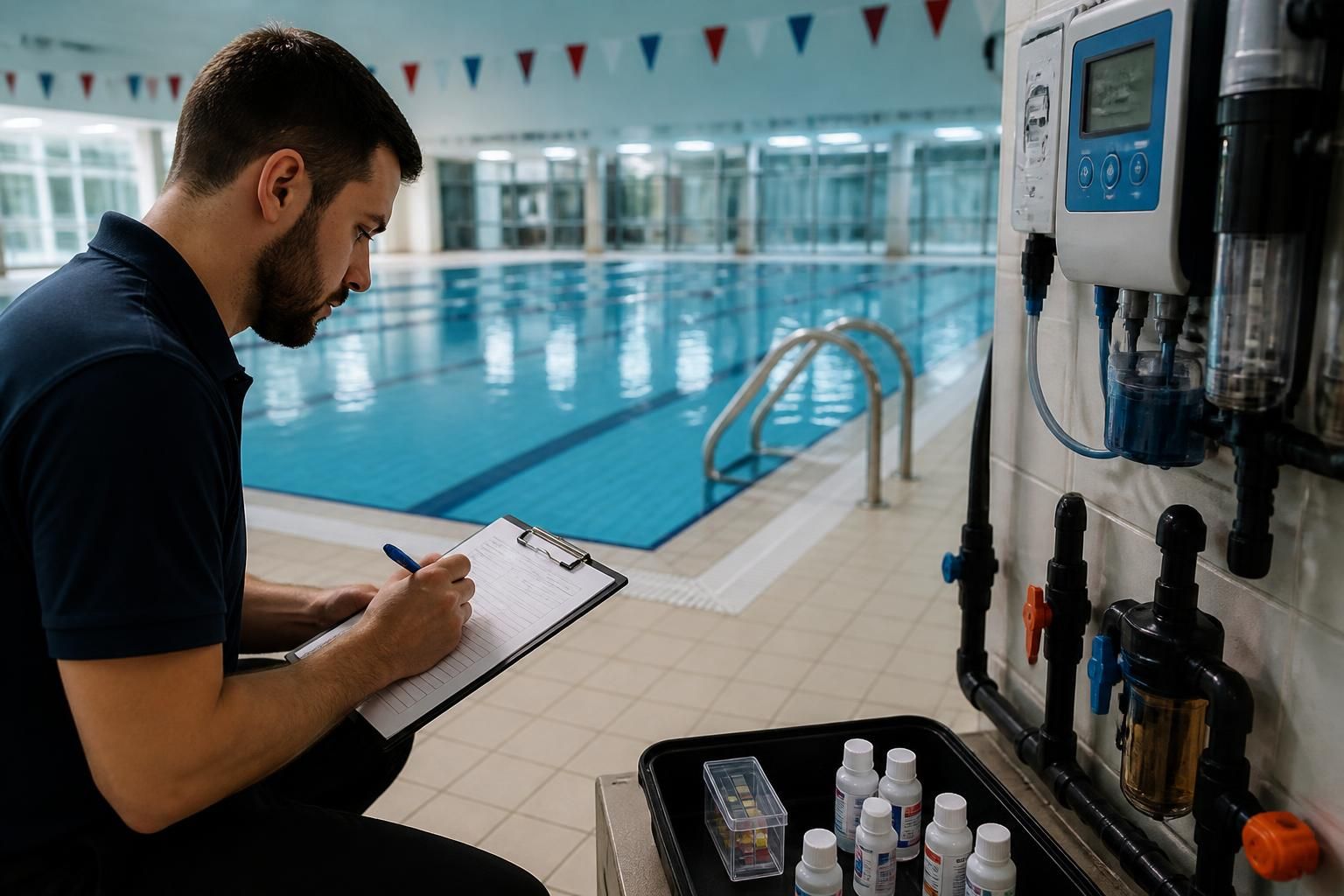
A useful pool chlorination report is an evidence-led document that allows a duty holder, facilities manager or auditor to understand the condition of the water system, the reliability of the results and the action needed next. It should do more than present isolated readings: it should explain how samples were obtained, how results compare with the applicable operating criteria and whether any limitation affects confidence in the findings.
The report should normally include the following information:
- Scope and system description: identify the pool, tank, treatment circuit or other assets examined, together with the parts of the installation included and excluded from the visit. A brief description of circulation, filtration, dosing and disinfection arrangements helps the reader understand what the results represent.
- Sampling detail: record each sampling point, whether the sample was taken from the pool, balance tank, return line or another location, and the date and time of collection. The report should also state whether samples were taken before, during or after treatment, since timing can materially affect interpretation.
- Test method and equipment: state whether results came from field testing, laboratory analysis or both. The method, units of measurement, equipment used and relevant calibration or quality-control information should be clear. If a result is reported by a laboratory, the report should identify the laboratory and distinguish accredited tests from any tests outside the relevant accreditation scope.
- Results in context: present results in a table or similarly clear format, with the applicable target, operating range or action level alongside each result where appropriate. This enables the reader to identify a normal result, a warning condition and a result requiring intervention without having to interpret unexplained figures.
- Related water-quality parameters: chlorination should not be assessed in isolation. Depending on the system and scope of the visit, the report may need to address pH, disinfectant residual, combined chlorine, temperature, turbidity, alkalinity or microbiological findings. The provider should explain why any parameter was tested or omitted.
- Operational observations: document conditions that may affect treatment performance, such as dosing equipment condition, chemical storage, injection points, circulation, filtration, visible contamination, plant-room access, signage and the general state of relevant components. Photographs or marked-up diagrams can provide useful supporting evidence where a defect is difficult to describe precisely.
- Comparison with requirements: explain the criteria used to assess the results. These may arise from the site's operating procedures, risk assessment, manufacturer instructions, contract requirements, current technical guidance or applicable health and safety obligations. A report should avoid presenting a number as acceptable without identifying the basis for that conclusion.
- Exceptions and limitations: record inaccessible areas, unavailable records, interrupted circulation, unusual bather loading, recent chemical dosing or any other factor that could affect the inspection or results. If a sample was not representative, that qualification should be prominent rather than hidden in a general note.
- Risk-based findings: separate minor housekeeping matters from conditions that could affect disinfection, water quality or user safety. Findings should explain the significance of the issue and, where relevant, the potential consequence of leaving it unresolved. This gives the responsible person a rational basis for prioritising work.
- Corrective action schedule: recommendations should identify the specific task, the responsible party where known, the priority and the evidence needed to confirm completion. Vague instructions such as “monitor the system” are less useful than a defined check, a documented acceptance criterion and a stated review point.
- Verification requirements: where remedial work, adjustment or further treatment is recommended, the report should state how effectiveness is to be checked. This may involve repeat field measurements, additional laboratory samples, inspection of dosing performance or review of trend data. The required verification should match the nature and seriousness of the finding.
- Supporting records: attach or reference raw results, laboratory certificates, photographs, instrument records, chemical delivery information, relevant maintenance notes and any previous report needed to understand a trend. Keeping the evidence with the conclusion makes the document more useful during an audit or later investigation.
- Review and approval: identify who prepared the report, who reviewed it where applicable and who received it. A controlled report should have a report reference, issue date and revision status so that amended findings are not confused with an earlier version.
Trend information is particularly valuable where several reports exist. Rather than treating each visit as a standalone pass or fail, the provider should identify recurring drift, intermittent failures or gradual deterioration. For example, repeated changes in disinfectant residual, pH control or filtration performance may indicate an underlying plant or management issue that a single reading would not reveal.
The report should also distinguish between a test result and an interpretation. A measured value is evidence from a particular sample at a particular time; it is not automatically proof that every part of the pool system is operating in the same way. Clear wording about sampling coverage, timing and limitations prevents the report from being relied upon beyond what the inspection can support.
For business sites, the final document should be practical for more than one audience. A facilities team may need precise instructions for adjustment and maintenance, while senior management or an auditor may need a concise summary of compliance status, outstanding risks and evidence of closure. A short executive summary followed by technical detail and supporting records usually serves both purposes.
Before accepting a report, the client should check that the findings can be traced back to identifiable samples and that every significant exception has an owner and a follow-up requirement. A report that contains results but no assessment criteria, limitations or route to verification is incomplete, even if the readings themselves appear accurate.

Where water samples are sent to a laboratory, the report should preserve their chain of custody as well as the final results. Each sample should have a unique reference linked to its sampling point, collection date and time, collector, transport arrangements and laboratory receipt. The record should also note any deviation, such as delayed delivery, damaged packaging or insufficient sample volume, because these factors may affect how confidently the result can be interpreted.
This traceability allows a facilities manager or auditor to connect a reported microbiological finding to the exact sample and handling process that produced it. It also prevents results from different sampling visits or pool areas being combined or attributed to the wrong part of the system.
Discuss your pool chlorination reporting requirements
Discuss your pool chlorination reporting requirements with Blue Fish Water Management Ltd to establish a clear, suitable reporting scope for your site and responsibilities.