
What accreditation should a pool chlorination provider hold?
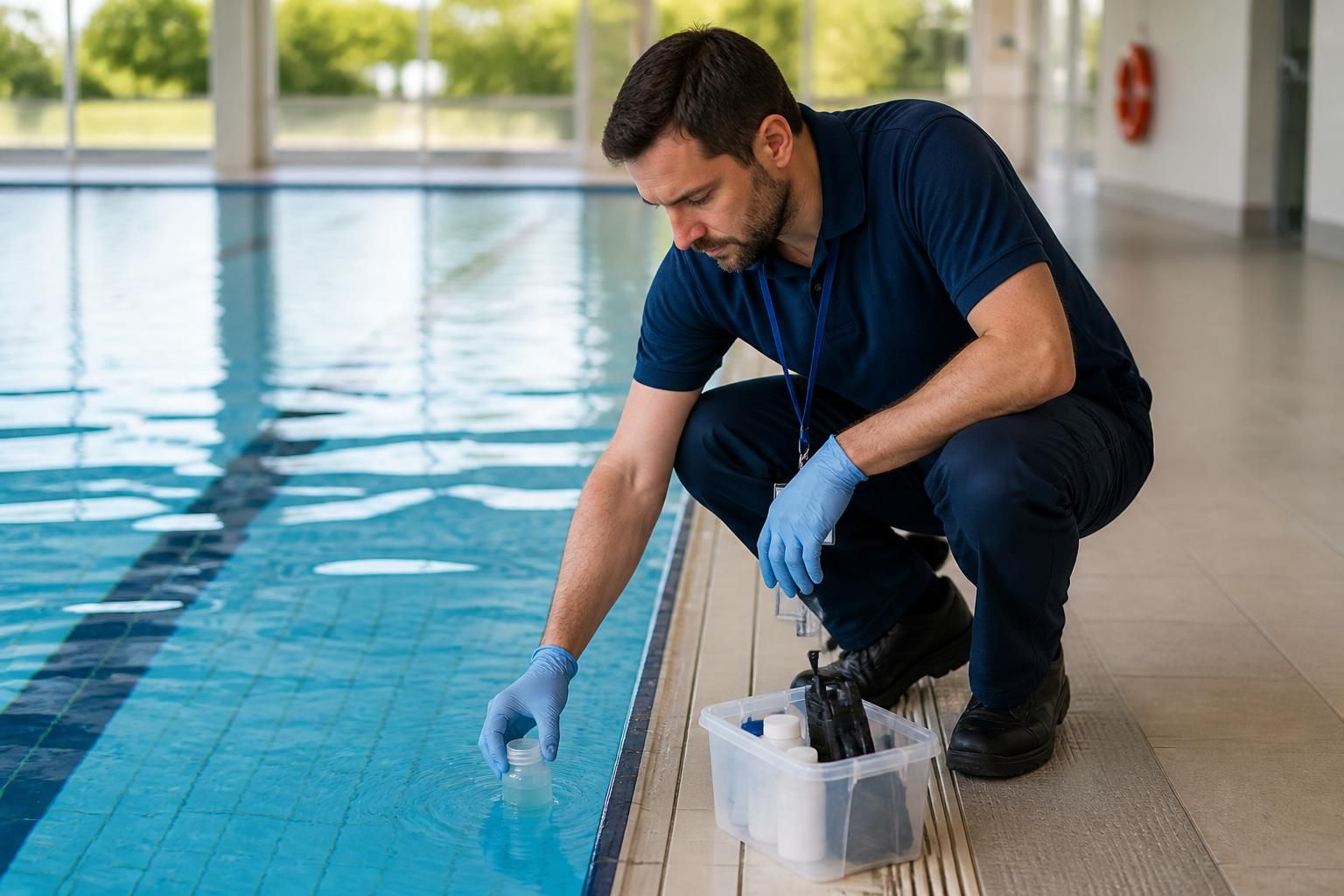
The most relevant accreditation is UKAS accreditation for the laboratory carrying out any required water testing, supported by demonstrable competence in pool disinfection, water hygiene and risk control. The accreditation should be relevant to the tests being commissioned and current at the time of service; a general quality mark or membership alone does not establish technical competence.
It is also important to distinguish between the laboratory, the individual technicians and the company managing the work. UKAS generally accredits testing laboratories rather than every activity performed by a pool chlorination contractor. A provider should therefore explain which work is performed by its own personnel, which tests are undertaken by an accredited laboratory and how results are linked to the pool, sample point and treatment record.
When assessing a provider, look for the following evidence:
- Relevant laboratory accreditation: the laboratory should be able to provide a current UKAS schedule showing the methods and types of water analysis within its scope.
- Qualified personnel: technicians should have suitable training in pool water treatment, chemical handling, sampling, disinfection and health and safety. Training records, competency assessments and refresher training are more useful than an unsupported claim that staff are “qualified”.
- Documented operating procedures: the provider should work to written procedures for chemical dosing, sampling, safe isolation, cleaning, post-treatment checks and the management of abnormal results.
- Quality management controls: certification such as ISO 9001 may indicate that a company has structured processes for document control, corrective action and continual review. It should be treated as evidence of management systems, not as a substitute for technical water-treatment competence.
- Relevant industry recognition: membership of a credible water-treatment or pool-industry body can support a provider’s professional standing, but membership should be checked alongside qualifications, experience and independently verifiable procedures.
- Traceable reporting: records should identify the system assessed, chemicals used, relevant readings, samples taken, laboratory results, deviations and recommended corrective actions. This is essential when demonstrating that the work was controlled rather than simply completed.
Accreditation should also be considered alongside the provider’s understanding of applicable guidance. A competent contractor should be able to explain how its method reflects current pool water treatment guidance, chemical safety requirements, risk assessment principles and the client’s own operating procedures. Guidance documents and legal duties are not accreditations, but they provide the framework against which competent work should be planned and recorded.
Before appointing a provider, ask to see certificate numbers, expiry dates, accreditation schedules and the scope of any claimed certification. Check whether the certificate belongs to the provider, a laboratory or a subcontractor, and whether it covers the service actually being proposed. If the provider cannot explain those distinctions, the accreditation claim may provide little assurance.
The strongest evidence is a combination of suitable laboratory arrangements, trained and assessed personnel, controlled working procedures and clear records. Accreditation supports confidence in the process, but it does not remove the need to review the provider’s practical competence, risk controls and ability to produce a defensible treatment report.
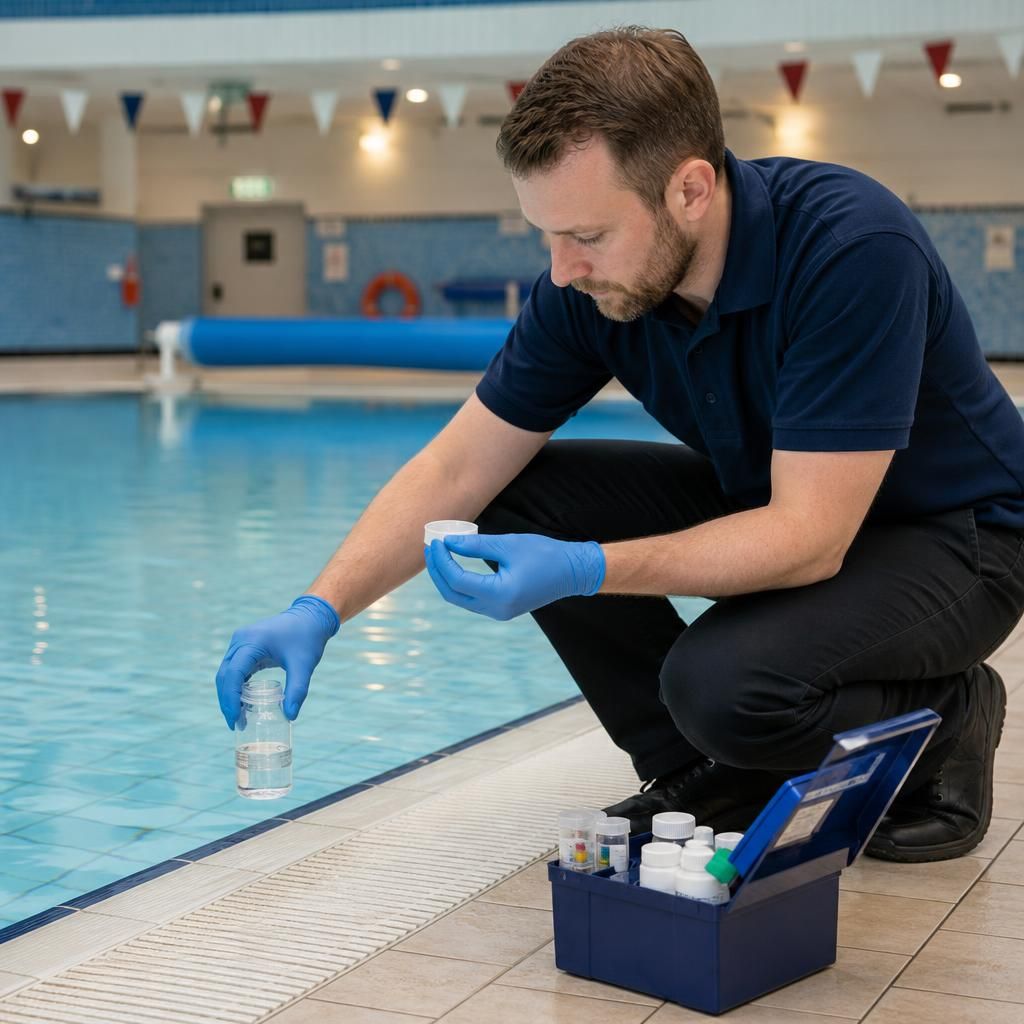
A laboratory accreditation supports the reliability of a test result, but it does not determine what treatment a pool requires. The provider must still interpret the result in relation to the pool’s operating conditions, recent maintenance, chemical readings, bather use and any relevant risk factors. A competent explanation should distinguish between the measured result, the significance assigned to it and the corrective action proposed.
When reviewing a provider, ask how accreditation-backed results are used in decision-making. The recommendation should be proportionate to the evidence, explain any uncertainty and identify when further investigation is needed. This helps prevent a test result being treated as an automatic instruction to increase chemical dosing or undertake unnecessary work.
Discuss pool chlorination provider accreditation
Need help evaluating a pool chlorination provider’s credentials and proposed approach? Contact Blue Fish Water Management Ltd to discuss your pool water hygiene requirements and the evidence you should request before appointing a contractor.