
How will the provider determine the correct pool chlorination method?
The correct pool chlorination method is selected by matching the disinfection process to the pool’s operating conditions, treatment plant and required level of control. A competent provider should not recommend a dosing arrangement from the pool type alone. It should first establish how chlorine is currently being applied, whether the process is maintaining an effective disinfectant residual, and what changes are needed to control water quality consistently.
The assessment normally begins with a review of the pool’s operating information and treatment records. This can include the pool volume, circulation and filtration arrangements, dosing points, chemical storage, controller settings, maintenance procedures and previous test results. The provider should also consider how the pool is used, including likely bather loading, water temperature, periods of high demand and whether different pools or water features share treatment equipment.
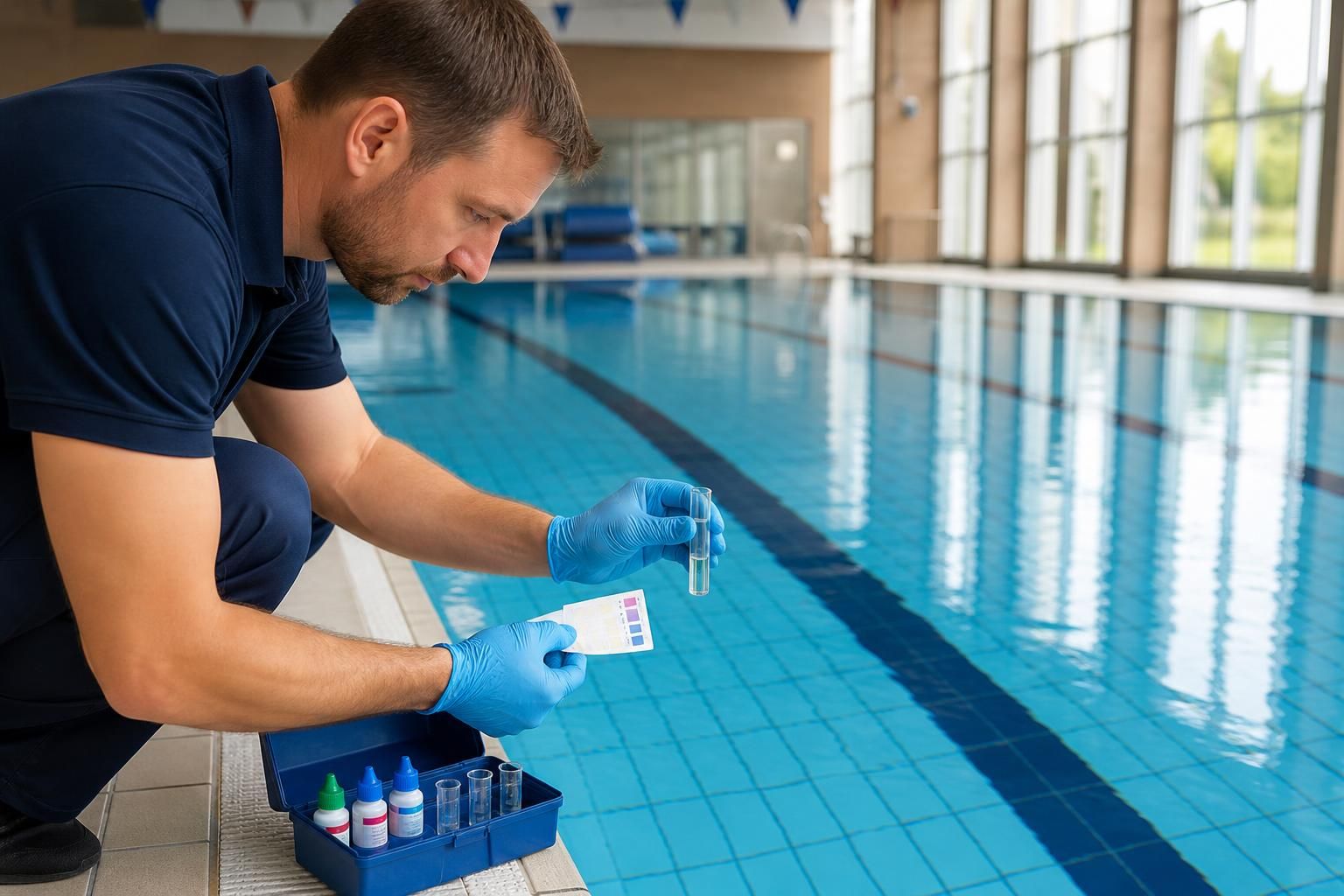
Water testing then helps distinguish between a dosing problem and a wider treatment issue. Relevant checks may include:
- free chlorine and combined chlorine;
- pH and alkalinity;
- water temperature;
- clarity and signs of contamination;
- the condition of filters and circulation equipment; and
- microbiological parameters where the risk assessment or operating history indicates that further investigation is appropriate.
These results are interpreted together rather than in isolation. For example, increasing chlorine may not resolve poor water quality if inadequate circulation leaves dead spots, filtration is overloaded, pH control is unstable or organic contamination is creating excessive combined chlorine. A suitable recommendation therefore addresses the reason for the loss of control, not simply the quantity of chemical being added.
The provider should compare the available chlorination arrangements against the pool’s needs. A manually managed system may be appropriate for a small or lightly used installation where trained staff can carry out and record regular checks. An automatically controlled system may be more suitable where demand varies, accurate dosing is required or continuous monitoring can reduce the risk of under- or over-dosing. In some installations, the appropriate solution may involve improving the existing dosing system rather than replacing it.
Compatibility with the plant is an important part of that decision. The provider should check whether the proposed disinfectant, dosing equipment, injection points and storage arrangements are suitable for the pipework, pumps, tanks, controllers and ventilation. It should also consider chemical segregation, safe handling, dosing failure alarms and the means of preventing incompatible chemicals from mixing. A method that appears effective in theory may be unsuitable if the equipment cannot deliver it reliably or safely.
Control of pH is considered alongside chlorine selection because pH affects the effectiveness of chlorine and the condition of the pool and its components. The recommendation should explain how pH will be monitored and corrected, how chlorine demand will be managed during changing use, and how operators will identify a developing problem. Where combined chlorine is elevated, the proposed approach should also explain how contamination and chloramine formation will be investigated and controlled.
A sound recommendation includes verification rather than relying on the initial specification. This may involve checking chlorine distribution at representative sample points, reviewing automated readings against manual or laboratory tests, examining dosing trends and confirming that the system responds appropriately when pool use changes. Any commissioning or remedial work should be followed by documented test results and clear operating instructions.
The final method should therefore be recorded as a practical management plan. It should identify the chosen disinfection arrangement, monitoring requirements, control limits, sampling locations, chemical-handling precautions, maintenance tasks and actions to take when results fall outside the required range. Blue Fish can use its water hygiene and testing experience to help interpret these findings and provide a proportionate recommendation, rather than treating chlorination as a standalone chemical-dosing decision.
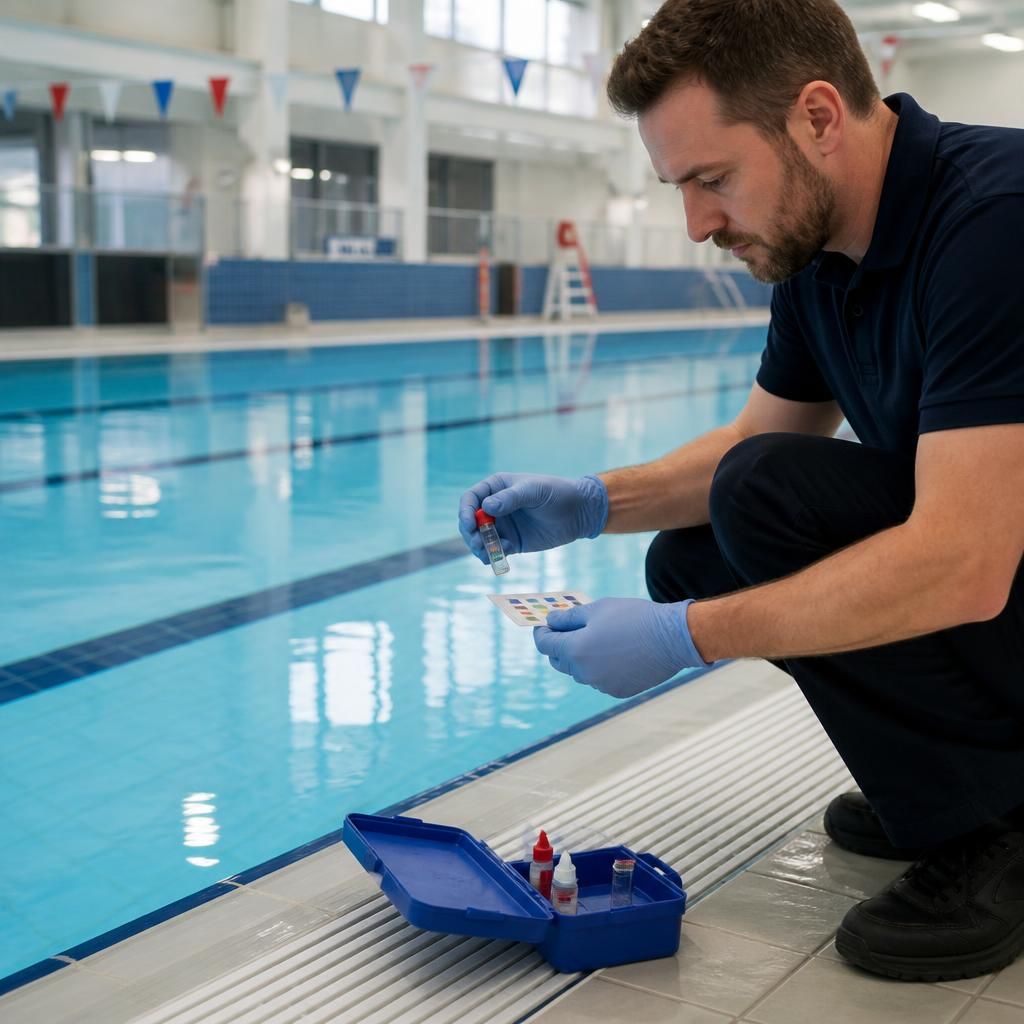
The correct pool chlorination method should be supported by a clear written rationale, not just a list of equipment or chemicals. The provider should explain how the recommendation follows from the pool’s assessed risks, operating conditions and required level of control, while identifying any assumptions made during the assessment.
A useful recommendation should also state why other practical options were not selected, what limitations remain and which changes would require the method to be reviewed. This makes the decision easier for the operator to understand, approve and manage. Blue Fish can help turn the assessment findings into a documented, proportionate chlorination recommendation for the installation.
Discuss Your Pool Chlorination Method
If you need to confirm that your pool’s chlorination method is suitable for its operating conditions, discuss the installation with Blue Fish. Their team can help review the available information and identify the appropriate next steps.