
When is chemical neutralisation suitable for dechlorination?
Chemical neutralisation is suitable when a controlled, rapid reduction in residual chlorine is needed before chlorinated water is discharged, particularly where flow, volume or discharge limits make passive methods impractical. The chosen dosing method and neutralising agent must be matched to the chlorine concentration, water volume and discharge conditions, with verification that the treated water meets the relevant requirements.
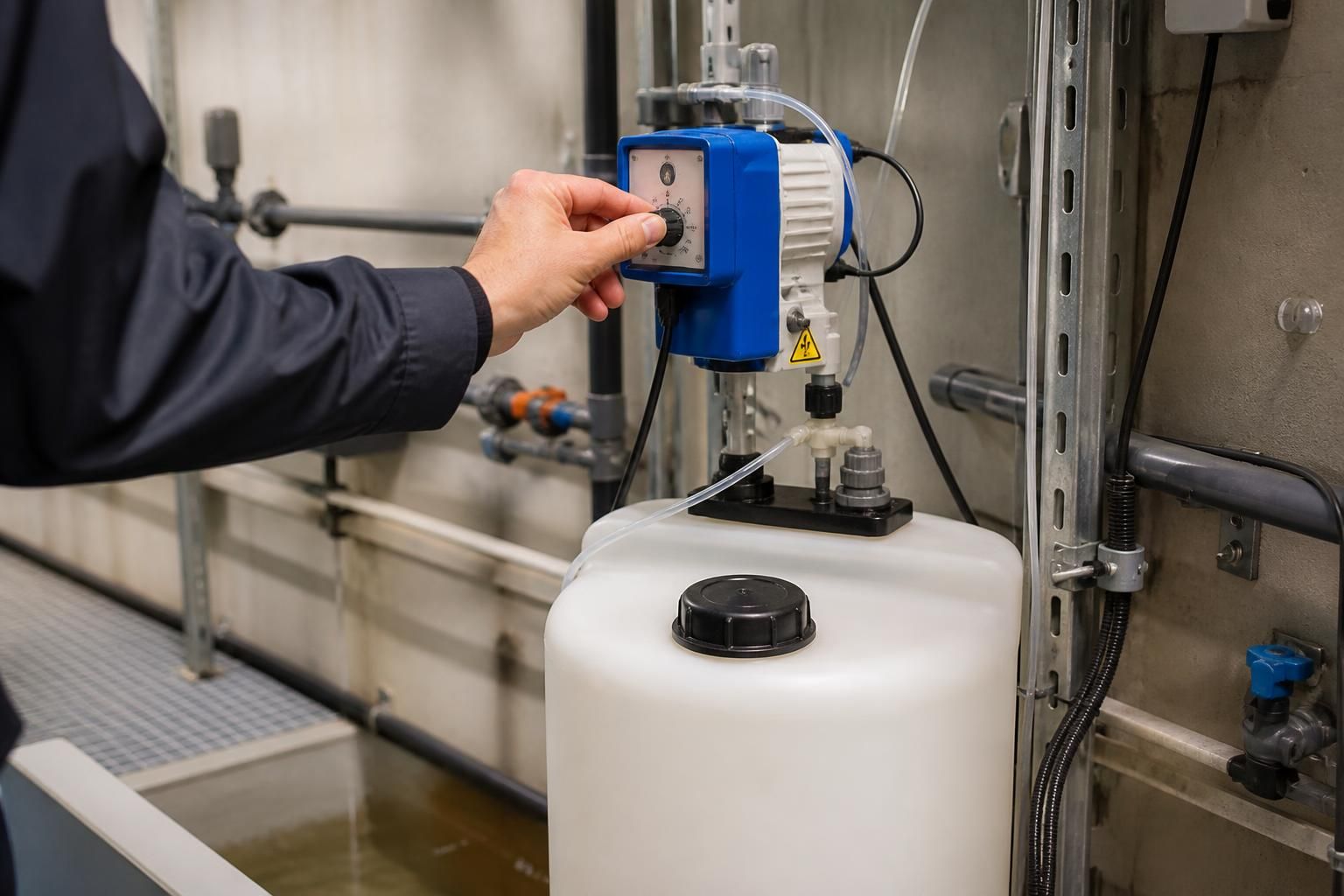
Chemical neutralisation is suitable when chlorine needs to be removed by a measured chemical reaction and the treatment can be controlled, monitored and verified. It is often considered for planned discharges, system cleaning activities, process water and other situations where the water chemistry, discharge route and operating conditions are sufficiently understood to support safe dosing.
The method works by adding a reducing agent that reacts with residual chlorine. Common neutralising chemicals include sulphite-, bisulphite- or thiosulphate-based products, although the appropriate substance depends on the water quality, chlorine species and intended discharge. The dose should be calculated from representative test results and the volume or flow being treated, rather than estimated from the original chlorination dose.
Chemical neutralisation may be appropriate where:
- the residual chlorine concentration is known or can be measured reliably;
- the volume, flow rate and treatment point can be defined;
- there is enough access to introduce and mix the neutralising agent properly;
- the discharge must meet a specified chlorine limit or consent condition;
- treatment needs to take place within a controlled process rather than by leaving water to stand; or
- the water contains conditions that make adsorption through carbon impractical, such as a high or variable loading.
It is particularly important to distinguish free chlorine from combined chlorine. A neutralising agent that is effective for free chlorine may not provide the same result where chloramines or other chlorine compounds are present. Testing should therefore identify the relevant residual and establish whether the proposed treatment removes it to the required level without creating an unacceptable secondary chemical burden.
Control of the dosing process is central to suitability. The treatment arrangement should account for the chemical concentration, dosing rate, contact time, mixing efficiency and changes in flow. In a continuous system, dosing may need to adjust as the flow or chlorine concentration changes. In a batch process, the contents should be mixed thoroughly before a representative sample is taken. Poor mixing can leave untreated pockets while suggesting that the overall batch has been neutralised.
Overdosing is not a harmless substitute for accurate dosing. Excess reducing agent can alter water chemistry, affect pH or dissolved oxygen, and introduce sulphite or other reaction products into the discharge. The reaction can also be influenced by temperature, organic demand and the presence of other oxidising substances. These factors should be considered when selecting the chemical and setting the operating procedure.
Safety controls are required for both the neutralising chemical and the chlorinated water. A suitable assessment should cover storage, handling, incompatible substances, ventilation, personal protective equipment, spill response and the risk of accidental mixing. Chemicals should be stored and used in accordance with their safety data and the organisation's control-of-substances procedures. Dosing equipment also needs inspection and maintenance so that blockages, leaks or calibration errors do not lead to an uncontrolled discharge.
Verification should not rely solely on the amount of neutralising chemical added. Residual chlorine should be tested at a suitable point after adequate mixing and contact time, using a method appropriate to the concentration and chlorine species. Where the discharge conditions include requirements for pH, temperature, suspended solids or other parameters, these may need to be checked as well. Results, chemical batch details, volumes treated, dosing calculations, equipment checks and discharge decisions should be recorded for audit and future review.
Chemical neutralisation may be unsuitable where the chlorine concentration is unknown, the flow cannot be controlled, mixing cannot be assured, the discharge route is not defined or the resulting water cannot be sampled reliably. It may also be inappropriate where the neutralising chemical could compromise the receiving system or where the water contains contaminants that require a different treatment process. In these circumstances, further characterisation or an alternative method such as controlled dilution or activated carbon may be more appropriate.
A competent water hygiene or environmental assessment should consider the source water, the treatment objective, the discharge requirements and the practical dosing arrangement before the method is selected. For business water systems, Blue Fish Water Management can support this decision through water testing, compliance advice, system monitoring and remedial planning, with the final method based on site-specific evidence rather than a standard chemical dose.
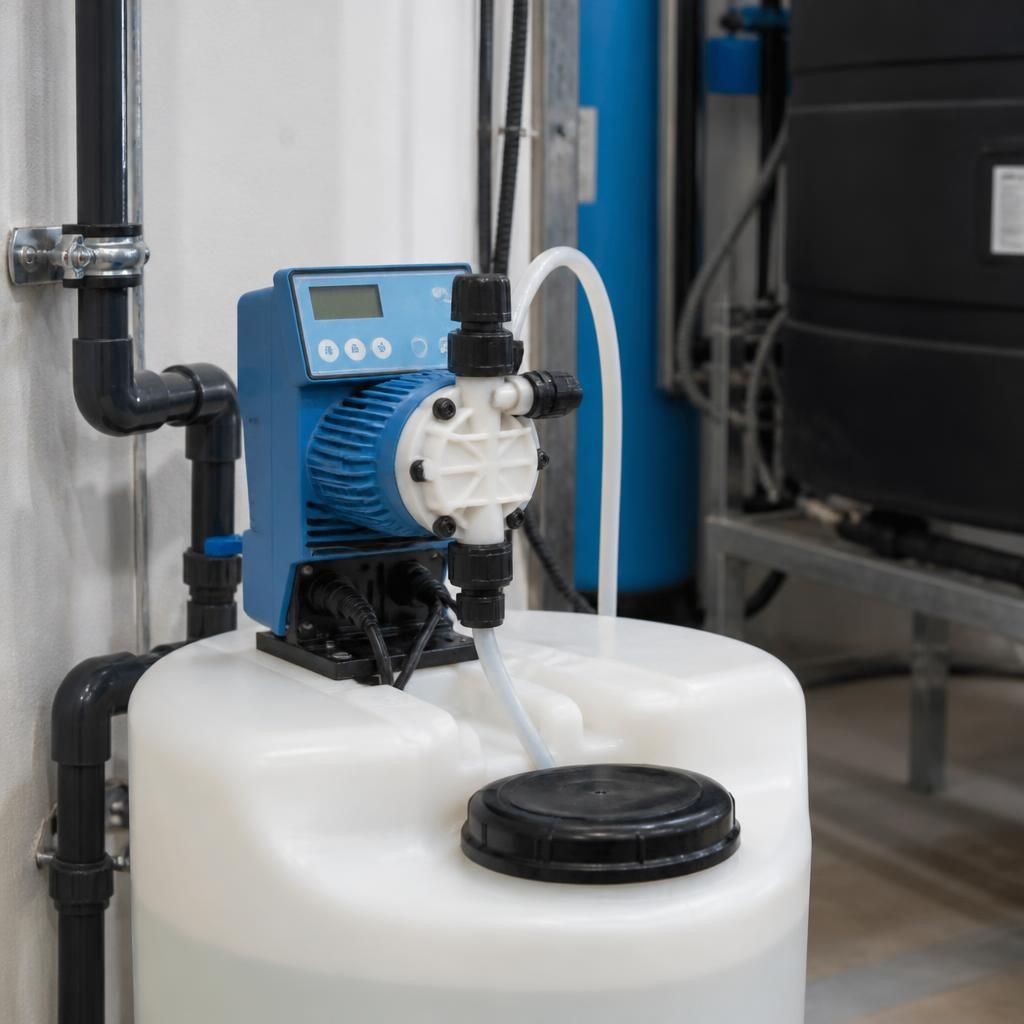
Chemical neutralisation removes or reduces residual chlorine; it does not make the water suitable for discharge in every other respect. The treated water may still contain suspended solids, metals, cleaning residues, microbiological hazards or other pollutants that require separate assessment. This means neutralisation is suitable only when chlorine is the specific parameter requiring control and the wider water quality and discharge conditions have also been considered.
Assess whether chemical neutralisation is suitable for your site
Discuss your proposed discharge with Blue Fish Water Management to establish whether chemical neutralisation is appropriate and what site-specific information is needed before dosing begins.