
When is controlled dilution appropriate for dechlorination?
Controlled dilution is appropriate when chlorinated water can be safely mixed with a sufficient volume of compatible, chlorine-free water to reduce the residual to an acceptable level before discharge. It should only be used where the final concentration can be calculated, controlled and verified, and where the receiving system or drainage conditions permit the diluted water.
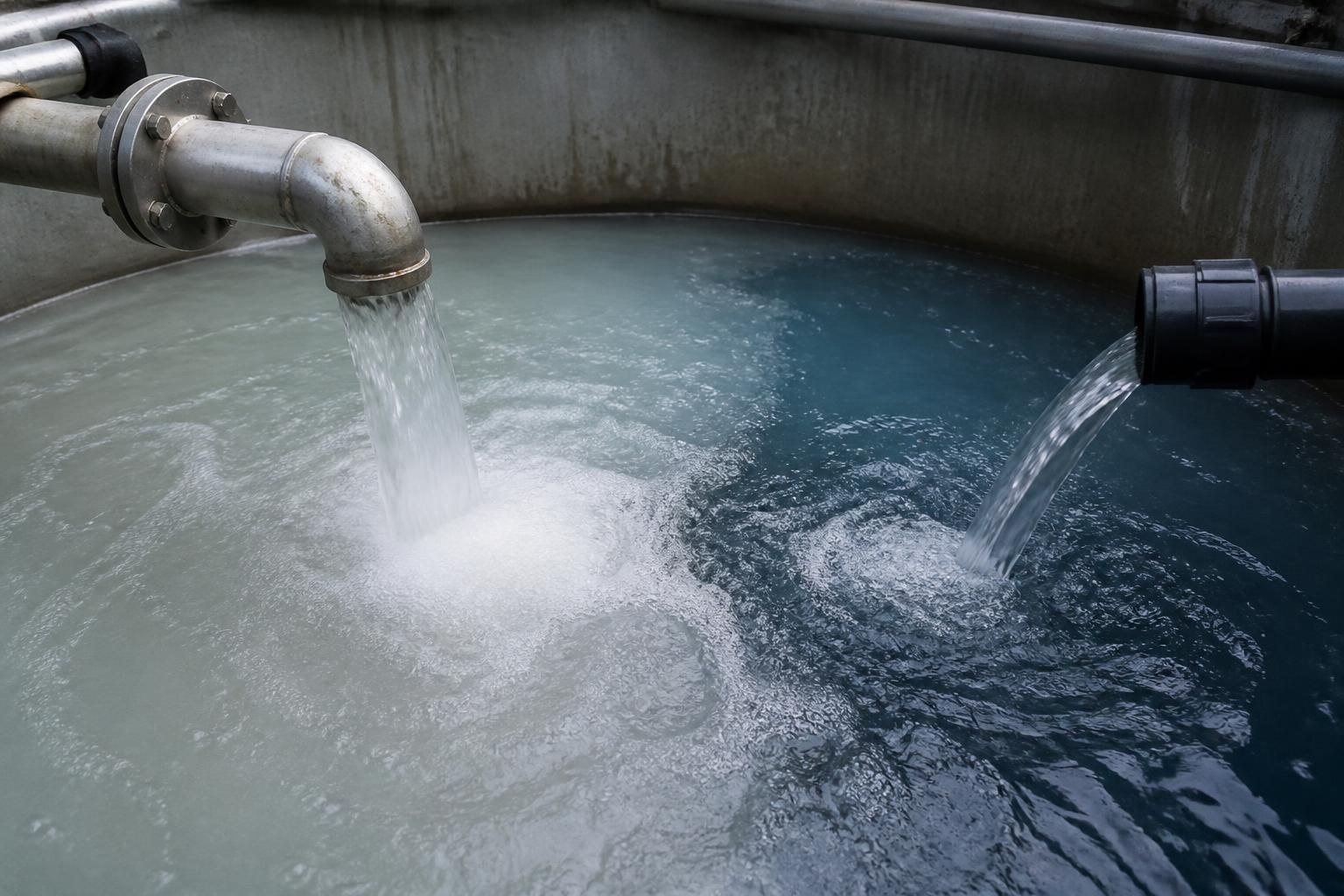
Controlled dilution is most appropriate where the chlorinated water is a manageable, relatively consistent stream and a suitable diluent can be introduced in a controlled proportion. It is generally considered when the volume, chlorine residual and discharge route are known well enough to support a documented calculation and a practical verification process.
Dilution reduces the concentration by increasing the total volume; it does not remove chlorine from the water. The method therefore depends on maintaining the intended ratio throughout the discharge. If the chlorinated water varies significantly in strength or is released in surges, a calculated dilution ratio may not reflect the concentration reaching the drain, sewer or receiving environment.
Before selecting this approach, a competent person should establish:
- the volume of water to be discharged;
- the measured chlorine residual, including whether the relevant result is free chlorine or another specified chlorine parameter;
- the available volume and quality of the diluent;
- how the two water streams will be stored, proportioned and mixed;
- the permitted concentration or discharge requirement; and
- the characteristics and capacity of the receiving drainage or disposal system.
A basic mass-balance calculation can estimate the resulting concentration by relating the chlorine present in the original water to the combined volume after dilution. This calculation is only a starting point. It should allow for measurement uncertainty, uneven mixing, changes in flow, and any chlorine demand from tanks, pipework or other surfaces. Where the result is close to the applicable limit, relying on calculation alone is unsuitable; additional control or a different dechlorination method may be needed.
The diluent should be compatible with the water and the intended discharge route. Water that introduces contamination, solids, unusual chemistry or a different environmental risk is not a suitable solution simply because it lowers the chlorine reading. The source and condition of the diluent should be assessed, and the mixing arrangement should prevent short-circuiting, backflow or untreated pockets of concentrated water.
Controlled dilution is more practical for planned activities than for emergency or highly variable discharges. It may suit a system that can be isolated, drained at a controlled rate and monitored during the work. It is less suitable where the available diluent is restricted, the discharge must be completed quickly, the chlorinated volume is uncertain, or the residual changes as different parts of a system are emptied.
Verification should take place during the discharge rather than only before it. Samples should be taken at a representative point after adequate mixing, using a suitable test method and equipment. Results should be compared with the relevant discharge condition, and the operation should be paused or adjusted if the measured residual is higher than expected. Records should include the source volume, initial and final test results, dilution arrangements, sampling points, timings, calculations and any corrective action.
Discharge permission must also be considered. A lower chlorine residual does not automatically make a discharge acceptable: the receiving sewer, surface water, trade effluent system or other disposal route may impose separate conditions on volume, flow, pH, temperature, suspended solids or other parameters. The responsible water company, environmental regulator, site owner or other relevant authority may need to be consulted before the method is used.
Controlled dilution is therefore best viewed as a managed operational technique, not a substitute for dechlorination equipment or chemical treatment in every situation. Where the discharge is variable, the required dilution volume is impractical, or reliable verification cannot be achieved, activated carbon or chemical neutralisation may provide more dependable control. A water hygiene specialist can review the test data, system layout and discharge constraints before recommending the appropriate method and documenting the controls.
Assess Whether Controlled Dilution Is Appropriate
If you are assessing whether controlled dilution is suitable, ask Blue Fish Water Management Ltd to review the proposed discharge arrangements, available test data and operational controls before the method is adopted.