
What information does a provider need before recommending a dechlorination method?
Before recommending a dechlorination method, a provider needs details of the water source, chlorine concentration, flow rate or volume, treatment objective and any other relevant water-quality characteristics. They also need to understand the site layout, available equipment, operating conditions, space, access, discharge requirements and how the treated water will be managed.
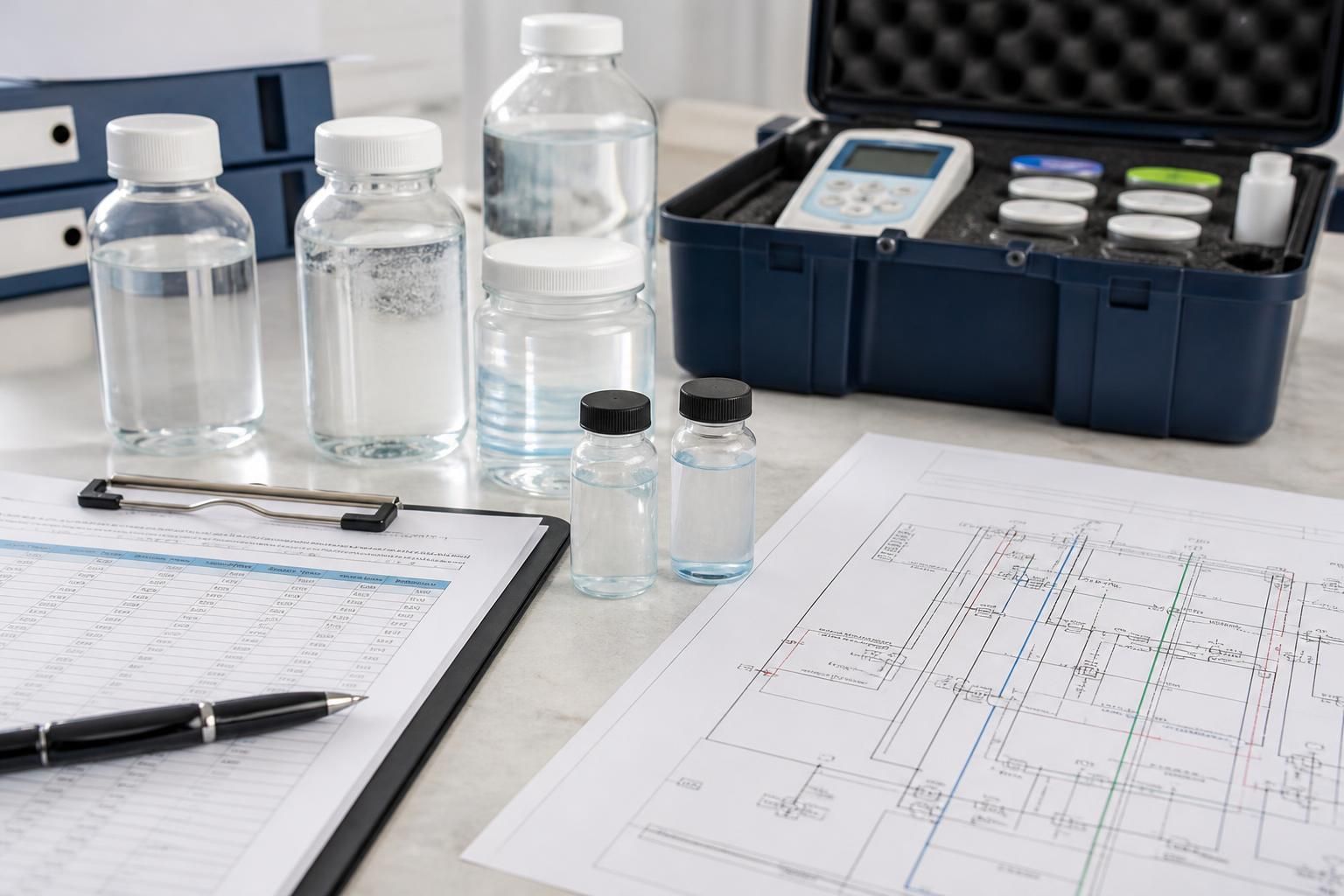
A provider needs reliable technical, compliance and operational information to recommend a dechlorination method safely. The most useful evidence is a representative water analysis, an understanding of how conditions vary, and clear information about the treatment limits that must be met after dechlorination.
Water-quality data should identify the chlorine species present, rather than reporting only a general chlorine result. Free chlorine, combined chlorine and chloramine can behave differently during treatment. The provider may also need results for pH, temperature, turbidity, suspended solids, organic matter and other chemicals that could affect activated carbon performance or the reaction of a neutralising agent. Recent laboratory results are preferable to assumptions based on the source or the treatment history.
It is also important to show whether the water quality is stable. A single sample may not represent conditions during dosing, system cleaning, tank emptying or other periodic activities. Sampling records from different operating stages can help identify peaks, fluctuations or contamination that could change the recommended method. Where results are uncertain, a provider may recommend additional sampling or a controlled trial before finalising the design.
The provider should be told about any substances already added to the water and any treatment that will take place before or after dechlorination. This includes disinfectants, corrosion-control products, coagulants and cleaning chemicals. Compatibility matters because some combinations can reduce treatment efficiency, create unwanted by-products or introduce additional handling risks.
Regulatory and contractual requirements are another essential part of the assessment. The provider may need to review:
- the required residual chlorine level or other acceptance criteria;
- any consent, permit or trade-effluent conditions applying to the discharge;
- requirements imposed by a sewerage undertaker, site operator or receiving facility;
- restrictions relating to aquatic environments, surface water or ground conditions; and
- records that must be retained to demonstrate that the treatment was properly controlled.
These requirements can determine whether a method is technically suitable even when it can reduce chlorine effectively. For example, a chemically neutralised discharge may need evidence of correct dosing, while carbon treatment may generate spent media requiring appropriate management. A dilution approach may be unsuitable if the receiving point has strict quality limits or if the necessary dilution cannot be demonstrated consistently.
Information about the proposed treatment period is also relevant. The provider should know whether the work is a one-off discharge, a repeating maintenance activity, a continuous process or an emergency response. The likely duration and frequency affect equipment selection, monitoring arrangements, consumables, storage and the level of operator involvement required.
Safe operation must be considered before a method is selected. Useful details include the chemicals available on site, their storage arrangements, secondary containment, handling procedures, ventilation, personal protective equipment and the competence of the people who will operate or check the equipment. Chemical neutralisation in particular requires accurate dosing and appropriate safeguards against over-treatment, under-treatment and unintended chemical reactions.
The provider may also ask for drawings, photographs, pipework information and details of connection points. These records help establish where samples can be taken, where monitoring equipment can be installed and whether the treated water can be isolated if results fall outside the required range. Existing instrumentation and calibration records can be relevant, but equipment should not be assumed to be suitable merely because it is already installed.
Finally, the recommendation should identify how performance will be verified. This normally involves agreeing the parameters to monitor, the sampling locations, the testing method, the frequency of checks and the action to take if results do not meet the agreed criteria. A method should be selected on the basis of demonstrable control, not simply its ability to remove chlorine in ideal conditions.
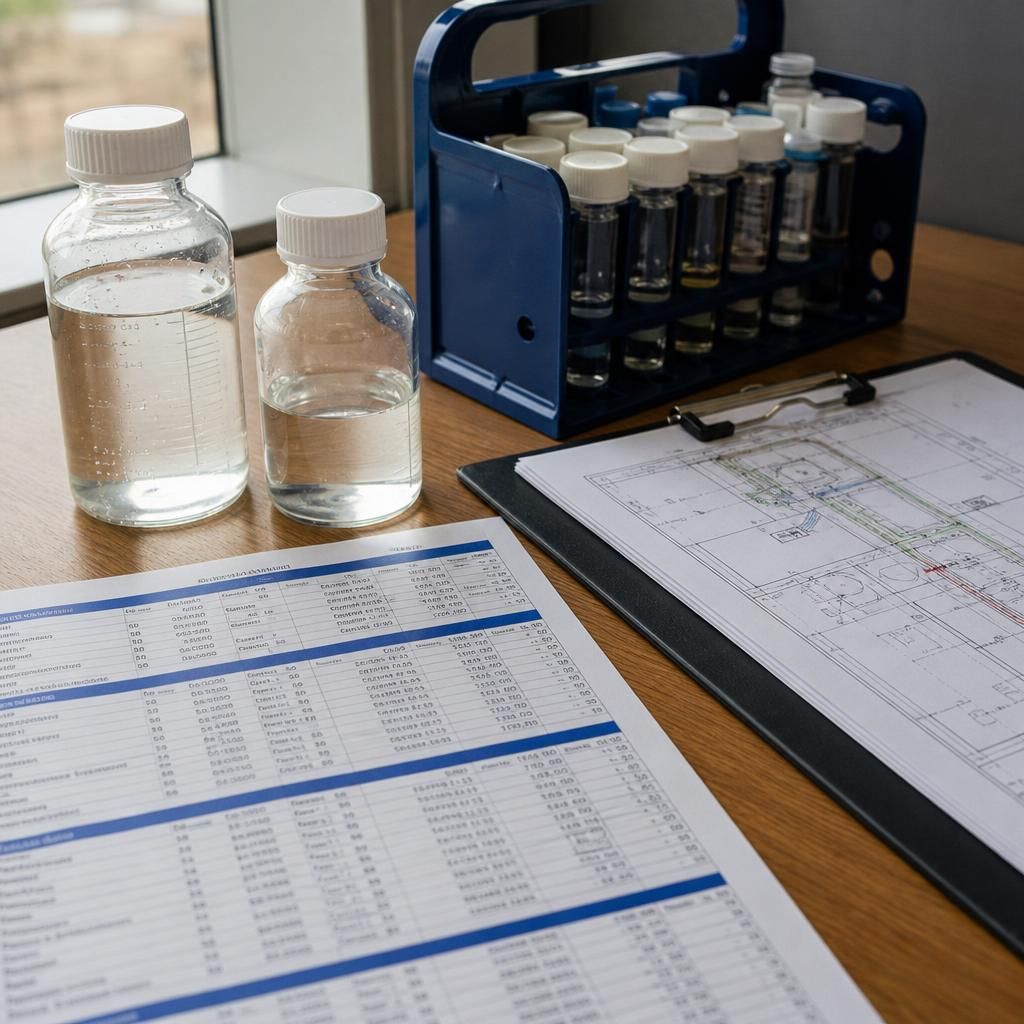
The format and provenance of water-quality results matter as much as the reported values. A provider should be told whether each result represents free chlorine, combined chlorine or total chlorine, together with the units, analytical method, sampling point and date. This prevents results that appear comparable from being treated as equivalent when they were produced under different conditions.
It is also useful to provide the laboratory’s detection limit and any notes about sample handling or unusual operating conditions. These details help the provider judge how much confidence to place in the data and whether it is suitable for method selection. If the records cannot establish what was measured or how the sample relates to the proposed discharge, further testing may be needed before equipment or chemical requirements can be specified.
Discuss Your Dechlorination Requirements
Discuss your dechlorination requirements with Blue Fish Water Management Ltd to review your proposed application and establish the information needed for a suitable method recommendation.