
Is tank chlorination suitable for every commercial water system?
No. Tank chlorination can be effective for suitable commercial systems with storage tanks, but it is not appropriate for every installation. Suitability depends on the system’s design, materials, condition, access arrangements and the nature of any contamination, so an assessment should determine whether chlorination is safe and effective or whether another control measure is more appropriate.
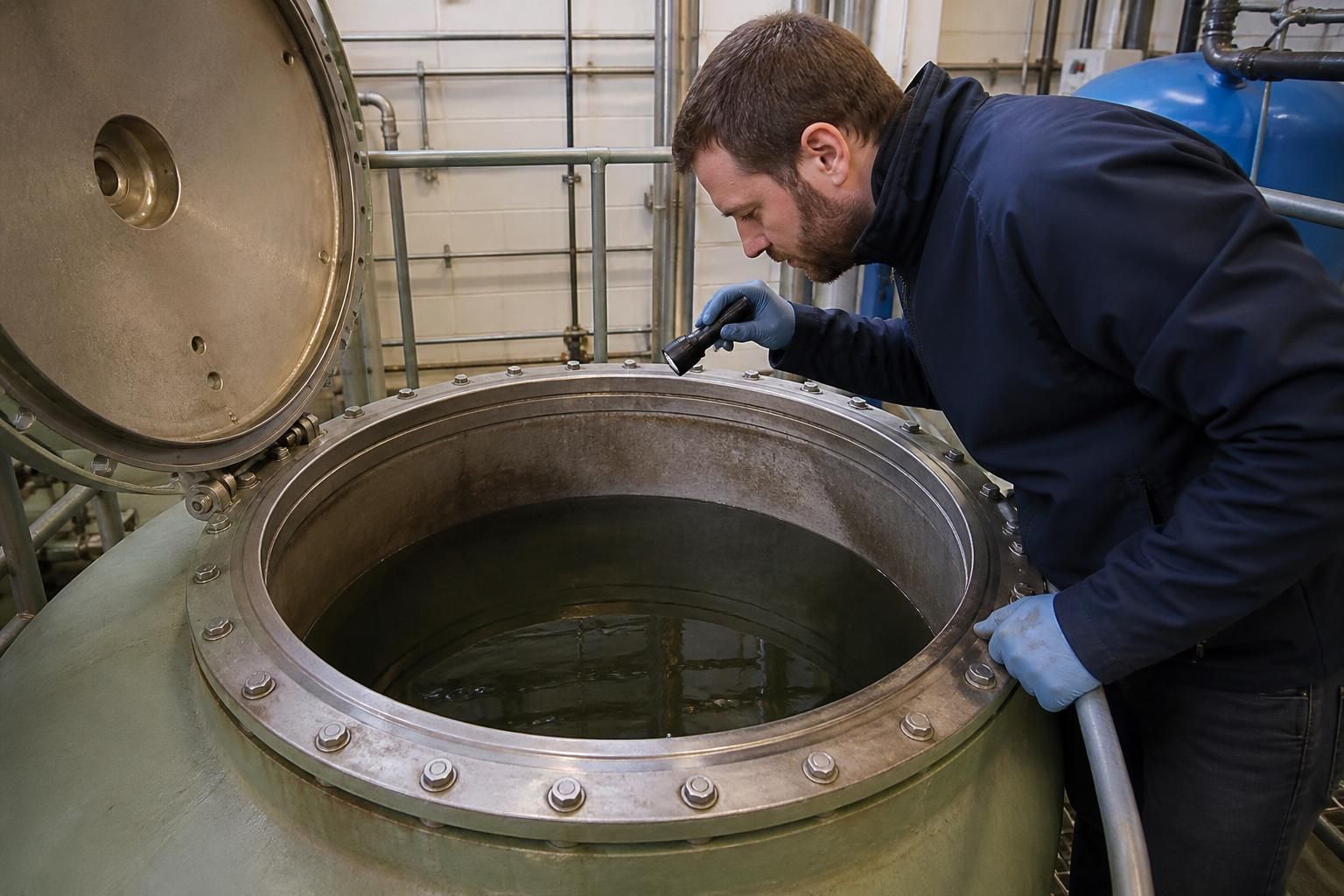
No. Tank chlorination is a targeted chemical disinfection method, not a universal treatment for every commercial water installation. It is generally considered where a system contains a storage tank and the tank, associated pipework and outlets can be isolated, treated, flushed and verified safely. It may be unsuitable where the system cannot be effectively isolated, where materials could be damaged, or where the underlying problem is not one that chlorination can resolve.
Systems where tank chlorination may be appropriate
Tank chlorination can be suitable for certain cold water storage systems following contamination, maintenance, prolonged stagnation or remedial work. It may also be used as part of a planned response where sampling or a risk assessment indicates that chemical disinfection is necessary. The treatment normally involves introducing a controlled chlorine solution, allowing the required contact period, flushing the system and checking that the water is suitable for return to use.
The treatment is more likely to be appropriate when:
- the storage tank and connected pipework can be identified and isolated;
- all relevant outlets and branches can be reached or adequately flushed;
- the system materials are compatible with the proposed chemical treatment;
- there is a suitable method for safely discharging the treated water;
- users and other building systems can be protected from exposure during the work; and
- the cause and extent of contamination are sufficiently understood.
These conditions matter because treating only the tank may leave contamination in downstream pipework, low-use outlets, hoses, valves or dead legs. In that situation, the tank may appear clean while the wider system remains poorly controlled.
Examples where it may not be the right approach
A system supplied directly from the mains without a storage tank may have no tank to chlorinate. It may require a different investigation and control strategy, particularly if the concern relates to a local outlet, a section of pipework or a faulty fitting. Similarly, closed heating circuits, process-water systems and other specialist installations cannot automatically be treated in the same way as a commercial cold water storage system. Their contents, materials, operating conditions and intended use must be considered before selecting any disinfectant.
Tank chlorination may also be unsuitable or require additional controls where the tank contains heavy sediment, scale, corrosion products or organic deposits. Chlorine does not replace physical cleaning. Deposits can protect microorganisms from the disinfectant and may continue to affect water quality after treatment. A tank may therefore need draining, cleaning, inspection or repair before chemical disinfection is considered.
Materials and equipment present another limitation. Some tanks, seals, flexible connections, specialist coatings, membranes, dosing equipment or sensitive components may not tolerate the proposed chlorine concentration or contact period. Excessive or poorly controlled treatment can contribute to corrosion, damage components or create a chemical hazard. The treatment method should therefore be selected with reference to the system manufacturer's information and the condition of the installation, rather than applying a standard procedure to every site.
Why access and system control are important
A suitable tank must be accessible for inspection, cleaning, dosing and safe sampling. The operator also needs to know which valves control the tank, how water flows through the building and whether any supplies must remain operational. Complex premises may have multiple tanks, boosted supplies, blended temperatures, stored water at different levels or branches that are rarely used. Each part can affect whether the disinfectant reaches the intended areas and whether flushing removes it afterwards.
Temporary isolation may not be straightforward in premises such as healthcare facilities, care settings, manufacturing sites, hotels or multi-occupancy buildings. Before work begins, the responsible person should consider how the supply will be managed, which activities could be affected and how treated water will be prevented from reaching users. Discharge arrangements are also important because chlorinated water may need to be managed before it enters drainage or the environment.
Chlorination is not always the main control measure
Where the principal risk is linked to inadequate water temperatures, low flow, poor tank insulation, excessive storage capacity or recurring stagnation, chlorination alone will not correct the cause. The system may need improvements to temperature control, circulation, turnover, tank condition, insulation, outlet use or pipework configuration. In some circumstances, thermal disinfection, physical cleaning, flushing, replacement of defective components or a combination of measures may be more appropriate.
Chlorination should not be used to give temporary reassurance while an ongoing source of contamination remains. Any treatment should sit within the site's water safety arrangements, with clear responsibility for isolation, chemical handling, flushing, recommissioning and follow-up checks. Water sampling can help establish whether the treatment has achieved its intended purpose, but results need to be interpreted alongside the system's design and operating conditions.
How suitability should be decided
- Identify the system type, storage arrangements, materials, outlets and connected equipment.
- Review the reason for considering chlorination, including any sampling results, incidents, maintenance or periods of stagnation.
- Assess whether the whole affected area can be isolated, treated, flushed and safely returned to service.
- Check for deposits, damage, inaccessible sections and components that may be incompatible with the proposed treatment.
- Compare chlorination with other corrective measures, including cleaning, repairs, flushing or temperature-based controls.
- Define the method, safety controls, discharge arrangements and verification checks before work starts.
For commercial premises, Blue Fish Water Management Ltd can assess the installation and advise whether tank chlorination is an appropriate control measure or whether a different remedial approach should be considered. Its water hygiene specialists provide risk assessments, testing, monitoring and remedial support for businesses nationally.
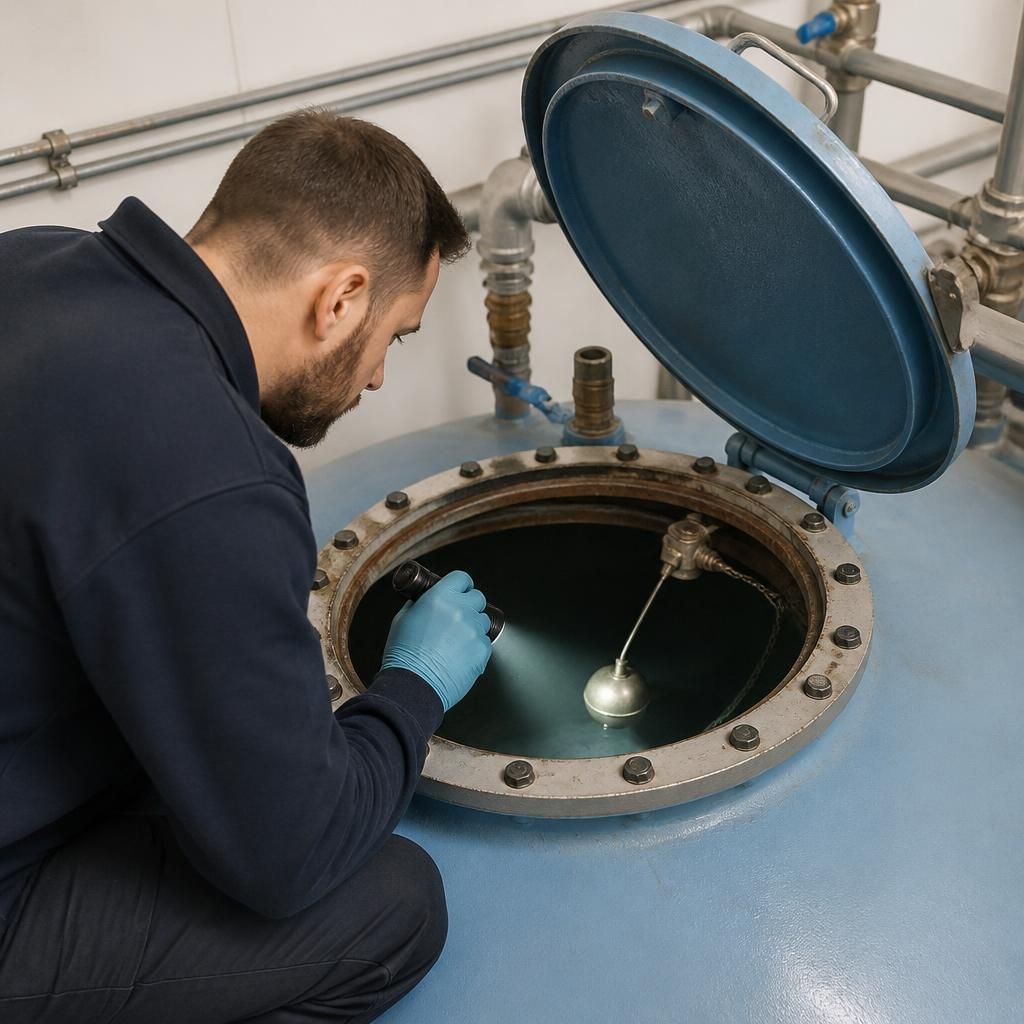
Suitability should be decided from the whole water safety picture, not from a single laboratory result. A positive sample may indicate local contamination, wider system colonisation, or a temporary issue linked to stagnation or recent maintenance. The result should therefore be considered alongside sampling location, system history, operating conditions and the findings of a risk assessment.
This distinction helps prevent unnecessary or incomplete treatment. If evidence points to a localised fault, repairing the fitting or correcting the affected section may be more appropriate than disinfecting the entire storage system. Conversely, where contamination is widespread, a tank-only treatment may not address the affected pipework. The selected measure should be proportionate to the evidence and recorded within the premises’ water safety arrangements.
Need advice on whether tank chlorination is suitable?
Need to determine whether tank chlorination is suitable for your commercial water system? Contact Blue Fish Water Management Ltd to discuss an assessment of the installation and the most appropriate control measure.