
What information is needed before arranging tank chlorination?

Before tank chlorination is arranged, the contractor needs enough information to confirm the disinfection scope, identify hazards, protect building users and plan how the system will be isolated, treated, flushed and returned to service. The most useful information goes beyond the tank itself and covers the wider water installation, site controls and the evidence required after treatment.
Provide the system and site context. Explain what the storage tank supplies and whether it forms part of a cold-water distribution system, boosted supply, process-water installation or another arrangement. Details of connected tanks, pumps, calorifiers, pressure vessels, dosing equipment, filters, softeners, ultraviolet units and other treatment components help establish which parts must be isolated or protected during chlorination. The contractor should also know whether the system serves one building, several buildings or specific areas only.
It is also important to identify any unusual construction or materials. Tank coatings, internal linings, insulation, pipework materials, flexible hoses and seals may affect the choice or concentration of disinfectant. Information about previous alterations can reveal sections that are no longer shown on older drawings, dead legs that may retain untreated water, or equipment that could be damaged by the proposed treatment.
Explain the reason for the work. State whether chlorination is being considered after a positive microbiological result, following cleaning or refurbishment, before a new system is put into use, or as part of corrective action identified by a risk assessment. Include the relevant sample date, organism or indicator reported, sampling point and any laboratory interpretation. If there has been a suspected illness, contamination event, loss of supply integrity or ingress into the tank, that should be disclosed before a method is selected.
This context matters because chlorination is not a substitute for correcting the cause of contamination. Persistent stagnation, poor temperature control, defective covers, inadequate turnover, backflow or damaged components may require separate remedial work. The information supplied should therefore include any known defects and the measures already taken to control them.
Confirm who can authorise and control the work. The booking should identify the responsible person or facilities contact, the person who can approve isolation of the water supply and the person who will accept the system back into service. Contact details for site management, security, maintenance and emergency coordination may be needed where several parties control different parts of the installation.
Advise the contractor about site rules, permit systems, induction requirements, security arrangements, asbestos information, confined-space controls and any restrictions on chemical handling. A tank, plant room or service area may require specific risk controls even where the disinfection itself is straightforward. Relevant method statements, permits and access assessments can then be prepared for the actual premises rather than based on assumptions.
Set out how the supply can be isolated and drained. The contractor needs to know the location and condition of isolation valves, drain points, overflow arrangements, sampling points and suitable flushing outlets. Confirm whether valves operate correctly and whether the tank can be taken out of service without affecting fire-fighting systems, process operations, neighbouring units or other essential supplies.
Discharge arrangements must be considered before work starts. Chlorinated water may need controlled neutralisation or a defined disposal route, and it must not be released where it could harm people, aquatic life, drainage infrastructure or the environment. Any trade-effluent requirements, drainage restrictions or consent conditions should be provided in advance.
Describe occupancy and operational constraints. Identify areas used by staff, residents, visitors, patients, tenants or contractors, together with any vulnerable users or activities that depend on the water supply. State whether the premises contains kitchens, showers, welfare facilities, healthcare areas, laboratories, manufacturing processes or equipment that must not receive chlorinated water.
Include the preferred isolation sequence, required notices, alternative water arrangements and the person responsible for confirming that outlets can be flushed. Chlorination can affect operations beyond the plant room, so affected departments should understand when outlets must not be used and how the system will be released for normal use.
Agree the testing and handover requirements. Before booking, confirm which post-treatment checks are required, including checks for disinfectant residual, flushing effectiveness and microbiological sampling where appropriate. The sampling plan should identify representative outlets rather than relying only on the tank or the nearest tap. It should also state who will receive the results and what action will follow if a result is unsatisfactory.
Useful handover information includes the completed treatment record, areas covered, chemicals used, relevant readings, flushing details, sampling locations, laboratory reports and any limitations or defects identified. Keep this with the water hygiene records and the site’s written control scheme so that future monitoring is based on an accurate account of what was done.
Providing these details at the planning stage allows the proposed tank chlorination to be assessed against the actual installation, contamination history and site controls. It also helps distinguish disinfection from related work such as tank cleaning, repair, replacement of defective components or improvements to ongoing monitoring.
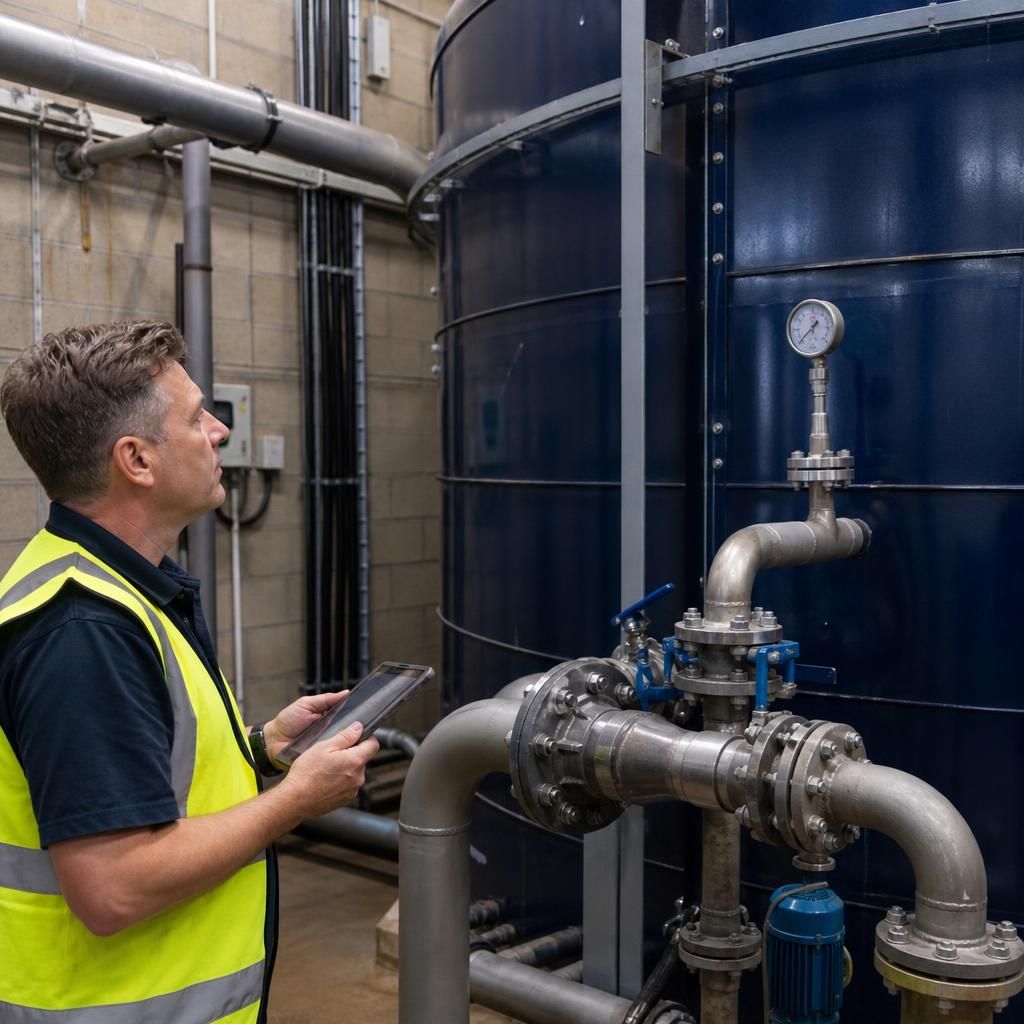
Any information that is uncertain should be identified rather than estimated. If the tank’s capacity, materials, valve functions or connected outlets cannot be confirmed from existing records, say so when requesting the work. Clear photographs, current equipment labels and an up-to-date inspection can help resolve gaps, while a site assessment may be needed where the available information is incomplete.
This prevents the chlorination plan being based on assumptions about the installation. It also allows the contractor to distinguish a straightforward treatment from work requiring further investigation, repair or specialist controls before disinfection can proceed.
Discuss your tank chlorination requirements
Discuss your tank chlorination requirements with Blue Fish Water Management Ltd to clarify whether the proposed work is appropriate and whether any further assessment is needed.