
How often should water tanks be disinfected?
Water tanks should be disinfected according to the findings of a legionella risk assessment, rather than on a fixed universal timetable. The appropriate interval depends on factors including tank condition, water use, contamination risk and monitoring results, with additional disinfection required after contamination or remedial work where advised.
A water tank should be disinfected when the responsible person’s documented control programme identifies a need, rather than simply because a set number of months has passed. In practice, the decision is based on inspection findings, water quality results, system performance and any change that could increase the risk of Legionella growth.
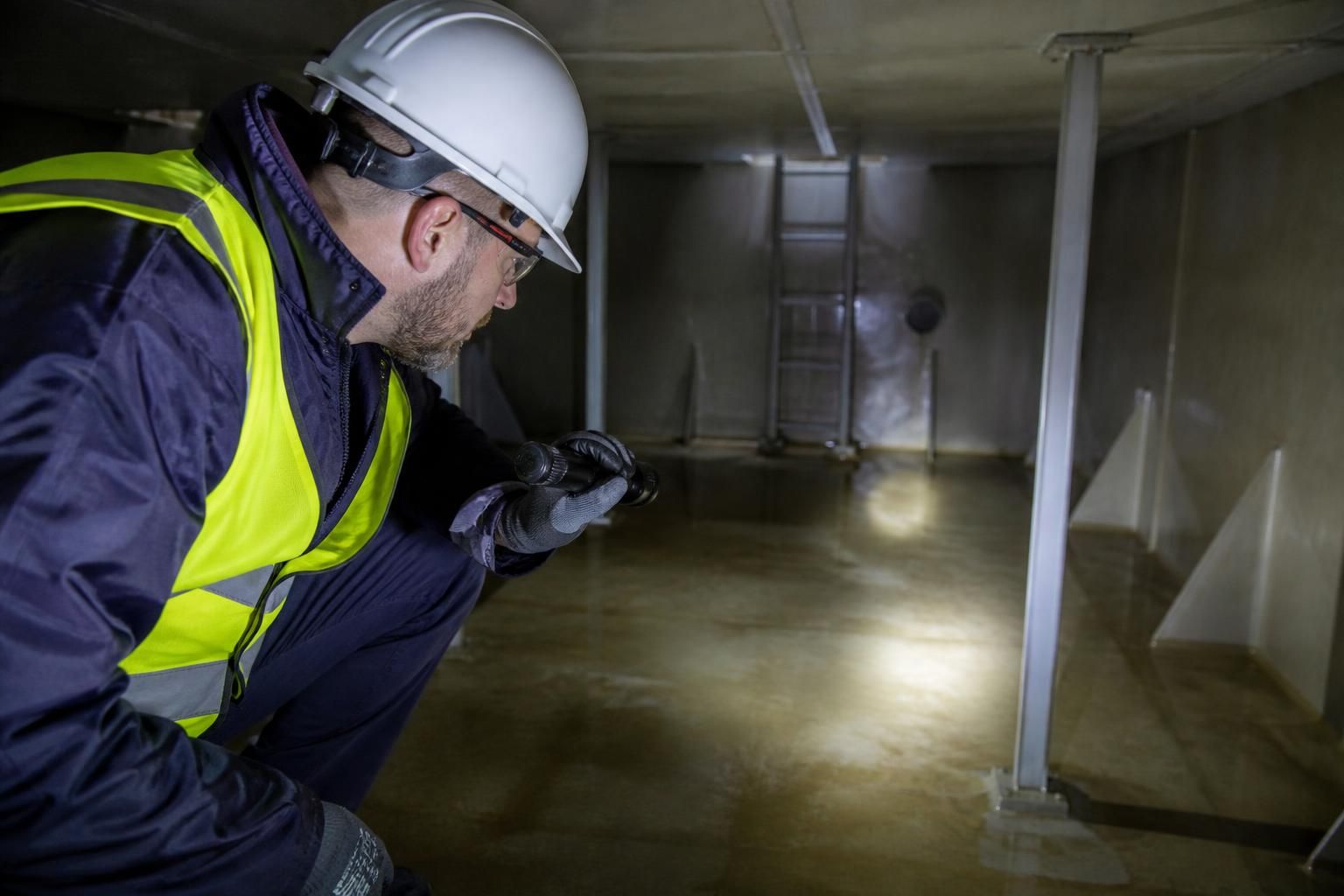
Routine inspection is separate from disinfection. Cold water storage tanks should be checked for conditions such as sludge, scale, corrosion, damaged lids, gaps around access points, inadequate insulation, insect ingress and signs of contamination. HSE guidance is commonly applied through regular inspection, including an annual review of tank condition where appropriate. An inspection may conclude that cleaning and disinfection are unnecessary, or that remedial work and disinfection are required.
More frequent intervention may be appropriate where a tank supplies a high-risk population, has a history of contamination, experiences low or irregular turnover, or is connected to a system with persistent temperature-control problems. Tank condition can also change after building alterations, changes in occupancy, periods of low use, interruption to water treatment or work on connected pipework. These factors should prompt a review of the risk assessment rather than an automatic assumption that disinfection alone will solve the problem.
Disinfection should normally be considered when inspection or testing identifies:
- visible sediment, biofilm, scale or organic matter inside the tank;
- evidence of contamination, including a positive Legionella result where the risk assessment recommends remedial action;
- poor tank hygiene caused by a defective cover, damaged fittings or water ingress;
- stagnation, dead legs or insufficient turnover that cannot be corrected through operational controls; or
- contamination introduced during installation, maintenance, refurbishment or remedial work.
Cleaning and disinfection may need to cover more than the tank itself. If contaminated water has entered connected distribution pipework, outlets and associated components, disinfecting only the storage vessel may leave residual contamination in the system. The scope should therefore be defined by a competent person using the system design, sampling evidence and risk assessment.
After disinfection, the control process should include appropriate flushing, checks that disinfectant has been removed or neutralised where relevant, and verification that the system can operate within its required control parameters. Follow-up water testing may be necessary, particularly after a positive result or significant remedial work. A tank should not be repeatedly disinfected to compensate for an unresolved defect, unsuitable temperature, poor turnover or inadequate maintenance.
Records should show the inspection date, condition of the tank, reason for any disinfection, method used, areas treated, test results, remedial actions and the date when the decision will next be reviewed. This provides an auditable explanation for why disinfection was or was not carried out and helps identify deterioration over time.
For a commercial or industrial site, the appropriate schedule should be set by the legionella risk assessment and incorporated into the water hygiene management plan. Blue Fish Water Management can support this process through risk assessment, UKAS-accredited water testing, compliance audits, system monitoring and water tank disinfection where the evidence indicates that it is required.
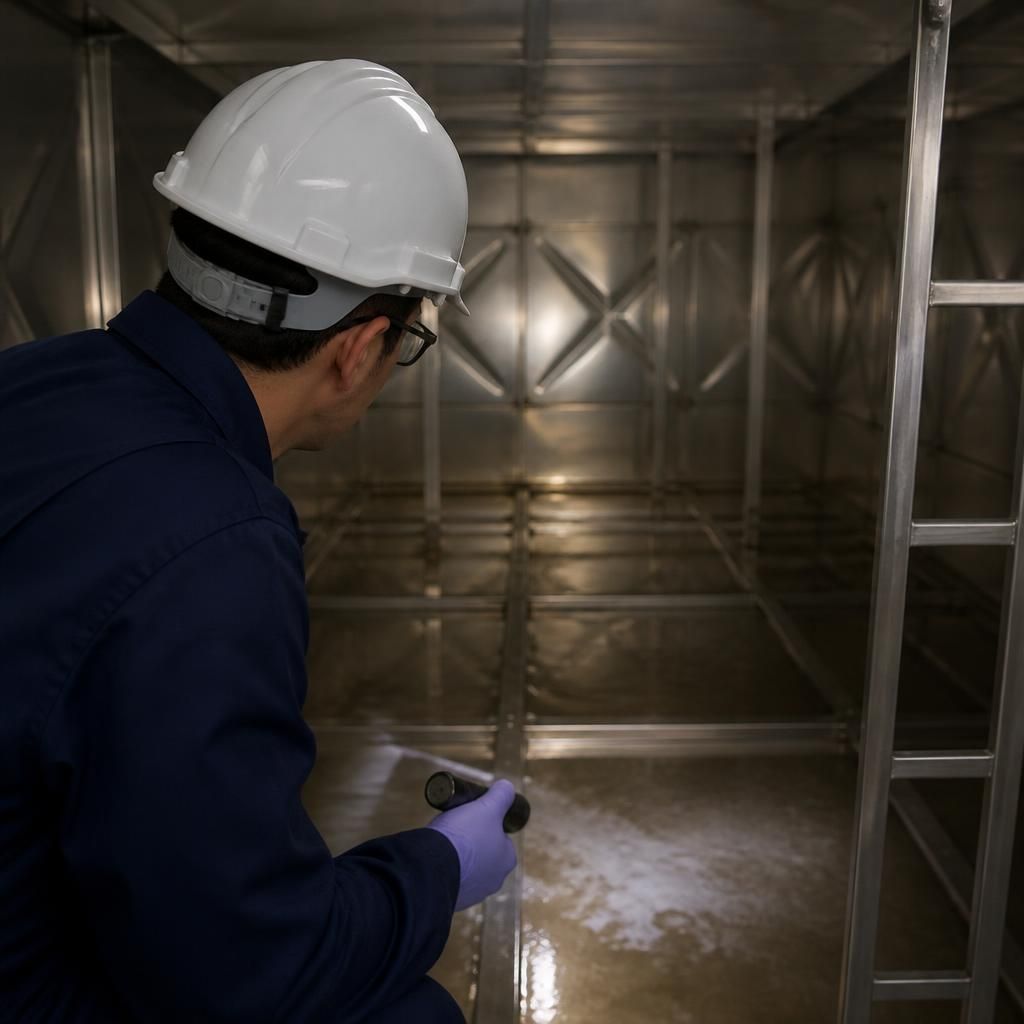
A planned disinfection interval should be treated as a control decision, not a substitute for professional judgement. Where regular disinfection is included in a water hygiene programme, the documented rationale should explain the site-specific risk, the evidence supporting the interval and the conditions that would require it to be brought forward.
The schedule should also be reviewed when monitoring shows a change in system performance. A stable history of satisfactory results may support continuing the existing arrangement, while deteriorating water quality, repeated hygiene defects or changes to the building or its use may require a revised approach. This keeps the frequency proportionate to the actual risk rather than relying on an arbitrary calendar date.
Discuss your water tank disinfection schedule
Ask Blue Fish Water Management to review your current water tank disinfection schedule against your site’s risk assessment, inspection records and monitoring results. Their team can help determine whether the documented frequency remains appropriate or needs to be revised.