
What does water tank disinfection involve?
Water tank disinfection involves isolating the tank, draining and mechanically cleaning it, applying a suitable disinfectant, then refilling and flushing the system. The process should be followed by appropriate water quality testing and documented checks to confirm that the system is safe to return to service.
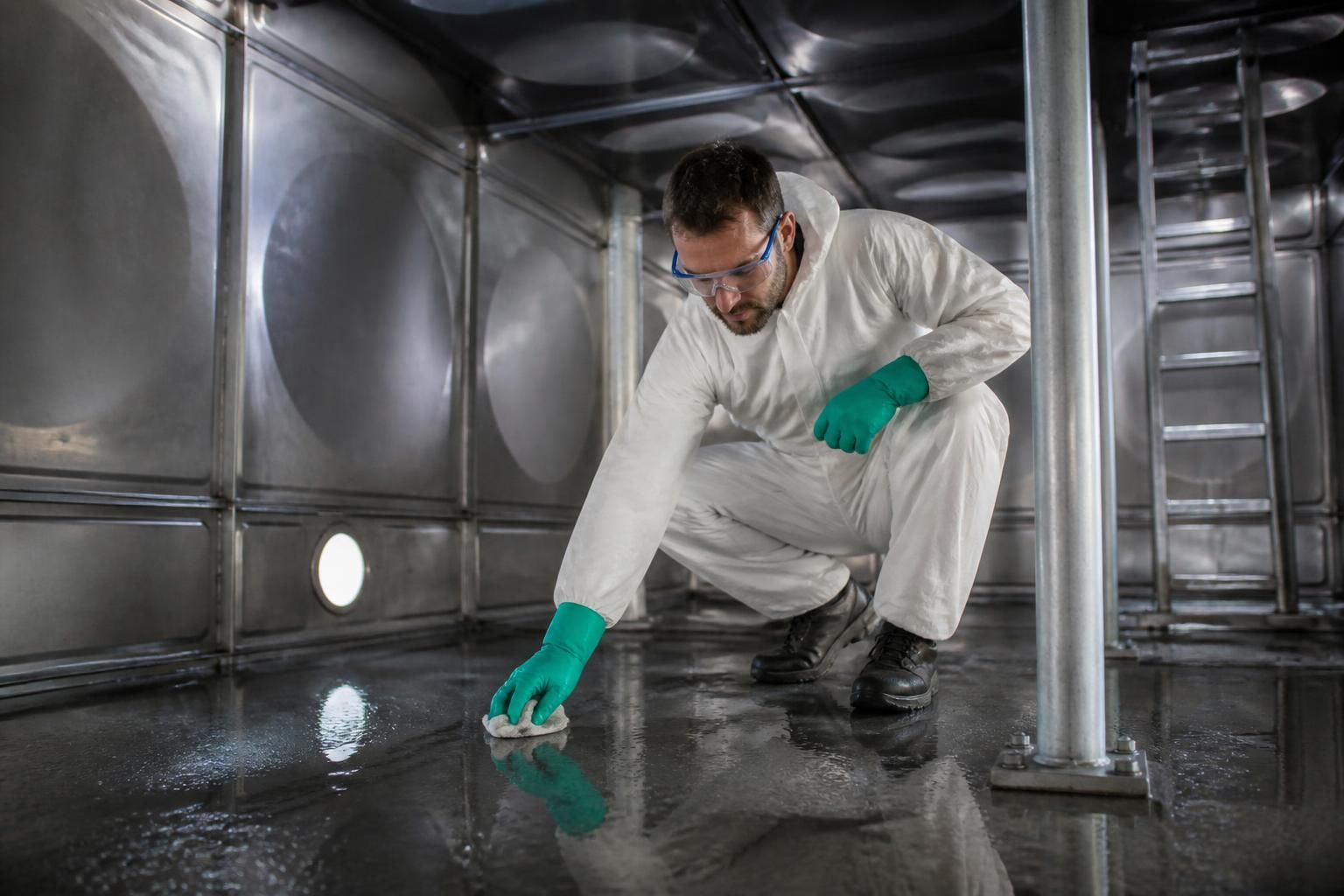
Water tank disinfection is a controlled process designed to reduce microbiological contamination in a storage tank and the parts of the water system affected by it. It involves more than introducing a chemical: the work must be planned around the system design, carried out safely, verified through suitable checks and recorded for compliance purposes.
Before work begins, the system should be assessed. This normally includes reviewing available schematics, identifying every tank and connected pipework section, confirming which outlets and services may be affected, and considering whether the building has vulnerable occupants or critical water uses. The responsible person should also establish why disinfection is required and define the scope of the work. Treating a tank in isolation may not address contamination elsewhere, such as connected pipework, dead legs, calorifiers or infrequently used outlets.
The tank itself should be inspected for conditions that could undermine water hygiene. Sediment, scale, corrosion, damaged coatings, defective covers, poor seals, insect ingress and inadequate insulation can all contribute to contamination or make effective disinfection more difficult. If defects are found, they may need to be corrected as part of the remedial work. Disinfection is not a substitute for repairing a tank that is allowing contamination to enter or accumulate.
Cleaning is an important part of the preparation. Deposits and organic material can protect microorganisms from disinfectant, so visible contamination must be removed as far as practicable. The chosen cleaning approach should be suitable for the tank construction and internal surfaces. Any waste, sludge or contaminated water must be managed safely, with appropriate controls to protect workers, building users and the environment.
The disinfection method is selected according to the tank materials, system configuration, intended use and findings from the assessment. A competent person determines the appropriate disinfectant, dosing arrangement and exposure conditions, following the relevant product instructions and water hygiene guidance. The work should include controls for chemical handling, access into or around the tank, accidental exposure, discharge and the prevention of untreated or treated water entering the wrong part of the system.
Where the system is connected to occupied premises or operational processes, the work also needs to be coordinated with the building’s users and responsible personnel. This may involve protecting essential services, controlling access to outlets, identifying temporary changes in water availability and ensuring that nobody uses water that has not been confirmed suitable for use. Tank access should be managed carefully because confined spaces, wet surfaces and chemical residues can introduce significant hazards.
After the treatment stage, the system must be brought back into service in a controlled manner. This includes removing treated water and residual disinfectant appropriately, checking relevant outlets and confirming that the water is acceptable for its intended use. The system may also require operational checks to confirm that valves, pumps, level controls, alarms and other associated equipment are functioning correctly.
Verification provides evidence that the work has achieved its intended purpose. Depending on the reason for disinfection and the risk assessment, this can include water quality sampling, microbiological analysis and checks of disinfectant residuals or other relevant parameters. Results should be interpreted alongside the condition of the tank, the wider system and any previous findings rather than viewed as an isolated pass-or-fail result.
A complete record should identify the reason for the work, the areas treated, inspection findings, cleaning and disinfection methods, chemicals used, safety controls, observations, test results, deviations and any further actions required. These records help demonstrate that the intervention was properly managed and provide a baseline for future monitoring and maintenance.
Blue Fish Water Management can support organisations with the assessment, cleaning and disinfection planning, UKAS-accredited water testing, compliance documentation and any remedial recommendations needed to manage the system as a whole.
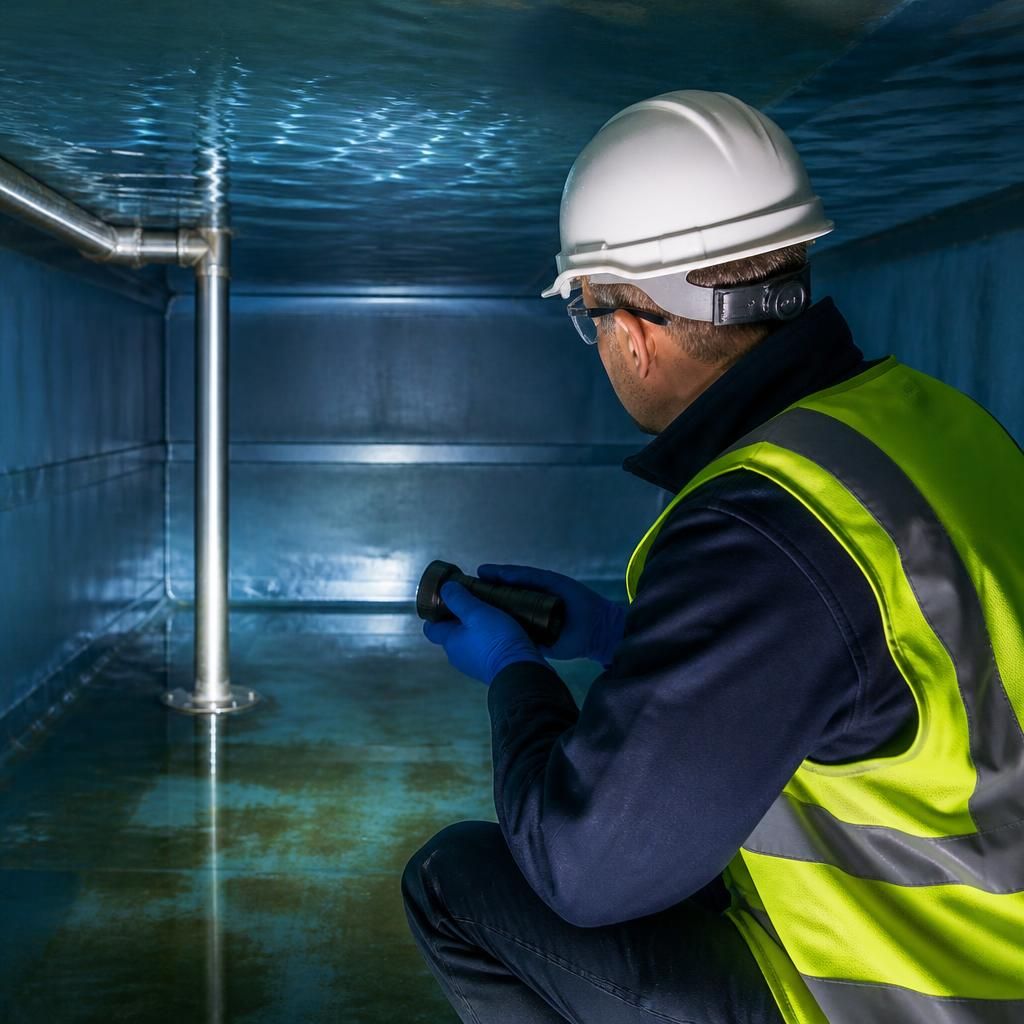
Sampling after disinfection should reflect how the water system is used, rather than relying on a single tank sample. A competent person may select representative outlets and relevant points within the treated system, taking samples only after flushing and the required return-to-service checks have been completed. This helps show whether the treatment has been effective throughout the areas supplied by the tank, while laboratory results can be considered alongside the system’s condition and operating controls.
Discuss your water tank disinfection requirements
If you need to establish whether your water tank requires disinfection or define the appropriate scope of work, discuss the system with Blue Fish Water Management. Their team can help review the relevant requirements and advise on suitable next steps.