
Can water tank disinfection damage the tank?
Yes, water tank disinfection can damage a tank if the chemical, concentration, contact time or application method is unsuitable for its construction materials. A correctly planned disinfection uses a compatible method and controlled conditions to protect the tank, fittings, coatings and seals while treating the water system effectively.
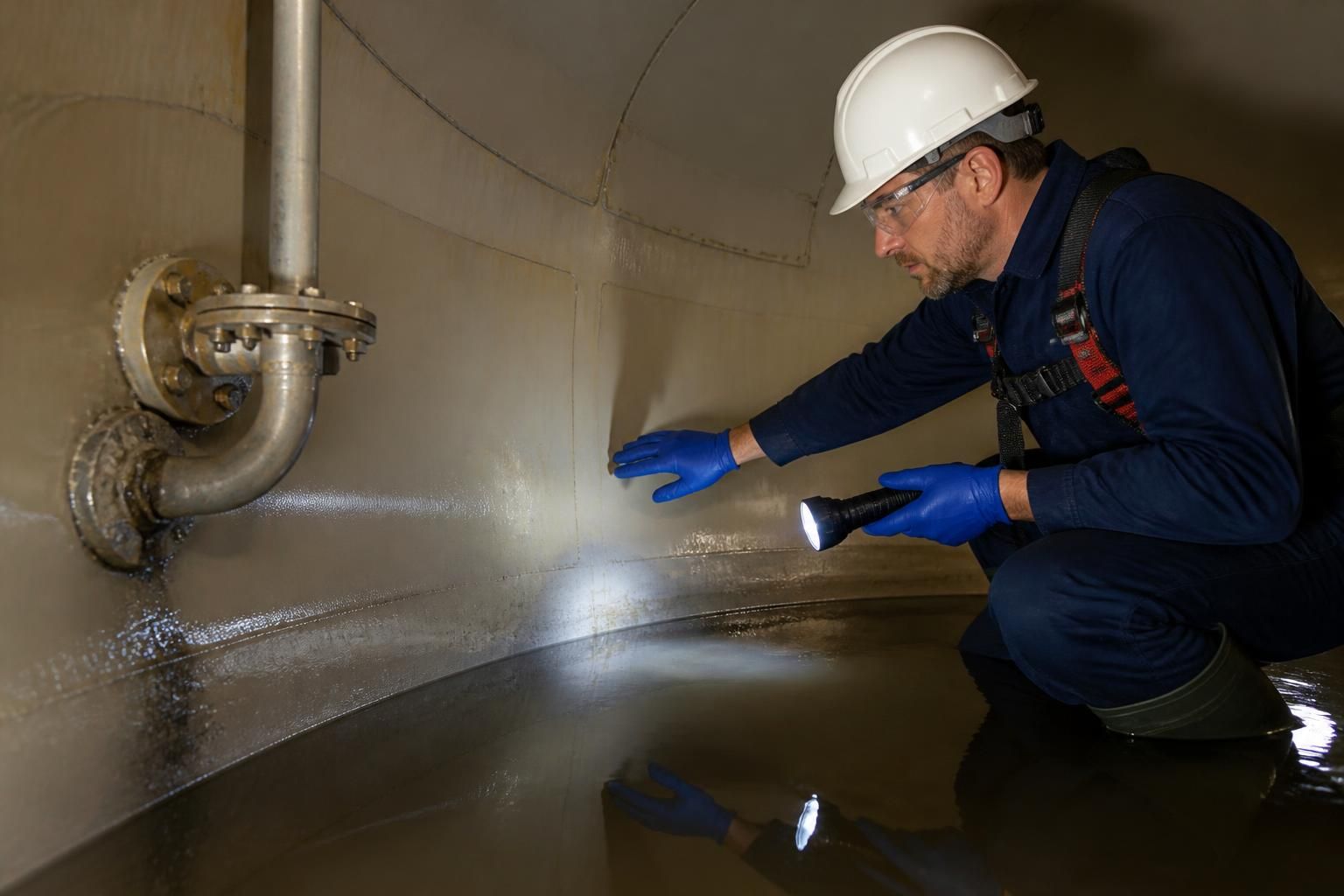
Water tank disinfection does not normally damage a sound, suitable tank when the method is selected and controlled correctly. Damage is more likely where the tank material, internal lining, fittings or seals are incompatible with the disinfectant, or where the system is exposed to an unsuitable chemical condition for too long.
What can be affected? The tank itself is only one part of the installation. Disinfection can also affect inlet valves, float-operated valves, temperature sensors, level controls, flexible connectors, gaskets, washers, jointing compounds and pipework connected to the tank. Older components may already be degraded, so disinfection can expose a weakness that was not previously apparent rather than causing the original defect.
Common forms of damage include corrosion, swelling or cracking of elastomeric seals, deterioration of protective coatings, loss of adhesion from lining systems, and changes to plastic or composite components. Metal tanks and fittings require particular care because disinfectant residues or unsuitable chemical conditions can accelerate corrosion. A damaged internal coating may then leave the underlying material exposed and create rough surfaces where deposits and microorganisms can collect.
The tank material matters. Polyethylene, GRP, stainless steel, galvanised steel, coated steel and concrete tanks do not have the same chemical resistance. A method that is appropriate for one construction may be unsuitable for another. The condition and age of the tank are also relevant. Hairline cracks, porous surfaces, rusting, delamination, failed sealant or previous chemical treatment can all alter the risk. Compatibility should be confirmed from reliable technical information for the specific material and component, rather than assumed from the tank’s appearance.
Disinfectant choice and application are important. Chlorine-based treatment is widely used in water hygiene, but an excessive residual, poor distribution or extended exposure can increase the risk of corrosion and material degradation. Other approaches, including thermal treatment or alternative chemical methods, have their own limitations. Thermal treatment may be unsuitable for tanks, coatings, plastic components or connected equipment that cannot tolerate elevated temperatures. Chemical treatment can also be ineffective or damaging if deposits prevent contact with the surface or if the solution is unevenly mixed.
A competent disinfection plan should therefore establish:
- the tank’s construction, lining and condition;
- the materials used in valves, seals, fittings and connected pipework;
- the appropriate disinfection method for the installation;
- how the disinfectant will be introduced and distributed throughout the tank and system;
- how exposure will be controlled and verified;
- how the system will be flushed, returned to service and checked afterwards; and
- how chemical handling, discharge and worker safety will be managed.
Emptying a tank can also create mechanical risks if the installation is not designed to remain stable when drained. Some tanks or associated pipework may be vulnerable to loss of support, vacuum conditions or movement if isolation and drainage are carried out incorrectly. Tank access presents separate confined-space hazards and should not be treated as a routine part of cleaning or disinfection.
Post-disinfection checks are essential. After treatment, the tank and associated components should be inspected for leaks, corrosion, coating defects, damaged seals, valve problems and unusual changes in appearance. The system should be flushed in a controlled manner, with the discharge managed appropriately, and water quality should be verified before normal use. If the tank supplies drinking water or water used in a process, the acceptance criteria should reflect that intended use.
Signs that a tank may have been adversely affected include persistent leakage, discoloured water, metallic taste or odour, visible flaking or blistering of a lining, rust deposits, stiff or leaking valves, and a disinfectant residual that does not reduce as expected during flushing. These signs should be investigated rather than resolved by repeatedly applying more disinfectant.
Where a tank has suffered damage, the remedy may involve replacing seals or fittings, repairing or renewing a compatible lining, removing corrosion, improving access or drainage, or replacing the tank if its structural integrity is compromised. Cleaning and disinfection alone will not correct a defective tank, poor turnover, dead legs or an ongoing source of contamination.
For a commercial or industrial system, the treatment should be documented within the water hygiene record. This should include the method used, materials considered, relevant safety controls, inspection findings, flushing arrangements and any follow-up testing or remedial work. Blue Fish Water Management can provide practical advice on legionella control, water testing and remedial requirements where the condition or suitability of a tank needs professional assessment.
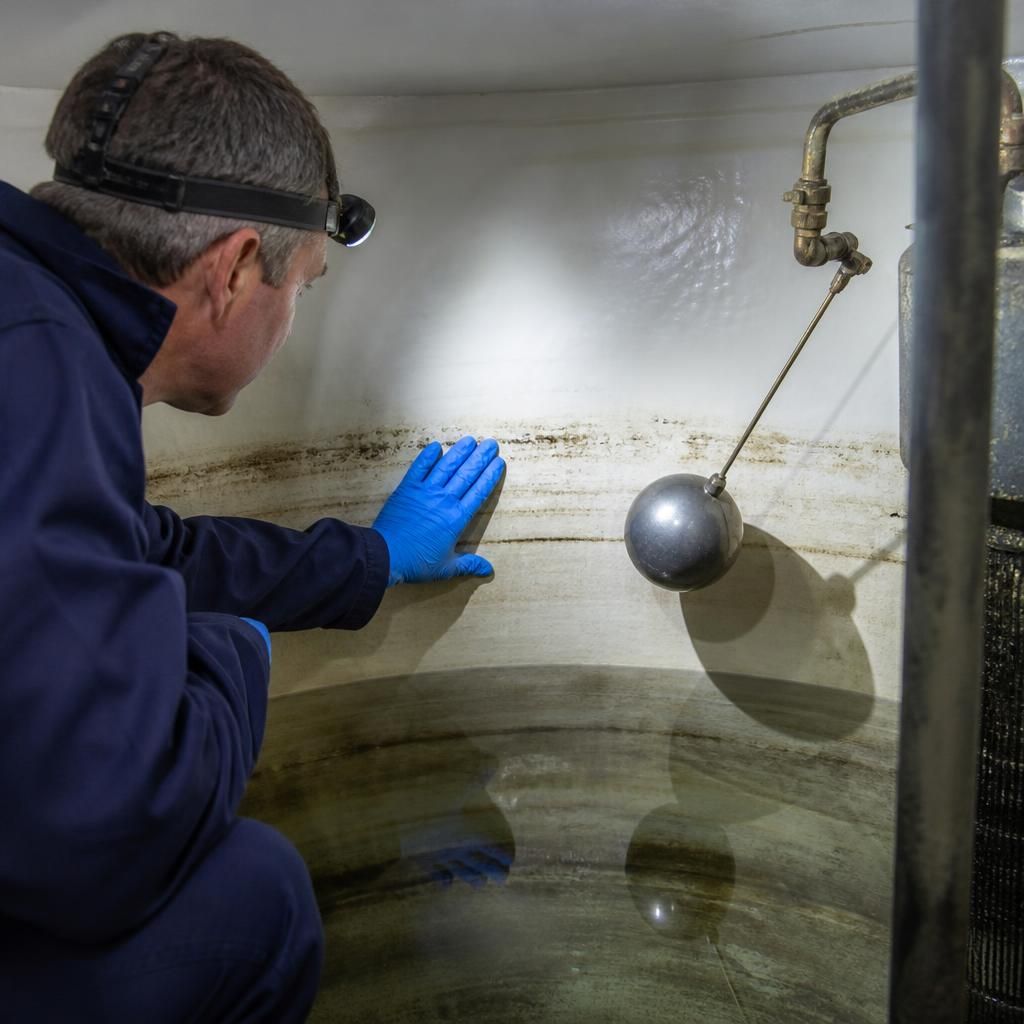
Pre-cleaning the tank can help reduce the risk of damage during disinfection. Sediment, scale and biofilm can shield microorganisms and consume disinfectant, making treatment less consistent and potentially leading to repeated or prolonged chemical exposure. Removing deposits using a method suitable for the tank’s construction allows the subsequent disinfection to be controlled more accurately.
Cleaning should not involve abrasive tools or chemicals that could scratch surfaces, remove protective coatings or weaken components. The cleaning method should be selected alongside the disinfection plan, with the tank’s material and condition considered before work begins. This supports effective treatment without placing unnecessary stress on the tank or its fittings.
Discuss safe tank disinfection for your system
If you are unsure whether your tank, lining or connected components are suitable for disinfection, discuss the installation with Blue Fish Water Management before treatment begins. A professional review can help identify material compatibility issues and define appropriate controls for the work.