
When should a business use a water testing laboratory near me?
A business should use a water testing laboratory when it needs dependable, documented analysis of water samples to investigate potential legionella risk, verify control measures or support compliance evidence. Laboratory testing is particularly appropriate where results must be technically robust and suitable for review by clients, auditors or enforcing authorities.
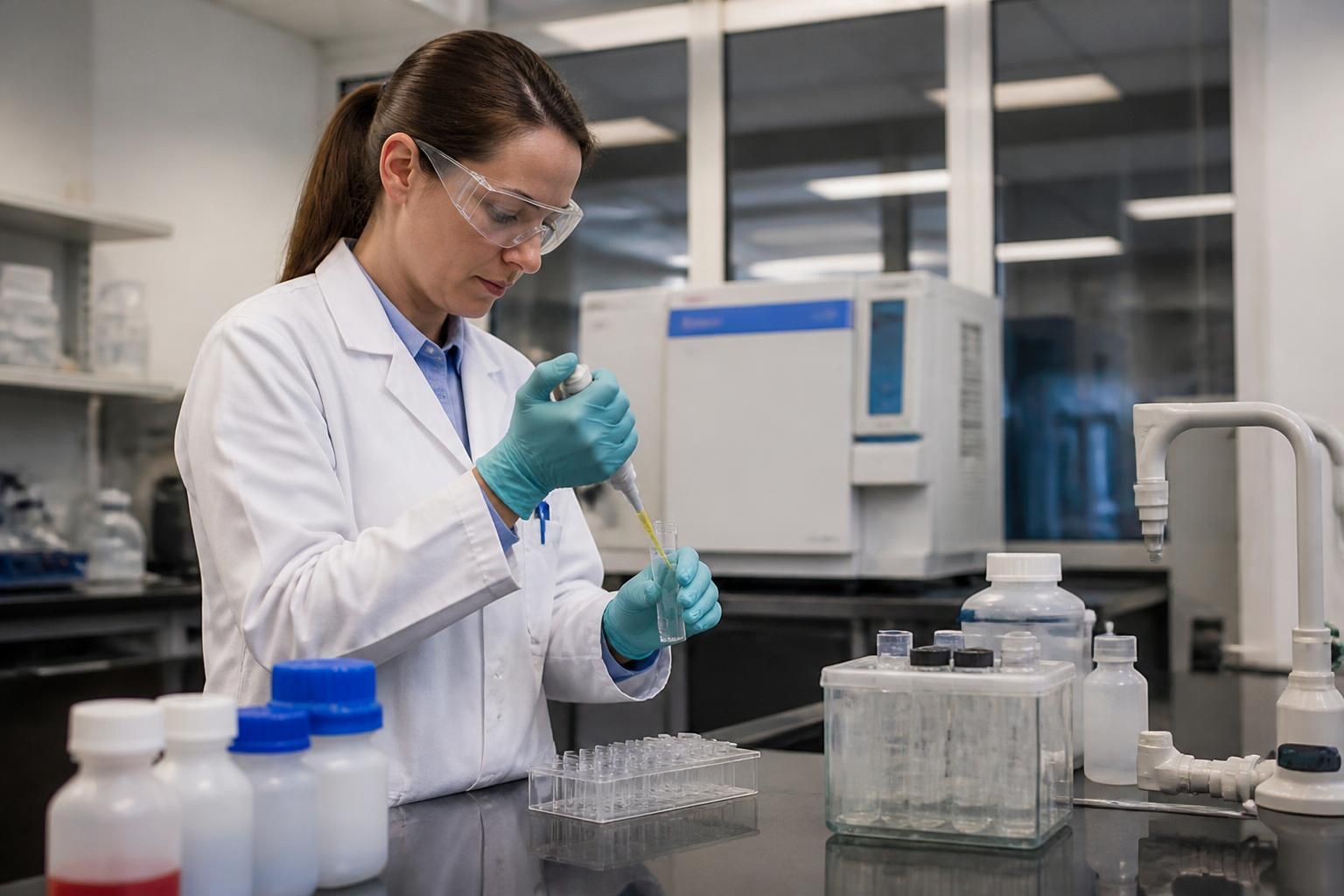
A business should use a water testing laboratory when a water sample needs formal analysis to clarify a potential health risk, assess the effectiveness of control measures or provide evidence for a compliance decision. This is especially important where water systems are complex, the consequences of a wrong conclusion could be serious, or the result will be reviewed by someone outside the organisation.
Laboratory testing is usually appropriate in the following situations:
- There is a suspected legionella problem. A sample may be required after an illness investigation, an adverse trend in monitoring results, or a concern about conditions within a hot or cold water system. Testing can help inform the investigation, but a negative result does not by itself prove that a system is free from risk.
- Control measures need to be checked. Sampling can support verification after temperature adjustments, cleaning and disinfection, tank or pipework work, or other remedial action. It should form part of a wider review rather than replace checks of temperatures, circulation, maintenance and management controls.
- The building has higher-risk features. Large or intricate systems, healthcare environments, care settings, residential accommodation, leisure facilities, industrial sites and premises with vulnerable occupants may justify a more structured sampling programme. The appropriate approach depends on the risk assessment and the way the system is used.
- A site has been vacant, altered or poorly maintained. Stagnation, changes in occupancy, extended periods without use, dead legs, low-flow outlets and recent plumbing alterations can change the risk profile. Laboratory analysis may be useful alongside a physical inspection and a review of system records.
- There is a dispute or uncertainty about results. If results from a basic kit are difficult to interpret, conflict with site observations or do not explain a recurring concern, a laboratory can provide a more suitable basis for further investigation.
- Documented evidence is needed. A business may need test records for an internal review, client requirement, insurance process, audit, tender, enforcement enquiry or handover between responsible parties. The sampling plan, sample locations, dates and laboratory report should all be retained with the water hygiene records.
Testing should be planned rather than carried out as a standalone exercise. Before samples are taken, the responsible person should identify the purpose of the test, the outlets or parts of the system that need consideration, the type of sample required and how the result will influence the next decision. Sampling locations should be representative of the risk being investigated. Taking a sample from an easy-to-reach tap may provide little useful information if the concern relates to a storage tank, infrequently used outlet or poorly circulating section of pipework.
The condition of the sample also affects the value of the result. Collection, labelling, preservation, transport and laboratory handling need to follow the relevant procedure. Records should identify the premises, sampling point, date and time, sampler, sample type and any relevant observations. Poor technique, delays or incomplete information can make a result harder to interpret, even when the analytical work itself is carried out correctly.
A laboratory result must be interpreted in context. The report may identify an organism or provide a quantified result, but it does not describe every factor that determines risk. The result should be considered alongside:
- stored and circulating water temperatures;
- the condition and design of tanks, calorifiers, pipework and outlets;
- evidence of stagnation, low flow or scale and sediment;
- the effectiveness and frequency of flushing, cleaning and disinfection;
- maintenance and monitoring records; and
- the vulnerability and use of the people who may be exposed.
A single result should therefore not be used to declare a system safe or unsafe without considering the wider evidence. A result indicating a concern may require immediate management action, additional sampling or specialist investigation. A result showing no detection may still need to be followed by continued monitoring if the underlying conditions that allowed risk to develop remain unchanged.
A test kit may be unsuitable where the decision has formal or significant consequences. Kits can be useful for limited screening or preliminary checks, depending on the product and its validated use, but they may not provide the same level of traceability, sensitivity, method control or reporting detail as laboratory analysis. They should not be used to avoid a proper risk assessment or to give false reassurance about a complex water system.
For most businesses, the decision to use a laboratory should come from the risk assessment, the reason for sampling and the level of evidence required. Where the result will guide remedial work, support a compliance file or be relied upon by an auditor, client or enforcing authority, laboratory testing is generally the more defensible option. A competent water hygiene provider can help define the sampling objective, coordinate appropriate analysis and relate the findings to practical control measures.
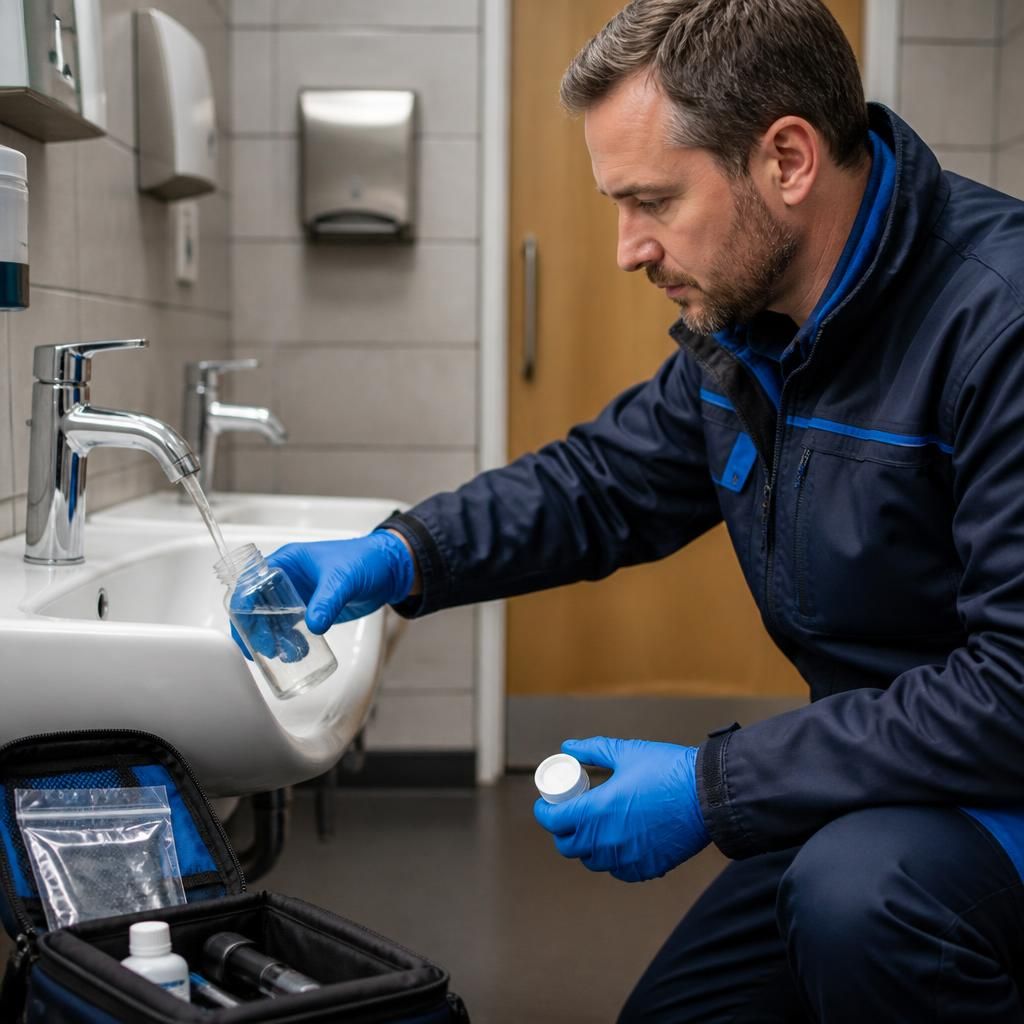
For a business searching for a water testing laboratory near me, physical proximity is only one consideration. The laboratory must be able to analyse the required sample using a suitable method and provide a report that can be understood in the context of the water system and the reason for testing. A nearby facility is not necessarily the right choice if its testing scope does not match the investigation.
Before commissioning analysis, confirm what the laboratory is accredited to test, whether it accepts the sample type required, and how results will be reported. For legionella investigations, it is also important to establish how the result should be used alongside the site’s risk assessment and water hygiene records. Choosing on technical suitability rather than distance helps ensure that the analysis provides useful evidence for managing the business’s water system.
Discuss your laboratory water testing needs
If you are unsure which laboratory testing approach suits your business, discuss your sampling objective and reporting requirements with Blue Fish Water Management Ltd before arranging analysis.