
What are the limitations of Legionella test kits?
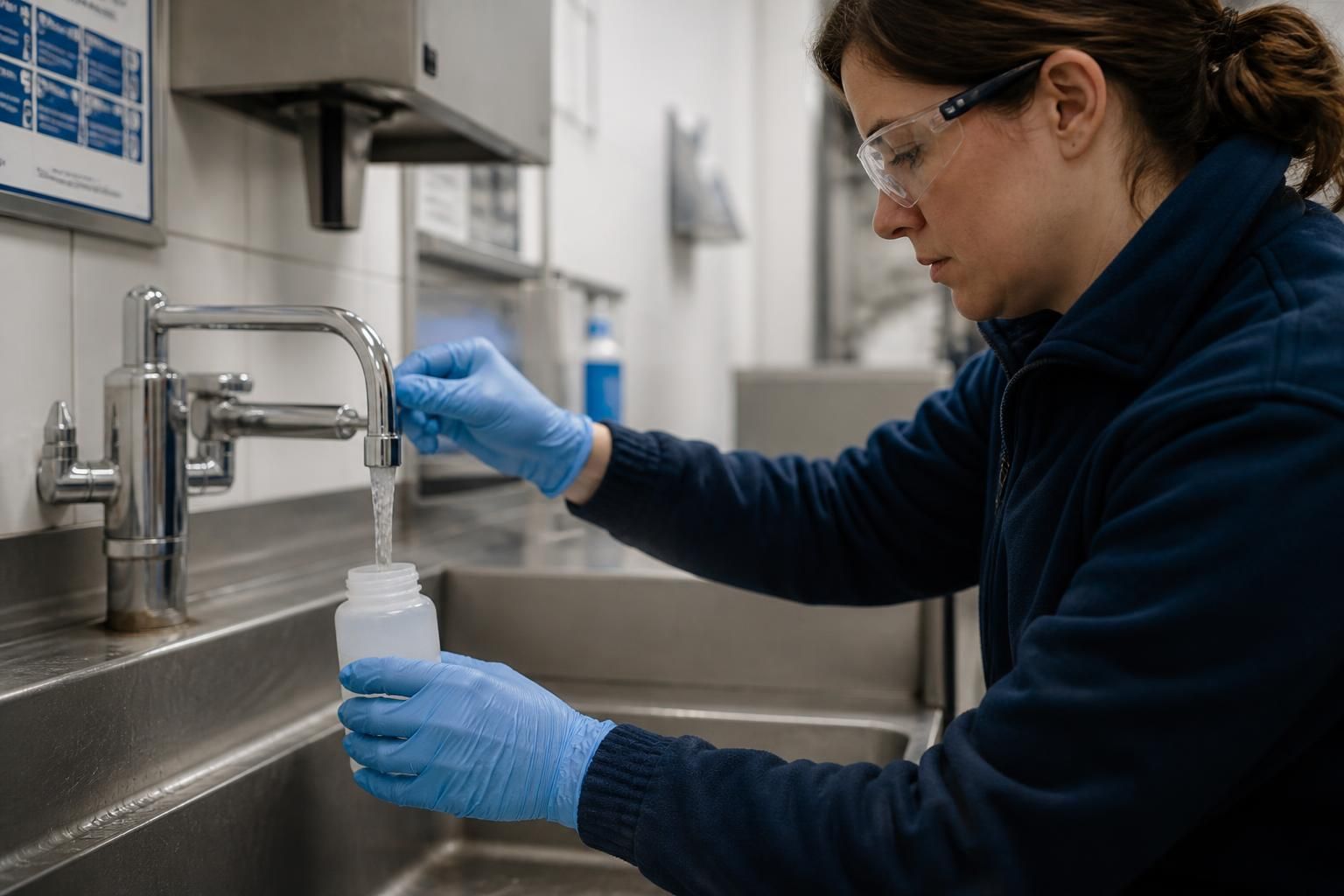
Legionella test kits are limited because they often provide screening information rather than a complete, independently validated assessment of the water system. Their usefulness depends on the kit’s technology, the sample collected, the person carrying out the test and the decision the result is intended to support. A kit result should therefore be treated as one part of a wider water safety process, not as conclusive proof that a system is safe or unsafe.
They may not identify Legionella specifically. Some products detect general bacterial activity, biological indicators or conditions associated with microbial growth rather than identifying Legionella bacteria. A positive result can therefore require further investigation, while a negative result may simply mean that the indicator was not detected. Even where a kit is designed to detect Legionella or its genetic material, the result may not establish whether the bacteria are viable and capable of multiplying.
Results are not always directly comparable. Different kits can use different detection principles, sample volumes, reporting units and interpretation criteria. A result from one product may not be equivalent to a result from another, making it difficult to track trends over time if the testing method changes. The colour, turbidity or numerical reading may also be open to interpretation, particularly where the result is close to the manufacturer’s stated detection boundary.
Operator error can affect the outcome. Test kits are often designed to be practical for routine use, but they still require the instructions to be followed precisely. Errors may arise from incorrect sample collection, inadequate mixing, inaccurate timing, contamination of containers or equipment, incorrect incubation, or difficulty reading a visual result. Storage conditions, expiry dates and the preparation of reagents can also influence performance. A test carried out by an untrained person may not produce evidence that can be confidently relied upon for a formal risk decision.
A single result gives only a snapshot. Legionella risk can vary between outlets, storage vessels and sections of a distribution system. One sample cannot demonstrate that all parts of the system have the same microbiological condition. It also cannot show whether contamination is persistent, intermittent or associated with a particular piece of plant. Meaningful monitoring usually requires a documented sampling plan that considers system design, sentinel outlets, risk points, temperature management and previous findings.
Rapid results can omit important context. A kit may indicate that further action is warranted, but it will not usually explain why the result occurred. It may not identify the likely source, distinguish between colonisation and a temporary finding, or show how contamination is distributed through the system. Those questions may require a review of the schematic, storage and distribution arrangements, temperature records, maintenance history and control measures alongside appropriately selected laboratory analysis.
Results may not provide the level of evidence needed for compliance. Businesses may need a clear audit trail showing who took the sample, where and when it was taken, how it was transported or processed, which method was used and how the result was interpreted. A self-administered kit may not provide the same documented chain of custody, method validation or quality assurance as a professional laboratory service. This can create difficulties when findings need to be reviewed by a client, auditor, consultant, insurer or enforcing authority.
This does not mean that every kit is unsuitable. A screening method can have a role in identifying a possible change, supporting routine checks or indicating that specialist investigation should be considered. Its role should be defined in advance, including what the test can detect, what it cannot detect and what action will follow a positive, negative or inconclusive result.
Before relying on a kit, a business should check:
- whether the method detects Legionella itself, viable organisms, genetic material or only a general indicator;
- the detection range, limitations and validation information supplied for the product;
- whether the sample volume and method are appropriate for the type of water system being assessed;
- how samples must be labelled, preserved, processed and recorded;
- whether the result will be accepted for the intended compliance, audit or client requirement; and
- what competent person will interpret the finding and decide whether further action is required.
Professional water testing is generally more appropriate where there has been a suspected case of Legionnaires’ disease, an unexplained change in system control, significant remedial work, repeated adverse results or a need for defensible compliance records. A laboratory can apply a defined method, provide a formal report and place the result in the context of the sampling plan and wider risk assessment. Where the consequence of an incorrect negative result is significant, relying on a test kit alone is difficult to justify.
The main limitation is therefore not simply whether a kit produces a result. It is whether that result is sufficiently specific, reliable, representative and well documented to support the decision being made. For many commercial and industrial water systems, a kit may be useful as an early warning tool, but it should not replace competent risk assessment, effective control measures and suitable laboratory testing where confirmation is required.
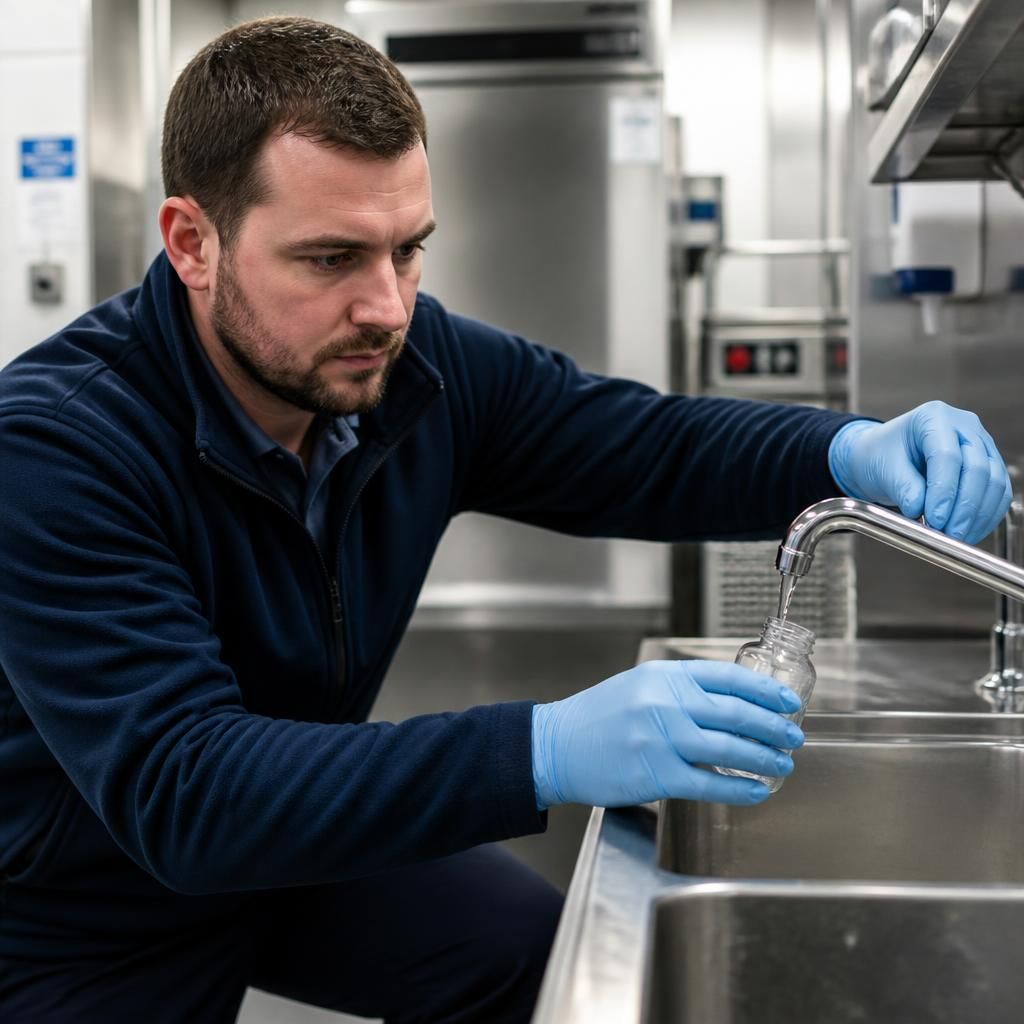
A Legionella test result does not, by itself, measure the likelihood of people being exposed to infection. That risk also depends on how water is used, whether aerosols can be generated, the condition and temperature of the system, and the vulnerability of those who may be exposed. A detected organism therefore requires risk-based interpretation rather than an automatic conclusion about danger, while an undetected result cannot replace ongoing control of the water system.
Discuss your Legionella testing requirements
Discuss your Legionella testing requirements with Blue Fish Water Management Ltd to determine whether a test kit is suitable for your intended decision or whether professional laboratory analysis is needed.