
How should water sampling results inform compliance decisions?
Water sampling results should be assessed against relevant guidance, previous results, system conditions and the findings of the legionella risk assessment. Any adverse or changing result should inform proportionate action, such as further investigation, remedial work, increased monitoring or review of control measures.
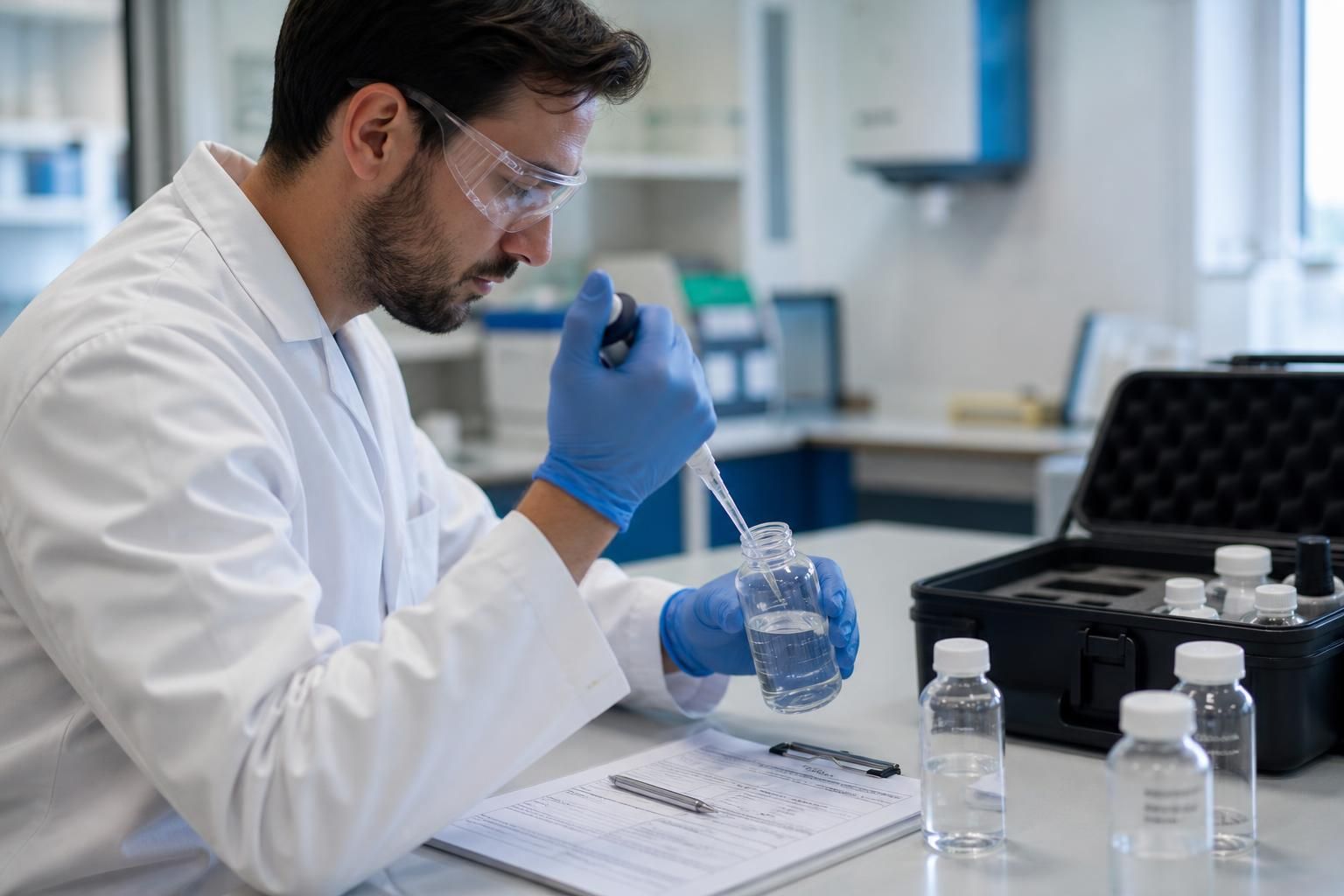
Water sampling results inform compliance decisions by providing objective evidence about whether water hygiene controls are operating as intended and whether further action is justified. They should be interpreted in context rather than treated as a simple pass-or-fail test.
Start with the quality and meaning of the result. Before making a decision, confirm what was tested, where and when the sample was taken, the sampling method used, and whether the sample was handled and transported correctly. The result should also be read with the laboratory’s interpretation, reporting units, detection limits and any comments about the sample. A result cannot support a sound compliance decision if its provenance or limitations are unclear.
The sampling point is particularly important. A result from a sentinel outlet may indicate conditions in part of a system, but it does not automatically represent every outlet, storage vessel, return loop or low-use area. The decision-maker should ask whether the sampling locations reflect the areas where exposure is most likely, including outlets used by vulnerable people or locations associated with poor circulation, low use or temperature control difficulties.
Legionella findings require a proportionate response. The significance of a detection depends on factors including the organism identified, the reported concentration, the type of water system, the people exposed, the system’s operating conditions and the effectiveness of existing control measures. A result that appears limited in isolation may have greater significance if it forms part of a pattern, occurs at a high-risk outlet or is accompanied by evidence of inadequate temperatures, stagnation or poor maintenance.
Results for other parameters can help explain why legionella controls may be less effective. Microbiological indicators, such as general bacterial counts or indicators of contamination, may point to changes in water quality or system condition. Chemical and operational information can provide further context, including disinfectant residuals, temperature readings, deposits, corrosion, scale, tank condition and evidence of low flow. These findings should be considered together rather than used as unrelated pass-or-fail measures.
Use the result to select the appropriate compliance response. Depending on the evidence, this may involve:
- recording the result and continuing the established control programme where conditions remain adequately controlled;
- checking storage, distribution, temperature, flow, outlet use and maintenance records;
- taking confirmatory samples where the result is unexpected, technically questionable or inconsistent with other evidence;
- cleaning, disinfecting, flushing, repairing or modifying relevant parts of the system;
- increasing the frequency or scope of monitoring while the cause is investigated;
- reviewing whether outlets, tanks, dead legs or other system components are appropriately included in routine controls; and
- escalating the matter where there is a credible risk of exposure or evidence that existing controls are not effective.
Retesting can show whether conditions have changed, but it should not be used to replace corrective action where the result indicates a known control failure. For example, repeatedly sampling an outlet without addressing poor circulation, unsuitable temperatures or contamination within the system may generate more data without reducing the underlying risk.
Trend information is often more useful than one isolated result. Comparing current findings with earlier samples can identify gradual deterioration, recurring contamination at a particular outlet, seasonal changes, or improvement following remedial work. However, apparent changes should be checked against alterations to the system, occupancy, usage, maintenance, sampling locations and laboratory methods. A direct comparison may be misleading if the samples were not collected on a consistent basis.
Where results lead to remedial work, the compliance record should show the original finding, the decision taken, the person responsible, the completion date and the evidence used to verify the outcome. This may include follow-up results, temperature or disinfectant records, maintenance documentation and confirmation that affected areas were returned to suitable control. Documenting the reasoning is important because compliance depends not only on the result itself, but also on demonstrating that it was assessed competently and acted on appropriately.
Water sampling therefore supports compliance when it is part of a managed process: obtain reliable samples, interpret them with system and exposure information, investigate the cause, take proportionate action and verify that controls remain effective. The final decision should be made by a suitably competent person who can relate the laboratory evidence to the operation of the water system and the organisation’s wider water safety arrangements.
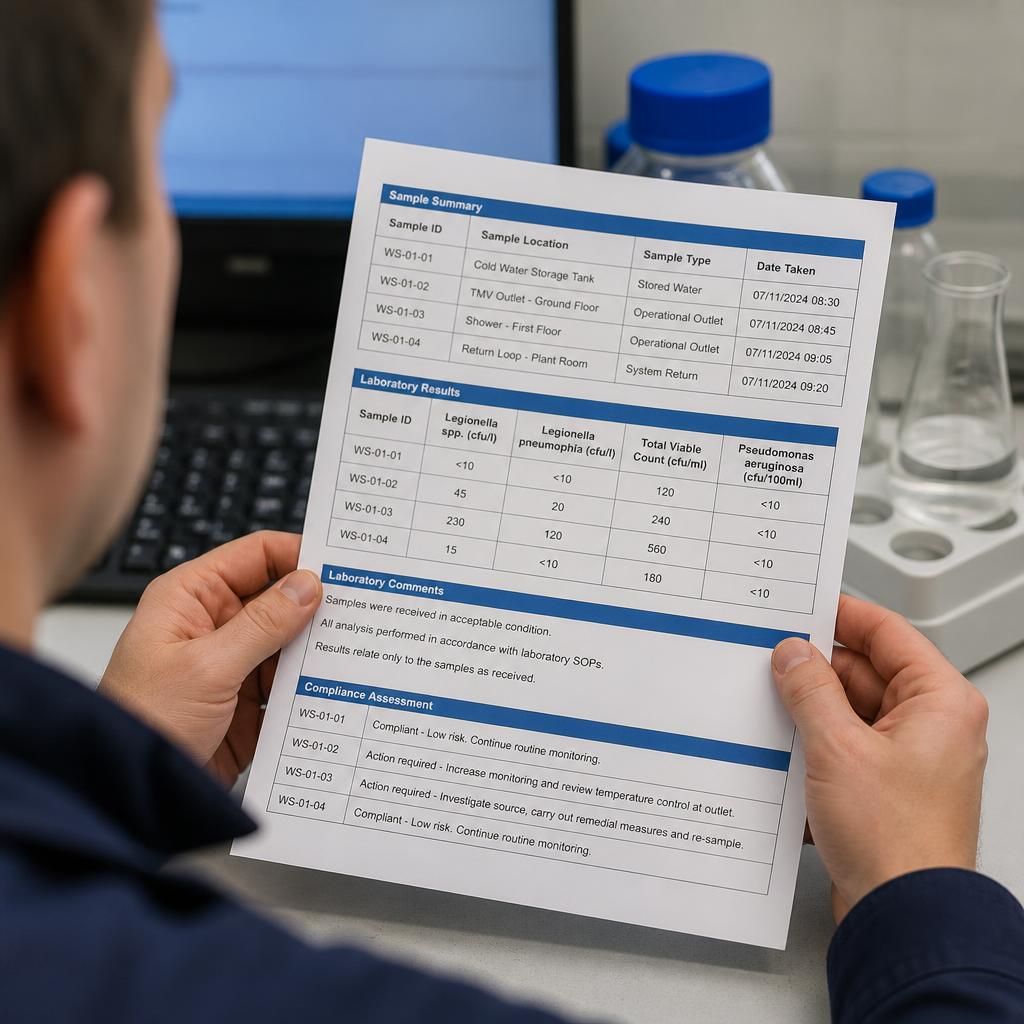
Water sampling results should be assessed against the organisation’s documented control scheme, including the actions to take for different types of finding. Setting these decision criteria in advance helps ensure that similar results are handled consistently and prevents a favourable result from being given undue weight when other compliance information indicates a concern.
The outcome should be communicated to the people responsible for water system management, maintenance and occupational safety. They need to understand what the result means for their duties, whether any restrictions or precautions apply, and when the decision will be reviewed. This creates a clear link between laboratory evidence and day-to-day management of the water system.
Discuss Your Water Sampling Results and Compliance Decisions
Discuss your water sampling results with Blue Fish Water Management Ltd to clarify their implications for your compliance decisions. Their team can help relate laboratory findings to the operation of your water system and determine whether further assessment is appropriate.